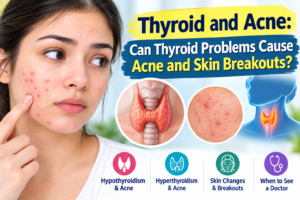

Thyroid and Acne: Can Thyroid Problems Cause Acne and Skin Breakouts
One of the most prevalent skin conditions that affects both adults and teenagers is acne. Breakouts can be caused by a variety of factors, including hormonal fluctuations, genetics, stress, skincare products, medications, and specific medical conditions. What about the thyroid, though?
You might question whether your thyroid is to blame if you have thyroid disease and you suddenly develop dry skin, oily skin, acne, or other changes to your complexion.
The connection between thyroid and acne is not as straightforward as the relationship between acne and hormones such as androgens. Thyroid disorders can affect the skin in several ways, but thyroid disease is not generally considered a direct or common cause of acne.
However, thyroid problems can sometimes influence the factors that affect skin health and may occur alongside other hormonal or metabolic changes that contribute to breakouts.
Let’s look at the connection between thyroid health and acne, the differences between hypothyroidism and hyperthyroidism, and what you can do if you’re experiencing persistent breakouts.
What Is the Thyroid?
The thyroid is a small, butterfly-shaped gland located at the front of your neck. It produces thyroid hormones that help regulate many important body functions, including metabolism, energy use, body temperature, heart rate, and other processes.
The two major thyroid conditions are:
- Hypothyroidism: The thyroid does not produce enough thyroid hormone.
- Hyperthyroidism: The thyroid produces too much thyroid hormone.
Because thyroid hormones influence many systems throughout the body, thyroid disorders can cause noticeable changes in the skin, hair, nails, weight, energy levels, and general well-being.
Can Thyroid Problems Cause Acne?
Thyroid problems are not usually a direct cause of acne.
The main cause of acne is oil and dead skin cells clogging hair follicles. Pimples can be caused by increased oil production, inflammation, bacteria, and hormonal changes.
Oil production is particularly stimulated by androgens, such as testosterone and related hormones.
Thyroid hormones are different from these sex hormones. Therefore, having hypothyroidism or hyperthyroidism does not automatically mean you will develop acne.
However, thyroid disorders can cause changes in skin texture, oiliness, sweating, inflammation, and other body processes. These changes may sometimes make existing skin problems more noticeable.
In addition, some people have more than one hormonal or endocrine condition at the same time. In these situations, acne may be related to another hormonal imbalance rather than the thyroid itself.
How Hypothyroidism Can Affect Your Skin
Hypothyroidism occurs when the thyroid gland does not produce enough thyroid hormones.
One of the most common skin changes associated with hypothyroidism is dry, rough, or flaky skin.
Other possible skin-related symptoms include:
- Dry skin
- Rough skin texture
- Pale or dull-looking skin
- Increased sensitivity to cold
- Swelling or puffiness
- Dry or thinning hair
- Brittle nails
- Reduced sweating
- Slow healing of minor skin injuries
These symptoms are different from the classic oily skin associated with acne.
That is why someone with hypothyroidism may experience dry skin while also developing acne for an unrelated reason.
Can Hypothyroidism Make Acne Worse?
There is no strong evidence that hypothyroidism directly causes typical acne.
However, if your skin barrier becomes dry or irritated, using harsh acne treatments may cause additional irritation. For example, excessive use of strong exfoliants or drying acne products can worsen redness, peeling, and discomfort.
If you have hypothyroidism and acne, it may be helpful to treat both problems separately rather than assuming that all breakouts are caused by the thyroid.
Can Hyperthyroidism Cause Acne?
Hyperthyroidism occurs when the thyroid gland produces excessive thyroid hormone.
It can cause symptoms such as:
- Increased sweating
- Warm or moist skin
- Heat intolerance
- Increased heart rate
- Weight loss
- Trembling
- Anxiety or restlessness
- Sleep difficulties
- Changes in hair
Because sweating and skin oil can contribute to clogged pores in some people, someone with hyperthyroidism might notice changes in their skin.
However, hyperthyroidism itself is not considered a common direct cause of acne.
If acne develops while you have hyperthyroidism, other factors should also be considered, including genetics, menstrual or reproductive hormones, medications, stress, skincare products, and diet.
Thyroid and Hormonal Acne: What’s the Difference?
Understanding the difference between thyroid hormones and acne-related hormones is important.
Acne is often influenced by androgens, which can increase sebum production and contribute to clogged pores.
Hormonal acne commonly appears around areas such as:
- Chin
- Jawline
- Lower cheeks
- Around the mouth
- Neck
It may become more noticeable during hormonal fluctuations, including puberty, menstrual cycles, pregnancy, or certain endocrine conditions.
Thyroid hormones, on the other hand, primarily regulate metabolism and other body functions.
Therefore, if someone has acne and a thyroid condition, the two may coexist without one directly causing the other.
Other Hormonal Conditions Can Cause Acne
If you have thyroid symptoms and persistent acne, it is important not to focus only on the thyroid.
Other hormonal conditions can be more closely associated with acne.
For example, polycystic ovary syndrome (PCOS) may cause hormonal acne in some women. PCOS can also be associated with irregular periods, increased facial or body hair, and other signs of androgen excess.
Other possible contributors include:
- Hormonal fluctuations
- Certain medications
- Increased androgen activity
- Stress
- Menstrual changes
- Pregnancy-related hormonal changes
If acne appears suddenly or becomes severe in adulthood, discussing the pattern with a healthcare professional may help identify the underlying cause.
Thyroid Medication and Acne
If you take medication for a thyroid condition and notice new acne after starting or changing treatment, do not stop your medication on your own.
Skin changes can have many causes, and the timing may not necessarily mean that the medication is responsible.
Instead, keep track of:
- When the acne started
- When your thyroid medication was started or changed
- Where the acne appears
- Whether your skin has become oily or dry
- Any other new symptoms
- Other medications or supplements you are taking
Your doctor can determine whether the medication, thyroid condition, or another factor may be involved.
Thyroid Symptoms That Should Not Be Ignored
Generally speaking, acne by itself does not indicate a thyroid condition.
However, it might be worthwhile to talk to a healthcare provider about your general health if acne coexists with a number of other symptoms.
Possible symptoms of hypothyroidism include:
- Persistent tiredness
- Feeling unusually cold
- Constipation
- Dry skin
- Hair thinning
- Weight gain
- Low energy
- Changes in menstrual periods
Possible symptoms of hyperthyroidism include:
- Unexplained weight loss
- Fast heartbeat
- Increased sweating
- Feeling unusually hot
- Trembling
- Anxiety or irritability
- Difficulty sleeping
- Frequent bowel movements
These symptoms can occur for many different reasons, so they should not be used to diagnose thyroid disease by themselves.
How to Manage Acne If You Have a Thyroid Condition
If you have both thyroid disease and acne, a basic, gentle skincare routine can help.
1. Cleanse Gently
Wash your face with a gentle cleanser once or twice daily.
Avoid aggressive scrubbing because it can irritate the skin and make inflammation worse.
2. Choose Non-Comedogenic Products
Look for moisturizers, sunscreens, and makeup labeled non-comedogenic.
These products are designed to be less likely to clog pores.
3. Keep Your Skin Moisturized
Even oily or acne-prone skin needs hydration.
This is particularly important if you have thyroid-related dry skin or are using acne treatments that cause dryness.
Choose a lightweight moisturizer that suits your skin type.
4. Consider Proven Acne Ingredients
Depending on your skin and the severity of your acne, ingredients such as salicylic acid, benzoyl peroxide, or topical retinoids may be useful.
Start gradually because these ingredients can cause dryness or irritation.
If you have sensitive or very dry skin, talk with a dermatologist before introducing several active ingredients at once.
5. Don’t Pick Pimples
Squeezing or picking acne can increase inflammation and raise the risk of dark marks and scarring.
Allow pimples to heal while maintaining a consistent skincare routine.
6. Manage the Underlying Thyroid Condition
If you have a diagnosed thyroid disorder, following your prescribed treatment plan is important for overall health.
Do not change thyroid medication doses without medical advice.
When Should You See a Dermatologist?
Consider seeing a dermatologist if:
- Acne is painful or severe
- You have deep cysts or nodules
- Acne is leaving scars
- Breakouts continue despite basic skincare
- Adult acne suddenly becomes severe
- Acne is affecting your confidence or daily life
- You are unsure whether your skin symptoms are hormonal
A dermatologist can determine whether your acne is typical acne or whether another skin condition may be causing the breakouts.
When Should You Get Your Thyroid Checked?
Acne by itself generally isn’t a reason to assume you have a thyroid problem.
However, if you have multiple symptoms associated with thyroid dysfunction, talk with your healthcare provider.
A clinician may consider your symptoms, medical history, examination, and appropriate blood tests when evaluating thyroid function.
Do not rely on acne alone to determine whether your thyroid is underactive or overactive.
Can Treating Thyroid Disease Clear Acne?
If your acne is caused by another factor, treating a thyroid disorder may not make the acne disappear.
Treating thyroid disease is important for correcting thyroid hormone levels and improving symptoms related to the thyroid, but acne may require its own treatment.
If your skin changes are partly related to dryness, sweating, inflammation, or another hormonal issue, improving your overall health may help your skin as well.
Still, persistent acne should be treated based on its actual cause rather than assuming that thyroid treatment will cure it.
Frequently Asked Questions
Can an underactive thyroid cause acne?
An underactive thyroid, or hypothyroidism, is not considered a direct or common cause of acne. It is more commonly associated with dry, rough, or pale skin. Acne may occur at the same time for other reasons.
Can an overactive thyroid cause pimples?
Hyperthyroidism is not generally considered a direct cause of acne. Increased sweating and other skin changes may occur with hyperthyroidism, but acne usually has additional contributing factors.
Can thyroid hormones affect the skin?
Yes. Thyroid hormones influence many body functions, and thyroid disorders can cause noticeable changes in skin moisture, texture, sweating, hair, and nails.
Should I test my thyroid if I suddenly develop acne?
Acne alone usually does not mean you need thyroid testing. However, if you also have symptoms such as unexplained weight changes, unusual fatigue, heat or cold intolerance, hair changes, or heart-rate changes, discuss them with a healthcare professional.
Is hormonal acne related to the thyroid?
Hormonal acne is more commonly associated with androgen activity and other reproductive hormones than with thyroid hormones. Thyroid disease and hormonal acne can occur together, but that does not necessarily mean one is causing the other.
Final Thoughts
It can be unclear how thyroid and acne are related. Although thyroid conditions can have a major impact on the skin, they are not usually thought to be a direct cause of common acne.
While hyperthyroidism can result in increased perspiration and warm, moist skin, hypothyroidism is more frequently linked to dry, rough skin. Due to distinct factors like androgen activity, genetics, stress, skincare products, medications, or other hormonal changes, acne may develop concurrently with either condition.
If you have persistent acne together with symptoms of thyroid dysfunction, it is worth discussing both issues with a healthcare professional. The best approach is to identify the actual cause of your breakouts and treat your thyroid condition and skin condition appropriately.
Remember that acne is common and usually manageable. A gentle skincare routine, appropriate acne treatment, and professional medical advice when needed can help you achieve healthier-looking skin without unnecessarily blaming every breakout on your thyroid.