
Introduction
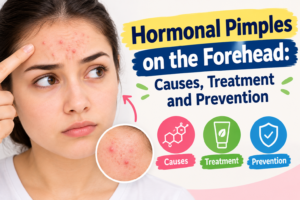
Hormonal pimples on the forehead can be annoying, particularly if they keep coming up even with a regular skincare regimen. Acne on the forehead can appear as inflammatory pimples, whiteheads, blackheads, or tiny red bumps. Hormonal fluctuations may be the source of these outbreaks for some people, while hair products, perspiration, plugged pores, stress, or skincare products may be the cause for others.
Hormones influence oil production in the skin. When certain hormones increase oil production, excess oil can combine with dead skin cells and clog pores. This can contribute to acne and recurring forehead breakouts.
Understanding the possible causes is the first step toward choosing the right treatment. In this guide, we will discuss hormonal pimples on the forehead, their common causes, treatment options, prevention strategies, and signs that you should consider seeing a dermatologist.
What Are Hormonal Pimples on the Forehead?
Hormonal pimples are acne breakouts associated with changes in hormone levels. Hormones called androgens can stimulate the skin’s sebaceous glands, causing them to produce more sebum, or natural oil.
When there is too much oil, dead skin cells and bacteria can contribute to clogged pores and inflammation.
Although hormonal acne is often associated with the lower face, jawline, and chin, hormonal changes can also contribute to forehead breakouts.
Forehead acne may appear as:
- Small red bumps
- Whiteheads
- Blackheads
- Pus-filled pimples
- Inflamed acne
- Groups of tiny clogged pores
- Deep and painful pimples in some cases
Not every forehead breakout is hormonal, so identifying other possible triggers is important.
What Causes Hormonal Pimples on the Forehead?
Several factors can contribute to hormonal pimples on the forehead.
1. Hormonal Changes
Hormonal fluctuations can increase oil production and influence how easily pores become clogged. This may happen during puberty, menstrual cycles, pregnancy, or other periods of hormonal change.
Some people notice acne appearing or becoming worse at predictable times of the month.
2. Puberty
During puberty, androgen levels increase. These hormones can stimulate the sebaceous glands, causing oily skin and clogged pores.
As a result, teenagers commonly experience pimples on the forehead, nose, cheeks, and other areas of the face.
3. Menstrual Cycle
Some women notice acne before or around their menstrual period. Hormonal fluctuations during the menstrual cycle may increase oiliness and inflammation in acne-prone skin.
If forehead pimples consistently appear at the same point in your cycle, hormones may be one of several contributing factors.
4. Stress
Stress does not necessarily cause acne by itself, but it can make existing acne worse. Stress-related hormonal changes may influence oil production and inflammation.
Poor sleep and stress may also affect skincare habits, diet, and overall skin health.
5. Hair Products
Hair oils, gels, conditioners, styling creams, and other products can transfer onto the forehead. Some products may clog pores and contribute to small bumps along the hairline and forehead.
This type of breakout is sometimes called pomade acne.
6. Sweat and Heat
Sweating can mix with oil, bacteria, sunscreen, makeup, and skincare products. If sweat remains on the skin for long periods, it may contribute to clogged pores and irritation.
This is especially common during hot weather or after exercise.
7. Comedogenic Skincare Products
Heavy moisturizers, makeup, sunscreen, or facial oils may contribute to clogged pores in some acne-prone individuals.
Look for products labeled non-comedogenic when possible, particularly if you frequently experience forehead breakouts.
How to Tell If Forehead Acne Is Hormonal
There is no simple visual test that can confirm hormonal acne. However, certain patterns may provide clues.
Your forehead pimples may be more likely to have a hormonal component if:
- Breakouts repeatedly occur around your menstrual cycle.
- Acne began or worsened during a period of hormonal change.
- Pimples continue despite a suitable basic skincare routine.
- You experience acne in several areas of the face.
- Breakouts are recurring rather than occasional.
- You also have other symptoms that could indicate a hormonal imbalance.
However, forehead acne can have multiple causes at the same time. A dermatologist can help determine whether hormones are contributing to your acne.
How to Treat Hormonal Pimples on the Forehead
Treatment depends on the severity and cause of the acne.
1. Use a Gentle Cleanser
Wash your face gently twice a day and after heavy sweating.
Avoid aggressive scrubbing because excessive friction can irritate the skin and potentially make acne appear worse.
Choose a gentle cleanser that removes excess oil without leaving your skin extremely dry or tight.
2. Consider Salicylic Acid
Salicylic acid is a commonly used acne-fighting ingredient. It helps exfoliate inside pores and can be particularly useful for blackheads, whiteheads, and clogged pores.
Start with a lower-strength product if your skin is sensitive and follow the product directions.
3. Try Benzoyl Peroxide for Inflamed Acne
Benzoyl peroxide can help reduce acne-causing bacteria and inflammation. It is commonly used for inflammatory pimples.
Because it may cause dryness and irritation, begin gradually and use a moisturizer suitable for acne-prone skin.
4. Consider a Retinoid
Topical retinoids can help prevent clogged pores and improve acne over time. They are often used as part of long-term acne management.
Introduce retinoids slowly because irritation, dryness, and peeling can occur.
If you are pregnant, trying to become pregnant, or breastfeeding, ask a healthcare professional before using acne medications, particularly retinoid products.
5. Keep Hair Away From the Forehead
If your hair becomes oily or you regularly use styling products, try keeping hair away from your forehead.
Wash pillowcases, hats, headbands, and other items that frequently contact the forehead regularly.
6. Use a Lightweight Moisturizer
People with oily skin sometimes skip moisturizer because they are afraid it will cause more pimples. However, excessive dryness and irritation can make skincare more difficult.
Choose a lightweight, non-comedogenic moisturizer that suits your skin type.
7. Wear Sunscreen
Sun protection is important when treating acne. Acne and inflammation can leave temporary dark marks, and UV exposure can make discoloration more noticeable.
Choose a non-comedogenic sunscreen and apply it as directed.
How to Prevent Hormonal Pimples on the Forehead
You may not be able to completely prevent hormonal acne, but several habits can reduce breakouts.
Keep Your Skin Clean
Cleanse regularly, particularly after sweating. Avoid repeatedly washing your face throughout the day because this can irritate the skin.
Avoid Picking Pimples
Picking, squeezing, or scratching forehead pimples can increase inflammation and raise the risk of scarring or dark marks.
Allow acne treatments to work instead of manually removing pimples.
Check Your Hair Products
If you notice bumps mainly around your hairline, examine your haircare routine. Try reducing heavy oils and styling products that come into contact with the forehead.
Clean Your Pillowcase
Oil, sweat, hair products, and skincare products can accumulate on pillowcases. Regular washing may help maintain a cleaner sleeping surface.
Choose Acne-Friendly Makeup
If you wear foundation, concealer, or other makeup products, consider non-comedogenic options.
Always remove makeup before sleeping.
Maintain a Consistent Routine
Changing acne products frequently can irritate your skin. Give a suitable acne routine enough time to show improvement unless severe irritation occurs.
Can Diet Cause Hormonal Pimples on the Forehead?
Diet is not the only cause of acne, and there is no single food that causes pimples in everyone.
However, research suggests that certain dietary patterns may influence acne in some people. Diets with a high glycemic load may be associated with acne in some individuals.
Instead of eliminating large numbers of foods unnecessarily, focus on a balanced diet containing vegetables, fruits, whole grains, adequate protein, and healthy fats.
If you notice that a particular food consistently seems to trigger your acne, discuss your concerns with a healthcare professional or registered dietitian.
When Should You See a Dermatologist?
Consider professional medical advice if:
- Acne is painful or deep.
- Pimples are leaving scars.
- Over-the-counter treatments are not helping.
- Breakouts are becoming increasingly frequent.
- Acne is significantly affecting your confidence or daily life.
- You suddenly develop severe acne as an adult.
- Acne occurs alongside other symptoms that concern you.
A dermatologist can assess your skin and determine whether topical treatments, prescription medications, or hormonal treatment may be appropriate.
Hormonal Acne and Other Hormonal Symptoms
Persistent acne can sometimes occur alongside other symptoms of hormonal changes. Depending on the individual, these may include irregular menstrual periods, increased facial or body hair, hair thinning, or significant changes in weight.
These symptoms do not automatically mean that you have a hormonal disorder. However, if several symptoms occur together, it is worth discussing them with a healthcare professional.
Frequently Asked Questions
Is forehead acne always hormonal?
No. Forehead acne can have many causes, including hormones, excess oil, clogged pores, hair products, sweat, makeup, stress, and skincare products.
Why do I suddenly have hormonal pimples on my forehead?
Sudden breakouts can occur because of hormonal fluctuations, stress, changes in skincare or haircare products, increased sweating, or other factors. If sudden acne is severe or persistent, consider speaking with a dermatologist.
How can I get rid of hormonal pimples quickly?
There is no guaranteed overnight treatment for hormonal acne. Gentle cleansing, appropriate acne ingredients such as salicylic acid or benzoyl peroxide, avoiding picking, and maintaining a consistent routine can help manage breakouts over time.
Does stress cause forehead pimples?
Stress may worsen acne in some people by influencing hormonal activity, inflammation, sleep, and other behaviors. Managing stress and maintaining healthy sleep habits can be useful alongside an appropriate skincare routine.
Should I pop forehead pimples?
It is generally better not to pop or squeeze pimples. Doing so can increase inflammation and may contribute to dark marks or scarring.
Can hormonal acne be permanently cured?
Hormonal acne can often be effectively managed, but the treatment needed varies from person to person. Some people experience improvement as hormone levels change, while others need ongoing acne treatment.
Final Thoughts
Hormonal pimples on the forehead can be caused by hormonal fluctuations, but hormones are not the only possible explanation. Hair products, sweat, clogged pores, stress, skincare products, and other factors can also contribute to forehead acne.
Many people can control breakouts with a straightforward regimen that includes moisturizer, sunscreen, gentle cleansing, and the right acne treatments. Steer clear of picking at pimples and observe any patterns that might indicate your personal triggers.
A professional evaluation can help determine the underlying causes and develop a more successful treatment plan if forehead acne is severe, painful, persistent, or linked to other hormonal symptoms.