
Acne Around Lips and Rough Skin: Causes, Treatment & Skincare Tips
Acne around the lips and rough skin can be frustrating, especially because the skin in this area is sensitive and easily irritated. Small pimples, bumps, dryness, flaking, redness, and rough texture around the mouth can develop for several different reasons. While acne is one possibility, not every bump around the lips is acne.
Problems around the mouth can be caused by hormonal fluctuations, clogged pores, skincare products, lip products, irritation, dry skin, and specific skin conditions. The first step in selecting the best course of action is to comprehend the potential cause.
In this guide, we explain the common causes of acne around the lips, why the skin may become rough, effective treatment options, skincare tips, mistakes to avoid, and when to see a dermatologist.
What Causes Acne Around the Lips?
The skin around your mouth contains pores and oil glands, so it can develop acne just like other areas of the face. However, irritation and other skin conditions can look very similar to pimples.
Here are some common causes.
1. Clogged Pores
Clogged pores are one of the most frequent causes of oral acne.
Breakouts can be caused by the buildup of oil, dead skin cells, bacteria, and cosmetics around hair follicles. Oily lip products, sunscreen, heavy creams, and makeup can occasionally cause clogged pores in those who are vulnerable.
You may notice:
- Small whiteheads
- Blackheads
- Red pimples
- Small bumps
- Uneven skin texture
Using non-comedogenic skincare and removing makeup thoroughly can help reduce pore-clogging buildup.
2. Hormonal Changes
Hormones can play an important role in acne development. Changes in hormone levels can increase oil production and contribute to clogged pores and inflammation.
Hormonal acne may appear around the:
- Chin
- Jawline
- Lower cheeks
- Mouth area
Some people notice breakouts at particular times of the menstrual cycle.
If acne repeatedly develops around the lower face and does not respond to basic skincare, a dermatologist can help determine whether hormonal factors may be involved.
3. Lip Products and Cosmetics
Lip balms, lipsticks, glosses, makeup, and other products can sometimes irritate the skin around the mouth.
Some products contain fragrances, flavoring agents, waxes, oils, or other ingredients that may not agree with sensitive skin.
If you notice that bumps or roughness started after using a new lip product, consider stopping that product temporarily and observing whether the irritation improves.
Avoid applying heavy or fragranced products directly onto irritated skin unless they are appropriate for your skin.
4. Saliva and Lip Licking
Frequently licking the skin around your lips can contribute to dryness and irritation.
Saliva may temporarily make dry skin feel moisturized, but repeated wetting and drying can disrupt the skin barrier and contribute to chapping and roughness.
This can create a cycle:
Dry skin → licking → temporary relief → more dryness → irritation.
Try to avoid repeatedly licking the area and use a gentle, fragrance-free moisturizer suitable for sensitive facial skin.
5. Toothpaste Irritation
Some people may experience irritation around the mouth after exposure to certain toothpaste ingredients.
Toothpaste can come into contact with the skin during brushing, particularly around the corners of the mouth and lower lip.
If you consistently notice irritation around the mouth after brushing, rinse the skin gently with water and avoid leaving toothpaste residue on the surrounding skin.
If the problem persists, discuss it with a dermatologist or dentist before making major changes to your oral-care routine.
6. Dry or Damaged Skin Barrier
Rough skin around the lips is not always caused by acne. A damaged skin barrier can cause dryness, tightness, flaking, redness, and rough texture.
Common triggers include:
- Cold or dry weather
- Excessive face washing
- Hot water
- Harsh cleansers
- Over-exfoliation
- Strong acne treatments
- Fragranced products
- Picking or rubbing the skin
When the skin barrier is damaged, it can become more sensitive and reactive.
7. Perioral Dermatitis
Small red bumps around the mouth can sometimes be perioral dermatitis, which is different from traditional acne.
Perioral dermatitis may appear as clusters of small red or skin-colored bumps around the mouth. The surrounding skin may also feel dry, irritated, or flaky.
Because perioral dermatitis can resemble acne, using multiple acne products may sometimes make irritation worse.
If bumps around your mouth persist despite gentle skincare, professional evaluation is recommended.
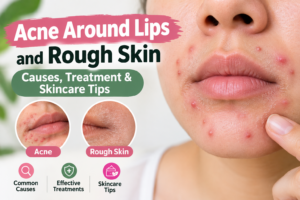
Acne vs. Rough Skin Around the Lips
It is important to understand that acne around the lips and rough, irritated skin are not necessarily the same problem.
Acne may include:
- Whiteheads
- Blackheads
- Inflamed pimples
- Tender bumps
- Pus-filled spots
- Clogged pores
Dry or irritated skin may include:
- Flaking
- Tightness
- Burning
- Rough texture
- Redness
- Peeling
Some people can have both acne and irritation at the same time. For example, aggressive acne treatments may improve pimples but leave the surrounding skin excessively dry.
How to Treat Acne Around the Lips
Treatment depends on the type and severity of the breakout.
1. Use a Gentle Cleanser
Wash your face with a mild, fragrance-free cleanser.
Avoid scrubbing the skin aggressively. Scrubbing can irritate the skin barrier and may make redness and roughness worse.
Cleanse gently, particularly around the sensitive mouth area.
2. Try Salicylic Acid for Clogged Pores
Salicylic acid is commonly used in acne skincare because it can help exfoliate inside pores and reduce buildup.
If you have sensitive or rough skin around the mouth, start cautiously and avoid applying strong products directly to the lips.
Using too much salicylic acid can increase dryness and irritation.
3. Consider Benzoyl Peroxide for Inflammatory Acne
Benzoyl peroxide can help reduce acne-causing bacteria and inflammatory pimples.
However, the skin around the mouth can be particularly sensitive. Keep acne treatments away from the lips and use them only as directed.
If your skin becomes excessively dry, burning, or irritated, stop and seek professional advice.
4. Moisturize Regularly
Moisturizing is especially important if your skin is rough or dry.
Choose a gentle moisturizer that is:
- Fragrance-free
- Suitable for sensitive skin
- Non-comedogenic when possible
- Comfortable on your skin
A healthy skin barrier can make the skin less vulnerable to irritation.
5. Wear Sunscreen
Daily sunscreen can help protect the skin from ultraviolet radiation and prevent post-acne marks from becoming more noticeable.
Choose a broad-spectrum sunscreen that feels comfortable on your skin and does not trigger breakouts.
How to Get Rid of Rough Skin Around the Lips
If roughness is caused by dryness or irritation, the best approach is usually to simplify your skincare routine.
Step 1: Stop Harsh Products
Temporarily avoid strong exfoliating acids, scrubs, fragranced products, and other products that cause burning or irritation.
Step 2: Use a Gentle Moisturizer
Apply moisturizer regularly to support the skin barrier.
Step 3: Avoid Picking
Picking flakes or bumps can cause additional irritation and may increase the risk of marks or infection.
Step 4: Protect the Area
Cold weather, wind, and dry air can worsen rough skin. Protect your face from harsh environmental conditions when possible.
Step 5: Give Your Skin Time
Damaged skin does not always recover overnight. A simple routine used consistently may be more helpful than repeatedly adding new products.
Skincare Routine for Acne Around the Mouth
A simple routine can help prevent unnecessary irritation.
Morning
1. Gentle cleanser:
Wash your face without scrubbing.
2. Lightweight moisturizer:
Apply a gentle moisturizer to support the skin barrier.
3. Sunscreen:
Use broad-spectrum sunscreen as the final skincare step.
Evening
1. Cleanser:
Remove makeup, sunscreen, oil, and dirt.
2. Acne treatment:
If appropriate for your skin, use an acne treatment according to product directions or your dermatologist’s recommendations.
3. Moisturizer:
Finish with a gentle moisturizer.
If your skin becomes increasingly dry, burning, or flaky, simplify the routine rather than adding more active ingredients.
Skincare Mistakes That Can Make Acne Around Lips Worse
Some common habits can increase irritation.
Over-Exfoliating
Using scrubs, acids, or exfoliating tools too frequently can damage the skin barrier.
Picking Pimples
Squeezing or picking pimples can increase inflammation and may contribute to dark marks and scarring.
Using Too Many Products
Adding several acne treatments at once makes it difficult to know what is helping and what is causing irritation.
Using Harsh Soap
Strong cleansers can strip the skin of natural oils and make roughness worse.
Applying Acne Products Directly on the Lips
The lips are more sensitive than normal facial skin. Keep acne medications away from the actual lip surface unless specifically instructed otherwise.
Ignoring Irritation
If a skincare product causes significant burning, swelling, or worsening redness, do not assume that the irritation means the product is “working.”
Natural Remedies for Rough Skin Around the Lips
Many people search for home remedies for acne around the lips, but natural does not automatically mean safe.
Avoid applying irritating ingredients such as lemon juice, baking soda, toothpaste, or undiluted essential oils to facial skin. These can cause irritation and worsen the skin barrier.
A safer approach is to keep the routine simple:
- Use a gentle cleanser
- Apply a fragrance-free moisturizer
- Avoid licking the lips
- Avoid picking
- Protect your skin from excessive sun exposure
- Stop products that clearly irritate the area
If the problem continues, professional diagnosis is better than repeatedly experimenting with home remedies.
How to Prevent Acne Around the Lips
Prevention starts with identifying your personal triggers.
Keep Your Skincare Simple
A consistent routine with a gentle cleanser, moisturizer, and sunscreen may be enough for many people.
Choose Non-Comedogenic Products
When possible, choose products labeled non-comedogenic, particularly if you are prone to clogged pores.
Clean Makeup Tools
Wash makeup brushes and applicators regularly to reduce buildup of oil and residue.
Remove Makeup Before Bed
Sleeping with makeup can contribute to clogged pores and irritation.
Avoid Touching Your Face
Frequent touching can transfer oil, dirt, and irritants to the skin.
Do Not Pick
Allow pimples to heal rather than squeezing them.
When Should You See a Dermatologist?
Occasional pimples are common, but persistent or unusual irritation deserves professional attention.
Consider seeing a dermatologist if:
- Acne keeps returning around the mouth
- The area is very painful
- Skin is severely red or swollen
- You have persistent burning or itching
- The skin is repeatedly peeling
- You develop pus-filled lesions
- Breakouts leave significant dark marks or scars
- Your condition does not improve with gentle skincare
- You are unsure whether the bumps are acne
A dermatologist can determine whether the problem is acne, irritation, perioral dermatitis, contact dermatitis, or another skin condition.
Frequently Asked Questions
Why am I getting acne around my lips?
Acne around the lips can be related to clogged pores, hormonal changes, cosmetics, skincare products, or irritation. Not every bump in this area is acne, so persistent symptoms should be evaluated.
How do I get rid of acne around my mouth fast?
Avoid picking or squeezing the pimples. Use a gentle cleanser, appropriate acne treatment, moisturizer, and sunscreen. If the bumps are persistent or worsening, see a dermatologist rather than repeatedly trying new products.
Why is the skin around my lips rough and dry?
Rough skin may result from a damaged skin barrier, cold weather, frequent lip licking, harsh skincare products, excessive exfoliation, or irritation. Simplifying your routine and moisturizing regularly may help.
Can toothpaste cause acne around the mouth?
Toothpaste residue may irritate the skin around the mouth in some people. If irritation consistently occurs after brushing, gently rinse the surrounding skin and discuss persistent symptoms with a healthcare professional.
Is perioral dermatitis the same as acne?
No. Perioral dermatitis can look like acne because it may cause small bumps around the mouth, but it is a different skin condition. Some acne treatments may irritate it, so an accurate diagnosis is important.
Should I exfoliate rough skin around my lips?
Be careful with exfoliation. If the skin is already irritated, peeling, or burning, additional exfoliation may make the problem worse. Focus on gentle cleansing and moisturizing until the skin barrier improves.
Final Thoughts
Acne around the lips and rough skin can have several causes, from clogged pores and hormonal changes to dry skin, product irritation, and conditions such as perioral dermatitis. Because these problems can look similar, identifying the underlying cause is more important than simply using stronger acne products.
Start with a simple skincare routine: use a gentle cleanser, moisturize regularly, protect your skin with sunscreen, and avoid picking or aggressively exfoliating the area. Introduce acne treatments carefully, especially because the skin around the lips can be sensitive.
If redness, bumps, dryness, burning, or irritation continues despite gentle skincare, consider seeing a dermatologist. Professional diagnosis can help you choose the right treatment and prevent unnecessary irritation.
Healthy skin does not require dozens of products. A consistent, gentle skincare routine and understanding your skin’s triggers can make a significant difference.