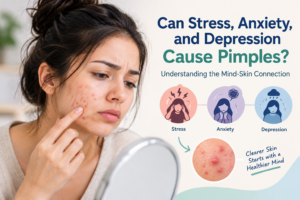

Can Stress, Anxiety, and Depression Cause Pimples? Understanding the Mind-Skin Connection
Key Takeaways
- Stress, anxiety, and depression may worsen existing acne by affecting oil production, inflammation, sleep, and everyday skincare habits.
- Acne can also affect mental health, contributing to stress, embarrassment, low self-esteem, and social anxiety.
- Stress-related breakouts can be managed with a consistent skincare routine, healthy lifestyle habits, and appropriate acne treatments.
- Treating both acne and emotional distress can support better skin health and overall well-being.
- Persistent acne or ongoing anxiety and depression may require help from a dermatologist or qualified mental health professional.
Introduction
Have you ever noticed new pimples appearing before an important event, during a stressful week, or after several nights of poor sleep? These changes may not be a coincidence. Your emotional well-being and skin health are connected through a relationship often called the mind-skin connection.
Stress is a normal part of life, but prolonged emotional pressure can affect the body in several ways. For people who are already prone to acne, these changes may contribute to more frequent breakouts, increased inflammation, and slower skin healing.
Acne can also affect how you feel about yourself. Visible pimples, painful blemishes, and lingering acne marks may cause embarrassment or frustration. When breakouts create emotional distress, that stress may further aggravate existing skin problems.
Understanding this connection can help you develop a more effective approach to acne management. In this guide, we explain how stress, anxiety, and depression may influence pimples, which habits can make breakouts worse, and what you can do to support healthier skin.
What Is the Mind-Skin Connection?
The mind-skin connection describes the relationship between psychological well-being and the condition of your skin. It is studied in a medical field known as psychodermatology, which explores how skin conditions and emotional health can influence one another.
The skin is not separate from the rest of your body. Hormones, immune responses, inflammation, and nervous system activity can all influence its condition.
When you experience emotional stress, your body activates its stress-response system. This response can affect hormone signaling and inflammatory processes, potentially making certain skin conditions more difficult to manage.
Acne is one example. Stress does not necessarily cause acne on its own, because breakouts also involve clogged pores, excess oil, bacteria, hormones, and genetic factors. However, stress may aggravate acne in people who are already susceptible.
The same broader relationship can affect people living with eczema, psoriasis, and other chronic skin conditions. Visible or uncomfortable skin symptoms may affect confidence and social relationships, creating additional emotional pressure.
Youtube Video
How Does Stress Make Pimples Worse?
Stress can influence acne through several overlapping mechanisms. The effects vary from person to person, but the following factors may contribute to stress-related breakouts.
1. Increased Oil Production
Your skin contains sebaceous glands that produce sebum, an oily substance that helps protect and lubricate the skin.
During periods of stress, the body releases stress-related hormones, including cortisol. Stress signaling may influence sebaceous gland activity and contribute to changes in oil production.
When excess oil combines with dead skin cells inside hair follicles, pores can become clogged. This creates an environment where acne lesions may develop.
People with naturally oily or acne-prone skin may notice that their complexion becomes shinier or that existing pimples become more noticeable during stressful periods.
However, increased oil production is not the only explanation for acne. Hormonal changes, genetics, skincare products, and other factors can also contribute.
2. Increased Inflammation
Inflammation plays an important role in the development of acne. Stress can influence immune system activity and the body’s inflammatory responses, potentially aggravating existing blemishes.
Inflamed pimples may appear red, swollen, tender, or painful. Some deeper acne lesions can remain noticeable for longer and may increase the risk of scarring.
Chronic stress may also interfere with the skin’s normal repair processes. As a result, some blemishes may take longer to settle, although healing time depends on the severity and type of acne.
Avoid squeezing inflamed pimples, as picking can increase irritation and raise the risk of scars and dark marks.
3. Touching or Picking at Your Skin
When people feel anxious, bored, or overwhelmed, they may touch their faces more frequently without realizing it.
Repeatedly rubbing, squeezing, or picking at pimples can irritate the surrounding skin. It may also introduce dirt and bacteria from your hands and damage healing tissue.
Picking can make existing blemishes look worse and may lead to persistent discoloration or scarring.
If you frequently touch your face during stressful moments, try keeping your hands occupied with another activity. Keeping your nails short and avoiding prolonged mirror checking may also help.
If picking feels difficult to control, particularly when you are anxious, a mental health professional can help you develop strategies to manage the behavior.
4. Skipping Your Skincare Routine
Managing acne requires consistency, but stress can make daily self-care feel difficult.
You might forget to wash your face before bed, sleep in makeup, skip moisturizer, or stop using an acne treatment because you feel discouraged.
These changes can interfere with your usual skincare habits and may contribute to irritation or additional breakouts.
A complicated routine can also become overwhelming when you are dealing with emotional pressure.
Instead, focus on a simple routine that includes gentle cleansing, a suitable moisturizer, sunscreen during the day, and your recommended acne treatment.
Many acne treatments require several weeks to show noticeable improvement. Depending on the treatment, visible results may take two to three months or longer.
5. Changes in Sleep, Diet, and Exercise
Stress can affect daily habits that support overall health, including sleep, eating patterns, and physical activity.
Poor sleep may influence hormonal regulation, immune function, and the body’s recovery processes. Although a lack of sleep does not automatically cause acne, it may make breakouts harder to manage for some people.
Stress can also lead to changes in eating habits. Some research suggests that high-glycemic foods, which can rapidly raise blood sugar, may aggravate acne in certain individuals. However, dietary effects vary, and no single food explains every breakout.
Regular physical activity may support stress management and improve sleep quality. If you exercise, gently cleanse your skin afterward when needed and avoid leaving sweat-soaked clothing against acne-prone areas for long periods.
A balanced diet, sufficient sleep, and manageable exercise routine can support general well-being without replacing appropriate acne treatment.
Can Anxiety and Depression Cause Pimples?
Anxiety and depression are complex conditions, and they do not affect everyone’s skin in the same way.
Anxiety may involve persistent worry, physical tension, disrupted sleep, and changes in everyday routines. These effects can indirectly contribute to acne flare-ups in susceptible people.
Depression may make personal care more difficult. Someone experiencing low energy or a loss of motivation may struggle to maintain a skincare routine, prepare balanced meals, or follow an established treatment plan.
Both conditions can also increase emotional sensitivity to visible skin changes. A small breakout may feel especially distressing when someone is already struggling with confidence or mood.
It is important to understand that anxiety and depression are not personal failures, and acne is not evidence that someone has poor mental health. Many factors influence both conditions, and professional support can help when symptoms become difficult to manage.
How Acne Can Affect Mental Health
The relationship between acne and emotional well-being works in both directions. Stress may aggravate acne, while persistent breakouts can create additional emotional distress.
Low Self-Esteem and Appearance Concerns
Acne can affect how people feel about their appearance, especially when pimples are painful, widespread, or leave visible marks.
Some individuals become overly concerned about how others perceive their skin. They may spend excessive time checking their reflection, covering blemishes, or comparing their appearance with edited photographs online.
These experiences can gradually affect confidence and self-image.
Social Anxiety and Avoidance
People with noticeable acne may worry that others are staring at their skin or judging their appearance.
This concern can make social situations, photographs, work meetings, school activities, or special occasions feel uncomfortable. Some individuals may avoid these situations altogether.
If acne-related fears interfere with daily activities or relationships, speaking with a mental health professional may help.
Stress From Persistent Breakouts
Acne treatments do not always produce immediate results. It can be frustrating to follow a routine for weeks without seeing the improvement you expected.
This frustration may lead to frequent product changes, excessive cleansing, or the use of multiple strong ingredients at once. Such habits can irritate the skin and make treatment more difficult.
Remember that acne is a common medical skin condition. Improvement often takes time, and needing treatment does not mean you have done anything wrong.
If acne is affecting your mood, confidence, or quality of life, tell your healthcare provider. Emotional distress deserves attention alongside the physical symptoms.
Can Mental Health Medications Make Acne Worse?
Some prescription medications used to treat mental health conditions may cause acne-like eruptions or other skin changes in certain individuals. Lithium, for example, is associated with acneiform eruptions in some patients.
However, medication-related skin reactions vary depending on the drug, dosage, individual sensitivity, and other factors. A breakout does not automatically mean your mental health medication is responsible.
If your skin changes after starting a medication or adjusting a dose, speak with the prescribing clinician or a dermatologist. They can assess possible causes and recommend suitable treatment.
Never stop, reduce, or change a prescribed mental health medication without medical guidance. Abruptly stopping some medications can cause withdrawal symptoms or a return of the condition being treated.
Your healthcare provider can help balance your mental health needs with an appropriate plan for managing your skin.
How to Manage Stress-Related Pimples
Managing stress-related acne usually involves addressing both skin care and the habits that influence emotional well-being.
Follow a Gentle Skincare Routine
Wash your face with a gentle cleanser suited to your skin type. Avoid harsh scrubs, aggressive exfoliation, and excessive washing, which can irritate the skin.
Choose a moisturizer labeled non-comedogenic if you are prone to clogged pores. During the day, use broad-spectrum sunscreen with SPF 30 or higher.
Depending on your needs, an acne treatment containing benzoyl peroxide or a topical retinoid may be appropriate. Some treatments can cause dryness or irritation, so introduce products carefully and follow professional advice, especially if you have sensitive skin or are pregnant or planning pregnancy.
Avoid starting several active ingredients at once. A simple, consistent routine is often easier to maintain.
Practice Stress-Management Techniques
You cannot eliminate every source of stress, but you can develop habits that make stressful periods easier to handle.
Consider trying:
- Slow, controlled breathing for a few minutes.
- Mindfulness or meditation.
- Journaling about difficult thoughts and experiences.
- Spending time outdoors.
- Talking with supportive friends or family members.
- Taking short breaks during demanding tasks.
Choose activities that fit your lifestyle rather than adding another demanding task to your schedule.
Prioritize Quality Sleep
Most adults benefit from approximately seven to nine hours of sleep each night.
Try maintaining a consistent bedtime and wake-up time, limiting caffeine later in the day, and reducing stimulating screen use before bed.
Better sleep can support mood, concentration, and general health. Although it is not a guaranteed acne treatment, it may help you manage stress more effectively.
Stay Physically Active
Walking, cycling, swimming, and other enjoyable activities can help reduce stress and support overall well-being.
You do not need an intense workout to benefit from movement. Start with an activity that feels manageable and increase your routine gradually.
After exercise, cleanse your skin gently if it is sweaty. Avoid rough towels, tight equipment that repeatedly rubs acne-prone areas, and unnecessary picking.
Seek Professional Help When Needed
If acne continues despite consistent care, a dermatologist can help identify the type and severity of your acne and recommend appropriate treatment.
If anxiety, depression, or stress is affecting your sleep, relationships, work, or daily activities, consider speaking with a qualified mental health professional.
Depending on your needs, treatment may involve counseling, medication, dermatological care, or a combination of approaches.
If you experience thoughts of suicide or feel that you may harm yourself, seek immediate help from local emergency services or a crisis support service.
When Should You See a Dermatologist?
Occasional pimples are common, but some symptoms indicate that professional assessment may be helpful.
Consider scheduling an appointment if you experience:
- Deep, painful, or cyst-like acne lesions.
- Breakouts that leave scars or persistent dark marks.
- Acne that does not improve with appropriate over-the-counter treatment.
- Sudden or severe changes in your skin.
- Significant irritation from acne products.
- Emotional distress that affects your daily life.
A dermatologist can help determine whether your breakouts are related to acne, medication effects, hormonal changes, or another skin condition.
Seek help early if acne is affecting your emotional health. You do not need to wait until your skin becomes severe before asking for support.
Frequently Asked Questions
1. Where Do Stress-Related Pimples Usually Appear?
Stress-related breakouts can occur in the same areas as ordinary acne, including the forehead, cheeks, chin, nose, chest, shoulders, and back.
The location of a pimple alone cannot confirm that stress is the cause. Oil production, hormones, genetics, skincare products, and other factors may also influence where acne develops.
2. Can Stress Make Cystic Acne Worse?
Stress may aggravate existing inflammatory acne, including deep and painful lesions, in some people. However, cystic or nodular acne is influenced by several factors and should not be attributed to stress alone.
Deep, painful acne can cause scarring, so professional dermatological treatment is often worthwhile.
3. What Do Stress Pimples Look Like?
Stress-related pimples do not have one specific appearance. They may look like red bumps, inflamed pimples, whiteheads, or deeper painful lesions.
Because these symptoms resemble other types of acne, it is not possible to identify stress as the cause based on appearance alone.
4. How Long Do Stress-Related Breakouts Last?
The duration depends on the type of acne, its severity, and the treatment being used. Some small pimples settle within days, while deeper lesions may take weeks to improve.
If breakouts continue, become painful, or leave scars, consult a dermatologist instead of relying only on stress management.
5. Can Treating Anxiety Improve Acne?
Managing anxiety may help reduce stress-related behaviors, improve sleep, and make it easier to maintain a consistent skincare routine. These changes may support acne management.
However, anxiety treatment does not guarantee clear skin. Many people also need acne-specific medication or dermatological care.
6. Should I Change My Skincare Products When I Feel Stressed?
Not necessarily. Frequently switching products can irritate your skin and make it difficult to identify what works.
Try to maintain a gentle routine during stressful periods. If your skin becomes unusually sensitive or your acne worsens, review your products with a dermatologist.
Conclusion
Stress, anxiety, depression, and acne can influence one another in ways that affect both physical appearance and emotional well-being. Stress may aggravate existing breakouts through changes in oil production, inflammation, sleep, and skincare habits. At the same time, persistent acne can contribute to low confidence, social discomfort, and additional stress.
The most practical approach is to care for both your skin and your mental health. Maintain a gentle skincare routine, get enough sleep, stay physically active, and use stress-management strategies that work for you.
If acne persists or emotional symptoms become difficult to manage, seek professional guidance. With an appropriate treatment plan and consistent support, it is possible to improve acne management while protecting your overall well-being.
Disclaimer: This article is for educational purposes only and is not a substitute for professional medical advice, diagnosis, or treatment.