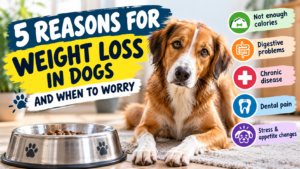

5 Reasons for Weight Loss in Dogs: Causes, Warning Signs, and What to Do
Key Takeaways
- Unexplained weight loss in dogs can result from insufficient calorie intake, digestive problems, chronic disease, dental pain, or changes in appetite and routine.
- If your dog is losing weight despite eating normally, an underlying medical condition could be affecting nutrient absorption or metabolism.
- Regularly monitoring your dog’s weight, food intake, and body condition can help you identify changes early.
- Persistent or unexplained weight loss should be assessed by a veterinarian rather than treated simply by increasing food portions.
Introduction
Have you noticed that your dog is getting thinner even though you haven’t intentionally changed their diet? Unexplained weight loss in dogs is a symptom that deserves attention. Although small fluctuations can occur because of changes in activity, appetite, or routine, ongoing weight loss may indicate an underlying nutritional or medical problem.
One common mistake dog owners make is assuming their pet simply needs more food. While insufficient calorie intake can certainly cause weight loss, other factors may be responsible, including digestive disorders, poor nutrient absorption, chronic illness, and dental pain.
Understanding the possible causes can help you take the right steps to protect your dog’s health.
In this guide, we’ll explore the five most common reasons dogs lose weight, the warning signs to watch for, and when to seek veterinary advice.
1. Your Dog Is Not Getting Enough Calories
One of the possible causes of weight loss in dogs is inadequate calorie intake. Dogs need enough energy to maintain their body weight, support their muscles, and fuel their daily activities.
However, the amount of food a dog needs varies depending on age, breed, size, activity level, body condition, and health status.
A dog may gradually lose weight if their meals do not provide enough calories to meet their individual needs. This can happen when feeding portions are estimated rather than weighed, treats replace too much of their regular food, or a lower-calorie diet is introduced without adjusting portion sizes.
Dogs that are particularly active, growing, or recovering from illness may have different nutritional requirements from less active adult dogs.
Youtube Video
Signs Your Dog May Not Be Eating Enough
Look out for these possible signs:
- Gradual weight loss despite appearing otherwise healthy
- More prominent ribs, spine, or hip bones
- Reduced muscle mass
- Persistent hunger between meals
- Meals left unfinished or inconsistent eating habits
Keep in mind that increased hunger combined with weight loss can also indicate a medical problem.
How to Help Your Dog Maintain a Healthy Weight
Start by reviewing your dog’s current feeding routine.
- Weigh your dog regularly and record changes.
- Measure food portions using a kitchen scale.
- Check the calorie content of your dog’s food.
- Include treats, chews, and food toppers when reviewing daily calorie intake.
- Ensure the main diet is complete and balanced for your dog’s life stage.
- Monitor body condition and muscle mass rather than relying on weight alone.
If your dog continues to lose weight despite receiving appropriate portions, arrange a veterinary examination.
You can also explore a guide to choosing the right dog food to better understand your pet’s nutritional needs.
2. Digestive Problems, Malabsorption, or Exocrine Pancreatic Insufficiency (EPI)
Sometimes, a dog loses weight even when they have a healthy appetite. In these cases, the problem may involve how the body digests food or absorbs nutrients.
Digestive disorders can interfere with the absorption of protein, fats, vitamins, and other essential nutrients. As a result, a dog may eat enough food but still struggle to maintain a healthy weight.
One condition to be aware of is exocrine pancreatic insufficiency (EPI). Dogs with EPI do not produce enough digestive enzymes from the pancreas, making it difficult to break down and absorb nutrients properly.
Other possible causes include chronic intestinal disease, parasites, and certain gastrointestinal disorders.
Symptoms of Digestive Problems in Dogs
Possible warning signs include:
- Weight loss despite a normal or increased appetite
- Persistent or recurring diarrhoea
- Large or unusually frequent stools
- Pale, greasy, or bulky stools
- Excessive gas
- Poor coat condition
- Increased hunger
- Occasional vomiting
Not every dog will develop all these symptoms. Some digestive conditions initially cause only subtle changes.
What Should You Do?
If your dog is eating well but becoming thinner, speak to your veterinarian. Depending on the symptoms, your vet may recommend blood tests, faecal testing, pancreatic function tests, vitamin B12 testing, or further gastrointestinal investigations.
Treatment depends on the underlying cause. Some dogs benefit from a highly digestible complete diet, while others may require specific nutritional adjustments, medication, digestive enzyme supplementation, or treatment for parasites.
Avoid repeatedly switching foods without identifying the problem, as this may make symptoms harder to assess.
For more information, read this guide to EPI in dogs: symptoms, diagnosis, and diet.
3. Chronic Disease and Underlying Medical Conditions
Unexplained weight loss can sometimes be an early sign of an underlying illness. Certain diseases affect appetite, metabolism, digestion, or the body’s ability to use nutrients effectively.
Possible medical causes of weight loss in dogs include:
- Kidney disease
- Liver disease
- Diabetes mellitus
- Addison’s disease
- Chronic infections
- Cancer
- Other metabolic or systemic disorders
Some conditions cause dogs to eat less, while others can lead to weight loss even when appetite remains normal or increases.
For example, a dog with diabetes may lose weight because the body cannot use glucose normally. Kidney disease can affect appetite and overall health, while certain chronic illnesses can contribute to muscle breakdown.
Signs That May Accompany Disease-Related Weight Loss
Watch for changes such as:
- Increased thirst or urination
- Reduced appetite
- Vomiting or diarrhoea
- Low energy or unusual tiredness
- Muscle loss or weakness
- Changes in coat quality
- Behavioural changes
- Difficulty maintaining a healthy body condition
Older dogs may be particuthumbnillarly vulnerable to conditions that affect weight and muscle mass, but unexplained weight loss can occur at any age.
When to Contact Your Veterinarian
If your dog is losing weight without a clear explanation, arrange a veterinary appointment. Your vet can assess their body condition, review their medical history, and determine whether diagnostic tests are needed.
Nutritional support can play an important role in managing some illnesses, but the right diet depends on the diagnosis. A diet that helps one medical condition may be unsuitable for another.
For additional information, explore how to feed senior dogs and learn when a low-fat diet may be appropriate for dogs.
4. Dental Pain and Mouth Problems
Dental disease is another possible reason for weight loss in dogs. Even dogs that seem interested in food may eat less if chewing is uncomfortable or painful.
Broken teeth, gum disease, oral inflammation, mouth ulcers, and other dental problems can make eating difficult. Some dogs compensate by swallowing food quickly, avoiding harder foods, or eating smaller portions.
Because dogs often hide signs of pain, dental problems may go unnoticed until changes in eating habits or body weight become apparent.
Signs of Dental Pain in Dogs
Look for the following symptoms:
- Taking longer than usual to finish meals
- Dropping food while eating
- Chewing on one side of the mouth
- Avoiding hard kibble or chew toys
- Preferring soft food
- Bad breath
- Excessive drooling
- Pawing at the mouth
- Reduced interest in food
These symptoms do not always indicate dental disease, but they warrant investigation.
How to Help Your Dog
Arrange a veterinary dental examination if you suspect mouth pain. Your veterinarian can identify the cause and recommend appropriate treatment.
Soft food may make eating more comfortable temporarily, but it will not treat the underlying dental problem.
Maintaining good oral hygiene, including regular toothbrushing with dog-safe toothpaste, can help support long-term dental health.
5. Stress, Appetite Changes, and Frequent Diet Switching
Changes in routine, stress, and inconsistent feeding habits can contribute to reduced food intake and weight loss in some dogs.
Moving house, changes in the household, boarding, new pets, and other environmental changes may affect a dog’s appetite.
Repeatedly changing food or adding more treats and toppers can also make it difficult to understand how much your dog is actually eating. Some dogs may begin refusing their regular meals when offered more appealing alternatives.
However, it is important not to assume that a dog is simply fussy. Reduced appetite can also be caused by nausea, pain, digestive problems, or other medical conditions.
Signs That Feeding Habits or Stress May Be Contributing
You may notice:
- Skipping meals or eating smaller portions
- Reduced interest in regular food
- Changes in eating behaviour after a household disruption
- Frequent changes in food or feeding routines
- Filling up on treats instead of balanced meals
What Can You Do?
Try to maintain a consistent feeding routine and measure how much your dog actually eats. Keep treats and extras in moderation, and ensure that the main diet remains nutritionally complete.
Consider whether anything in your dog’s environment has changed recently.
If your dog continues to lose weight, refuses food, or develops vomiting, diarrhoea, lethargy, or changes in thirst, contact your veterinarian rather than treating the issue as simple fussiness.
You may also find these resources useful:
- Fussy dogs: causes and ways to improve appetite
- Dog food for allergies and intolerances
When Should You Worry About Weight Loss in Dogs?
A dog losing weight without a deliberate change in their feeding plan should be assessed, particularly when the weight loss is persistent or unexplained.
Contact your veterinarian if you notice:
- Continued weight loss despite adequate food intake
- Noticeable loss of muscle
- A sudden change in appetite
- Persistent vomiting or diarrhoea
- Increased thirst or urination
- Unusual tiredness or weakness
- Difficulty chewing or swallowing
- Weight loss in an older dog
Seek urgent veterinary care if your dog experiences collapse, severe weakness, difficulty breathing, repeated vomiting, bloody stools, or other severe symptoms.
There is no single percentage of weight loss that is safe for every dog. The significance depends on how quickly the weight is lost, your dog’s starting body condition, and any accompanying symptoms.
Do not wait for your dog to become visibly underweight before seeking advice.
How to Monitor Your Dog’s Weight at Home
Regular monitoring can help you identify changes before they become more serious.
Step 1: Weigh Your Dog Consistently
Use the same scales where possible and record the results. For small dogs, a pet scale may provide more reliable measurements.
Step 2: Check Body Condition
You should generally be able to feel your dog’s ribs beneath a thin layer of fat. Their waist should be visible from above, with an abdominal tuck when viewed from the side.
These features vary with breed, so your veterinarian can help determine your dog’s ideal body condition.
Step 3: Monitor Muscle Condition
Pay attention to changes around the spine, shoulders, hips, and thighs. A dog can lose muscle even when the change on the scale appears small.
Step 4: Record Food Intake and Symptoms
Keep a simple log of meals, treats, appetite, stools, water intake, and any unusual behaviour. This information can help your veterinarian identify patterns.
Frequently Asked Questions About Weight Loss in Dogs
Why is my dog losing weight but eating normally?
Weight loss despite a normal or increased appetite can occur with digestive disorders, poor nutrient absorption, EPI, diabetes, and other medical conditions. A veterinary examination is important to identify the cause.
Can changing dog food cause weight loss?
Yes. Switching to a food with fewer calories per serving, changing portion sizes, or feeding an unbalanced diet can contribute to weight loss. However, persistent weight loss should not automatically be attributed to food changes.
Can stress make a dog lose weight?
Yes. Stress can reduce appetite or disrupt normal feeding behaviour. However, stress should not be assumed to be the cause until medical problems have been considered.
Why is my older dog getting thinner?
Older dogs may lose muscle with age, but noticeable weight loss can also indicate dental disease, digestive problems, kidney disease, diabetes, cancer, or other illnesses. Unexplained weight loss in senior dogs warrants a veterinary check.
Should I feed my dog more if they are losing weight?
Not necessarily. Increasing calories may help if your dog is underfed, but it will not correct every cause of weight loss. Review their food intake and seek veterinary advice if the loss is unexplained, persistent, or accompanied by other symptoms.
How can I help my dog gain weight safely?
The safest approach is to identify why your dog is underweight before changing their diet. Your veterinarian can help determine an appropriate calorie target and whether a specific nutritional plan is needed.
Final Thoughts
The five key reasons for weight loss in dogs include insufficient calorie intake, digestive disorders and malabsorption, chronic disease, dental pain, and stress-related changes in appetite or feeding habits.
Although adjusting food portions can help some dogs, unexplained weight loss is not always a nutritional problem. It may be an important sign that something else is affecting your dog’s health.
Start by measuring your dog’s food accurately, tracking their weight, and reviewing their feeding routine. If the weight loss continues or occurs alongside other symptoms, arrange a veterinary assessment.
Once the underlying cause has been identified, a suitable feeding plan and targeted nutritional support can help your dog maintain a healthier body condition.
For further guidance on feeding and canine nutrition, explore the resources available at The Canine Dietitian.
This article is for general educational purposes and is not a substitute for veterinary diagnosis or treatment.