
Does Toothpaste Help Get Rid of Pimples? What Dermatologists Recommend
Key Takeaways
- Using toothpaste to treat pimples is not scientifically proven and may irritate your skin.
- Ingredients found in some toothpastes, including detergents and whitening agents, can cause dryness, redness, and inflammation.
- Toothpaste is designed for cleaning teeth, not treating acne or preventing clogged pores.
- Acne treatments containing benzoyl peroxide, salicylic acid, or topical retinoids are better-studied options.
- People with persistent, painful, or severe acne should consider consulting a dermatologist.
Introduction
A pimple can appear at the most inconvenient time, whether you are preparing for an important event, meeting friends, or getting ready for a special occasion. When a noticeable breakout appears overnight, it is tempting to look for a quick home remedy that promises to make it disappear.
One popular suggestion is applying toothpaste directly to a pimple. This traditional beauty trick has circulated online and through word of mouth for years. Some people believe toothpaste can dry out excess oil and shrink blemishes overnight.
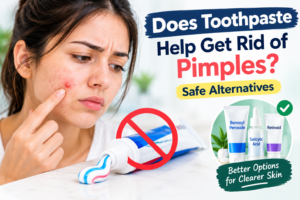
However, there is an important difference between a popular skincare tip and a treatment supported by scientific evidence. Toothpaste is formulated to clean and protect teeth, not to treat acne. Its ingredients may irritate the delicate skin on your face rather than improve the appearance of a breakout.
So, does toothpaste actually help get rid of pimples? Here is what you should know about the science, possible side effects, and safer alternatives for treating acne.
Why Do People Use Toothpaste on Pimples?
The idea of using toothpaste for acne probably comes from its ability to leave the mouth feeling clean and its reputation as a drying product.
Some toothpaste formulas contain ingredients that can dry surfaces or remove buildup. People have assumed that applying these products to a pimple might reduce excess oil and make the blemish smaller.
Another reason the myth has survived is that some people notice temporary changes after applying toothpaste. A pimple might look drier, but that does not mean the underlying acne has been treated.
Toothpaste may also cause redness, peeling, or irritation that changes the appearance of the affected area. These effects should not be mistaken for successful acne treatment.
There is no strong clinical evidence establishing ordinary toothpaste as a safe or effective treatment for pimples.
Youtube Video
What Ingredients Are Found in Toothpaste?
Toothpaste formulas differ by brand and product type. Understanding their common ingredients helps explain why a product designed for oral care may not be suitable for facial skin.
1. Fluoride
Fluoride is a mineral used in many toothpastes to help strengthen tooth enamel and prevent cavities.
Although it serves an important purpose in dental care, fluoride toothpaste is not formulated to treat acne. Applying it to facial blemishes offers no established acne-fighting benefit.
2. Abrasives
Toothpastes often contain mild abrasive ingredients that help remove plaque and surface stains from teeth.
Facial skin is more delicate than tooth enamel. Products containing abrasive particles are not intended to scrub pimples and may aggravate already irritated skin if used improperly.
3. Detergents
Some toothpastes contain foaming agents, such as sodium lauryl sulfate or related cleansing ingredients. These help spread the toothpaste and remove debris during brushing.
Depending on the formula and the individual’s sensitivity, these ingredients may contribute to dryness or irritation when they come into contact with facial skin.
4. Flavoring Agents
Mint, menthol, and other flavoring ingredients give toothpaste its familiar taste and sensation.
Some of these ingredients can irritate sensitive skin, particularly when a product is left on the face for an extended period.
5. Whitening Ingredients
Certain whitening toothpastes contain peroxide-based ingredients or other substances intended to help remove stains from teeth.
These formulas are not designed for acne treatment. Applying them to pimples can cause irritation, especially when the skin is already inflamed or damaged.
The exact ingredients vary, so not every toothpaste will have the same effects. Nevertheless, the overall concern remains: toothpaste is not a substitute for a properly formulated acne product.
What Does Science Say About Toothpaste for Acne?
There is insufficient scientific evidence to recommend toothpaste as a treatment for pimples. Dermatology guidance generally advises against this home remedy because toothpaste can irritate the skin.
Acne develops when hair follicles become clogged with oil and dead skin cells. Bacteria, inflammation, hormones, and genetic factors can also contribute to breakouts.
An effective acne treatment is selected to address one or more of these processes. Toothpaste is not formulated or clinically established for this purpose.
A product that works well on hard tooth enamel does not automatically work well on living skin. The skin has a protective barrier that helps retain moisture and defend against irritants. Harsh or unsuitable products may disrupt this barrier.
When the skin becomes irritated, it may feel tight, sting, peel, or develop redness. People with sensitive skin may be particularly vulnerable to these reactions.
For this reason, dermatologists generally recommend using products specifically designed and tested for acne-prone skin.
Possible Side Effects of Putting Toothpaste on Pimples
Although a small amount of toothpaste may not cause a serious reaction in everyone, using it as a facial treatment can create several problems.
Skin Irritation and Redness
Toothpaste ingredients may trigger irritation, causing the affected area to look red or inflamed. This can make a pimple more noticeable instead of less noticeable.
Dryness and Peeling
Some toothpaste ingredients can strip moisture from the skin. Excessive dryness may cause flaking, tightness, and discomfort.
Dry skin is not necessarily healthier skin, and drying out a pimple does not guarantee that the clogged follicle will clear.
Burning or Stinging
Leaving toothpaste on the face for an extended period may cause burning or stinging, particularly if the product contains irritating flavorings, detergents, or whitening ingredients.
If this happens, remove the product gently with lukewarm water and stop using it on your skin.
Dark Marks After Inflammation
Skin irritation can sometimes leave lingering discoloration, particularly in people whose skin is prone to post-inflammatory hyperpigmentation.
These marks may take weeks or months to fade. Picking, squeezing, or repeatedly irritating a blemish can increase the risk.
Worsening Existing Acne
An unsuitable product may aggravate the surrounding skin without treating the underlying acne. This can make an existing breakout more uncomfortable and complicate your skincare routine.
If toothpaste causes significant swelling, blistering, severe pain, or persistent symptoms, seek medical advice.
What Are the Best Alternatives to Toothpaste for Pimples?
If you want to treat a breakout, several acne-specific ingredients have better evidence supporting their use.
1. Benzoyl Peroxide
Benzoyl peroxide helps reduce acne-causing bacteria and inflammation. It is available in various over-the-counter products, including cleansers and leave-on treatments.
Lower-strength products may be a reasonable starting point for some people because benzoyl peroxide can cause dryness and irritation. Follow the product instructions and introduce it gradually if appropriate.
It can also bleach fabrics, so keep it away from colored towels and pillowcases.
2. Salicylic Acid
Salicylic acid helps exfoliate the inside of clogged pores and may be useful for blackheads, whiteheads, and mild acne.
It is available in cleansers, gels, and other skincare products. Using too much can cause dryness, so avoid combining several irritating treatments without professional guidance.
3. Topical Retinoids
Topical retinoids, such as adapalene, help prevent clogged pores and treat certain types of acne. Some are available over the counter, while others require a prescription depending on the product and location.
These treatments can cause irritation and increased sun sensitivity. Follow the directions carefully and seek medical advice before using retinoids during pregnancy or when planning pregnancy.
4. Topical Antibiotics
Dermatologists may prescribe topical antibiotics for selected cases of inflammatory acne.
These medicines are not suitable for everyone and should be used under medical guidance. Antibiotics are generally combined with other appropriate acne treatments to help reduce the risk of antibiotic resistance.
5. Tea Tree Oil Products
Some research suggests that appropriately formulated tea tree oil products may help certain people with mild acne. However, the evidence is more limited than for several established acne treatments.
Undiluted tea tree oil can irritate the skin and cause allergic reactions. Avoid applying concentrated essential oils directly to pimples, and discontinue use if irritation develops.
How to Care for a Pimple Safely at Home
A simple, consistent skincare routine is often more helpful than experimenting with household products.
Cleanse gently. Wash your face with a mild cleanser suited to your skin type. Avoid vigorous scrubbing, which can increase irritation.
Use an appropriate acne treatment. Choose an over-the-counter product with an ingredient suited to your type of acne. Follow the label instructions and avoid starting multiple strong products at once.
Moisturize your skin. A non-comedogenic moisturizer can help maintain the skin barrier without unnecessarily clogging pores.
Protect your skin from the sun. Use broad-spectrum sunscreen with SPF 30 or higher during the day. Sun protection is particularly important if you are using treatments that increase sensitivity or if your acne leaves dark marks.
Avoid squeezing pimples. Picking can increase inflammation and raise the risk of infection, discoloration, and scarring.
Be patient with treatment. Many acne treatments take several weeks to show improvement. Changing products every few days may irritate your skin and make it difficult to determine what works.
When Should You See a Dermatologist?
Occasional pimples can often be managed with suitable over-the-counter products. However, professional treatment may be necessary when acne is persistent or severe.
Consider seeing a dermatologist if you experience deep, painful blemishes, frequent breakouts, acne scars, or skin discoloration that does not improve.
You should also seek advice if over-the-counter treatments cause significant irritation or fail to improve your skin after consistent use.
A dermatologist can assess your acne and recommend an individualized plan. Depending on the severity, treatment may include prescription creams, oral medications, or other procedures.
Seeking treatment early may help reduce the risk of long-term scarring.
Frequently Asked Questions
Does toothpaste get rid of pimples overnight?
No reliable scientific evidence shows that toothpaste can safely eliminate pimples overnight. It may dry or irritate the skin without treating the underlying acne. Acne-specific treatments are better options.
Which toothpaste is best for acne?
No toothpaste is recommended as an acne treatment. Whitening, mint-flavored, and ordinary fluoride toothpastes are designed for oral care rather than treating clogged pores.
Can toothpaste make pimples worse?
Yes. Depending on its ingredients and your skin sensitivity, toothpaste may cause redness, dryness, peeling, or irritation. In some cases, inflammation may leave dark marks.
How long should I leave toothpaste on a pimple?
It is best not to apply toothpaste to pimples at all. Leaving it on your skin for longer does not make it a proven acne treatment and may increase irritation.
What is the fastest safe way to treat a pimple?
There is no guaranteed way to make every pimple disappear immediately. A suitable acne treatment, a gentle skincare routine, and avoiding picking can help. A dermatologist can recommend additional options for painful or persistent blemishes.
Is toothpaste safe for sensitive skin?
Toothpaste is not designed for facial skin, and people with sensitive skin may be more likely to experience irritation. Use skincare products formulated for your skin type instead.
Conclusion
Using toothpaste to get rid of pimples may sound like an easy and inexpensive solution, but it is not supported by strong scientific evidence. Ingredients that help clean teeth can irritate facial skin, leading to dryness, redness, peeling, or lingering dark marks.
A safer approach is to choose acne treatments formulated for skin, such as benzoyl peroxide, salicylic acid, or an appropriate topical retinoid. Introduce products carefully, maintain a gentle routine, and give treatments enough time to work.
If your acne is painful, persistent, or leaving scars, consult a dermatologist for personalized advice.
Your skin does not need harsh household remedies to become healthier. Consistent care and evidence-based treatment are better places to start.
Medical Disclaimer: This article is for educational purposes only and should not replace professional medical advice, diagnosis, or treatment.