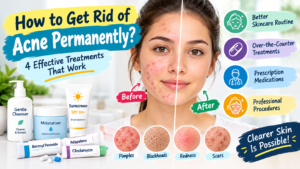

How to Get Rid of Acne Permanently: 4 Effective Treatments That Work
Introduction
Acne is one of the most common skin conditions, affecting teenagers and adults worldwide. Whether you experience occasional pimples, persistent blackheads, painful cysts, or recurring breakouts, dealing with acne can be frustrating. It can also affect your confidence, emotional well-being, and daily life.
Finding the right acne treatment is not always easy. Some skincare products may improve your skin, while others may cause irritation or fail to deliver the expected results. Fortunately, several effective approaches can help reduce acne, prevent new breakouts, and improve your skin’s appearance.
The best way to treat acne depends on its type, severity, underlying causes, and your skin’s sensitivity. Some people achieve clearer skin with a gentle skincare routine and over-the-counter products, while others need prescription medications or professional dermatological treatments.
Although no treatment can guarantee that acne will never return, the right combination of treatments and maintenance skincare can help many people achieve long-term control.
In this guide, you will learn how to get rid of acne permanently, which treatments may work best, how lifestyle habits influence breakouts, and when to consult a dermatologist.
Key Takeaways
- A consistent skincare routine can help reduce acne and prevent clogged pores.
- Benzoyl peroxide, salicylic acid, and adapalene are common ingredients used to treat acne.
- Prescription treatments may be necessary for persistent, inflammatory, or severe acne.
- Diet may influence breakouts in some individuals, particularly diets high in refined carbohydrates.
- Professional procedures can help treat selected acne lesions, discoloration, and scars.
- Most acne treatments require several weeks to show noticeable improvement.
- Maintenance treatment may be necessary to prevent acne from returning.
What Causes Acne?
Acne develops when hair follicles become blocked with excess oil, dead skin cells, and other debris. Inflammation within these follicles can produce different types of blemishes, including blackheads, whiteheads, red pimples, and pus-filled bumps.
Several factors contribute to acne development.
Youtube Video
1. Excess Oil Production
The skin contains sebaceous glands that produce sebum, a natural oil that helps protect and lubricate the skin.
When these glands produce excessive oil, sebum can combine with dead skin cells and contribute to clogged pores. This creates conditions that encourage acne lesions to develop.
2. Hormonal Changes
Hormones called androgens can stimulate oil production. This is one reason acne commonly develops during puberty.
Hormonal fluctuations can also contribute to breakouts in adults. Some women notice that their acne becomes worse around menstruation.
3. Inflammation
Inflammation contributes to the redness, swelling, and tenderness associated with acne.
The bacterium Cutibacterium acnes naturally lives on the skin and may contribute to acne-related inflammation under certain conditions.
4. Genetics
Your genes can influence your likelihood of developing acne. If acne runs in your family, you may be more susceptible to persistent breakouts.
5. Skincare and Lifestyle Factors
Certain oily skincare products, heavy makeup, and hair products may contribute to clogged pores in some people.
Picking or squeezing pimples can worsen inflammation and increase the risk of scarring.
Stress may also aggravate acne in some individuals, although it is not the sole cause of the condition.
Understanding these contributing factors can help you choose an appropriate treatment strategy.
1. Improve Your Daily Skincare Routine
A consistent skincare routine is the foundation of acne management. You do not need dozens of expensive products to support clearer skin. In many cases, a few carefully selected products are sufficient.
Wash Your Face Twice Daily
Use a gentle facial cleanser in the morning and evening to remove excess oil, sweat, makeup, and dirt.
Apply the cleanser with your fingertips and lukewarm water. Avoid aggressive scrubbing, rough brushes, and harsh exfoliants because these can irritate your skin.
You should also wash your face after heavy sweating.
Washing too frequently can cause dryness and irritation without necessarily improving acne.
Choose Non-Comedogenic Products
Non-comedogenic skincare products are formulated to be less likely to clog pores.
Look for this label when choosing moisturizers, sunscreens, and makeup, particularly if your skin is prone to blackheads and whiteheads.
However, individual reactions vary, so discontinue a product if it consistently causes irritation or worsens your breakouts.
Use a Suitable Moisturizer
People with acne often avoid moisturizers because they worry about making their skin oily.
However, acne treatments can cause dryness, peeling, and irritation. A lightweight, non-comedogenic moisturizer can help maintain skin hydration and support the skin barrier.
Choose a formula that suits your skin type. Gel moisturizers may feel comfortable on oily skin, while lotions or creams may be better for dry skin.
Apply Sunscreen Every Day
Sun protection is an important part of acne care.
Choose a broad-spectrum sunscreen with SPF 30 or higher. If you have acne-prone skin, consider a lightweight, non-comedogenic formula.
Sun protection helps prevent sunburn and may reduce the worsening of dark marks left behind by acne.
Avoid Picking or Popping Pimples
Picking, squeezing, or popping pimples can increase inflammation and damage surrounding skin.
This may lead to persistent discoloration, infection, or permanent scarring.
Allow blemishes to heal naturally and use appropriate acne treatments instead.
Keep Makeup and Hair Products Under Control
Remove makeup before going to bed and clean makeup brushes regularly.
If you use oily hair products, try keeping them away from your forehead and face. Wash your hair regularly when it becomes oily.
Changing pillowcases regularly can also help maintain good hygiene, although pillowcase changes alone will not cure acne.
2. Try Over-the-Counter Acne Treatments
Over-the-counter treatments can be effective for mild to moderate acne. The best option depends on whether your main concern is clogged pores, inflammatory pimples, or a combination of both.
Introduce one active ingredient at a time to help your skin adjust and make it easier to identify irritation.
Benzoyl Peroxide
Benzoyl peroxide helps reduce acne-associated bacteria and inflammation. It can also help prevent pores from becoming clogged.
It is available in different strengths and formulations, including facial washes, creams, and gels.
Lower concentrations may be sufficient for many people and can sometimes cause less irritation than stronger products.
Best for: Red, inflamed pimples and mild to moderate inflammatory acne.
Possible side effects: Dryness, redness, peeling, and irritation. Benzoyl peroxide can also bleach clothing, towels, and bedding.
Start according to the product directions and reduce use if excessive irritation develops.
Salicylic Acid
Salicylic acid is a beta-hydroxy acid that helps loosen dead skin cells and keep pores from becoming clogged.
It is commonly found in cleansers, gels, lotions, and other acne products.
Best for: Blackheads, whiteheads, and some forms of mild acne.
Possible side effects: Dryness, stinging, and irritation, particularly when combined with other strong acne treatments.
Avoid applying several irritating active ingredients simultaneously unless advised by a healthcare professional.
Adapalene
Adapalene is a topical retinoid available over the counter in some countries and strengths.
It helps regulate skin cell turnover and prevent clogged pores. It can be useful for treating blackheads, whiteheads, and inflammatory acne.
Best for: Acne involving clogged pores and recurring breakouts.
Possible side effects: Dryness, redness, peeling, and irritation, especially during the first few weeks.
Introduce adapalene gradually according to its instructions and use moisturizer and sunscreen.
People who are pregnant or planning pregnancy should consult a healthcare professional before using topical retinoids.
How Long Do Over-the-Counter Treatments Take to Work?
Acne treatments do not usually produce immediate results.
Some people begin noticing improvement within four to eight weeks, while more substantial improvement may take around 12 weeks or longer.
Using products consistently and avoiding frequent changes can help you evaluate whether a treatment is working.
If your acne is worsening, painful, or leaving scars, seek professional advice rather than continuing to experiment with products.
3. Prescription Treatments for Persistent Acne
If your acne does not improve with a suitable skincare routine and over-the-counter treatments, a dermatologist may recommend prescription medication.
Prescription treatments can be particularly helpful for inflammatory acne, hormonal breakouts, and severe acne.
Prescription Topical Retinoids
Topical retinoids help prevent clogged pores and reduce acne lesions.
Common prescription options include:
- Tretinoin
- Tazarotene
- Trifarotene
- Prescription-strength adapalene, where available
These medications are commonly used to treat comedonal acne and may also be included in treatment plans for inflammatory acne.
Skin irritation is possible, particularly when treatment begins. A healthcare professional can advise you on the appropriate strength, frequency, and combination of products.
Prescription Antibiotics
Topical antibiotics, such as clindamycin, may be prescribed for certain inflammatory acne cases.
Oral antibiotics, including doxycycline, may be appropriate for some people with moderate or severe inflammatory acne.
However, antibiotics should not generally be used alone for acne because this can contribute to antibiotic resistance. Clinicians often combine them with other treatments, such as benzoyl peroxide, and limit their duration when possible.
The choice of medication depends on your symptoms, medical history, age, and other individual factors.
Hormonal Acne Treatments
Hormonal treatments may be helpful for some women whose acne is associated with hormonal fluctuations.
Combined oral contraceptives: Certain birth control pills can help improve acne by regulating hormonal activity. They are not suitable for everyone and require medical assessment.
Spironolactone: This prescription medication can reduce the effects of androgens on oil production and may help treat hormonal acne in selected patients.
These treatments require professional guidance because they have specific risks, precautions, and contraindications.
Isotretinoin for Severe Acne
Isotretinoin is an oral retinoid used to treat severe acne and selected cases of persistent acne that have not responded adequately to other treatments.
It can produce substantial and long-lasting improvement for many patients.
However, isotretinoin has important safety considerations and requires medical supervision. It can cause significant birth defects if taken during pregnancy, so strict pregnancy-prevention requirements apply to people who can become pregnant.
Depending on the patient and local guidance, monitoring may include pregnancy testing, laboratory tests, and assessment of side effects.
Isotretinoin should only be used under the care of a qualified prescriber.
4. Professional Procedures for Acne and Acne Scars
Some professional procedures can complement medication or address specific acne concerns.
These treatments should be selected according to the type of acne, skin tone, sensitivity, and risk of scarring.
Comedone Extraction
A trained professional can remove certain blackheads and whiteheads using appropriate instruments.
Extraction can improve the appearance of clogged pores, but it does not address every underlying cause of acne.
Repeated or aggressive extraction may damage the skin, so it should not be attempted with excessive force at home.
Corticosteroid Injections
For selected large, painful acne nodules or cysts, a dermatologist may inject a small amount of corticosteroid into the lesion.
This can reduce inflammation and help the lesion settle more quickly.
The procedure is not appropriate for every pimple, and excessive or improperly administered injections can cause skin thinning or changes in pigmentation.
Chemical Peels
Professional chemical peels use selected acids to exfoliate the skin and may help improve some forms of acne and post-acne discoloration.
The type and strength of peel should be chosen carefully.
Strong peels or inappropriate treatment can cause burns, irritation, and pigment changes, particularly in people prone to post-inflammatory hyperpigmentation.
Laser and Light Treatments
Certain laser and light-based treatments may help selected patients with acne or acne-related discoloration.
However, results vary, and these procedures are not guaranteed to eliminate acne permanently.
Some treatments work best as part of a broader treatment plan rather than as a replacement for appropriate medication.
Treatments for Acne Scars
If acne has left depressed scars or raised scars, a dermatologist may discuss procedures such as microneedling, selected laser treatments, or other scar-specific treatments.
The best option depends on the type of scarring and the individual’s skin characteristics.
Active acne may need to be controlled before certain scar procedures are performed.
Can Diet Help You Get Rid of Acne?
Diet may influence acne in some individuals, although research has not established a single diet that reliably prevents or cures acne in everyone.
Some studies suggest that foods that rapidly raise blood sugar, including certain refined carbohydrates and sugary foods, may contribute to acne in susceptible individuals.
Research has also identified a possible association between some dairy products and acne, but the relationship varies between individuals and is not fully understood.
Focus on Balanced Nutrition
Rather than eliminating entire food groups, aim for a balanced eating pattern that includes vegetables, fruits, whole grains, protein sources, and healthy fats.
If you suspect that a particular food contributes to your breakouts, consider keeping a food and symptom diary for several weeks.
Look for consistent patterns rather than assuming that every breakout is related to something you ate.
Avoid restrictive diets, particularly for children and teenagers, without guidance from a qualified healthcare professional.
Important: Dietary changes may support acne management, but they should not replace effective medical treatment when it is needed.
How to Prevent Acne From Coming Back
Acne can improve significantly with treatment but may return when treatment is stopped.
A maintenance routine can help reduce the likelihood of new breakouts.
Continue Appropriate Maintenance Treatment
Some people benefit from continuing a topical retinoid or another recommended acne treatment after their skin improves.
Your dermatologist can help determine which products to continue and how frequently to use them.
Do not continue prescription medication indefinitely without following the prescriber’s instructions.
Avoid Changing Products Too Often
Switching between multiple acne products can irritate the skin and make it difficult to identify which treatments are effective.
Give a suitable treatment enough time to work unless it causes significant irritation or your symptoms worsen.
Keep Your Routine Consistent
Continue gentle cleansing, moisturizing, and sun protection even after breakouts improve.
Avoid harsh scrubs and excessive washing.
Address Acne Early
Early treatment may help prevent mild acne from progressing into more severe inflammation and scarring.
If your acne repeatedly returns despite appropriate care, a dermatologist can reassess your treatment plan.
When Should You See a Dermatologist?
Although many cases of mild acne can be managed with over-the-counter products, some situations require professional care.
Consider seeing a dermatologist if:
- Your acne is painful or severe.
- You develop deep nodules or cysts.
- Your skin is developing permanent scars.
- Over-the-counter treatments have not helped after an adequate trial.
- Acne is affecting your confidence or emotional well-being.
- You suspect that a medication or hormonal condition may be contributing to your breakouts.
A dermatologist can identify the type of acne you have and recommend a treatment plan based on your individual needs.
Seeking help early can reduce unnecessary product spending and lower the risk of long-term skin damage.
Frequently Asked Questions About Getting Rid of Acne
1. Can Acne Be Cured Permanently?
Some people experience long periods without acne after treatment, while others continue to develop occasional breakouts.
Treatments such as isotretinoin can produce long-lasting remission in many patients, but acne can still return. Maintenance treatment may be necessary.
2. What Is the Fastest Way to Get Rid of Acne?
There is no single treatment that clears every type of acne overnight.
A suitable treatment may begin improving breakouts over several weeks. A dermatologist can recommend additional options for large, painful lesions or severe acne.
Avoid squeezing pimples or using harsh home remedies in an attempt to speed up healing.
3. Which Acne Ingredient Is Best?
The best ingredient depends on the type of acne.
Benzoyl peroxide may help inflammatory pimples, salicylic acid can help clogged pores, and adapalene can help prevent blackheads, whiteheads, and other acne lesions.
Some people benefit from a combination, but introducing multiple active ingredients too quickly can cause irritation.
4. Does Sugar Cause Acne?
Eating sugar does not automatically cause acne in everyone.
However, some research suggests that diets high in refined carbohydrates and foods that rapidly raise blood sugar may worsen acne in certain individuals.
A balanced diet is a reasonable approach, but dietary changes alone may not control persistent acne.
5. Should I Wash My Face More Often to Prevent Pimples?
No. Washing your face gently twice daily and after heavy sweating is generally sufficient for most people.
Excessive washing and scrubbing can irritate the skin and may make acne harder to manage.
6. Can Moisturizer Make Acne Worse?
Some heavy or unsuitable products may contribute to clogged pores in certain people.
However, a lightweight, non-comedogenic moisturizer can help reduce dryness and irritation caused by acne treatments.
Choose a formula that suits your skin type.
7. How Long Does Acne Treatment Take to Work?
Many acne treatments require six to eight weeks before noticeable improvement, and a fuller assessment may take around 12 weeks.
The timeline varies according to the treatment and severity of the acne.
If your skin becomes severely irritated or your acne worsens, seek medical advice rather than simply continuing the same treatment.
8. Can Acne Scars Disappear Completely?
Some mild discoloration fades gradually over time, but deeper scars may not disappear completely without treatment.
A dermatologist can recommend suitable procedures based on whether the problem involves pigmentation, depressed scars, or raised scars.
9. Is It Safe to Use Several Acne Treatments Together?
Some treatments work well together, but combining several active ingredients can increase dryness, redness, and irritation.
A simple routine is often easier to tolerate. Introduce new products gradually and ask a healthcare professional before combining prescription medications.
Conclusion
Getting rid of acne requires understanding your skin, choosing appropriate treatments, and following a consistent routine.
Gentle cleansing, non-comedogenic skincare products, daily sunscreen, and avoiding the temptation to pick pimples provide a useful foundation for acne management.
Over-the-counter ingredients such as benzoyl peroxide, salicylic acid, and adapalene may help mild acne. Persistent or severe breakouts may require prescription medications, hormonal treatments, or isotretinoin under medical supervision.
Professional procedures can also help selected patients with clogged pores, inflamed lesions, and acne scars.
Dietary habits may influence breakouts in some individuals, but no single food or skincare product explains every case of acne.
Most importantly, there is no guaranteed permanent cure for every person, but effective treatments can provide long-term control and help prevent new breakouts. If acne is painful, persistent, or leaving scars, consult a dermatologist to develop a treatment plan that suits your skin.
With patience, appropriate care, and the right treatment, clearer and healthier-looking skin is an achievable goal.