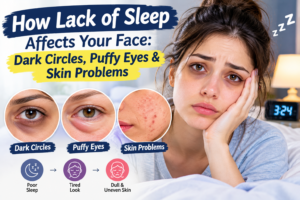

How Lack of Sleep Affects Your Face: Dark Circles, Puffy Eyes & Skin Problems
Have you ever looked in the mirror after a sleepless night and noticed dark circles, puffy eyes, dull skin, or a tired appearance? Lack of sleep can affect more than your energy levels. It may also influence how your skin looks and feels, making your face appear less refreshed.
Your skin needs on a regular routine to preserve its natural protective barrier, and sleep is an essential component of general health. You may observe changes in skin moisture, under-eye look, and how your skin reacts to daily stressors if you consistently receive too little sleep.
Even though a single bad night’s sleep doesn’t always result in long-term skin issues, persistent sleep deprivation can have negative effects on your overall health and may make your complexion appear exhausted. Facial appearance can also be influenced by other variables, such as heredity, allergies, dehydration, sun exposure, and skincare practices.
In this guide, you will learn how lack of sleep affects your face, why dark circles and puffy eyes develop, how sleep may influence acne and skin aging, and which daily habits can help your skin look healthier.
How Does Lack of Sleep Affect Your Face?
Sleep allows the body to carry out important maintenance and recovery processes. During sleep, the body regulates several biological functions involved in immune activity, stress responses, and tissue maintenance.
When you consistently sleep less than your body needs, these processes may be affected. Research suggests that sleep deprivation can influence perceived facial appearance, including tired-looking eyes, paler skin, and changes around the mouth and eyelids.
The effects vary from person to person. Some people notice changes after a single night, while others may experience more noticeable effects after several nights of insufficient sleep.
Common facial changes associated with poor sleep include:
- Darker-looking circles under the eyes
- Puffy or swollen-looking eyelids
- Dull or tired-looking skin
- More noticeable fine lines caused by dryness
- Increased skin sensitivity in some people
- A less refreshed overall appearance
Not every facial concern is caused by sleep deprivation. Persistent dark circles, swelling, acne, or discoloration may have other explanations and may require different treatments.
1. Lack of Sleep Can Make Dark Circles More Noticeable
Dark circles are among the most common concerns associated with a tired appearance. After a night of poor sleep, the skin beneath the eyes may look darker or the area may appear more hollow and shadowed.
The skin around the eyes is naturally thin. Changes in blood vessels, pigmentation, facial structure, and fluid distribution can make this area look darker than the surrounding skin.
Insufficient sleep may make existing under-eye circles more noticeable, but it is not the only cause.
Why Do Dark Circles Develop?
Several factors can contribute to dark circles:
Genetics: Some people naturally have darker pigmentation or a facial structure that creates shadows beneath the eyes.
Allergies: Allergic reactions may cause itching, congestion, and rubbing around the eyes, making the area look darker.
Sleep deprivation: Poor sleep can contribute to a tired appearance and may make under-eye discoloration more noticeable.
Dehydration: Insufficient fluid intake can sometimes make the skin appear less plump, emphasizing shadows.
Aging: As the skin changes with age, the area beneath the eyes may become thinner or develop more pronounced hollows.
How to Improve the Appearance of Dark Circles
Start by maintaining a regular sleep schedule and aiming for sufficient rest. Most adults need at least seven hours of sleep per night, although individual needs vary.
A cool compress applied gently to closed eyes may temporarily reduce puffiness and make the area look more refreshed. A fragrance-free moisturizer formulated for the eye area may also help with dryness.
During the day, use sun protection around the eyes with a product suitable for that area. Sunglasses can provide additional protection from sunlight.
If dark circles persist despite adequate sleep, consider other possible causes, such as allergies, pigmentation, or facial anatomy.
2. Poor Sleep Can Cause Puffy Eyes
Puffy eyes are another common feature of a tired face. You may notice swelling around the eyelids when you wake up after sleeping poorly.
The under-eye area contains delicate tissues that can show changes in fluid distribution. Fluid retention, allergies, crying, salty meals, and sleeping position can all contribute to temporary puffiness.
Poor sleep may make the appearance more noticeable, particularly when several contributing factors occur together.
What Helps Reduce Puffy Eyes?
A few simple habits may help reduce temporary under-eye swelling.
First, try applying a clean, cool compress to closed eyes for several minutes. Avoid placing ice directly on the skin because extreme cold can cause irritation or injury.
Second, maintain regular sleep hours and avoid repeatedly changing your bedtime. Keeping your head slightly elevated while sleeping may help some people who experience morning puffiness.
Third, drink enough water throughout the day and moderate excessive sodium intake if your diet is high in salt.
If swelling is persistent, painful, one-sided, or accompanied by redness or changes in vision, seek medical advice rather than assuming that lack of sleep is responsible.
3. Lack of Sleep May Make Your Skin Look Dull
Healthy-looking skin generally appears comfortable, hydrated, and relatively even in texture. After a poor night’s sleep, however, your complexion may appear tired, uneven, or less radiant.
Sleep deprivation can influence stress responses and normal physiological processes. Studies have also found associations between poor sleep quality and aspects of skin health, although the precise effects vary.
A dull appearance may also result from dehydration, dry indoor air, excessive cleansing, dead skin buildup, or an unsuitable skincare routine.
How to Improve Dull-Looking Skin
You do not need an expensive skincare routine to support a healthier-looking complexion.
Start with a gentle cleanser that removes dirt, sweat, and sunscreen without leaving your face tight. Follow with a moisturizer containing ingredients such as glycerin or ceramides to support skin hydration.
In the morning, apply broad-spectrum sunscreen with SPF 30 or higher. Sun protection helps prevent UV-related skin damage, uneven pigmentation, and premature aging.
Avoid harsh scrubs and excessive exfoliation. These practices can irritate the skin and make dryness or discoloration more noticeable.
Most importantly, combine consistent skincare with adequate sleep. A face mask or serum cannot compensate for an ongoing lack of rest.
4. Can Lack of Sleep Cause Acne?
Sleep deprivation is not the sole cause of acne, and getting more sleep will not automatically clear existing breakouts. However, poor sleep may contribute indirectly to factors associated with acne.
Insufficient sleep can influence stress regulation and other biological processes. Stress may worsen acne in some individuals, while inflammation and changes in daily habits may also affect skin health.
Acne itself develops through several mechanisms, including clogged hair follicles, excess sebum, inflammation, and the activity of acne-associated bacteria.
Hormonal changes, genetics, certain medications, and some skincare or cosmetic products can also contribute to breakouts.
How to Manage Breakouts When You Are Not Sleeping Well
If you notice more breakouts during stressful or sleep-deprived periods, begin with a consistent routine.
Cleanse your face gently, avoid picking pimples, and choose non-comedogenic skincare products when possible. If appropriate for your skin, an over-the-counter acne treatment containing benzoyl peroxide or salicylic acid may help.
Introduce acne treatments gradually because they can cause dryness or irritation. If acne is painful, leaves scars, or does not improve with appropriate over-the-counter care, consult a dermatologist.
Improving sleep can support your general health, but acne often requires its own targeted treatment.
5. Poor Sleep May Affect Skin Hydration and the Skin Barrier
Your skin barrier helps retain moisture and protects the skin from external irritants. When the barrier is functioning well, your skin is better able to maintain hydration and tolerate everyday environmental exposure.
Research has linked poor sleep quality with differences in skin barrier function and recovery. However, these findings do not mean that every person who sleeps poorly will develop dry or sensitive skin.
Other important contributors include cold weather, low humidity, hot showers, harsh cleansers, and overuse of active skincare ingredients.
Signs Your Skin Barrier May Need Attention
You may notice:
- Tightness after washing your face
- Dry or flaky patches
- Redness or increased sensitivity
- Stinging when applying skincare products
- Rough or uncomfortable skin
If these symptoms appear, simplify your routine. Use a gentle cleanser, apply a fragrance-free moisturizer, and avoid aggressive exfoliation until your skin feels comfortable again.
Persistent redness, burning, or inflammation should be evaluated by a healthcare professional, especially if symptoms worsen.
6. Can Lack of Sleep Make Your Face Look Older?
Sleep is one factor that may influence how refreshed your skin appears, but it is not the only factor responsible for facial aging.
Skin aging is affected by genetics, sun exposure, smoking, environmental pollution, hormonal changes, and other lifestyle factors.
Some research has associated poor sleep quality with increased signs of skin aging and reduced recovery from environmental stress. These associations do not establish that a few nights of poor sleep will cause permanent wrinkles.
When you are tired, dehydration and facial expressions may make existing fine lines more noticeable. Consistent sleep habits can help support overall health, while sun protection and appropriate skincare are essential parts of an anti-aging routine.
Habits That Support Healthier-Looking Skin
Consider these practical steps:
- Aim for at least seven hours of sleep each night if you are an adult.
- Apply broad-spectrum sunscreen every day.
- Use a moisturizer suited to your skin type.
- Avoid smoking and limit excessive alcohol consumption.
- Eat a balanced diet with a variety of nutrient-rich foods.
- Avoid irritating your skin with excessive exfoliation.
No single product or habit can stop natural aging, but consistent routines can support healthier skin over time.
7. How Much Sleep Does Your Skin Need?
Most adults need at least seven hours of sleep per night. Many adults feel and function best with approximately seven to nine hours, although individual needs differ.
Teenagers generally need more sleep than adults. Sleep needs also vary with age, health, activity levels, and individual circumstances.
Getting enough sleep is not only about the number of hours. Regular sleep and wake times, good sleep quality, and a comfortable sleeping environment also matter.
Tips for Better Sleep
Maintain a regular schedule: Go to bed and wake up at approximately the same times each day, including weekends.
Reduce evening screen use: Bright light and stimulating activities near bedtime may make it harder for some people to fall asleep.
Limit late-day caffeine: Caffeine can remain active for several hours, so consider avoiding it in the afternoon or evening if it affects your sleep.
Create a comfortable bedroom: Keep your room quiet, dark, and comfortably cool.
Develop a relaxing routine: Reading, gentle stretching, or taking a warm shower may help you wind down before bed.
If you regularly struggle to fall asleep, wake frequently, or feel exhausted despite getting enough time in bed, discuss the problem with a healthcare professional.
8. Morning Skincare Routine for a Tired Face
A simple morning routine can help your face look more refreshed after a poor night’s sleep.
Step 1: Cleanse gently. Use lukewarm water and a mild cleanser if your skin needs cleansing. Avoid vigorous rubbing.
Step 2: Apply a cool compress if needed. If your eyes look puffy, place a clean, cool cloth over closed eyelids for several minutes.
Step 3: Moisturize. Choose a moisturizer containing hydrating ingredients such as glycerin or hyaluronic acid. A suitable moisturizer can temporarily improve the appearance of dehydration-related fine lines.
Step 4: Use sunscreen. Apply broad-spectrum SPF 30 or higher to exposed skin. Reapply approximately every two hours when outdoors and after swimming or sweating, following the product instructions.
Step 5: Keep makeup gentle. If you wear makeup, choose products that suit your skin and remove them carefully before bed.
Remember that these steps may improve the appearance of tired skin temporarily. They do not replace sufficient sleep or treat every cause of dark circles and puffiness.
Frequently Asked Questions
Can one night of poor sleep affect your face?
Yes. One night of insufficient sleep may make some people look more tired, with more noticeable dark circles, puffiness, or a pale complexion. These effects are often temporary, although individual responses vary.
Does lack of sleep cause permanent dark circles?
Not necessarily. Sleep deprivation may make dark circles more noticeable, but persistent circles can be related to genetics, pigmentation, allergies, aging, or facial structure. Improving sleep may help if tiredness is a contributing factor.
Can sleeping more improve your skin?
Getting sufficient, consistent sleep supports overall health and may help you look more refreshed. However, additional sleep is not a guaranteed treatment for acne, pigmentation, wrinkles, or other persistent skin conditions.
How can I reduce puffy eyes after a sleepless night?
Try a clean, cool compress, drink water regularly, and return to your normal sleep schedule. Avoid rubbing your eyes. Persistent or painful swelling should be evaluated by a healthcare professional.
Does poor sleep cause wrinkles?
Poor sleep may be associated with changes in skin health, but wrinkles have many causes, including aging and UV exposure. Regular sleep, daily sunscreen, and suitable skincare can help support healthier-looking skin.
How long does it take for your face to recover from lack of sleep?
Some people look more refreshed after one or two nights of adequate sleep, while others need longer. Recovery depends on the amount of sleep lost, individual health, hydration, and other factors. There is no guaranteed timeline.
What is the best skincare product for a tired face?
There is no single best product for everyone. A gentle cleanser, a suitable moisturizer, and broad-spectrum sunscreen are useful foundations. Caffeine-based eye products may temporarily improve the appearance of puffiness for some people, but results vary.
Final Thoughts
Lack of sleep can affect how your face looks, particularly when it contributes to dark circles, puffy eyes, dullness, or a tired appearance. Ongoing sleep deprivation may also be associated with changes in skin health, although many facial concerns have multiple causes.
Combining enough sleep with a regular skincare regimen, daily sun protection, a balanced diet, and healthy lifestyle choices is the ideal strategy. Steer clear of harsh home treatments and keep in mind that healthy sleep cannot be replaced by expensive items.
See a dermatologist or other qualified healthcare provider to determine the underlying cause if dark circles, oedema, acne, or skin irritation continue despite adopting healthy habits.
Being flawless every morning is not the goal of having healthy skin. It is about maintaining your general health, safeguarding your skin, and forming long-lasting habits.