
Introduction
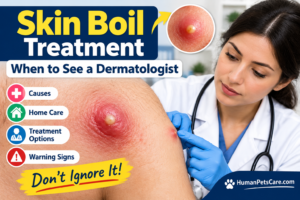
A skin boil is a painful, swollen bump that develops when an infection affects a hair follicle or the surrounding skin. Boils often begin as small, red, tender areas and may gradually grow larger as pus collects underneath the skin. They can develop on the face, neck, armpits, thighs, buttocks, and other parts of the body where hair follicles are present.
While many minor boils get better with the right care, some need to be treated by a doctor. A more serious infection may be indicated by a boil that gets more painful, grows quickly, or is accompanied by fever. Knowing how to treat a skin boil safely can help you control minor symptoms and identify when you need to see a doctor.
This guide explains the common causes of skin boils, practical home-care measures, treatment options, prevention tips, and the warning signs that mean it is time to see a dermatologist.
What Is a Skin Boil?
A skin boil, also known as a furuncle, is a localized skin infection that usually starts in a hair follicle. The infection commonly involves bacteria called Staphylococcus aureus, which can enter through a small cut, scratch, or damaged area of skin.
As the body’s immune system responds to the infection, the affected area may become red, warm, swollen, and painful. Pus can accumulate inside the bump, sometimes forming a visible white or yellow center.
A single boil may develop and heal without complications. However, several boils appearing together can form a larger infected area known as a carbuncle. Repeated or severe boils should be evaluated by a healthcare professional.
Common Causes of Skin Boils
Several factors can contribute to the development of boils. Understanding these causes may help you reduce your risk of future skin infections.
1. Bacterial Infection
The most common cause of a boil is a bacterial infection involving a hair follicle. Bacteria can enter the skin through minor injuries, shaving irritation, or damaged skin.
2. Friction and Skin Irritation
Tight clothing, repeated rubbing, and shaving can irritate the skin and increase the chance of infection, particularly in areas such as the thighs, armpits, and neck.
3. Excessive Sweating
Sweat does not directly cause boils, but moisture, friction, and irritated skin may contribute to an environment in which skin problems develop more easily.
4. Certain Health Conditions
People with diabetes or weakened immune systems may have a greater risk of developing skin infections or experiencing complications. Poorly controlled blood sugar can also make infections harder to manage.
5. Recurrent Skin Infections
Some people develop boils repeatedly because of bacterial carriage, close contact with someone who has a skin infection, or an underlying skin condition. Recurring painful lumps in the armpits or groin may also indicate hidradenitis suppurativa, a chronic inflammatory skin condition that needs a different treatment approach.
Common Symptoms of a Skin Boil
Boils can look different depending on their size, location, and stage of development. Common symptoms include:
- A red or pink bump that feels tender to the touch.
- Swelling around an infected hair follicle.
- Skin that feels warmer than the surrounding area.
- Increasing pain or pressure as the bump grows.
- A white or yellow center containing pus.
- Drainage of pus when the boil opens naturally.
- Mild redness around the affected area.
Some boils remain small, while others become larger and more painful. Symptoms that spread beyond the original bump or are accompanied by fever require particular attention.
Skin Boil Treatment: Safe Home-Care Steps
Small, uncomplicated boils may improve with simple home care. These measures can help relieve discomfort and support natural drainage, but they do not replace medical treatment when an infection is severe.
1. Apply a Warm Compress
A warm compress is one of the most useful home-care measures for a small boil.
Follow these steps:
- Wash your hands with soap and water.
- Wet a clean washcloth with warm, not hot, water.
- Place it gently over the boil for about 10–15 minutes.
- Repeat three or four times daily using a clean cloth each time.
Warm compresses may help ease discomfort and encourage a small boil to drain naturally. Avoid water that is hot enough to burn the skin.
2. Keep the Area Clean
Gently clean the surrounding skin with mild soap and water. Avoid aggressive scrubbing, which can irritate the infected area.
If the boil opens and drains, clean the area carefully and cover it with a sterile dressing. Change the dressing when it becomes wet or dirty, and wash your hands before and after touching it.
3. Never Squeeze or Pierce a Boil
Squeezing, cutting, or puncturing a boil at home can worsen inflammation and spread infection to nearby skin. It may also increase the risk of scarring.
Allow the boil to drain naturally or seek medical care if it is large, painful, or not improving.
4. Avoid Sharing Personal Items
Do not share towels, razors, washcloths, or clothing that comes into direct contact with the affected area. Wash contaminated towels and clothing regularly.
These precautions are particularly important when the boil may be caused by bacteria that can spread through close contact or contaminated personal items.
5. Monitor Changes in Symptoms
Pay attention to the size of the boil, the level of pain, surrounding redness, and any new symptoms.
If the swelling increases, redness spreads, or the boil fails to improve, contact a healthcare professional. Do not continue relying on home care when warning signs appear.
When Should You See a Dermatologist for a Skin Boil?
Not every boil requires a specialist, but certain symptoms should not be ignored. A dermatologist can examine the affected skin, assess possible causes, and recommend appropriate treatment.
1. The Boil Is on Your Face
Boils on the nose, upper lip, or around the eyes deserve particular caution because infections in these areas can occasionally lead to serious complications.
Seek prompt medical advice for a facial boil. Swelling around the eye, vision changes, severe headache, or rapidly spreading redness requires urgent assessment.
2. The Boil Is Large or Very Painful
A large, deep, or increasingly painful boil may contain a collection of pus that does not drain adequately on its own. A healthcare professional can determine whether a procedure is needed.
Do not attempt to drain a deep boil yourself.
3. You Develop a Fever
Fever, chills, unusual weakness, or feeling generally unwell alongside a boil may indicate that the infection is spreading.
Seek urgent medical assessment, especially if these symptoms occur with rapidly increasing swelling or redness.
4. Redness or Swelling Is Spreading
Redness that extends beyond the original bump, increasing warmth, or worsening swelling can be signs of a spreading skin infection.
Prompt medical evaluation is important because some infections require prescription treatment.
5. The Boil Does Not Improve
If a boil is not beginning to improve after several days of appropriate home care, or it continues to grow, arrange a medical assessment. A boil that persists for around one to two weeks should not simply be ignored.
Seek care sooner if symptoms worsen or you develop any warning signs.
6. Boils Keep Coming Back
Repeated boils may be associated with bacterial carriage, diabetes, skin irritation, or an underlying skin condition.
A dermatologist may recommend additional testing or a prevention plan based on your medical history and examination.
7. You Have Diabetes or a Weakened Immune System
People with diabetes, immune-system disorders, or medicines that suppress immunity may be more vulnerable to complications from skin infections.
If you fall into one of these groups, seek medical advice early rather than waiting for a boil to become severe.
Medical Treatments for Skin Boils
Treatment depends on the size, location, severity, and cause of the infection. A dermatologist or another qualified healthcare professional can determine which approach is appropriate.
Professional Drainage
Some boils develop into abscesses, which are collections of pus beneath the skin. A healthcare professional may perform a minor procedure called incision and drainage to release the pus safely.
This procedure should be performed by a trained professional under appropriate conditions. Not every boil needs drainage.
Prescription Antibiotics
Antibiotics may be prescribed when an infection is spreading, the patient has certain risk factors, or the infection is severe or associated with other complications.
Antibiotics are not necessary for every uncomplicated boil. The choice of medicine depends on the suspected bacteria, clinical findings, and local treatment guidance.
Never use leftover antibiotics or someone else’s prescription. Taking antibiotics unnecessarily can cause side effects and contribute to antibiotic resistance.
Testing for Recurrent Infections
If boils occur frequently or do not respond to treatment, a clinician may collect a sample of drainage for laboratory testing. This can help identify the bacteria involved and guide treatment.
Additional assessment may be recommended if the clinician suspects an underlying health condition.
How to Prevent Skin Boils
Although not all boils can be prevented, good hygiene and skin care can reduce the risk of some infections.
- Wash your hands regularly: Use soap and water, especially after changing a wound dressing.
- Keep cuts clean: Clean minor cuts and cover them with an appropriate dressing.
- Avoid sharing personal items: Keep towels, razors, and washcloths for individual use.
- Change sweaty clothing: Wear clean clothing and reduce prolonged moisture and friction.
- Use shaving equipment carefully: Avoid sharing razors and do not shave over irritated or infected skin.
- Keep draining wounds covered: Follow healthcare guidance for dressing changes and disposal.
- Manage existing health conditions: If you have diabetes, follow your healthcare professional’s advice for blood sugar management and skin care.
- Seek help for recurring boils: Repeated infections may require evaluation rather than repeated home treatment.
Good hygiene can help reduce the spread of bacteria, but developing a boil does not necessarily mean that someone has poor hygiene.
Skin Boil vs. Pimple: What Is the Difference?
Boils and pimples can look similar, but they usually involve different processes.
A pimple commonly develops when a hair follicle becomes clogged with oil and dead skin cells, often as part of acne. A boil is generally a deeper infection of a hair follicle and the surrounding tissue.
Boils are often more painful, may feel deeper under the skin, and can grow larger as pus collects. Pimples are usually smaller, although severe acne lesions can also be deep and painful.
Because different skin conditions can resemble one another, avoid diagnosing a lump by appearance alone. A clinician can help determine the cause when the diagnosis is uncertain.
What You Should Avoid When Treating a Boil
Certain actions may worsen irritation or increase the risk of spreading infection.
Avoid squeezing or popping the boil, using needles or sharp tools, applying harsh chemicals, or using unverified remedies that can damage the skin.
Do not apply prescription creams or antibiotics without appropriate medical guidance. If a boil is worsening, painful, or associated with fever, seek professional care rather than experimenting with multiple treatments.
Frequently Asked Questions
1. Can a skin boil heal on its own?
Yes, some small boils improve and drain naturally. Warm compresses and careful hygiene may support recovery. However, large, painful, persistent, or worsening boils may require medical treatment.
2. How long does a skin boil take to heal?
Healing time varies according to the size and severity of the infection. Some small boils improve within several days, while larger boils may take longer. Seek medical advice if the boil is not improving or symptoms worsen.
3. Should I pop a boil at home?
No. Popping, squeezing, or cutting a boil can spread infection and increase the risk of scarring. A healthcare professional can determine whether drainage is necessary.
4. Are skin boils contagious?
The boil itself is a localized infection, but the bacteria responsible can spread through direct contact with infected drainage or contaminated personal items. Keep draining boils covered, wash your hands, and avoid sharing towels or razors.
5. Do all boils require antibiotics?
No. Some uncomplicated boils improve with basic care or professional drainage alone. Antibiotics are used when medically indicated, depending on the severity and circumstances of the infection.
6. When should I seek urgent medical care?
Seek urgent care if you develop fever with worsening skin symptoms, rapidly spreading redness, severe pain, or significant swelling. A facial boil near the eye or nose deserves prompt assessment. Vision changes, confusion, or severe systemic symptoms warrant emergency evaluation.
7. Can stress cause skin boils?
Stress is not a direct cause of most boils. However, stress can affect sleep and general well-being, and some people may experience changes in their skin-care habits during stressful periods. Recurrent boils should be evaluated for more direct contributing factors.
8. Which doctor treats skin boils?
A dermatologist can diagnose and treat many skin conditions, including recurrent or complicated boils. A primary-care doctor or urgent-care clinician can also assess a boil and provide treatment or referral when needed.
Conclusion
Skin boil treatment depends on the size, location, and severity of the infection. Small boils may improve with warm compresses, gentle cleansing, and appropriate wound care. Avoid squeezing or puncturing a boil, as doing so can spread infection and damage the skin.
Recognize when to get expert assistance. Medical attention should be given to a boil that is large, extremely painful, persistent, recurrent, or accompanied by fever or spreading redness. People with diabetes or compromised immune systems should exercise extra caution when it comes to facial boils and infections.
With appropriate care and timely medical assessment, many skin boils can be treated effectively while reducing the risk of complications.
Medical Disclaimer: This article is for general educational purposes only and does not replace professional medical advice, diagnosis, or treatment. Seek advice from a qualified healthcare professional about a skin boil, especially if symptoms are severe, worsening, or recurring.