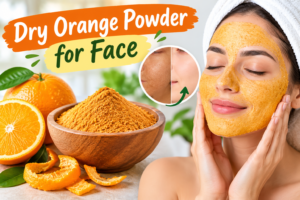

Dry Orange Powder for Face: Benefits, DIY Face Masks, Uses, and Skin Care Tips
Dry orange powder is a popular natural ingredient in homemade skin care. It is usually made by drying orange peels and grinding them into a fine powder. Many people use orange peel powder in face masks to improve the appearance of dull skin, absorb excess oil, and create a smoother-looking complexion.
However, natural ingredients are not suitable for every skin type. Orange peel powder may irritate sensitive skin, and scientific evidence supporting its benefits in homemade facial treatments remains limited. Understanding how to use it safely is important before adding it to your skin care routine.
In this guide, you will learn about the potential benefits of dry orange powder for the face, simple DIY face mask recipes, precautions, and ways to incorporate it into a balanced skin care routine.
What Is Dry Orange Powder?
Dry orange powder, also called orange peel powder, is made from the outer skin of oranges. The peels are dried and ground into a powder that can be used in homemade face masks and other cosmetic preparations.
Orange peels contain naturally occurring plant compounds, including flavonoids and other antioxidants. They also contain aromatic compounds that give oranges their distinctive fragrance.
Although these compounds are interesting from a skin care perspective, their presence does not automatically mean that a homemade orange peel mask will deliver the same results as a tested cosmetic product.
The quality of orange peel powder depends on the fruit, drying method, storage conditions, and cleanliness of the preparation process.
Youtube Video
Potential Benefits of Dry Orange Powder for Face
Orange peel powder is often included in natural beauty routines. Its potential benefits should be understood realistically because research on homemade orange peel powder applied directly to human facial skin is limited.
1. May Help Improve the Appearance of Dull Skin
Dull-looking skin can result from dryness, accumulated dead skin cells, environmental exposure, and an inconsistent skin care routine.
A gentle face mask containing orange peel powder may temporarily make the skin feel fresher and smoother. However, there is not enough evidence to conclude that orange peel powder reliably brightens the complexion.
For a more dependable approach, use a gentle cleanser, moisturizer, and broad-spectrum sunscreen with SPF 30 or higher.
2. Contains Naturally Occurring Antioxidants
Orange peels contain flavonoids and other plant compounds that have antioxidant activity in laboratory studies.
Antioxidants are relevant to skin research because oxidative stress contributes to several processes associated with skin aging. However, laboratory findings do not establish that a homemade orange peel mask prevents wrinkles or reverses skin damage.
For proven skin care benefits, consider well-formulated products containing ingredients such as vitamin C, niacinamide, or retinoids, depending on your skin concerns and tolerance.
3. May Help Remove Excess Surface Oil
People with oily skin sometimes prefer face masks because they can temporarily reduce the feeling of greasiness.
Orange peel powder may absorb some surface moisture, depending on how it is prepared and what other ingredients are used. Nevertheless, it is not a proven treatment for excessive oil production.
Avoid scrubbing oily skin aggressively. Harsh exfoliation can damage the skin barrier and sometimes make irritation and breakouts worse.
4. May Make Skin Feel Smoother
A finely prepared powder can provide mild physical exfoliation when used in an appropriate formulation. However, coarse or uneven particles may cause friction and irritation.
If your goal is smoother skin, avoid rubbing orange peel powder against your face. A gentle, rinse-off mask is preferable to a gritty scrub.
People with active acne, eczema, rosacea, or an irritated skin barrier should be particularly cautious.
5. Can Be Used in Simple Homemade Face Masks
One reason orange peel powder is popular is its versatility. It can be mixed with plain water or a simple, fragrance-free cosmetic base to make a short-contact face mask.
These preparations are inexpensive, but their results are not guaranteed. A basic skin care routine remains more important than adding multiple homemade treatments.
How to Make Dry Orange Powder at Home
You can prepare orange peel powder at home if you have fresh oranges and clean kitchen equipment.
Ingredients:
- Fresh oranges
- Clean water
- A clean tray
- A clean grinder
- An airtight, dry storage container
Preparation method:
- Wash the oranges thoroughly under running water before peeling them.
- Remove the peels and cut them into small, relatively even pieces.
- Dry the peels completely using a suitable food dehydrator or a clean drying method that prevents contamination.
- Allow the dried peels to cool completely.
- Grind them into a fine powder using a clean, dry grinder.
- Store the powder in a clean, airtight container away from heat and moisture.
Do not use peels that smell musty, show mold, or have been stored in damp conditions. Discard any powder that develops an unusual odor or visible contamination.
Homemade powder is not sterile, and its shelf life cannot be guaranteed without appropriate testing. Making small batches and keeping them completely dry can reduce storage problems.
5 DIY Dry Orange Powder Face Mask Recipes
Before trying any recipe, remember that homemade mixtures have not necessarily been clinically tested. Introduce only one new product or ingredient at a time, and do not use a mask on broken, inflamed, or freshly exfoliated skin.
1. Orange Peel Powder and Water Mask
This is one of the simplest ways to experiment with orange peel powder without adding several other ingredients.
Ingredients:
- 1 teaspoon of finely ground orange peel powder
- Enough clean water to form a smooth paste
How to use it:
Mix the powder with water until it forms a thin, spreadable paste. Apply a small amount to a limited area of skin, avoiding the eyes and lips. Leave it on briefly, then rinse gently with lukewarm water without scrubbing.
Pat the skin dry and apply a fragrance-free moisturizer.
This mask does not have a proven skin-brightening effect. Stop using it if you notice burning, redness, itching, or tightness.
2. Orange Peel Powder and Oatmeal Mask
Oatmeal is used in some skin care products because certain formulations can help soothe dry or irritated skin. However, not every kitchen oatmeal preparation has the same properties as a formulated colloidal oatmeal product.
Ingredients:
- 1 teaspoon of finely ground orange peel powder
- 1 teaspoon of finely ground plain oats
- A small amount of water
Directions:
Combine the ingredients to create a soft paste. Test it on a small area first. If there is no irritation, apply it gently without rubbing, leave it on for a few minutes, and rinse thoroughly.
This combination may provide a temporary softening effect, but orange peel powder can still irritate sensitive skin.
3. Orange Peel Powder and Plain Yogurt Mask
Plain, unsweetened yogurt is sometimes used in homemade face masks. It contains lactic acid, but the concentration and effects of the acid in food products are not standardized for facial use.
Ingredients:
- 1 teaspoon of orange peel powder
- 1 teaspoon of plain, unsweetened yogurt
Directions:
Mix the ingredients and test a small amount on an inconspicuous area of skin. If tolerated, apply a thin layer for a short period and rinse gently.
Avoid this recipe if you have a milk allergy or if dairy products irritate your skin. Do not use it on inflamed acne, open wounds, or sensitive skin.
A properly formulated exfoliating product is more predictable than a homemade yogurt mask.
4. Orange Peel Powder and Fragrance-Free Moisturizer
If you want to experiment with orange peel powder, mixing a very small amount with a familiar fragrance-free moisturizer may seem convenient. However, adding kitchen ingredients to a commercial product can alter its formulation and introduce contamination.
A safer option is to use your moisturizer separately rather than mixing the two together. If you try orange peel powder, use a small, freshly prepared rinse-off mixture and moisturize afterward.
5. Orange Peel Powder for Oily Skin
People with oily skin may be interested in orange peel powder because of its dry texture. However, dry powder does not necessarily regulate oil production or prevent acne.
If you choose to test a water-based orange peel mask, use a small amount, avoid friction, and rinse it off gently. Do not use it daily or combine it with multiple exfoliating products.
For ongoing oiliness, consider a gentle cleanser and a well-formulated salicylic acid product if your skin tolerates it.
How Often Should You Use Orange Peel Powder on Your Face?
There is no scientifically established frequency for using homemade orange peel powder on facial skin.
If you decide to try it, start with a small patch test and a brief, infrequent application. Do not apply it every day, and discontinue use at the first sign of irritation.
A patch test reduces uncertainty but cannot guarantee that a reaction will not occur later.
Avoid using orange peel powder on the same day as strong exfoliating acids, retinoids, abrasive scrubs, or other products that may irritate your skin.
Is Dry Orange Powder Good for All Skin Types?
No. Different skin types can respond differently to homemade skin care ingredients.
Oily skin: A mask may temporarily change the feel of surface oil, but it is not a proven acne treatment.
Dry skin: Powder and repeated washing may worsen dryness or tightness. A fragrance-free moisturizer is generally a better starting point.
Sensitive skin: Orange peel powder may cause irritation. Avoid it if you frequently experience stinging, redness, or allergic reactions.
Acne-prone skin: Avoid gritty scrubbing and do not apply homemade mixtures to open pimples or inflamed lesions.
Mature skin: A simple routine with moisturizer and daily sunscreen has stronger practical support for maintaining healthy-looking skin than homemade orange peel treatments.
If you have a diagnosed skin condition, ask a dermatologist before experimenting with potentially irritating ingredients.
Important Precautions Before Applying Orange Peel Powder
Natural skin care products can cause adverse reactions, particularly when their composition and concentration are not standardized.
Keep these safety tips in mind:
- Perform a patch test: Test a small amount on a limited area and observe the skin for irritation before considering facial use.
- Avoid the eye area: Facial skin around the eyes is delicate and can become irritated easily.
- Never scrub aggressively: Rough particles can cause friction and damage the skin barrier.
- Do not use on damaged skin: Avoid the powder on cuts, sunburn, active eczema, or irritated skin.
- Be careful with citrus ingredients: Citrus peel preparations can contain aromatic compounds that may irritate some people. Do not assume that a natural preparation is automatically safe in sunlight.
- Wear sunscreen: Use broad-spectrum SPF 30 or higher during the day to help prevent sun damage and the worsening of dark spots.
- Stop if a reaction develops: Wash the product off if you experience burning, swelling, itching, or persistent redness.
Seek medical advice if a reaction is severe, continues after washing, or involves significant swelling or blistering.
Does Orange Peel Powder Remove Dark Spots or Whiten Skin?
Orange peel powder is often promoted online as a natural remedy for pigmentation, tanning, and uneven skin tone. However, there is insufficient clinical evidence that homemade orange peel powder removes dark spots, permanently lightens skin, or changes your natural skin color.
Dark spots can develop for different reasons, including sun exposure, acne-related inflammation, hormonal changes, and certain skin conditions. The best treatment depends on the underlying cause.
For uneven skin tone, a more evidence-based routine may include:
- Daily broad-spectrum sunscreen with SPF 30 or higher
- A gentle cleanser and moisturizer
- A suitable niacinamide or vitamin C product
- A dermatologist-recommended treatment for persistent pigmentation
Avoid harsh bleaching products and unregulated skin-lightening creams. If a spot changes shape, grows, bleeds, or looks different from other spots, have it evaluated by a health professional.
A Simple Skin Care Routine for Healthy-Looking Skin
You do not need several homemade masks to maintain healthy-looking skin. Consistency is more important than the number of products you use.
Morning routine: Cleanse gently, apply a moisturizer suited to your skin type, and finish with broad-spectrum SPF 30 or higher.
Evening routine: Remove sunscreen and makeup, cleanse gently, and apply moisturizer. If you have acne, dark spots, or signs of aging, consider introducing an appropriate evidence-based product gradually.
Avoid adding several active ingredients at once. This makes it easier to identify what works and what causes irritation.
A homemade orange peel mask is optional, not an essential part of a skin care routine.
Frequently Asked Questions
1. Can I apply dry orange powder to my face every day?
Daily use is not recommended because there is no established safe frequency for homemade orange peel powder. Repeated applications may irritate the skin, especially if the powder is coarse or your skin barrier is already damaged.
2. Can orange peel powder help brighten dull skin?
It may temporarily make skin feel smoother, but reliable clinical evidence supporting its use as a skin-brightening treatment is lacking. Sunscreen and appropriate skin care products are more dependable options.
3. Is orange peel powder suitable for oily skin?
Some people with oily skin may tolerate a gentle rinse-off preparation. However, it is not a proven treatment for excess oil, blackheads, or acne. Avoid scrubbing and stop if irritation develops.
4. Can orange peel powder remove acne scars?
There is no strong clinical evidence that orange peel powder removes acne scars. Flat marks left after acne and indented scars are different problems and may require different treatments. A dermatologist can help identify suitable options.
5. Can I mix orange peel powder with turmeric?
Some people use this combination in traditional face masks, but evidence for its effectiveness is limited. Both ingredients can cause irritation or allergic reactions in some individuals. Turmeric may also temporarily stain the skin.
6. How long does it take to see results from orange peel powder?
There is no scientifically established timeline because its effectiveness has not been adequately demonstrated in clinical studies. Do not continue using a preparation that causes irritation in the hope that it will eventually work.
7. Is homemade orange peel powder better than commercial skin care products?
Not necessarily. Homemade powder may be inexpensive, but its particle size, composition, cleanliness, and stability are difficult to standardize. Commercial products designed for facial use may offer more predictable formulations and clearer directions.
Conclusion
Dry orange powder is a popular ingredient in homemade face masks because it is accessible and easy to prepare. It contains naturally occurring plant compounds, but its claimed benefits for brightening skin, removing dark spots, and treating acne are not well established by clinical research.
If you decide to experiment with orange peel powder, use a clean, finely ground preparation, avoid aggressive scrubbing, and stop immediately if irritation develops. People with sensitive or inflamed skin may be better off avoiding it.
For lasting improvements in skin appearance, focus on gentle cleansing, appropriate moisturization, daily sunscreen, and evidence-based treatments suited to your skin concerns. These steps provide a more reliable foundation than depending on a homemade face mask.
Health note: This article is for general educational purposes and is not a substitute for individualized medical advice.