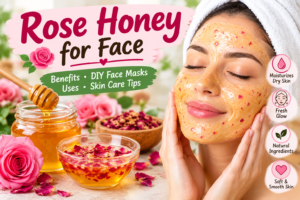

Rose Honey for Face: Benefits, DIY Face Masks, Uses, and Skin Care Tips
Rose honey is a beauty ingredient combination that brings together the sweet, moisturizing properties of honey with the delicate fragrance of rose. It is popular in natural skin care routines because people use it to soften dry skin, improve the appearance of dullness, and create simple homemade face masks.
Honey is a humectant, which means it can help attract and retain moisture. Roses are commonly used in cosmetic products for their fragrance and skin-conditioning properties. However, the results of applying rose honey to the face depend on the ingredients used, your skin type, and whether your skin tolerates the mixture.
Although rose honey may be an enjoyable addition to a skin care routine, it is not a proven treatment for acne, dark spots, wrinkles, or other skin conditions. This guide explains its potential benefits, safe ways to use it, homemade face mask recipes, and important precautions.
What Is Rose Honey for Face?
Rose honey generally refers to honey combined with rose water, rose petals, or rose extract. The exact ingredients can vary depending on the preparation.
Some people mix plain honey with cosmetic-grade rose water to make a simple face mask. Others use commercial products containing honey and rose-derived ingredients.
These preparations are not identical. Rose water may contain fragrance compounds that irritate sensitive skin, while homemade mixtures may have inconsistent ingredients and cleanliness.
For facial use, choose plain honey and a rose product specifically intended for cosmetic use. Avoid products containing unknown additives, artificial fragrances, or ingredients that have previously irritated your skin.
Potential Benefits of Rose Honey for Face
1. May Help Moisturize Dry Skin
One reason honey is popular in skin care is its ability to attract moisture. When used in a rinse-off mask followed by a moisturizer, honey may help the skin feel softer.
However, honey is not a replacement for a properly formulated facial moisturizer, especially if you have very dry skin or a damaged skin barrier.
For better results, use a fragrance-free moisturizer containing ingredients such as glycerin or ceramides after washing your face.
2. May Make Dull Skin Look Fresher
Dryness can make the skin appear rough or dull. A moisturizing mask may temporarily improve its appearance by making the skin feel smoother and more comfortable.
Rose honey does not have strong clinical evidence as a skin-brightening treatment. Its effects should not be confused with proven treatments for pigmentation or sun damage.
For a healthier-looking complexion, use sunscreen daily and maintain a consistent skin care routine.
3. Can Help Soften Rough Skin
When skin lacks moisture, its surface may feel rough or tight. Honey may help improve the feeling of softness when applied briefly and rinsed off gently.
Avoid rubbing the mixture into your face. Physical scrubbing can irritate the skin, particularly around the nose, cheeks, and areas affected by acne.
If roughness continues despite moisturizing, consider whether weather, harsh cleansers, or an underlying skin condition could be contributing to the problem.
4. Rose Water Can Add a Refreshing Feel
Rose water is used in many cosmetic products because of its light fragrance and refreshing feel.
However, not every rose water product is suitable for sensitive facial skin. Some contain added perfume or other ingredients that can trigger redness, itching, or stinging.
Choose a fragrance-free or low-irritant product where possible, and remember that rose water is optional. You can use plain honey without adding rose ingredients.
5. Honey Contains Naturally Occurring Antioxidant Compounds
Honey contains several naturally occurring compounds, including some with antioxidant activity. Laboratory findings have attracted interest in its potential cosmetic applications.
Nevertheless, these properties do not establish that an ordinary kitchen honey mask prevents skin aging, removes wrinkles, or repairs sun damage.
For concerns such as fine lines and uneven skin tone, sunscreen and suitable evidence-based skin care products are more reliable options.
Youtube Video
How to Make Rose Honey for Face at Home
A simple mixture can be prepared using two ingredients.
Ingredients:
- 1 teaspoon of plain honey
- A few drops of cosmetic-grade rose water, if tolerated
Preparation method:
- Wash your hands before preparing the mixture.
- Place the honey in a clean bowl.
- Add a few drops of rose water and mix until smooth.
- Prepare only enough for one application.
- Do not store leftover homemade mixture for later use.
Use plain honey rather than a honey product containing added perfume, flavorings, or unknown cosmetic ingredients.
Before applying the mixture to your entire face, test it on a small area. If irritation occurs, wash it off and do not continue.
5 Rose Honey Face Mask Recipes
These recipes are optional home treatments, not medically proven therapies. Introduce only one new ingredient at a time and avoid applying masks to broken, inflamed, or irritated skin.
1. Simple Rose Honey Face Mask
This is the simplest preparation for people who want to try honey in their skin care routine.
Ingredients:
- 1 teaspoon of plain honey
- A few drops of suitable rose water, if desired
Directions:
Mix the ingredients in a clean bowl. Apply a thin layer to clean, slightly damp skin, avoiding the eyes and lips. Leave it on briefly, then rinse thoroughly with lukewarm water.
Pat your face dry and apply your usual moisturizer.
This mask may temporarily soften the skin, but it is not proven to remove dark spots or permanently brighten the complexion.
2. Rose Honey Mask for Dry Skin
Dry skin often benefits more from regular moisturizing than from frequent homemade masks.
Ingredients:
- 1 teaspoon of plain honey
- A small amount of lukewarm water
Directions:
Mix the ingredients until the honey spreads more easily. Apply a thin layer to a small area of skin, then rinse it off gently after a short period.
Follow with a fragrance-free moisturizer while your skin is slightly damp.
Avoid using hot water, harsh cleansers, or abrasive scrubs, as these can make dryness worse.
3. Rose Honey and Plain Oat Mask
Plain oats are used in some skin care formulations, particularly products designed to soothe dry skin. A homemade oat mixture, however, is not necessarily equivalent to a formulated colloidal oatmeal product.
Ingredients:
- 1 teaspoon of plain honey
- 1 teaspoon of finely ground plain oats
- A little water
Directions:
Combine the ingredients to make a soft paste. Apply gently without scrubbing and rinse thoroughly after a brief application.
Do not use coarse oats that could scratch the skin. If you have eczema or highly reactive skin, consult a health professional before experimenting with homemade masks.
4. Rose Honey Mask for a Fresh-Looking Complexion
If your skin looks dull because of dryness, a simple moisturizing preparation may temporarily improve its appearance.
Ingredients:
- 1 teaspoon of plain honey
- A few drops of cosmetic-grade rose water, if tolerated
Directions:
Mix the ingredients and apply a thin layer to a small area first. Rinse gently and finish with a moisturizer.
There is no established evidence that this mixture removes pigmentation or changes your natural skin color. Daily sunscreen is essential for preventing sun-related discoloration.
5. Rose Honey for Normal Skin
If your skin generally tolerates cosmetic products well, plain honey may be used occasionally as a short-contact face mask.
Ingredients:
- 1 teaspoon of plain honey
- A small amount of water, if needed
Directions:
Spread a thin layer over clean skin, avoiding the eyes and mouth. Rinse it off thoroughly and apply moisturizer.
Rose water is not necessary. Keeping the mixture simple makes it easier to identify the cause if irritation develops.
How Often Should You Use Rose Honey on Your Face?
There is no scientifically established frequency for homemade rose honey masks.
If you choose to try one, begin with an occasional, brief application rather than daily use. Stop if your skin becomes red, itchy, swollen, or uncomfortable.
A patch test can help identify some reactions, but it cannot guarantee that a product will never cause irritation or an allergic response.
Avoid combining homemade masks with strong exfoliating acids, retinoids, or abrasive scrubs when your skin is already irritated.
Is Rose Honey Suitable for Every Skin Type?
Dry skin: Honey may temporarily improve the feeling of softness, but a suitable moisturizer is more dependable for ongoing hydration.
Oily skin: Rose honey does not reliably regulate oil production. Use a gentle cleanser and avoid heavy or irritating mixtures if they make your skin uncomfortable.
Sensitive skin: Rose fragrance and other botanical ingredients may cause irritation. A simpler, fragrance-free routine is often a better option.
Acne-prone skin: Rose honey is not a proven acne treatment. Avoid applying it to open pimples or inflamed lesions, and seek advice if breakouts persist.
Mature skin: Moisturizing can improve the appearance of dryness, but rose honey has not been established as an anti-aging treatment. Daily sunscreen and suitable skin care products offer more reliable support.
Important Safety Tips Before Applying Rose Honey
Natural ingredients can still cause allergic reactions or irritation. Follow these precautions before using a homemade face mask:
- Check the ingredients: Use plain honey and a cosmetic-grade rose product with clearly listed ingredients.
- Perform a patch test: Test a small amount on a limited area and watch for redness, itching, or swelling.
- Avoid the eyes: Honey and rose products can irritate the eyes.
- Do not use on broken skin: Avoid homemade masks on cuts, open wounds, or severely irritated areas.
- Consider allergies: Do not use honey or rose ingredients if you know you are allergic to them.
- Keep mixtures fresh: Prepare only what you need for one use and discard leftovers.
- Stop if irritation develops: Wash off the mixture immediately if it causes burning or discomfort.
If you develop severe swelling, blistering, or a persistent reaction, seek medical advice.
Can Rose Honey Remove Dark Spots and Acne Scars?
Rose honey is sometimes promoted online as a natural solution for dark spots, acne marks, and uneven skin tone. However, there is insufficient clinical evidence to establish that it reliably treats these concerns.
The right treatment depends on the cause of the discoloration. Flat marks left after acne, sunspots, melasma, and indented acne scars require different approaches.
A more evidence-based routine may include:
- Broad-spectrum sunscreen with SPF 30 or higher every day
- A gentle cleanser and suitable moisturizer
- A well-formulated niacinamide or vitamin C product, if appropriate
- Dermatologist-recommended treatments for persistent pigmentation or acne scars
Avoid unregulated skin-lightening creams or harsh home remedies that can damage the skin barrier.
If a dark spot changes shape, grows, bleeds, or looks different from other spots, have it assessed by a health professional.
A Simple Daily Skin Care Routine
A consistent routine can help maintain healthy-looking skin without relying on multiple homemade face masks.
Morning:
- Cleanse gently or rinse according to your skin’s needs.
- Apply a moisturizer suitable for your skin type.
- Use broad-spectrum sunscreen with SPF 30 or higher.
Evening:
- Remove makeup and sunscreen.
- Cleanse without scrubbing.
- Apply moisturizer.
- Use a suitable treatment for specific skin concerns if recommended and tolerated.
Rose honey can be optional, but it is not necessary for healthy skin. Avoid introducing several new ingredients at once, especially if you have sensitive skin.
Frequently Asked Questions
1. Is rose honey good for the face?
Rose honey may temporarily soften the skin because honey helps attract moisture. However, evidence supporting the complete mixture as a treatment for acne, wrinkles, or pigmentation is limited.
2. Can I use rose honey on my face every day?
Daily use is unnecessary, and the safety of homemade mixtures has not been established for frequent application. Start cautiously and stop if irritation develops.
3. Does rose honey make skin glow?
Moisturizing may temporarily make dry skin look smoother and fresher. Rose honey is not proven to create a lasting glow or change your natural skin tone.
4. Can rose honey remove pimples?
There is insufficient clinical evidence to recommend a homemade rose honey mask as an acne treatment. Persistent acne may benefit from evidence-based products such as benzoyl peroxide or salicylic acid, depending on your skin and individual needs.
5. Is rose honey suitable for sensitive skin?
Not always. Rose water may contain fragrance compounds that irritate sensitive skin. If your skin reacts easily, choose a simple fragrance-free routine instead.
6. Can I leave rose honey on my face overnight?
It is better to avoid leaving homemade mixtures on your face overnight. Prolonged contact may cause irritation, discomfort, or mess, and there is no established evidence that overnight use improves results.
7. Can rose honey remove wrinkles?
No reliable clinical evidence establishes that rose honey removes wrinkles. Moisturizing may temporarily soften the appearance of fine lines caused by dryness, while sunscreen and suitable retinoid products have stronger evidence for certain signs of photoaging.
Conclusion
Rose honey for face is a simple natural beauty combination that may temporarily soften dry skin and make it feel smoother. However, its effectiveness for treating acne, removing dark spots, reducing wrinkles, or permanently brightening skin has not been established by strong clinical evidence.
If you want to try a rose honey mask, use simple ingredients, test a small area first, and rinse it off gently. Avoid it if you have relevant allergies or highly reactive skin.
For long-term skin care, focus on gentle cleansing, regular moisturizing, daily sunscreen, and evidence-based treatments that match your skin’s needs.
Disclaimer: This article is for general educational purposes and does not replace individualized medical advice.