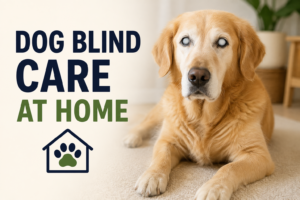

Losing vision doesn’t mean a dog loses the ability to enjoy life. Many blind dogs continue to run, play, learn new tricks, and develop strong bonds with their families. With the right care, patience, and a few adjustments at home, your dog can live a long and fulfilling life.
Whether your dog has become blind due to old age, cataracts, glaucoma, diabetes, injury, or a genetic condition, creating a safe and predictable environment is the key to helping them adapt.
In this guide, you’ll learn everything you need to know about dog blind care at home, including safety tips, feeding routines, exercise, emotional support, and common mistakes to avoid.
Why Dogs Become Blind
Understanding the cause of blindness can help you provide better care.
Common causes include:
- Cataracts
- Glaucoma
- Diabetes
- Progressive Retinal Atrophy (PRA)
- Eye infections
- Eye injuries
- Aging
- High blood pressure
Some dogs lose their vision slowly, while others become blind suddenly. Dogs that gradually lose vision usually adjust more easily.
Signs Your Dog May Be Losing Vision
Watch for these symptoms:
- Walking into furniture
- Difficulty finding food bowls
- Hesitation on stairs
- Cloudy or bluish eyes
- Startling easily
- Increased anxiety
- Difficulty locating toys
- Sleeping more than usual
If you notice these signs, schedule a veterinary examination immediately.
Preparing Your Home for a Blind Dog
One of the biggest parts of dog blind care at home is making your house easy to navigate.
Keep Furniture in the Same Place
Dogs memorize the layout of their surroundings.
Avoid:
- Rearranging furniture
- Moving food bowls
- Frequently changing dog beds
- Leaving boxes on the floor
Consistency builds confidence.
Remove Hazards
Protect your dog from injuries by removing:
- Sharp furniture corners
- Loose electrical cords
- Small toys
- Open cabinets
- Slippery rugs
Use non-slip mats on hardwood or tile floors.
Block Dangerous Areas
Use baby gates around:
- Staircases
- Swimming pools
- Balconies
- Workshops
- Kitchens during cooking
Safety should always come first.
Create Safe Navigation Paths
Keep walking paths clear.
Maintain open spaces between:
- Dog bed
- Water bowl
- Food bowl
- Doorways
- Favorite resting spots
Avoid placing obstacles in these pathways.
Use Different Scents Around the House
Blind dogs rely heavily on smell.
You can use pet-safe scents to identify different areas.
For example:
- Lavender near the sleeping area
- Vanilla near the food station
- Lemon near the back door
Always use pet-safe products and avoid strong essential oils that may be harmful to dogs.
Add Sound Cues
Sound helps blind dogs locate people and important places.
Examples:
- Small bells on other pets
- Talking before approaching
- Soft music in one room
- Wind chimes near the backyard door
These sounds help dogs orient themselves.
Feeding a Blind Dog
Always feed your dog in the exact same location.
Keep:
- Food bowl
- Water bowl
- Feeding schedule
consistent every day.
Never move the bowls unexpectedly.
Routine builds confidence.
Help Your Dog Learn Verbal Commands
Blind dogs quickly learn voice commands.
Useful commands include:
- Stop
- Wait
- Left
- Right
- Step up
- Step down
- Slow
- Come
- Stay
Use treats and praise during training.
Keep commands simple and consistent.
Walking a Blind Dog
Blind dogs still enjoy walks.
Tips include:
- Use a regular leash
- Walk slowly
- Talk frequently
- Warn about curbs
- Stay on familiar routes
- Avoid crowded places
Allow your dog plenty of time to sniff.
Smelling the environment is their way of “seeing.”
Keep Exercise Part of Daily Life
Blind dogs still need physical activity.
Great exercises include:
- Backyard exploration
- Gentle walks
- Nose work games
- Indoor obstacle courses
- Hide-and-seek using treats
Exercise keeps muscles strong and reduces anxiety.
Mental Stimulation Is Essential
Blind dogs become bored without mental enrichment.
Try:
- Puzzle feeders
- Treat-dispensing toys
- Scent trails
- Snuffle mats
- Voice training games
Mental exercise is just as important as physical activity.
Choosing Toys for Blind Dogs
The best toys make noise or have a strong scent.
Examples:
- Squeaky balls
- Crinkle toys
- Treat puzzles
- Rubber toys with food inside
- Toys scented with dog-safe flavors
Avoid toys with sharp edges.
Sleeping Area
Your dog’s bed should always stay in the same location.
Choose:
- Soft orthopedic beds
- Quiet room
- Easy access to water
- Warm environment
Avoid moving the bed unnecessarily.
Introduce Visitors Carefully
Blind dogs may startle easily.
Tell visitors to:
- Speak before touching
- Let the dog sniff their hand
- Avoid sudden hugs
- Stay calm
This helps reduce fear.
Living With Other Pets
Many blind dogs live happily with other animals.
Helpful tips:
- Keep routines predictable
- Prevent rough play
- Add a bell to another pet’s collar
- Supervise introductions
Most dogs adapt well over time.
Grooming and Hygiene
Regular grooming becomes even more important.
Brush your dog regularly.
Check:
- Eyes
- Ears
- Nails
- Skin
- Teeth
- Paw pads
Clean paws help prevent slipping indoors.
Managing Anxiety
Some blind dogs become anxious initially.
Help them by:
- Following routines
- Speaking gently
- Giving reassurance
- Offering puzzle toys
- Avoiding loud noises
Never punish a frightened dog.
Patience is essential.
Nighttime Care
Blind dogs may feel less secure at night.
Helpful ideas:
- Keep water nearby
- Leave pathways clear
- Maintain familiar sleeping spots
- Speak softly if they wake up
Predictability helps them relax.
Veterinary Care
Schedule regular veterinary visits.
Monitor for:
- Eye pain
- Eye discharge
- Redness
- Appetite changes
- Weight loss
- Increased anxiety
Some eye conditions require ongoing treatment even after vision loss.
Nutrition for Blind Dogs
A healthy diet supports overall wellness.
Choose foods rich in:
- Omega-3 fatty acids
- Vitamin A
- Vitamin C
- Vitamin E
- Zinc
- High-quality protein
Always ask your veterinarian before adding supplements.
Common Mistakes to Avoid
Avoid these common errors:
- Frequently moving furniture
- Startling your dog
- Skipping walks
- Ignoring eye problems
- Leaving dangerous objects on the floor
- Changing routines often
- Allowing unsupervised access to stairs
Consistency is the best gift you can give a blind dog.
Can Blind Dogs Still Be Happy?
Absolutely.
Dogs rely far more on:
- Smell
- Hearing
- Memory
- Routine
than vision.
Many blind dogs continue enjoying:
- Playing
- Running
- Hiking
- Swimming (with supervision)
- Learning tricks
- Family time
Most owners are surprised by how quickly dogs adapt.
Frequently Asked Questions (FAQs)
How do I help my blind dog adjust at home?
Keep furniture in the same place, remove hazards, establish a consistent routine, use verbal cues, and create clear walking paths.
Can blind dogs go outside?
Yes. They can enjoy outdoor walks and playtime with supervision and a leash in unfamiliar areas.
Should I move my blind dog’s food bowl?
No. Keeping food and water bowls in the same location helps your dog build confidence and navigate independently.
Do blind dogs become depressed?
Some dogs may feel anxious during the adjustment period, but with love, routine, exercise, and mental stimulation, most adapt well and live happy lives.
Can a blind dog still play?
Yes. Toys that squeak, crinkle, or dispense treats are excellent choices and encourage healthy physical and mental activity.
Conclusion
Caring for a blind dog at home may seem challenging at first, but dogs are incredibly adaptable. By maintaining a consistent routine, keeping your home safe, using voice commands, and providing plenty of love and encouragement, you can help your blind companion live a confident and joyful life.
Blindness does not define your dog’s quality of life. With patience, understanding, and thoughtful care, your dog can continue to enjoy daily adventures, strong family bonds, and many happy years by your side.