
Introduction
As dogs grow older, their healthcare needs change significantly. While senior dogs may become calmer and more affectionate, they are also more prone to age-related conditions such as arthritis, dental disease, obesity, vision loss, hearing problems, and cognitive decline. Providing the right care during these golden years can greatly improve your dog’s comfort, mobility, and overall quality of life.
A comprehensive Senior Dog Health Checklist helps pet owners stay proactive by identifying health issues early and ensuring their aging companions receive the nutrition, exercise, and medical attention they need. Regular monitoring and preventive care can add years to your dog’s life while keeping them happy and active.
Whether your dog is entering their senior years or has already become an elderly companion, this guide will help you understand the essential steps every owner should follow.
When Is a Dog Considered a Senior?
Dogs age differently depending on their breed and size. Smaller breeds usually live longer than larger breeds, so they become seniors later in life.
General guidelines include:
- Small breeds (under 20 lbs): Around 10–12 years old
- Medium breeds (20–50 lbs): Around 8–10 years old
- Large breeds (50–90 lbs): Around 7–8 years old
- Giant breeds (over 90 lbs): Around 5–7 years old
Knowing when your dog enters their senior stage allows you to adjust their healthcare routine before serious problems develop.
1. Schedule Regular Veterinary Checkups
Routine veterinary visits are one of the most important parts of a Senior Dog Health Checklist. As dogs age, diseases can develop gradually without obvious symptoms. Early diagnosis often leads to more effective treatment and a better quality of life.
Most veterinarians recommend health examinations every six months for senior dogs instead of once a year.
During these visits, your veterinarian may perform:
- Complete physical examination
- Weight evaluation
- Blood tests
- Urine analysis
- Blood pressure monitoring
- Heart and lung assessment
- Eye examination
- Dental inspection
Regular screenings can help detect:
- Kidney disease
- Liver disease
- Diabetes
- Arthritis
- Heart disease
- Thyroid disorders
- Cancer
Preventive healthcare is usually less expensive and more effective than treating advanced illnesses.
2. Maintain a Healthy Weight
Weight management becomes increasingly important as dogs grow older. Extra weight places additional stress on aging joints, making conditions like arthritis more painful.
On the other hand, unexplained weight loss may indicate an underlying illness that requires immediate veterinary attention.
Signs Your Dog Is Overweight
- Difficulty walking
- Reduced stamina
- Heavy breathing after mild activity
- Difficulty climbing stairs
- Unable to feel the ribs easily
Tips for Healthy Weight Management
- Measure food portions accurately.
- Avoid excessive table scraps.
- Choose high-quality senior dog food.
- Offer healthy treats in moderation.
- Weigh your dog regularly.
Maintaining an ideal body condition helps reduce joint strain and supports heart health.
3. Feed a Balanced Senior Diet
Older dogs require different nutrition than younger adults. Their metabolism slows, activity levels decrease, and digestive systems may become more sensitive.
A high-quality senior diet should provide balanced nutrition without unnecessary calories.
Important Nutrients for Senior Dogs
High-Quality Protein
Protein helps maintain muscle mass and supports immune function.
Healthy Fats
Omega-3 fatty acids from fish oil may reduce inflammation and support joint, skin, and brain health.
Fiber
Fiber promotes healthy digestion and helps prevent constipation.
Glucosamine and Chondroitin
These nutrients help support cartilage and may improve joint mobility.
Antioxidants
Vitamins C and E help protect cells from age-related damage.
Always introduce dietary changes gradually to avoid digestive upset.
4. Keep Your Senior Dog Active
Exercise remains essential even as dogs age. While older dogs may not enjoy intense activities, daily movement helps maintain muscle strength, flexibility, and cardiovascular health.
Regular exercise also prevents obesity and supports mental stimulation.
Recommended Activities
- Daily walks
- Gentle hiking
- Swimming
- Slow games of fetch
- Indoor enrichment games
Adjust exercise according to your dog’s physical condition.
Avoid:
- Long-distance running
- High jumps
- Slippery surfaces
- Excessive heat
Watch for signs of fatigue, limping, or discomfort and allow plenty of rest.
5. Monitor Joint Health and Mobility
Joint disease is extremely common in aging dogs. Arthritis can develop slowly, causing chronic pain that often goes unnoticed until it becomes severe.
Common Signs of Arthritis
- Difficulty standing up
- Limping
- Reluctance to jump
- Stiffness after resting
- Walking more slowly
- Sleeping more than usual
Fortunately, many treatments can improve your dog’s comfort.
Ways to Support Joint Health
- Maintain a healthy weight.
- Use orthopedic dog beds.
- Install ramps for furniture or vehicles.
- Place rugs on slippery floors.
- Consider veterinarian-approved joint supplements.
- Follow prescribed pain management plans.
Early intervention can greatly improve mobility and reduce discomfort.
6. Prioritize Dental Care
Dental disease affects the majority of senior dogs and can lead to pain, infections, and even heart or kidney complications if left untreated.
Common dental problems include:
- Plaque buildup
- Tartar
- Gum disease
- Loose teeth
- Tooth infections
Signs of Dental Disease
- Bad breath
- Difficulty chewing
- Dropping food
- Bleeding gums
- Excessive drooling
Dental Care Tips
- Brush your dog’s teeth regularly using dog-safe toothpaste.
- Provide veterinarian-approved dental chews.
- Schedule professional dental cleanings when recommended.
- Inspect your dog’s mouth for swelling or broken teeth.
Healthy teeth make eating more comfortable and reduce the risk of systemic infections.
Summary
A proper Senior Dog Health Checklist begins with preventive care. Regular veterinary visits, healthy nutrition, weight management, appropriate exercise, joint support, and dental hygiene form the foundation of a longer, healthier life for aging dogs.
By paying close attention to these essential areas, you can detect problems early and help your senior companion stay active, comfortable, and happy for years to come.
7. Monitor Vision and Hearing Changes
As dogs age, their eyesight and hearing often decline. These changes usually happen gradually, making them difficult for owners to notice at first. Keeping an eye on your senior dog’s senses is an important part of a complete Senior Dog Health Checklist.
Signs of Vision Problems
- Bumping into furniture or walls
- Cloudy or bluish eyes
- Difficulty finding toys or food bowls
- Hesitation when walking in unfamiliar places
- Increased anxiety in low-light conditions
Signs of Hearing Loss
- Not responding to their name
- Sleeping through loud noises
- Ignoring familiar commands
- Becoming startled when touched unexpectedly
How to Help
- Keep furniture in the same location.
- Use hand signals along with voice commands.
- Avoid startling your dog from behind.
- Use night lights in dark hallways.
- Schedule routine eye and ear examinations with your veterinarian.
Early diagnosis can help manage conditions such as cataracts, glaucoma, or chronic ear infections before they become severe.
8. Maintain Healthy Skin and Coat
A senior dog’s skin becomes thinner and less elastic with age. Their coat may lose its shine, and they may become more prone to dryness, irritation, and infections.
Signs of Skin Problems
- Excessive scratching
- Dry or flaky skin
- Bald patches
- Lumps or bumps
- Redness
- Unpleasant odor
Skin Care Tips
- Brush your dog several times each week.
- Use a gentle dog shampoo.
- Feed a diet rich in Omega-3 fatty acids.
- Check regularly for fleas, ticks, or skin growths.
- Report any new lumps to your veterinarian.
Routine grooming also gives you an opportunity to detect health problems early.
9. Support Brain Health and Mental Stimulation
Senior dogs can develop Canine Cognitive Dysfunction (CCD), a condition similar to dementia in humans.
Keeping your dog’s brain active may slow mental decline and improve their quality of life.
Signs of Cognitive Dysfunction
- Confusion
- Forgetting familiar people
- Wandering aimlessly
- Sleeping during the day but pacing at night
- House-training accidents
- Reduced interest in play
Ways to Keep Their Mind Active
- Interactive puzzle toys
- Short training sessions
- New scent games
- Gentle walks in different environments
- Consistent daily routines
Mental stimulation is just as important as physical exercise for aging dogs.
10. Stay Current on Vaccinations and Parasite Prevention
Some owners believe senior dogs no longer need vaccinations or parasite prevention. In reality, older dogs often have weaker immune systems, making preventive healthcare even more important.
Ask your veterinarian which vaccinations your dog still requires based on:
- Age
- Lifestyle
- Local disease risks
- Overall health
Continue protection against:
- Fleas
- Ticks
- Heartworms
- Intestinal parasites
Routine fecal exams and parasite prevention help keep your dog healthy throughout their senior years.
11. Make Your Home Senior-Dog Friendly
Simple home modifications can greatly improve your dog’s comfort and reduce the risk of injuries.
Helpful Home Adjustments
- Place non-slip rugs on smooth floors.
- Use orthopedic memory foam beds.
- Install ramps instead of stairs where possible.
- Raise food and water bowls for dogs with neck pain.
- Keep pathways free from clutter.
- Ensure fresh water is always available.
- Provide easy bathroom access.
Small changes can significantly improve mobility and confidence.
12. Watch for Common Senior Dog Diseases
Older dogs are more likely to develop chronic illnesses. Early detection often leads to better treatment outcomes.
Common conditions include:
- Arthritis
- Kidney disease
- Heart disease
- Diabetes
- Dental disease
- Cancer
- Liver disease
- Thyroid disorders
- Cognitive dysfunction
- Obesity
Contact your veterinarian if you notice:
- Sudden weight loss
- Loss of appetite
- Increased thirst
- Frequent urination
- Persistent coughing
- Difficulty breathing
- Vomiting
- Diarrhea
- Lethargy
- New lumps or swelling
Never ignore changes in your dog’s normal behavior.
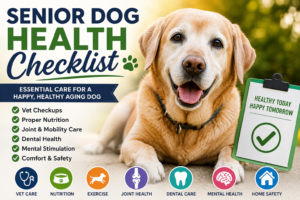
Complete Senior Dog Health Checklist
Use this checklist every month to monitor your dog’s health:
✅ Schedule veterinary checkups every six months.
✅ Monitor body weight.
✅ Feed a balanced senior diet.
✅ Provide daily exercise.
✅ Support joint health.
✅ Brush teeth regularly.
✅ Check eyes and ears.
✅ Groom and inspect skin weekly.
✅ Keep vaccinations up to date.
✅ Maintain flea, tick, and heartworm prevention.
✅ Encourage mental stimulation.
✅ Make your home safe and comfortable.
✅ Watch for changes in appetite, behavior, or mobility.
Frequently Asked Questions
At What Age Is a Dog Considered a Senior?
Most dogs become seniors between 7 and 10 years of age, although giant breeds may reach senior status as early as 5–6 years.
How Often Should Senior Dogs Visit the Vet?
Veterinarians generally recommend wellness examinations every six months for senior dogs.
What Is the Best Food for Senior Dogs?
The best senior dog food contains:
- High-quality protein
- Moderate calories
- Omega-3 fatty acids
- Joint-support ingredients
- Antioxidants
- Easily digestible carbohydrates
Always choose a diet recommended by your veterinarian.
Should Senior Dogs Still Exercise?
Yes. Low-impact daily exercise helps maintain muscle strength, joint flexibility, heart health, and a healthy weight.
Conclusion
Caring for a senior dog requires extra attention, but the rewards are immeasurable. By following this Senior Dog Health Checklist, you can detect health problems early, improve your dog’s comfort, and help them enjoy their golden years with confidence.
Regular veterinary care, proper nutrition, gentle exercise, dental hygiene, mental stimulation, and a safe home environment all contribute to a longer, healthier, and happier life.
Every senior dog deserves compassionate care, patience, and love. With a proactive approach to health, you can ensure your loyal companion continues to thrive for many years.