
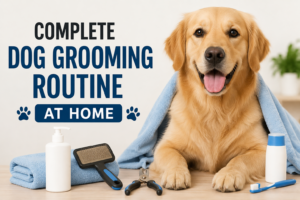

Keeping your dog clean and healthy doesn’t always require expensive trips to a professional groomer. With the right tools, patience, and knowledge, you can create a complete dog grooming routine at home that keeps your furry friend looking great while improving their overall health.
Regular grooming is more than making your dog look beautiful. It helps prevent skin infections, removes loose hair, reduces shedding, detects health problems early, and strengthens the bond between you and your pet.
Whether you own a Golden Retriever, Labrador, German Shepherd, Poodle, Husky, Beagle, or a small mixed breed, this guide will walk you through every step of grooming safely at home.
Why Regular Dog Grooming Is Important
Many dog owners only groom their pets when they become dirty. However, consistent grooming provides several health benefits.
Benefits of Home Grooming
- Reduces excessive shedding
- Prevents painful mats and tangles
- Keeps skin healthy
- Removes dirt and allergens
- Helps identify ticks and fleas
- Detects lumps or skin problems early
- Improves blood circulation
- Prevents ear infections
- Keeps nails at healthy lengths
- Strengthens your relationship with your dog
Dogs that are groomed regularly are generally happier, healthier, and more comfortable.
Essential Dog Grooming Tools
Before beginning your grooming routine, gather the proper supplies.
Grooming Checklist
- Slicker brush
- Bristle brush
- Undercoat rake (for double-coated breeds)
- Dog shampoo
- Dog conditioner (optional)
- Nail clippers or grinder
- Ear cleaning solution
- Cotton balls
- Dog toothbrush
- Dog toothpaste
- Grooming scissors
- Towels
- Hair dryer with cool setting
- Grooming wipes
Using pet-specific products helps protect your dog’s skin and coat.
Step 1: Brush the Coat Thoroughly
Brushing should always come before bathing.
Brushing removes:
- Loose fur
- Dirt
- Dead skin
- Small tangles
- Mats
- Dust
Different coat types require different brushes.
Short-Haired Dogs
Examples:
- Beagle
- Boxer
- Doberman
Brush 1–2 times weekly.
Medium-Coated Dogs
Examples:
- Golden Retriever
- Border Collie
Brush 3–4 times each week.
Long-Haired Dogs
Examples:
- Shih Tzu
- Afghan Hound
- Yorkshire Terrier
Brush daily to prevent matting.
Double-Coated Dogs
Examples:
- Husky
- German Shepherd
- Samoyed
Use an undercoat rake during shedding seasons.
Step 2: Inspect the Skin
While brushing, inspect your dog’s body carefully.
Look for:
- Fleas
- Ticks
- Dry skin
- Hot spots
- Redness
- Cuts
- Lumps
- Rashes
Finding skin problems early can prevent serious health issues later.
Step 3: Trim Mats Carefully
Never pull mats with force.
Instead:
- Hold the fur near the skin.
- Use grooming scissors carefully.
- Work slowly.
- Brush little by little.
Large mats may require professional grooming.
Step 4: Bathe Your Dog Properly
Bathing frequency depends on breed and activity level.
General Bathing Schedule
- Indoor dogs: Every 4–8 weeks
- Active outdoor dogs: Every 3–4 weeks
- Hairless breeds: Weekly
- Long-haired breeds: Every 4 weeks
Avoid bathing too frequently because it removes natural skin oils.
Bathing Steps
Wet the Coat
Use lukewarm water.
Avoid spraying directly into:
- Eyes
- Nose
- Ears
Apply Dog Shampoo
Massage gently from neck to tail.
Clean:
- Belly
- Legs
- Tail
- Paws
Avoid human shampoo because it can irritate your dog’s skin.
Rinse Completely
Leftover shampoo can cause itching.
Rinse until water runs completely clear.
Apply Conditioner (Optional)
Dogs with long coats may benefit from conditioner.
It reduces tangles and keeps fur softer.
Step 5: Dry the Coat
Use several towels first.
Then use:
- Cool air dryer
- Low heat setting
Never use high heat because dogs can overheat easily.
Brush while drying for a fluffy finish.
Step 6: Clean the Ears
Healthy ears should be:
- Pink
- Clean
- Odor-free
How to Clean
- Apply ear cleaner.
- Massage the ear base.
- Allow your dog to shake.
- Wipe with cotton.
Never insert cotton swabs deep into the ear canal.
Step 7: Trim the Nails
Long nails can cause:
- Pain
- Joint stress
- Walking problems
- Broken nails
Use sharp nail clippers or a grinder.
Trim only the tip.
If your dog has dark nails, trim small amounts to avoid cutting the quick.