
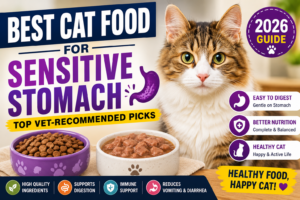

A sensitive stomach is one of the most common digestive issues in cats. If your cat frequently vomits, has diarrhea, refuses food, or experiences gas after eating, its diet may be the problem. Choosing the best cat food for sensitive stomach can improve digestion, increase energy, and help your cat live a healthier life.
Many cats develop food sensitivities due to certain proteins, artificial ingredients, or poor-quality fillers. Fortunately, modern cat foods are specially designed to support digestive health using highly digestible proteins, probiotics, and limited ingredients.
In this guide, you’ll learn how to identify digestive problems, what ingredients to look for, and the best cat foods recommended for sensitive stomachs in 2026.
What Causes a Sensitive Stomach in Cats?
A sensitive stomach doesn’t always mean your cat has a serious illness. In many cases, the problem is related to diet.
Common causes include:
- Food allergies
- Food intolerance
- Sudden diet changes
- Poor-quality ingredients
- Hairballs
- Intestinal parasites
- Stress
- Digestive disorders
- Inflammatory bowel disease (IBD)
If vomiting or diarrhea continues for more than 24–48 hours, consult your veterinarian immediately.
Signs Your Cat Has a Sensitive Stomach
Watch for these symptoms:
- Frequent vomiting
- Loose stools
- Diarrhea
- Constipation
- Gas
- Poor appetite
- Weight loss
- Stomach noises
- Lethargy
- Excessive licking after meals
If your cat shows multiple symptoms regularly, switching to a digestive-support diet may help.
How to Choose the Best Cat Food for a Sensitive Stomach
1. High-Quality Animal Protein
Cats are obligate carnivores and need real meat as the first ingredient.
Good choices include:
- Chicken
- Turkey
- Salmon
- Duck
- Rabbit
Avoid foods with unnamed meat by-products.
2. Limited Ingredients
Cats with food sensitivities often benefit from fewer ingredients.
Limited ingredient diets reduce exposure to common allergens and make digestion easier.
3. Easily Digestible Carbohydrates
Look for gentle carbohydrates such as:
- Rice
- Oats
- Sweet potatoes
Avoid excessive corn and wheat fillers.
4. Added Probiotics
Probiotics help maintain healthy gut bacteria.
Benefits include:
- Better digestion
- Reduced diarrhea
- Improved nutrient absorption
- Stronger immune system
5. Omega-3 Fatty Acids
Fish oil helps reduce inflammation inside the digestive tract.
Benefits include:
- Healthy skin
- Shinier coat
- Reduced digestive irritation
Ingredients to Avoid
Some ingredients may worsen digestive issues.
Avoid foods containing:
- Artificial colors
- Artificial preservatives
- Excess fillers
- Soy
- Excess corn
- Artificial flavors
- Too many different protein sources
- Low-quality meat meals
Best Cat Foods for Sensitive Stomachs
1. Hill’s Science Diet Sensitive Stomach & Skin
One of the most trusted formulas available.
Pros
- Highly digestible ingredients
- Added prebiotic fiber
- Vitamin E
- Omega-6 fatty acids
- Supports healthy digestion
Best for:
Adult indoor cats with mild digestive problems.
2. Purina Pro Plan Sensitive Skin & Stomach
A popular veterinarian-recommended formula.
Features:
- Real salmon
- Rice for gentle digestion
- Live probiotics
- High protein
- Excellent taste
Ideal for cats with occasional vomiting.
3. Royal Canin Digestive Care
Royal Canin focuses specifically on digestive health.
Benefits include:
- Highly digestible proteins
- Balanced fiber
- Supports healthy stool quality
- Reduces digestive upset
Recommended for adult cats with recurring stomach sensitivity.