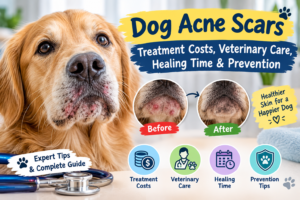

Dog Acne Scars: Treatment Costs, Veterinary Care, Healing Time & Prevention
Introduction
Small red bumps, blackheads, pimples, swelling, and irritated skin, particularly around a dog’s lips and chin, are all common symptoms of dog acne. With the right care, mild dog acne frequently gets better. On the other hand, severe or recurrent acne can harm the skin and occasionally result in permanent scars, hair loss, or transient dark marks.
If your dog has developed marks after an acne outbreak, you may be wondering: Do dog acne scars go away? How much does treatment cost? When should you visit a veterinarian? And how long does dog acne take to heal?
The good news is that many dogs recover well when the underlying cause is identified and treated early. This guide explains dog acne scars, veterinary care, possible treatment costs, healing time, and practical prevention tips.
What Is Dog Acne?
Dog acne, also called canine acne, is an inflammatory skin condition that commonly affects the muzzle, chin, and lips. It can look similar to human acne, although the causes and treatment can be different.
Dogs may develop:
- Red bumps
- Whiteheads or pustules
- Blackheads
- Swollen areas
- Crusts
- Skin irritation
- Hair loss around affected areas
- Secondary bacterial infection
Young dogs are particularly prone to canine acne, but adult dogs can also develop it.
Mild acne may disappear without leaving significant marks. More severe inflammation, scratching, squeezing, or infection can increase the chance of skin damage.
What Do Dog Acne Scars Look Like?
Dog acne scars can appear differently depending on the severity of the original skin problem.
Common signs include:
- Dark brown or black spots
- Areas of lighter or darker pigmentation
- Small indentations in the skin
- Thickened skin
- Hairless patches
- Persistent redness
- Small raised areas
Not every dark mark is a true scar. Post-inflammatory pigmentation can remain after inflammation has healed and may gradually fade over time.
True scarring occurs when deeper layers of the skin are damaged. Deep or infected lesions are more likely to cause permanent changes.
What Causes Dog Acne Scars?
The scars themselves usually develop because the original acne caused significant inflammation or trauma to the skin.
Several factors can contribute.
Severe Inflammation
Large, painful pimples can cause deeper inflammation. When the inflammation damages the skin, healing may result in scar tissue or pigmentation.
Bacterial Infection
A damaged pimple can become infected. Infection may increase inflammation and delay healing.
Scratching and Rubbing
Dogs may scratch or rub their faces when acne is itchy or painful. Repeated trauma can make the skin injury worse.
Squeezing Pimples
Owners should avoid squeezing dog pimples. Trying to pop lesions can introduce bacteria, increase inflammation, and potentially cause additional skin damage.
Repeated Acne
If acne keeps returning, continuous inflammation can prevent the skin from recovering completely.
Do Dog Acne Scars Go Away?
Many marks associated with dog acne improve naturally as the skin heals.
Temporary pigmentation can take several weeks or even months to become less noticeable. The exact healing period depends on your dog’s skin, the severity of the acne, whether infection occurred, and whether the underlying problem has been controlled.
Superficial marks are generally more likely to fade than deep scars.
If a scar has caused a permanent change in skin texture, such as a depression or thickened area, it may not completely disappear.
The most important step is to control active acne and prevent additional skin damage.
Dog Acne Healing Time
The healing time varies from one dog to another.
For mild cases, visible inflammation may improve within a few weeks after appropriate treatment. More severe or infected cases can take considerably longer.
Scar pigmentation may remain after the active acne has disappeared.
Factors that can affect healing include:
- Severity of acne
- Presence of infection
- Dog’s age
- Skin sensitivity
- Allergies or other skin conditions
- Treatment consistency
- Scratching or rubbing
- Recurrence of acne
If your dog’s skin is becoming increasingly red, swollen, painful, or infected instead of improving, veterinary evaluation is recommended.
Veterinary Care for Dog Acne
A veterinarian can determine whether the lesions are actually acne or another skin condition.
Several problems can resemble dog acne, including bacterial infections, fungal infections, parasites, allergies, and other inflammatory skin disorders.
During an examination, your veterinarian may inspect the affected skin and ask about your dog’s diet, grooming routine, environment, and previous skin problems.
In more complicated cases, diagnostic tests may be recommended.
Possible Veterinary Treatments
The cause and severity of the illness determine the course of treatment. A veterinarian may suggest medication for underlying skin conditions, antiseptic cleansing, topical products made especially for dogs, or treatment for bacterial infections.
Unless your veterinarian expressly advises it, do not give your dog human acne medications. Certain human products may cause skin irritation in dogs or be dangerous if ingested.
How Much Does Dog Acne Treatment Cost?
The cost of treating dog acne varies considerably depending on where you live, the veterinarian’s fees, the severity of the condition, and whether diagnostic testing is required.
A simple veterinary consultation may be relatively inexpensive, while complicated cases involving laboratory testing, prescription medication, or repeated follow-up visits can cost substantially more.
Potential expenses may include:
- Veterinary examination
- Skin examination or diagnostic testing
- Prescription medication
- Medicated shampoo or cleanser
- Treatment for secondary infection
- Follow-up appointments
- Treatment of an underlying allergy or skin disorder
Because prices vary significantly between clinics and countries, it is best to ask your local veterinary clinic for an estimate before treatment begins.
The cheapest approach is not always the safest. Treating the underlying problem early may help prevent recurring inflammation and more serious skin damage.
How Veterinarians Diagnose Severe Dog Acne
If your dog’s acne is severe, persistent, or unusual, your veterinarian may investigate other causes.
Depending on the symptoms, testing can help determine whether bacteria, yeast, parasites, allergies, or another skin condition is involved.
This is important because treating a condition incorrectly can delay healing.
For example, what appears to be acne may actually be an infection or allergic skin disease. Once the correct cause is identified, treatment can be more targeted.
Home Care for Dog Acne Scars
Home care should focus on protecting the healing skin rather than trying to remove the scar aggressively.
Keep the Area Clean
Follow your veterinarian’s instructions for cleaning the affected area. Avoid harsh household soaps, alcohol, or strong chemicals.
Avoid Picking
Never pick, scratch, or squeeze pimples and scabs.
Keep Food and Water Bowls Clean
Dirty bowls can contribute to irritation and bacterial exposure around the mouth. Wash food and water bowls regularly.
Some dogs may also benefit from bowls that are easier to keep clean and less likely to irritate their skin.
Wash the Face Gently
If your veterinarian recommends facial cleaning, use a pet-safe product and avoid vigorous rubbing.
Prevent Excessive Scratching
If your dog continuously scratches the affected area, speak with your veterinarian. Excessive scratching can reopen healing skin.
How to Prevent Dog Acne From Coming Back
Preventing future outbreaks is often more useful than focusing only on existing scars.
1. Maintain Good Facial Hygiene
Gently clean your dog’s muzzle when necessary, especially after meals if food frequently remains around the mouth.
2. Clean Food and Water Bowls
Wash bowls frequently to reduce buildup of food residue and microorganisms.
3. Avoid Harsh Grooming Products
Use products designed for dogs. Human skincare products can be too harsh for canine skin.
4. Do Not Pop Pimples
Allow lesions to heal naturally or follow veterinary treatment instructions.
5. Control Allergies
If your dog has recurring facial irritation, allergies may be contributing to the problem. A veterinarian can help investigate possible triggers.
6. Keep Bedding Clean
Regularly wash bedding, blankets, and other surfaces that come into frequent contact with your dog’s face.
7. Follow Treatment Instructions
If your veterinarian prescribes medication or a medicated cleanser, use it exactly as directed. Stopping treatment too early can allow the underlying problem to return.
When Should You See a Veterinarian?
Mild occasional bumps may not always require urgent veterinary attention. However, you should contact a veterinarian if your dog develops:
- Severe swelling
- Bleeding
- Pus-filled lesions
- Significant pain
- Bad odor from the affected skin
- Extensive hair loss
- Repeated acne outbreaks
- Deep wounds
- Rapidly spreading redness
- Persistent lesions that do not improve
- Changes in behavior due to discomfort
A veterinarian should also evaluate acne-like lesions in dogs with other signs of illness.
Can Dog Acne Leave Permanent Scars?
Yes, severe acne can sometimes cause permanent scarring, particularly when inflammation affects deeper layers of the skin.
However, many marks that owners call “scars” are actually temporary pigmentation changes. These can gradually become less visible as the skin recovers.
Early treatment, preventing scratching, and avoiding squeezing lesions can reduce the risk of permanent damage.
Frequently Asked Questions
How long do dog acne scars take to heal?
The timeline varies. Active acne may improve within weeks with appropriate care, while dark pigmentation can take several weeks or months to fade. Deep scars may remain permanently.
Can I use human acne cream on my dog?
Do not use human acne products unless your veterinarian specifically tells you to do so. Dogs can lick topical products, and some ingredients may irritate their skin or be unsafe.
Is dog acne painful?
Mild acne may cause little discomfort, but severe inflammation or infection can become painful. Swelling, redness, pus, and repeated rubbing can indicate a more serious problem.
Can food cause dog acne?
Food is not considered the only or universal cause of canine acne. However, food allergies or sensitivities can contribute to skin inflammation in some dogs. A veterinarian can help determine whether diet may be involved.
Will dog acne come back?
Yes. Some dogs experience recurring acne, particularly if an underlying trigger remains. Consistent hygiene and veterinary management can help reduce recurrence.
Should I pop my dog’s pimples?
No. Popping pimples can damage the skin, increase inflammation, introduce bacteria, and potentially worsen scarring.
Conclusion
Dog acne scars can be concerning, but many dogs recover well with appropriate care. Some dark marks are temporary pigmentation rather than permanent scars, while deeper skin damage may leave lasting changes.
The best course of action is to treat active acne as soon as possible, avoid infection, refrain from squeezing or scratching lesions, and consult a veterinarian if the condition is severe or keeps coming back.
The location, severity, tests, and medications needed can all have a significant impact on the cost of veterinary care. It’s crucial to find and manage the acne’s root cause rather than just treating the scar.
With gentle skin care, clean feeding equipment, regular grooming, and appropriate veterinary treatment, many dogs can achieve healthier skin and experience fewer future outbreaks.