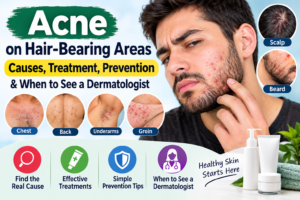

Acne on Hair-Bearing Areas: Causes, Treatment, Prevention & When to See a Dermatologist
It can be painful, irritating, and occasionally challenging to treat acne on hair-bearing areas. Although acne is typically associated with the face, breakouts can also occur on the scalp, beard, back, chest, underarms, and other areas where hair grows. These lumps may resemble typical pimples, but some are brought on by folliculitis, ingrown hairs, or inflamed hair follicles.
Because the type of breakout determines the appropriate treatment, it is crucial to understand the cause of acne on hair-bearing areas. While persistent or painful bumps may need to be treated by a dermatologist, mild cases may be resolved with gentle skincare and improved grooming practices.
This guide explains the common causes of acne on hair-bearing areas, effective treatment options, prevention tips, and warning signs that mean you should seek medical advice.
What Is Acne on Hair-Bearing Areas?
Acne on hair-bearing areas refers to pimples, blackheads, whiteheads, or inflamed bumps that develop in regions covered with hair. These breakouts often occur when hair follicles become clogged with oil, dead skin cells, and bacteria.
Hair-bearing skin contains follicles that produce hair and may also contain sebaceous glands, which release oil called sebum. When excess oil and dead skin cells block a follicle, a pimple can form. Shaving, sweating, friction, and hair products may make the problem worse.
Not every bump in a hairy area is acne. Folliculitis, ingrown hairs, and fungal folliculitis can cause similar symptoms. Identifying the difference helps you choose a safer and more effective treatment.
Common Causes of Acne on Hair-Bearing Areas
1. Clogged Hair Follicles
One of the most common causes of acne is a blocked hair follicle. Excess oil, dead skin cells, and other debris can collect inside the pore and create a whitehead or blackhead.
If the follicle becomes inflamed, it may develop into a red pimple or a pus-filled bump. This can happen on the scalp, beard area, chest, back, and other hair-bearing regions.
2. Hormonal Changes
Hormonal fluctuations can increase oil production and make the skin more prone to breakouts. Androgens, including testosterone, stimulate sebaceous glands and may contribute to acne.
Hormonal acne can appear on the face, neck, chest, shoulders, and back. Some people notice more breakouts during puberty, menstruation, pregnancy, or other periods of hormonal change.
3. Shaving and Ingrown Hairs
Shaving, waxing, and other hair-removal methods can irritate the skin. When a shaved hair curls back into the skin, it may cause an ingrown hair.
Ingrown hairs often appear as small red bumps, sometimes with a visible hair in the center. They can be itchy, painful, or filled with pus. Curly or coarse hair is more likely to become ingrown, especially in the beard, bikini, and underarm areas.
4. Sweat and Friction
Sweat, tight clothing, and repeated rubbing can irritate hair follicles. This is particularly common on the chest, back, thighs, groin, and underarms.
Sports equipment, backpacks, tight collars, and unwashed workout clothing may trap heat and moisture against the skin. These conditions can contribute to acne or folliculitis.
5. Hair and Skin Products
Pomades, conditioners, styling creams, and oily hair products can clog pores and spread to adjacent skin. Pomade acne is another name for this.
Breakouts along the hairline, forehead, neck, or behind the ears can also occur in people with scalp acne. These breakouts could be made worse by heavy oils and non-comedogenic products.
6. Bacterial Folliculitis
Bacterial folliculitis occurs when hair follicles become inflamed, often due to bacteria such as Staphylococcus aureus. It can cause small red bumps or pustules around individual hairs.
Folliculitis may develop after shaving, sweating, friction, or damage to the skin. Unlike typical acne, the bumps are often centered directly around hair follicles.
7. Fungal Folliculitis
Fungal folliculitis, sometimes called pityrosporum folliculitis, is caused by an overgrowth of yeast associated with the skin. It commonly affects the upper chest, back, shoulders, and sometimes the hairline.
The bumps may be small, similar in size, and itchy. They may become worse in hot, humid conditions. Traditional acne treatments may not help because the underlying cause is different.
8. Medications and Other Triggers
Certain medicines, including corticosteroids and some other drugs, may contribute to acne-like breakouts. Occlusive clothing, oily substances, and some occupational exposures can also aggravate follicular inflammation.
If breakouts begin after starting a new medication, discuss the symptoms with your healthcare professional rather than stopping prescribed treatment on your own.
Common Symptoms of Hair-Bearing Area Acne
Symptoms vary depending on the cause and location. Common signs include:
- Small red or skin-colored bumps.
- Whiteheads and blackheads.
- Pus-filled pimples.
- Tender or painful lumps.
- Itching or burning around hair follicles.
- Ingrown hairs after shaving.
- Dark marks or scars left after healing.
Scalp acne may feel like sore bumps when brushing or washing the hair. Beard acne may appear as pimples, ingrown hairs, or irritation after shaving. Breakouts on the chest and back may become more noticeable after exercise or sweating.
How to Treat Acne on Hair-Bearing Areas
Treatment depends on whether the bumps are caused by acne, folliculitis, or ingrown hairs. The following steps can help with mild breakouts.
1. Cleanse the Skin Gently
Wash affected areas with a mild, fragrance-free cleanser. Cleanse after sweating and avoid vigorous scrubbing, which can increase irritation.
For scalp acne, use a gentle shampoo and rinse away hair products thoroughly. Avoid picking or scratching bumps.
2. Try Salicylic Acid
Salicylic acid helps exfoliate the skin and clear clogged pores. A cleanser containing salicylic acid may be useful for mild acne on the chest, back, or other accessible hair-bearing areas.
Start with a low-strength product according to its label. Avoid applying it to broken skin, sensitive genital skin, or areas that are already irritated from shaving.
3. Consider Benzoyl Peroxide
Benzoyl peroxide helps reduce acne-causing bacteria and can be useful for inflammatory acne and some bacterial folliculitis. A wash may be more practical for the chest, back, or beard area.
Begin with a lower concentration and use it as directed. It may cause dryness and can bleach towels or clothing.
4. Use a Gentle Moisturizer
A lightweight, non-comedogenic moisturizer can help prevent dryness caused by acne treatments. Choose products that are fragrance-free if your skin is sensitive.
Moisturizing is particularly helpful when using salicylic acid or benzoyl peroxide regularly.
5. Adjust Shaving Habits
If shaving triggers bumps, use a clean razor and a moisturizing shaving gel. Shave in the direction of hair growth and avoid repeated passes over the same area.
Do not squeeze ingrown hairs or dig into the skin with tweezers. If ingrown hairs are frequent, a dermatologist can recommend a suitable hair-removal approach.
6. Seek Medical Treatment for Persistent Breakouts
A dermatologist may recommend prescription treatments such as topical retinoids, antibiotics, or other medication depending on the diagnosis. Fungal folliculitis may require an antifungal treatment instead of standard acne medicine.
Severe, recurring, or scarring acne may need a more structured treatment plan.
How to Prevent Acne on Hair-Bearing Areas
Prevention focuses on reducing clogged pores, irritation, and follicle damage.
Keep Hair and Skin Products Away From Breakout-Prone Areas
Use non-comedogenic products when possible. Rinse conditioner thoroughly and avoid allowing heavy oils or styling products to remain on the forehead, neck, or back.
Shower After Exercise
Sweat and friction can aggravate follicular inflammation. Change out of sweaty clothing and wash the skin after workouts.
Wear Breathable Clothing
Loose, breathable fabrics can reduce heat and rubbing. Avoid wearing tight clothing for long periods when it causes repeated irritation.
Avoid Picking and Scratching
Squeezing pimples can increase inflammation and raise the risk of dark marks, infection, and scarring. Allow bumps to heal without unnecessary manipulation.
Keep Razors and Grooming Tools Clean
Use clean shaving equipment and avoid sharing razors. Replace dull blades and do not shave over severely inflamed skin.
Maintain a Consistent Skincare Routine
Gentle cleansing, appropriate acne treatment, and regular moisturizing are more useful than frequently changing products. Give a suitable treatment time to work unless irritation develops.
When to See a Dermatologist
You should consider seeing a dermatologist if acne on hair-bearing areas is persistent, painful, or repeatedly returns despite home care.
Seek medical advice if you notice:
- Deep, painful nodules or cysts.
- Spreading redness, warmth, or swelling.
- Large pus-filled bumps or draining lesions.
- Fever or feeling generally unwell.
- Hair loss or scarring around scalp lesions.
- Recurrent boils in the underarms, groin, or other skin folds.
- Breakouts that do not improve with gentle skincare.
- Itchy, uniform bumps that may indicate fungal folliculitis.
A dermatologist can examine the skin and determine whether the problem is acne, folliculitis, ingrown hairs, or another condition. In some cases, a culture or other testing may be needed.
Frequently Asked Questions
Can acne develop on the scalp?
Yes. Scalp acne can develop when follicles become clogged or inflamed. Hair products, sweating, and oily skin may contribute. Persistent scalp bumps should be evaluated, especially if they are painful or associated with hair loss.
Why do I get pimples in my beard area?
Beard pimples may be caused by acne, ingrown hairs, shaving irritation, or folliculitis. Shaving in the direction of hair growth and avoiding close, repeated passes may reduce irritation.
Is acne on the chest and back the same as facial acne?
Chest and back acne can involve the same processes as facial acne, including clogged pores and inflammation. However, folliculitis and other conditions can look similar, so persistent or itchy bumps may need a professional diagnosis.
Can hair products cause acne?
Yes. Heavy oils, pomades, and styling products can clog pores and cause breakouts along the hairline, forehead, neck, or back. Switching to non-comedogenic products may help.
How long does acne on hair-bearing areas take to heal?
Mild breakouts may improve over several weeks with consistent care. Deeper acne, recurrent folliculitis, or ingrown hairs may take longer and sometimes require medical treatment. Seek professional advice if the condition is not improving.
Final Thoughts
Clogged pores, hormonal fluctuations, shaving, ingrown hairs, perspiration, friction, or inflamed hair follicles can all cause acne on hair-bearing areas. The underlying cause determines the best course of action.
Mild breakouts can be controlled with gentle cleansing, appropriate acne products, cautious shaving, and proper hygiene. Bumps that are painful, persistent, spreading, or leave scars, however, shouldn’t be disregarded. A dermatologist can diagnose the ailment and suggest a course of action that will protect your skin and lower the chance of recurrence.