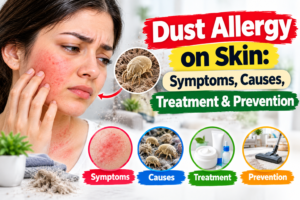

Dust Allergy on Skin: Symptoms, Causes, Treatment & Prevention
Introduction
Sneezing, coughing, watery eyes, and breathing issues are frequently linked to dust allergies. But the skin can also be impacted by dust. When exposed to household dust, dust mites, dirt, or airborne particles, some people experience itching, redness, dryness, rashes, or elevated bumps.
An allergy, irritation, sensitive skin, or another skin condition that gets worse in a dusty environment can all result in a dust-related skin reaction. Determining the cause is crucial because the course of treatment depends on whether the skin is responding to mold, dust mites, cleaning products, animal particles, or just plain irritation.
The common signs, causes, available treatments, and preventative measures for dust allergies on the skin are described in this guide.
What Is Dust Allergy on Skin?
Dust allergy on skin refers to an allergic or irritation-related skin reaction after contact with dust or substances present in dust. Household dust may contain:
- Dust mites and their waste particles
- Pollen
- Mold spores
- Pet dander
- Fabric fibers
- Soil particles
- Cleaning-product residue
- Insect particles
Dust mites are a common trigger of indoor allergies. They are microscopic organisms that live in bedding, carpets, mattresses, curtains and upholstered furniture. Their waste particles can trigger allergic reactions in sensitive people.
A true dust allergy may cause hives or worsen eczema. In other cases, dust simply dries or irritates the skin, producing symptoms that look similar to an allergy.
Symptoms of Dust Allergy on Skin
Symptoms may appear immediately after exposure or develop several hours later. Common signs include:
1. Itching
Itching is one of the most common symptoms. The skin may feel itchy after cleaning, handling old clothes, sweeping floors or sleeping on dusty bedding.
2. Redness
Affected areas may become red, warm or inflamed. Redness can occur on the face, neck, hands, arms and other exposed areas.
3. Small Bumps
Dust-related skin reactions may cause tiny raised bumps. These can resemble insect bites, heat rash or mild acne but are often accompanied by itching.
4. Hives
Hives are raised, swollen patches that may be pink, red or skin-colored. They can move from one part of the body to another and may disappear within a few hours.
5. Dry or Flaky Skin
Dust and indoor allergens may worsen dryness, especially in people with eczema or sensitive skin. The skin may feel rough, tight or irritated.
6. Eczema Flare-Ups
People with eczema may notice increased itching, redness, scaling or cracking after exposure to dusty rooms, dirty fabrics or dust mites.
7. Burning or Stinging
Some people experience burning, stinging or a prickling sensation. This is more likely when dust combines with sweat, friction or harsh cleaning chemicals.
8. Swelling
Mild swelling around the eyes, cheeks, hands or other exposed areas may occur. Severe swelling involving the lips, tongue or throat requires emergency care.
Causes of Dust Allergy on Skin
Dust Mites
Dust mites are a major indoor allergen. Their particles can trigger allergic inflammation and may worsen eczema, itching and hives.
Pet Dander
Dust often carries tiny flakes of skin, saliva proteins and hair from cats, dogs and other animals. People allergic to pet dander may develop skin itching or hives after touching dusty furniture or bedding.
Mold Spores
Damp rooms, basements and poorly ventilated areas may contain mold spores. These can irritate the skin or trigger allergic symptoms in sensitive individuals.
Pollen
Pollen can enter the home through open windows, clothing and shoes. When pollen mixes with dust, it may cause skin irritation in people with seasonal allergies.
Cleaning Chemicals
Floor cleaners, disinfectants, detergents and sprays may remain on dusty surfaces. These chemicals can cause irritant or allergic contact dermatitis.
Sensitive Skin
People with sensitive skin may react to ordinary dust particles because their skin barrier is weak or easily disturbed. Frequent washing, hot water and harsh soaps can make symptoms worse.
Existing Skin Conditions
Dust may aggravate conditions such as:
- Eczema
- Atopic dermatitis
- Contact dermatitis
- Psoriasis
- Dry skin
- Rosacea
Dust may not be the original cause, but it can increase itching and inflammation.
Dust Allergy vs. Dust Irritation
Not every dust-related rash is a true allergy.
Dust allergy involves the immune system reacting to an allergen such as dust-mite particles, pollen or pet dander. It may cause hives, itching, swelling or eczema flare-ups.
Dust irritation occurs when particles, friction, sweat or chemicals damage or disturb the skin. It may cause redness, dryness, burning and roughness without a true immune allergy.
An allergy specialist or dermatologist can help determine the cause when symptoms are persistent or recurring.
Treatment for Dust Allergy on Skin
1. Wash the Exposed Skin
After cleaning or working in a dusty environment, gently wash the affected area with lukewarm water and a mild, fragrance-free cleanser. Avoid scrubbing because friction can increase inflammation.
2. Apply a Cool Compress
Place a clean, cool, damp cloth on itchy or swollen skin for 10–15 minutes. Repeat as needed to reduce discomfort.
3. Use a Fragrance-Free Moisturizer
Apply a thick, gentle moisturizer after washing. Ingredients such as ceramides, glycerin and petrolatum may help restore the skin barrier and reduce dryness.
4. Avoid Scratching
Scratching can damage the skin, cause bleeding and increase the risk of infection. Keep fingernails short and use a cool compress when itching becomes intense.
5. Consider an Antihistamine
An oral antihistamine may help relieve allergy-related itching or hives. Ask a pharmacist or healthcare professional which option is appropriate, especially for children, pregnancy, older adults or people taking other medicines.
6. Use a Mild Anti-Inflammatory Cream
For certain itchy inflammatory rashes, a healthcare professional may recommend a short course of a low-strength topical corticosteroid. Do not use steroid creams on the face, eyelids, groin or broken skin without medical advice.
7. Treat the Underlying Skin Condition
If dust triggers eczema, dermatitis or another skin disorder, treatment may require a regular skincare routine, prescription creams or allergy evaluation.
Home Care Tips
Simple home-care measures may reduce symptoms:
- Rinse the skin after dust exposure.
- Change dusty clothes after cleaning.
- Use lukewarm rather than hot water.
- Avoid scented soaps and lotions.
- Moisturize twice daily if the skin is dry.
- Keep the bedroom clean and well ventilated.
- Avoid rubbing or scrubbing the rash.
- Do not apply lemon juice, baking soda or strong essential oils to irritated skin.
- Test new skincare products on a small area before full use.
Natural ingredients are not always safe for inflamed skin. Fragrance-free, dermatologist-tested products are usually a better choice than homemade mixtures.
How to Prevent Dust Allergy on Skin
Keep Bedding Clean
Wash sheets, pillowcases and blankets regularly in hot water when the fabric allows. Use dust-mite-resistant covers for mattresses and pillows if dust mites are a suspected trigger.
Reduce Carpets and Heavy Fabrics
Carpets, thick curtains and upholstered furniture can collect dust. Vacuum regularly and wash curtains or removable covers according to their care instructions.
Use a HEPA Vacuum
A vacuum with a HEPA filter may help reduce fine particles and allergens in the home. Vacuum slowly and avoid immediately entering the room if cleaning stirs up dust.
Wear Protective Clothing
When dusting, sweeping or handling old items, wear long sleeves and gloves. A suitable mask may also reduce inhalation of dust particles.
Avoid Dry Dusting
Dry dusting can send particles into the air. Use a damp microfiber cloth or a vacuum attachment instead.
Control Humidity
Dust mites thrive in humid environments. Keeping indoor humidity moderate may help reduce their growth. Repair leaks and improve ventilation in damp areas.
Wash Hands After Cleaning
Wash your hands and exposed skin after handling dusty objects, books, storage boxes or old clothing.
Keep Pets and Bedding Clean
Regular grooming and washing pet bedding can reduce the amount of dander carried through the home.
When to See a Doctor
Contact a dermatologist or healthcare professional if:
- The rash lasts more than several days.
- Symptoms return frequently.
- The skin becomes painful, cracked or infected.
- There is pus, increasing warmth or spreading redness.
- Over-the-counter treatment does not help.
- The rash affects the eyes, lips or genitals.
- You are unsure whether the problem is allergy, eczema or infection.
Seek emergency medical help if a skin reaction occurs with difficulty breathing, throat tightness, faintness, or sudden swelling of the lips, tongue or throat. These may be signs of a serious allergic reaction.
Frequently Asked Questions
Can dust cause itching on the skin?
Yes. Dust may cause itching through dust-mite allergy, pet dander, pollen, mold or simple skin irritation. People with eczema may experience stronger symptoms.
Can dust allergy cause red bumps?
Yes. Dust-related reactions may produce small itchy bumps or hives. However, red bumps can also result from insect bites, heat rash, eczema or infection.
Is dust allergy on skin contagious?
No. An allergic or irritation-related reaction caused by dust is not contagious. However, an infectious rash may look similar, so persistent symptoms should be evaluated.
Can dust allergy cause facial redness?
Yes. Dust, allergens and cleaning chemicals may trigger facial redness, itching or irritation. Avoid applying harsh products to the face while the skin is inflamed.
What is the best cream for dust allergy on skin?
A fragrance-free moisturizer is a useful first step. Depending on the rash, a healthcare professional may recommend an antihistamine or a mild anti-inflammatory cream.
How long does dust allergy skin irritation last?
Mild irritation may improve within a few hours or days after avoiding the trigger. Hives may disappear sooner, while eczema flare-ups can last longer and may need treatment.
Conclusion
Itching, redness, bumps, hives, dryness, and flare-ups of eczema can all result from a dust allergy. Common triggers include mold, dust mites, pollen, pet dander, and cleaning agents. Cool compresses, fragrance-free moisturizers, gentle cleaning, and minimizing indoor dust can all help alleviate and prevent symptoms.
See a dermatologist or allergy specialist to determine the precise cause and select the safest course of action if the rash is severe, persistent, or recurs frequently.
Medical Disclaimer: Professional medical advice, diagnosis, or treatment are not substituted by this article, which is intended solely for general educational purposes.