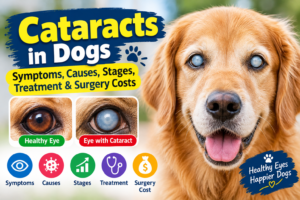

Cataracts in Dogs: Symptoms, Causes, Stages, Treatment, and Surgery Costs
Cataracts are a common eye condition that can affect both humans and dogs. They develop when the lens inside the eye becomes cloudy, preventing light from passing through properly. As a result, a dog may experience blurred vision, difficulty seeing, or even complete blindness if the condition progresses.
Some dogs develop cataracts because of genetics, while others may develop them due to diabetes, eye injuries, or certain underlying health problems. In the early stages, cataracts may be difficult to notice, but as they progress, the eyes can become cloudy and vision may deteriorate.
Understanding the symptoms, causes, and treatment options can help you protect your dog’s eyesight and maintain their quality of life.
What Do Early-Stage Cataracts Look Like in Dogs?
Early-stage cataracts affect less than 15% of the eye’s lens. At this point, the changes may be too small to notice without specialized veterinary equipment. Most dogs with incipient cataracts continue to see normally because the majority of the lens remains clear.
A veterinarian can identify these early changes using an ophthalmoscope, which helps examine the internal structures of the eye. Cataracts may appear as small areas that interfere with the normal reflection of light.
As the condition progresses, you may begin to notice a cloudy or whitish appearance in your dog’s eyes. However, not every cloudy eye is caused by cataracts. Other age-related eye changes can create a similar appearance, so a veterinary examination is important.
The Four Stages of Cataracts in Dogs
Canine cataracts are generally classified into four stages based on how much of the lens is affected.
1. Incipient Cataracts
Incipient cataracts are the earliest stage. They affect less than 15% of the lens and typically do not interfere with vision.
Dogs may show no obvious symptoms, and owners might not realize anything is wrong until a veterinarian discovers the condition during an eye examination.
2. Immature Cataracts
Immature cataracts affect a larger portion of the lens, but some areas remain clear. Dogs may still have useful vision, although their ability to see clearly can vary depending on the location and severity of the cataract.
Possible signs include difficulty seeing in dim lighting, hesitation around unfamiliar objects, or changes in how confidently your dog moves around the home.
3. Mature Cataracts
Mature cataracts affect the entire lens, causing it to become significantly cloudy. Vision is usually severely impaired and may be completely lost in the affected eye.
Dogs may bump into furniture, struggle to find toys, or become less confident when walking in unfamiliar places.
4. Hypermature Cataracts
Hypermature cataracts are an advanced stage in which the lens begins to shrink and develop wrinkles. The lens may also undergo changes that trigger inflammation inside the eye.
This stage can increase the risk of complications, including glaucoma and damage to other eye structures. Veterinary monitoring is essential to protect your dog’s comfort and remaining vision.
Youtube Video
What Causes Cataracts in Dogs?
Several factors can contribute to cataract development. Identifying the underlying cause helps veterinarians determine the most appropriate treatment.
1. Genetics and Inherited Conditions
Inherited cataracts are among the most common causes of cataracts in dogs. Some dogs develop them because of genetic changes passed down from their parents. They may appear at a young age or develop later in life.
Breeds that may have a higher risk of inherited cataracts include:
-
Standard Poodles
-
Miniature Poodles
-
Miniature Schnauzers
-
Boston Terriers
-
American Cocker Spaniels
-
Australian Shepherds
-
Golden Retrievers
-
Rottweilers
Having a predisposed breed does not mean your dog will definitely develop cataracts. Responsible breeding and regular veterinary examinations can help identify potential eye problems.
2. Diabetes in Dogs
Diabetes mellitus is another important cause of cataracts in dogs. High blood sugar levels can change the balance of substances inside the lens, causing it to become cloudy.
Diabetic cataracts may develop quickly, sometimes affecting both eyes within a relatively short period.
Watch for other possible signs of diabetes, including:
-
Increased thirst
-
Frequent urination
-
Increased hunger
-
Unexplained weight loss
-
Changes in energy levels
If your dog develops cloudy eyes along with these symptoms, arrange a veterinary examination promptly. Managing diabetes is important for overall health, although controlling blood sugar does not necessarily reverse cataracts that have already formed.
3. Certain Medications or Toxic Exposures
In rare cases, specific medications or toxic exposures may contribute to cataract formation. Some drugs have been associated with lens changes under particular circumstances.
Never stop a prescribed medication without consulting your veterinarian. If your dog develops changes in vision after starting a medication, discuss the timing and possible side effects with the veterinary team.
4. Low Calcium Levels
Abnormally low calcium levels, known as hypocalcemia, may contribute to cataract development in some dogs.
Possible underlying causes include nutritional imbalances, kidney-related problems, and other medical conditions that affect calcium regulation.
A veterinarian may recommend blood tests to determine whether an underlying problem is present.
5. Eye Injuries
Trauma to the eye can damage the lens or trigger inflammation that leads to cataracts. Injuries may occur during rough play, fights with other animals, accidents, or contact with sharp objects.
Eye injuries should be evaluated promptly, especially if your dog has redness, swelling, squinting, discharge, or sudden changes in vision.
6. Other Eye Diseases
Certain eye conditions, including uveitis, can cause inflammation inside the eye and contribute to cataract formation.
Cataracts may also develop alongside other eye problems, making a complete ophthalmic examination important. Treating the underlying condition may help protect the eye from additional damage.
How Are Cataracts Diagnosed in Dogs?
A veterinarian can usually identify cataracts through a detailed eye examination. Depending on the findings, additional testing may be needed to determine whether surgery is appropriate.
Common diagnostic steps include:
Eye examination: The veterinarian checks the appearance of the lens, pupils, cornea, and other eye structures.
Ophthalmoscopy: A specialized instrument helps examine the lens and internal structures of the eye.
Vision assessment: The veterinarian evaluates how your dog responds to visual cues and navigates its surroundings.
Blood tests: These may help identify diabetes, calcium abnormalities, or other underlying medical conditions.
Additional eye testing: Tests measuring eye pressure and assessing the retina may be necessary to check for glaucoma or other complications.
One condition that can resemble cataracts is nuclear sclerosis, an age-related change that makes the lens appear bluish or cloudy. Unlike significant cataracts, nuclear sclerosis usually has a much smaller effect on vision. A veterinarian can distinguish between these conditions.
How Are Cataracts in Dogs Treated?
Treatment depends on the cataract’s severity, whether vision is affected, and whether other eye problems are present.
1. Cataract Surgery
Surgery is the primary treatment for restoring vision lost because of cataracts. It is typically performed by a veterinary ophthalmologist.
During the procedure, the cloudy lens is removed. In many cases, an artificial lens is implanted to help the eye focus light more effectively.
Surgery may be recommended when cataracts significantly interfere with vision and the rest of the eye is healthy enough to benefit from treatment.
Success depends on several factors, including the condition of the retina, the presence of inflammation, and the dog’s overall health. Veterinary specialists report favorable outcomes in appropriately selected patients, but surgery cannot guarantee restored vision in every dog.
2. Anti-Inflammatory Eye Drops
Some dogs develop inflammation associated with cataracts. Veterinarians may prescribe anti-inflammatory eye drops to reduce inflammation and help keep the eye comfortable.
These medications can help manage complications, but they do not remove cataracts or restore vision lost because of a cloudy lens.
Do not use human eye drops or leftover veterinary medications without professional guidance. The wrong medication may worsen certain eye conditions.
3. Monitoring Early Cataracts
Dogs with small cataracts that do not affect vision may not need immediate surgery.
A veterinarian may recommend regular eye examinations to monitor changes and identify complications early. The appropriate follow-up schedule depends on the cataract’s cause, severity, and rate of progression.
If the cataracts are associated with diabetes or another medical condition, treating that underlying problem is also important.
How Much Does Cataract Surgery Cost for Dogs?
The cost of canine cataract surgery varies depending on the veterinary hospital, location, diagnostic testing, and the complexity of the procedure.
A commonly reported estimate in the United States is approximately $2,800 to $4,900, although some cases may cost more.
Expenses may include:
-
Initial consultation with a veterinary ophthalmologist
-
Specialized eye examinations and diagnostic tests
-
Preoperative blood work
-
Cataract removal surgery
-
Artificial lens implantation, when appropriate
-
Anesthesia and hospital care
-
Postoperative medications and follow-up appointments
If you live outside the United States, including Pakistan, costs can differ considerably depending on the availability of veterinary eye specialists and surgical equipment. Contact a veterinary ophthalmologist for a local estimate.
When Is Cataract Surgery Not Recommended?
Although surgery can restore vision in suitable dogs, it is not appropriate for every patient.
A veterinarian may advise against surgery or recommend treating another condition first if the dog has:
-
Glaucoma: Increased pressure inside the eye can damage the optic nerve.
-
Severe uveitis: Significant inflammation may increase surgical risks.
-
Retinal detachment or retinal damage: These problems may prevent vision from returning even after cataract removal.
-
Corneal disease: An unhealthy cornea may interfere with surgery or recovery.
-
Serious underlying health problems: Certain medical conditions can increase anesthesia and surgical risks.
-
Difficulty completing postoperative care: Recovery often requires frequent eye drops, oral medications, activity restrictions, and follow-up visits.
Your veterinarian will assess whether the likely benefits outweigh the risks for your dog.
Can Dogs Live Comfortably With Cataracts?
Yes, many dogs can live happy, comfortable lives with cataracts, even when their vision becomes severely limited.
Dogs rely on more than eyesight to understand their surroundings. Their excellent senses of smell and hearing, combined with memory and routine, can help them navigate familiar environments.
However, cataracts may lead to complications that cause discomfort. These can include inflammation, glaucoma, and displacement of the lens. Regular veterinary monitoring is important even if your dog appears to be coping well with vision loss.
Tips for Caring for a Dog With Cataracts
You can make everyday life easier for a dog with impaired vision by following a few practical steps.
-
Keep furniture in familiar places. Avoid rearranging rooms unnecessarily.
-
Remove obstacles. Keep walkways clear of shoes, toys, and other objects.
-
Use verbal cues. Speak before approaching your dog and use consistent commands when walking.
-
Secure stairs and swimming pools. Use barriers to prevent accidental falls or dangerous situations.
-
Supervise outdoor activities. Keep your dog on a leash in unfamiliar areas.
-
Maintain a predictable routine. Consistent feeding, walking, and sleeping schedules can reduce stress.
-
Attend regular veterinary appointments. Monitoring helps detect inflammation and other complications early.
With patience and a safe environment, many visually impaired dogs continue to enjoy exercise, playtime, affection, and their usual daily activities.
Frequently Asked Questions About Cataracts in Dogs
Are Cataracts in Dogs Painful?
Cataracts themselves do not always cause pain. Some dogs experience little discomfort, while others develop painful complications such as glaucoma or severe inflammation.
Signs of possible eye pain include squinting, excessive tearing, redness, rubbing the face, and avoiding bright light. Seek veterinary care if you notice these symptoms.
Can Cataracts in Dogs Be Prevented?
Not all cataracts can be prevented, particularly those caused by inherited conditions or aging-related changes. However, maintaining your dog’s overall health can help reduce certain risks.
Follow your veterinarian’s advice for diabetes management, provide a balanced diet, protect your dog’s eyes from injuries, and schedule routine health examinations.
How Can You Slow Cataract Progression?
The rate of progression depends on the underlying cause. Managing diabetes and other medical conditions, treating eye inflammation, and attending regular veterinary appointments may help reduce additional risks.
There is no universally proven home remedy or over-the-counter eye drop that reliably stops or reverses canine cataracts.
What Can Be Mistaken for Cataracts in Dogs?
Nuclear sclerosis is a common age-related condition that creates a bluish or cloudy appearance in the lens. Corneal problems and other eye diseases can also make an eye look cloudy.
Because these conditions require different approaches, a veterinarian should examine any persistent change in your dog’s eyes.
Is There a Natural Way to Treat Cataracts in Dogs?
There is no reliable scientific evidence that natural remedies, special foods, or supplements can dissolve existing cataracts or restore vision lost because of them.
A balanced diet and appropriate medical care support general eye health, but they are not substitutes for veterinary treatment. Avoid putting oils, herbal preparations, or other home remedies into your dog’s eyes.
When Should You Take Your Dog to a Veterinarian?
Arrange an appointment if you notice persistent cloudiness, changes in eye color, difficulty navigating, or reduced responsiveness to visual cues.
Seek urgent veterinary attention if your dog develops sudden vision loss, a painful or intensely red eye, significant swelling, or an eye injury. These symptoms may indicate a serious condition requiring prompt treatment.
Final Thoughts
Cataracts in dogs can develop because of genetics, diabetes, injuries, inflammation, and other health conditions. Early cataracts may cause few noticeable symptoms, while advanced cataracts can significantly reduce vision or lead to blindness.
A veterinary eye examination is the best way to confirm the diagnosis, determine the underlying cause, and identify potential complications. While monitoring and medications can help manage certain cases, surgery is currently the main treatment capable of restoring vision lost because of cataracts.
Even when surgery is not suitable, many dogs adapt well to vision loss with a safe home environment, consistent routines, and attentive care. Recognizing eye changes early and working closely with your veterinarian can help protect your dog’s comfort and quality of life.