
Introduction
Retinol is a popular skincare ingredient known for its ability to improve acne, uneven skin texture, and the appearance of fine lines. Derived from vitamin A, it is available in many over-the-counter skincare products, while stronger retinoid treatments may require a prescription.
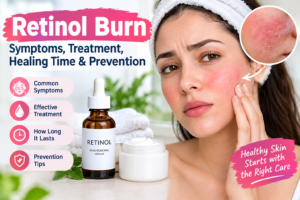
Although retinol can benefit the skin, using too much or introducing it too quickly can cause irritation. Some people experience redness, dryness, burning, itching, tightness, and peeling after starting a retinol product. These symptoms are commonly called a retinol burn.
Despite the name, a retinol burn is usually irritation rather than a true thermal burn. It can occur when the skin struggles to tolerate the product, especially when a high concentration is used too frequently or combined with other irritating ingredients.
The good news is that mild retinol irritation often improves with gentle skincare and time. Knowing what causes it, how to care for irritated skin, and when to restart retinol can help you protect your skin barrier and reduce the risk of another reaction.
What Is a Retinol Burn?
A retinol burn is a common term for skin irritation caused by topical retinol or related retinoid products. It often develops during the first few weeks of use, although irritation can happen later if you increase the concentration, apply the product too frequently, or change other parts of your skincare routine.
Retinol affects skin-cell activity and can help improve clogged pores and the appearance of aging skin. However, it may also temporarily disrupt the skin’s protective barrier, allowing moisture to escape more easily and making the skin feel uncomfortable.
Common symptoms include:
- Redness or pink patches
- Dryness and tightness
- Flaking or peeling
- Stinging or burning sensations
- Itching and sensitivity
- Discomfort when applying ordinary skincare products
A retinol burn is not necessarily an allergic reaction. However, allergic contact dermatitis and other skin conditions can produce similar symptoms. If your reaction is severe, spreads beyond the application area, or continues to worsen, seek medical advice.
What Causes Retinol Burns?
Several factors can increase the likelihood of retinol irritation.
1. Using Too Much Retinol
Applying more retinol does not guarantee faster or better results. A large amount can increase irritation without providing additional benefits.
For the entire face, follow the product instructions and use only a small amount. Avoid repeatedly applying more product to areas where you have acne or fine lines.
2. Starting With a High Concentration
Beginners may experience more irritation when they start with a strong retinol formula. Your skin needs time to adjust, and a lower concentration may be easier to tolerate.
The most suitable strength depends on the formulation, your skin type, and whether you have previously used retinoids.
3. Applying Retinol Too Frequently
Using retinol every night from the beginning can overwhelm skin that has not adapted to it.
Starting less frequently and gradually increasing use, if tolerated, can reduce irritation. Some people need to continue using retinol only a few times a week.
4. Combining Retinol With Other Active Ingredients
Certain skincare ingredients can increase dryness and irritation when used alongside retinol, particularly when several strong products are introduced at once.
Potential irritants include:
- Salicylic acid
- Glycolic acid and other alpha hydroxy acids
- Benzoyl peroxide
- Strong exfoliating products
- Abrasive facial scrubs
- Other retinoids
These ingredients are not universally incompatible with retinol, but combining them without a suitable plan can make irritation more likely. If your skin is already irritated, pause unnecessary active products until it recovers.
Youtube Video
5. Having Sensitive or Already-Damaged Skin
People with sensitive skin, eczema, or an impaired skin barrier may be more vulnerable to retinol irritation.
Using retinol on skin that is already dry, peeling, sunburned, or inflamed can make symptoms worse. A gentle skincare routine should come first.
What Does a Retinol Burn Look Like?
The appearance of a retinol burn varies depending on your skin type, the product strength, and the severity of irritation.
Mild irritation may cause slight redness, dryness, or fine peeling around the nose and mouth. More noticeable reactions can include larger red patches, persistent stinging, pronounced peeling, and increased sensitivity.
On lighter skin tones, redness may be easy to see. On darker skin tones, irritation may appear purple, brown, gray, or darker than the surrounding skin rather than bright red.
The skin may also feel tight or uncomfortable when washing your face or applying moisturizer.
Important: Blistering, significant swelling, severe pain, open sores, or rapidly worsening symptoms should not be treated as ordinary retinol adjustment. Stop using the product and seek medical care.
How Long Does a Retinol Burn Last?
A mild retinol burn may begin improving within several days after you stop using the irritating product. More noticeable irritation can take one to two weeks to settle, while severe reactions or irritation in people with underlying skin conditions may take longer.
Healing time depends on the severity of the reaction, your skin barrier, and whether you continue exposing the skin to irritating ingredients.
To support recovery:
- Stop using retinol temporarily.
- Avoid exfoliating acids and facial scrubs.
- Use a gentle cleanser and fragrance-free moisturizer.
- Protect your skin from sunlight.
- Avoid introducing new skincare products while your skin is healing.
If symptoms are not improving, persist beyond one to two weeks, or become worse, consult a dermatologist or another qualified healthcare professional.
How to Treat a Retinol Burn at Home
There is no instant cure for retinol irritation, but a simple skincare routine can help reduce discomfort while your skin recovers.
1. Stop Using Retinol Temporarily
The first step is to stop applying retinol to irritated skin. Continuing to use it may prolong the reaction and interfere with healing.
Also pause other nonessential active ingredients, including exfoliating acids, scrubs, and products that sting when applied.
Do not try to peel away loose skin or scrub off flaky areas. Allow the skin to recover naturally.
2. Apply a Cool Compress
A cool compress can help relieve burning, itching, and discomfort.
Wet a clean, soft cloth with cool water, wring out the excess, and gently place it on the affected area for approximately five to ten minutes.
Repeat as needed throughout the day. Avoid applying ice directly to your skin because extreme cold can cause additional damage.
3. Use a Gentle Moisturizer
Moisturizing is one of the most useful steps when dealing with retinol-related dryness.
Choose a simple moisturizer without fragrance, exfoliating acids, or other ingredients that commonly irritate your skin. Products containing glycerin, ceramides, or other skin-conditioning ingredients may help support hydration.
Apply moisturizer gently rather than rubbing it into the skin. You may need to reapply it during the day whenever your skin feels dry or tight.
If your usual moisturizer causes burning, stop using it and consider a simpler formulation. Persistent stinging deserves medical attention.
4. Consider a Protective Ointment
A thin layer of plain petroleum jelly may help protect very dry areas by reducing moisture loss. It can be particularly useful for localized patches of irritation.
Avoid introducing multiple new products at once, and discontinue anything that worsens your symptoms.
If you have severe acne, a skin condition, or extensive irritation, ask a healthcare professional which protective products are appropriate for you.
5. Wear Sunscreen Every Day
Irritated skin can be more vulnerable to environmental stress, and sun exposure can worsen inflammation and contribute to discoloration.
Once tolerated, use a broad-spectrum sunscreen with SPF 30 or higher. A gentle, fragrance-free formula may be more comfortable for sensitive skin.
Wear protective clothing and seek shade when possible. If sunscreen stings significantly, stop using that formula and seek advice about a suitable alternative.
6. Keep Your Skincare Routine Simple
During recovery, avoid experimenting with new products or trying to accelerate peeling.
A basic routine may include:
Morning: Gently rinse or cleanse your face, apply moisturizer, and use sunscreen.
Evening: Cleanse gently with lukewarm water and a mild cleanser, then apply moisturizer.
Avoid hot water, rough towels, exfoliating brushes, and strong facial treatments until your skin feels normal again.
How to Prevent Retinol Burns
Preventing irritation is easier than managing a significant reaction. A gradual approach can help you enjoy the potential benefits of retinol while protecting your skin.
Start With a Lower Strength
If you are new to retinol, consider a lower-strength product rather than immediately choosing the strongest available formula.
Follow the product label and ask a healthcare professional for guidance if you have sensitive skin or a history of dermatitis.
Introduce Retinol Gradually
Start with occasional applications, such as two nights a week, if consistent with the product instructions. If your skin tolerates this schedule, you may gradually increase frequency.
There is no need to force daily use if your skin remains irritated. Some people achieve a suitable routine with less frequent application.
Apply Only a Small Amount
A thin, even application is generally sufficient. Follow the specific product instructions, avoid sensitive areas around the eyes, corners of the nose, and lips, and do not apply retinol to broken or irritated skin.
More product does not mean faster results.
Moisturize Consistently
Using a suitable moisturizer can help reduce dryness and support the skin barrier.
Some people use a technique called buffering, applying moisturizer before retinol to reduce direct irritation. Others apply moisturizer after retinol. The best method depends on the product and your skin’s tolerance.
If irritation develops, pause retinol rather than attempting to cover up worsening symptoms with additional products.
Avoid Over-Exfoliating
Combining multiple exfoliating products with retinol may increase irritation. Introduce active ingredients one at a time and avoid layering several potentially irritating treatments without professional guidance.
Follow Sun Protection Habits
Apply broad-spectrum SPF 30 or higher during the day, reapply according to the product directions, and use shade and protective clothing.
Consistent sun protection is important for maintaining skin health and preventing the worsening of dark spots.
When Can You Start Using Retinol Again?
Wait until your skin has fully recovered before considering retinol again. This means redness, burning, unusual sensitivity, and active peeling have resolved.
When restarting, consider using a lower concentration or applying the product less frequently. Avoid combining it with other irritating treatments until you know how your skin responds.
If irritation returns, stop again and seek professional advice rather than repeatedly pushing through the symptoms.
If you experienced a severe reaction, have eczema or another underlying skin condition, or use prescription retinoids, consult your healthcare professional before restarting.
Retinoids should generally be avoided during pregnancy, so speak with your healthcare professional if you are pregnant or planning pregnancy.
Retinol Burn vs. Retinol Purging: What Is the Difference?
Retinol irritation and retinol purging are not the same thing.
Retinol burn typically causes redness, dryness, peeling, burning, itching, or tightness. Symptoms often appear in areas where the product has been applied.
Retinol purging refers to a temporary increase in acne-like breakouts that may occur when a retinoid is introduced. It is not a guaranteed part of treatment, and not every breakout after starting retinol is purging.
If you develop widespread itching, marked redness, painful inflammation, or persistent worsening acne, do not automatically assume your skin is purging. Stop irritating products and consult a dermatologist if symptoms continue.
When Should You See a Dermatologist?
Mild irritation may improve with home care, but certain symptoms require professional assessment.
Contact a healthcare professional if you experience:
- Severe or persistent burning
- Significant swelling or blistering
- Open sores or skin that appears damaged
- Symptoms that worsen despite stopping retinol
- A rash that spreads beyond the treated areas
- Persistent irritation lasting longer than expected
- Signs of infection, such as increasing pain, warmth, or discharge
A dermatologist can determine whether the reaction is caused by retinol, another product ingredient, an allergic reaction, or an underlying skin condition. They can also recommend an appropriate treatment and help you decide whether retinol remains suitable for your skin.
Frequently Asked Questions
Can you heal a retinol burn overnight?
A retinol burn generally cannot be completely healed overnight. A cool compress and gentle moisturizer may relieve discomfort, but the skin needs time to recover. Avoid using additional active ingredients in an attempt to speed up healing.
Should you wash off retinol if your face burns?
If you experience significant burning shortly after applying retinol, gently wash it off with lukewarm water and a mild cleanser. Stop using the product until the irritation resolves. If symptoms are severe or continue to worsen, seek medical advice.
Can moisturizer make a retinol burn worse?
A suitable, fragrance-free moisturizer can help reduce dryness and moisture loss. However, some formulas contain ingredients that may sting irritated skin. If your moisturizer causes persistent burning, discontinue it and choose a gentler option with professional guidance if needed.
Can retinol burns cause dark spots?
Inflammation and skin injury can sometimes lead to post-inflammatory hyperpigmentation, particularly in people prone to dark marks. Avoid picking or scrubbing irritated skin, allow it to heal, and use suitable sun protection to help reduce the risk of discoloration.
Should you use retinol every night?
Not necessarily. Some people tolerate nightly use, while others experience better comfort with less frequent applications. Start gradually, follow the product instructions, and adjust based on your skin’s response.
Is retinol safe for sensitive skin?
Some people with sensitive skin can tolerate a low-strength retinol product introduced gradually, while others develop significant irritation. If you have eczema, rosacea, or a compromised skin barrier, consult a dermatologist before starting retinol.
Final Thoughts
Retinol can help improve acne and the appearance of fine lines, but using it too frequently or choosing a concentration that your skin cannot tolerate may lead to irritation commonly called a retinol burn.
Symptoms can include dryness, redness, burning, itching, and peeling. The most important steps are to stop retinol temporarily, use a gentle moisturizer, apply cool compresses when needed, and protect your skin from the sun.
Mild irritation often improves within days, although more noticeable reactions may take one to two weeks or longer to settle. Once your skin has fully recovered, you may be able to restart retinol more gradually.
Remember that severe or persistent symptoms should not be ignored. A simple skincare routine, careful product selection, and a gradual introduction to retinol can help you reduce irritation and maintain healthier-looking skin.