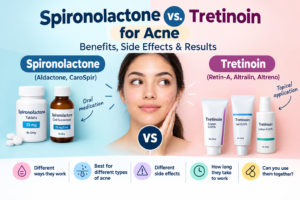

Key Takeaways
- Spironolactone and tretinoin are prescription medications that help treat acne, but they work in different ways.
- Spironolactone is an oral medication that targets hormonal factors contributing to acne, while tretinoin is a topical retinoid that helps unclog pores and improve skin cell turnover.
- Spironolactone is commonly prescribed off-label for hormonal acne in women, whereas tretinoin is an established treatment for acne, particularly blackheads, whiteheads, and clogged pores.
- Common tretinoin side effects include dryness, redness, peeling, and skin irritation. Spironolactone may cause increased urination, dizziness, breast tenderness, and menstrual changes.
- Some people may benefit from using both medications as part of a dermatologist-supervised acne treatment plan.
- Both medications require patience, and results can vary depending on acne severity, individual response, and treatment consistency.
Introduction
Acne is one of the most common skin concerns, affecting teenagers and adults alike. Although over-the-counter cleansers and skincare products can help manage mild breakouts, persistent or severe acne may require prescription treatment.
Two medications frequently used by dermatologists are spironolactone and tretinoin. Both can help improve acne, but they address different causes of breakouts. Spironolactone works by reducing the effects of certain hormones on oil production, while tretinoin helps prevent clogged pores and supports the natural renewal of skin cells.
Understanding the differences between spironolactone and tretinoin can help you have a more informed conversation with your dermatologist about which treatment may suit your skin.
In this guide, we’ll explore their forms, how they work, the types of acne they treat, potential side effects, and how long they may take to produce visible results.
1. Spironolactone and Tretinoin Come in Different Forms
One of the main differences between these medications is how they are used.
What Is Spironolactone?
Spironolactone is an oral medication available in tablet form and, in some markets, as an oral suspension. It was originally developed as a diuretic, a type of medication that helps the body remove excess fluid.
Dermatologists also prescribe spironolactone off-label to treat hormonal acne, particularly in women who experience recurring breakouts associated with hormonal fluctuations.
The medication is available under brand names such as Aldactone and CaroSpir. The appropriate dose depends on the person’s medical history, acne severity, other medications, and response to treatment.
Spironolactone is not FDA-approved specifically for acne, so its use for this condition should be guided by a qualified healthcare professional.
What Is Tretinoin?
Tretinoin is a topical retinoid derived from vitamin A. Unlike spironolactone, it is applied directly to the skin affected by acne.
Depending on the formulation and market, tretinoin is available as a cream, gel, or lotion. Brand names include Retin-A and Altreno.
Tretinoin is commonly prescribed to treat acne by helping remove dead skin cells, encouraging skin cell turnover, and preventing pores from becoming clogged.
Your dermatologist may recommend a particular formulation and strength based on your skin type, acne severity, and tolerance to topical retinoids.
Youtube Video
2. How Spironolactone and Tretinoin Work
Although both medications can improve acne, they target different processes within the body and skin.
How Spironolactone Helps Control Acne
Hormones called androgens can stimulate the skin’s oil glands, increasing sebum production. When excess oil combines with dead skin cells inside pores, breakouts can develop.
Spironolactone blocks the effects of androgens on their receptors, helping reduce hormonal stimulation of the oil glands. This can decrease excess oil production and make hormonal breakouts less frequent.
It may be particularly useful for women who experience acne around the chin, jawline, and lower cheeks or notice breakouts around their menstrual cycle. However, acne location alone cannot confirm that hormones are the cause.
Because spironolactone works through hormonal pathways, it is generally used as part of a broader acne treatment plan rather than as a direct treatment for clogged pores.
How Tretinoin Treats Acne
Tretinoin works directly on the skin. It helps normalize the shedding of skin cells inside hair follicles, reducing the buildup of dead cells that can block pores.
Its primary benefits include:
- Unclogging pores: Helps prevent the formation of blackheads and whiteheads.
- Improving skin cell turnover: Encourages the replacement of older surface cells.
- Reducing acne formation: Helps prevent new comedones from developing.
- Improving skin texture: May gradually smooth rough or uneven skin.
- Helping fade certain dark marks: Can improve some forms of post-acne discoloration over time.
Tretinoin is especially useful for comedonal acne, which includes blackheads and whiteheads. It may also be included in treatment plans for inflammatory acne.
Because tretinoin can initially irritate the skin, it is important to follow your prescriber’s instructions and avoid using more product than recommended.
3. Which Medication Is Better for Different Types of Acne?
Choosing between spironolactone and tretinoin depends on the type of acne you have, the factors contributing to your breakouts, and your skin’s response to treatment.
Spironolactone for Hormonal Acne
Hormonal acne may appear when hormonal changes increase oil production. Some women experience recurring breakouts around their menstrual periods or persistent acne along the lower face.
Spironolactone may help reduce these breakouts by limiting the effects of androgens on the skin’s oil glands.
Dermatologists may consider it when hormonal acne persists despite other treatments or when a patient needs a longer-term management option.
However, spironolactone is not appropriate for everyone. A healthcare professional should assess your medical history, pregnancy plans, kidney function, and potential medication interactions before prescribing it.
Tretinoin for Blackheads and Whiteheads
Comedonal acne develops when pores become blocked with oil and dead skin cells. It commonly appears as blackheads, whiteheads, and small bumps that may make the skin feel uneven.
Tretinoin helps prevent this buildup by improving the way skin cells are shed within pores.
It may be suitable for people with:
- Blackheads on the nose, chin, or forehead.
- Whiteheads and small clogged pores.
- Mild acne accompanied by uneven skin texture.
- Acne that requires ongoing prevention of new clogged pores.
Tretinoin can also be combined with other acne treatments when appropriate.
Can Both Medications Be Used Together?
Yes. In some cases, a dermatologist may prescribe spironolactone and tretinoin together because they address different aspects of acne.
Spironolactone helps manage hormonal stimulation of oil production, while tretinoin works to prevent clogged pores. Combining treatments may therefore provide broader acne control.
However, combination therapy is not necessary for everyone. Your dermatologist should determine whether using both medications offers additional benefits based on your skin condition and medical history.
4. Side Effects of Spironolactone and Tretinoin
Every medication has potential side effects. Knowing what to expect can help you recognize common reactions and understand when medical advice may be needed.
Common Side Effects of Spironolactone
Because spironolactone is taken orally and affects hormone-related pathways and fluid balance, its side effects can affect more than the skin.
Possible side effects include:
- Increased urination.
- Dizziness or lightheadedness.
- Breast tenderness.
- Menstrual irregularities.
- Headaches.
- Reduced libido in some people.
Spironolactone can also increase potassium levels in the blood. In certain individuals, this may become dangerous, particularly in people with kidney problems or those taking medications that increase potassium.
Your healthcare professional may recommend blood tests to monitor potassium and kidney function depending on your health history and other medications.
Spironolactone should generally be avoided during pregnancy because of potential risks to fetal development. Discuss pregnancy plans and reliable contraception with your prescriber.
Common Side Effects of Tretinoin
Tretinoin primarily causes side effects where it is applied. These reactions are often most noticeable during the first few weeks of treatment.
Common side effects include:
- Dryness and peeling.
- Redness.
- Burning or stinging.
- Skin irritation.
- Increased sensitivity to sunlight.
Some people experience temporary worsening of acne after starting treatment. However, significant irritation should not automatically be considered a normal part of treatment.
To reduce irritation, use tretinoin exactly as directed, apply a gentle moisturizer, avoid harsh exfoliating products, and use broad-spectrum sunscreen with SPF 30 or higher during the day.
Tretinoin should generally be avoided during pregnancy as a precaution. Anyone who is pregnant, planning pregnancy, or breastfeeding should discuss appropriate treatment options with a healthcare professional.
Which Medication Causes More Irritation?
Tretinoin is more likely to cause visible skin irritation, including redness, peeling, and dryness. Spironolactone is more likely to cause systemic effects, such as increased urination, dizziness, breast tenderness, and menstrual changes.
Neither medication is completely free of risks. The best option depends on your medical history, acne type, and tolerance to treatment.
5. How Long Does Each Treatment Take to Work?
Acne treatments rarely produce complete results overnight. Both spironolactone and tretinoin require consistent use and realistic expectations.
Spironolactone Results
Some people begin noticing improvements within several weeks of starting spironolactone. However, a more substantial response may take three to six months or longer.
The time required depends on the prescribed dose, the severity of hormonal acne, and individual response. A dermatologist may adjust the treatment plan if improvement is limited or side effects occur.
Do not increase your dose on your own to achieve faster results.
Tretinoin Results
Tretinoin also requires patience. Some people notice early changes within a few weeks, but meaningful improvement often takes six to twelve weeks or longer.
During the initial treatment period, dryness, peeling, or temporary acne flare-ups may occur. Gradually introducing the medication, when recommended by your prescriber, may help improve tolerance.
If your acne has not improved after an appropriate treatment period, consult your dermatologist rather than increasing the frequency or amount without guidance.
Which Treatment Works Faster?
There is no universal answer. Some people respond to tretinoin relatively quickly, especially when clogged pores are the main concern. Others may need several months of hormonal treatment with spironolactone before experiencing sustained improvement.
The speed of improvement depends on the type of acne, treatment routine, and individual response. A dermatologist can help determine whether your treatment is working as expected.
6. Tips for Getting Better Results From Acne Treatment
A consistent skincare routine can support prescription acne treatment and reduce unnecessary irritation.
Keep Your Skincare Routine Gentle
Wash your face with a mild cleanser and avoid excessive scrubbing. Harsh cleansers, abrasive exfoliants, and multiple irritating active ingredients may worsen redness and dryness.
Moisturize Regularly
A non-comedogenic moisturizer can help maintain the skin barrier while using tretinoin. Look for a product that hydrates without making your skin feel excessively greasy.
Protect Your Skin From the Sun
Tretinoin can make your skin more sensitive to sunlight. Apply broad-spectrum sunscreen with SPF 30 or higher, and reapply as directed when spending time outdoors.
Follow Your Prescribed Schedule
Use tretinoin according to your dermatologist’s instructions. If irritation becomes troublesome, ask whether you should reduce application frequency or temporarily pause treatment.
Take spironolactone only at the prescribed dose, and attend any recommended follow-up appointments or laboratory tests.
Avoid Changing Treatments Too Quickly
Switching products frequently can make it difficult to determine what is helping or causing irritation. Give your treatment an appropriate trial period unless significant side effects develop or your clinician advises otherwise.
7. When Should You See a Dermatologist?
Consider consulting a dermatologist if your acne is persistent, painful, leaving scars, or affecting your confidence and daily life.
A dermatologist can determine whether your breakouts are primarily hormonal, comedonal, inflammatory, or associated with another skin condition.
You should also seek medical advice if you experience severe irritation from tretinoin, persistent dizziness while taking spironolactone, or symptoms that could indicate high potassium levels, such as unusual muscle weakness or an abnormal heartbeat.
Urgent medical evaluation is appropriate for severe symptoms, including fainting, significant heart rhythm changes, or a severe allergic reaction.
Conclusion
Spironolactone and tretinoin are effective prescription options for managing different aspects of acne. Spironolactone is an oral medication that may be particularly helpful for hormonal acne in women, while tretinoin is a topical retinoid that helps unclog pores and prevent blackheads and whiteheads.
Their side effects also differ. Spironolactone may cause increased urination, dizziness, breast tenderness, and menstrual changes, while tretinoin commonly causes skin dryness, redness, peeling, and irritation.
Some people may benefit from using both medications together under medical supervision. The right approach depends on your acne type, medical history, and individual response to treatment.
For the best results, follow your dermatologist’s instructions, maintain a gentle skincare routine, protect your skin from the sun, and allow enough time for treatment to work. Consistent, personalized care is often more effective than trying multiple products without a clear plan.
Medical disclaimer: This article is for educational purposes only and is not a substitute for professional medical advice, diagnosis, or treatment. Consult a qualified healthcare professional before starting, stopping, or combining prescription acne medications.
Frequently Asked Questions (FAQs)
Is spironolactone better than tretinoin for acne?
Neither medication is universally better. Spironolactone may be more suitable for hormonal acne, while tretinoin is particularly useful for clogged pores, blackheads, and whiteheads.
Can I use spironolactone and tretinoin at the same time?
Yes, a dermatologist may prescribe both because they work through different mechanisms. Whether combination treatment is appropriate depends on your health history and acne severity.
Does tretinoin make acne worse before it gets better?
Some people experience temporary worsening of acne after starting tretinoin. However, severe or persistent irritation should be discussed with your healthcare professional.
How long does spironolactone take to clear hormonal acne?
Some improvement may occur within several weeks, but more substantial results can take three to six months or longer.
Can I use tretinoin every night?
Not everyone can tolerate nightly use immediately. Follow your prescriber’s instructions, as the appropriate frequency depends on the formulation, strength, and your skin’s tolerance.
Is spironolactone safe during pregnancy?
Spironolactone is generally avoided during pregnancy because of potential risks to fetal development. Discuss pregnancy plans and alternative acne treatments with your healthcare professional.
Can tretinoin remove acne scars?
Tretinoin may gradually improve some post-acne dark marks and uneven texture. However, deep or indented acne scars often require additional treatments, and results vary.