

Introduction
Under skin hair acne, also known as ingrown hair acne, is a common yet frustrating skin condition that affects both men and women. It occurs when hair grows back into the skin instead of rising up from it, leading to painful bumps, redness, and sometimes infection. This issue is especially common in areas where hair is frequently removed, such as the face, legs, underarms, and bikini line.
In this article, you’ll learn everything about under skin hair acne treatment, including causes, prevention tips, and the most effective home and medical remedies to achieve smooth, acne-free skin.
What is Under Skin Hair Acne?
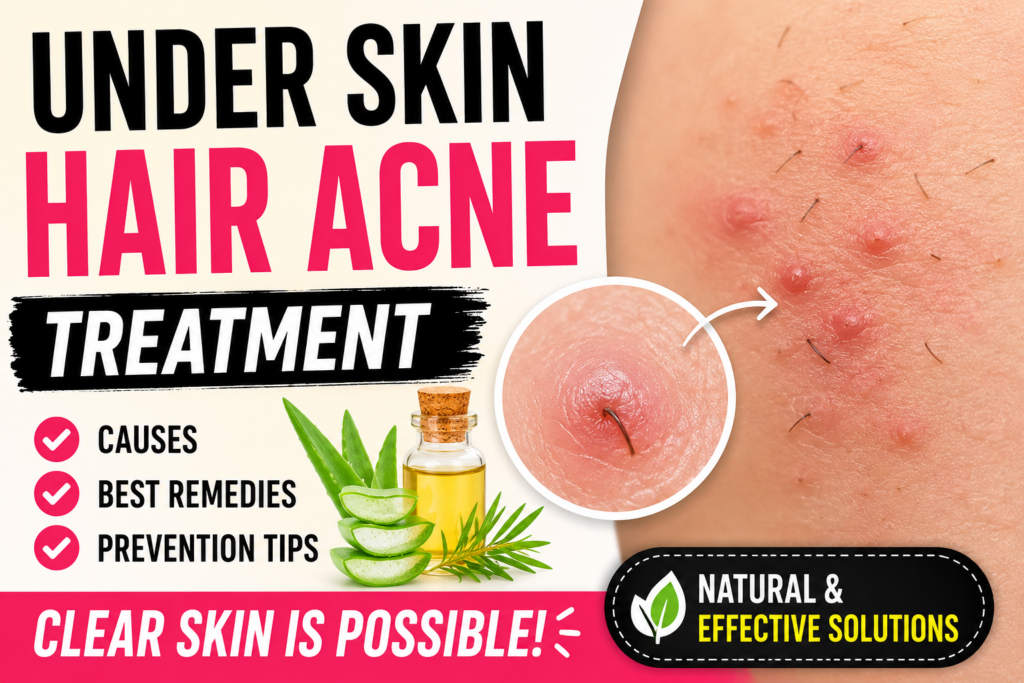
Under skin hair acne forms when a hair gets trapped beneath the skin surface. Instead of growing outward, it curls back into the skin, causing inflammation. These bumps often look like pimples and may contain pus, making them easy to confuse with regular acne.
Main Causes of Under Skin Hair Acne
Understanding the causes is the first step toward effective treatment.
1. Improper Hair Removal
Shaving, waxing, or threading incorrectly can cause hair to grow inward.
2. Dead Skin Cell Build-Up
Excess dead skin blocks hair follicles, trapping the hair underneath.
3. Tight Clothing
Friction from tight clothes can irritate skin and force hair to grow inward.
4. Curly or Coarse Hair
People with curly hair are more prone to ingrown hairs because hair naturally bends back toward the skin.
5. Oily Skin
Excess oil can clog pores and contribute to under skin acne.
Symptoms of Ingrown Hair Acne
- Small, raised bumps under the skin
- Redness and inflammation
- Pain or tenderness
- Pus-filled lesions (similar to pimples)
- Itching or irritation
Best Under Skin Hair Acne Treatments
1. Gentle Exfoliation
Exfoliating removes dead skin cells and helps release trapped hair.
- Use a mild scrub 2–3 times a week
- Try chemical exfoliants like salicylic acid or glycolic acid
2. Warm Compress
Applying a warm compress helps soften the skin and allows hair to come out naturally.
How to do it:
- Soak a clean cloth in warm water
- Apply to the affected area for 10–15 minutes
3. Tea Tree Oil
Tea tree oil has antibacterial and anti-inflammatory properties.
- Mix with a carrier oil
- Apply gently to reduce swelling and infection
4. Aloe Vera Gel
Aloe vera soothes irritated skin and promotes healing.
- Apply fresh aloe vera gel daily
- Helps reduce redness and inflammation
5. Salicylic Acid Treatment
This helps unclog pores and reduce swelling.
- Use in cleansers or spot treatments
- Ideal for acne-prone skin
6. Avoid Picking or Squeezing
This is critical. Picking can lead to infection, scarring, and worsening acne.
Medical Treatments for Severe Cases
If home remedies don’t work, consider professional treatments:
1. Topical Retinoids
Help prevent clogged pores and promote skin renewal.
2. Antibiotic Creams
Used when infection is present.
3. Laser Hair Removal
A long-term solution that reduces hair growth and prevents ingrown hairs.
4. Chemical Peels
Remove dead skin layers and improve skin texture.
How to Prevent Under Skin Hair Acne
1. Use Proper Shaving Techniques
- Shave in the direction of hair growth
- Use a sharp, clean razor
- Apply shaving gel or cream
2. Exfoliate Regularly
Keeps pores clean and prevents hair from getting trapped.
3. Moisturize Daily
Hydrated skin reduces irritation and improves healing.
4. Avoid Tight Clothing
Wear loose fabrics to reduce friction.
5. Choose the Right Hair Removal Method
Consider laser or trimming instead of shaving if you’re prone to ingrown hairs.
Natural Home Remedies
1. Sugar Scrub
A natural exfoliator that removes dead skin.
2. Honey
Has antibacterial properties and reduces inflammation.
3. Apple Cider Vinegar
Helps balance skin pH and prevent infection (dilute before use).
When to See a Doctor
You should consult a dermatologist if:
- The acne becomes very painful
- There is severe swelling or infection
- The condition keeps recurring
- You notice scarring
Conclusion
Under skin hair acne can be uncomfortable and affect your confidence, but the good news is that it’s treatable and preventable. With proper skincare, gentle exfoliation, and the right hair removal techniques, you can significantly reduce ingrown hairs and achieve clear, healthy skin.
Consistency is key—stick to a skincare routine, avoid harsh treatments, and give your skin time to heal naturally.
