

Ear cleaning is an essential part of personal hygiene, but many people do it incorrectly, which can lead to pain, infection, or even hearing loss. If you’re wondering how to clean your ears at home safely, this detailed guide will help you understand the right methods, risks, and best practices.
Understanding Earwax (Cerumen)
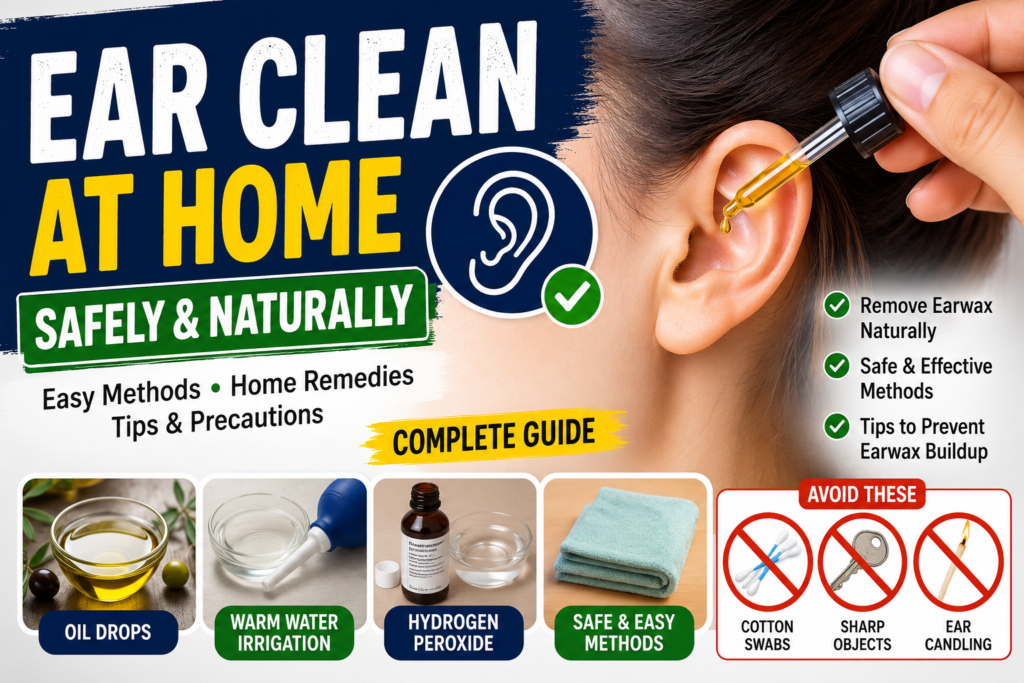
Before cleaning your ears, it’s important to understand what earwax actually is. Earwax, also known as cerumen, is a natural substance produced by glands in your ear canal. It plays an important role in protecting your ears by:
- Trapping dust and dirt
- Preventing bacteria growth
- Lubricating the ear canal
Contrary to popular belief, earwax is not dirty. In fact, your ears are self-cleaning, and most of the time, earwax naturally moves out of the ear.
When Should You Clean Your Ears?
You don’t need to clean your ears daily. However, you may need ear cleaning if you experience:
- Feeling of fullness in the ear
- Partial hearing loss
- Itching or discomfort
- Visible wax buildup
- Ringing sound (tinnitus)
If you have severe pain or sudden hearing loss, avoid home treatment and consult a doctor.
Safe Ways to Clean Your Ears at Home
1. Use a Damp Cloth (Safest Method)
This is the easiest and safest way to clean your ears.
Steps:
- Take a clean, soft cloth
- Dampen it with warm water
- Gently wipe the outer ear (not inside)
This method helps maintain hygiene without harming your ear canal.
2. Ear Drops (Oil-Based Cleaning)
Using natural oils can soften earwax, making it easier to come out naturally.
Common oils:
- Olive oil
- Baby oil
- Coconut oil
How to use:
- Warm the oil slightly (not hot)
- Put 2–3 drops into the ear
- Lie on one side for 5–10 minutes
- Let it drain out
Repeat for a few days if needed.
3. Hydrogen Peroxide Solution
Hydrogen peroxide helps break down earwax.
Steps:
- Mix equal parts hydrogen peroxide and water
- Put a few drops into your ear
- You may hear a fizzing sound (normal)
- After a few minutes, tilt your head to drain
Use this method occasionally, not regularly.
4. Warm Water Irrigation
This method helps flush out softened earwax.
Steps:
- Use a bulb syringe
- Fill it with lukewarm water
- Gently squirt water into your ear
- Tilt your head to let it drain
Make sure the water is not too hot or cold.
What NOT to Do When Cleaning Your Ears
Many people unknowingly damage their ears by using unsafe methods. Avoid the following:
❌ Cotton Swabs (Q-tips)
They push wax deeper into the ear and can cause blockage or injury.
❌ Sharp Objects
Never insert pins, keys, or other objects into your ear.
❌ Ear Candling
This method is unsafe and not scientifically proven.
❌ Over-Cleaning
Too much cleaning can remove protective wax and cause dryness or infection.
Signs of Earwax Blockage
Sometimes earwax builds up and becomes impacted. Symptoms include:
- Earache
- Dizziness
- Reduced hearing
- Itching
- Bad odor
If these symptoms persist, seek medical help.
Home Remedies for Ear Cleaning
Here are some natural remedies you can try:
1. Salt Water Solution
Salt water helps soften wax.
How to use:
- Mix 1 teaspoon salt in warm water
- Dip cotton and squeeze drops into ear
2. Baking Soda Solution
Helps break down earwax.
Steps:
- Mix 1/4 teaspoon baking soda in water
- Apply a few drops into ear
3. Garlic Oil (Antibacterial)
Garlic oil can help if there’s mild infection.
Who Should Avoid Home Ear Cleaning?
Some people should not try cleaning ears at home:
- People with ear infections
- Those with eardrum damage
- After ear surgery
- Severe pain or bleeding
Always consult a doctor in these cases.
How to Prevent Earwax Buildup
Prevention is better than cure. Follow these tips:
- Avoid inserting objects into ears
- Keep ears dry after bathing
- Use ear drops occasionally
- Maintain overall hygiene
When to See a Doctor
Home cleaning is not always enough. Visit a doctor if:
- Earwax doesn’t come out
- Pain increases
- Hearing loss continues
- You feel pressure in ear
Doctors use safe methods like suction or special tools to remove wax.
Conclusion
Cleaning your ears at home can be safe and effective if done correctly. Always remember that your ears are self-cleaning, and earwax is actually beneficial. The key is to avoid harmful methods like cotton swabs and instead use safe techniques such as oil drops or warm water.
If you experience severe symptoms or discomfort, don’t hesitate to seek professional help. Taking care of your ears properly will protect your hearing and overall ear health for years to come.
