
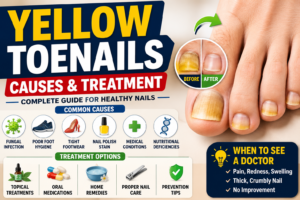

Yellow toenails can be concerning, especially when the nails also become thick, brittle, cracked, or develop an unusual odor. In many cases, yellow toenails are caused by a fungal infection, but fungus is not the only possible explanation.
Toenails can change color because of nail polish, repeated trauma, aging, skin conditions, certain medications, nutritional problems, or underlying health conditions. Identifying the cause is important because the right treatment depends on why the nail has changed.
This guide explains the most common yellow toenails causes and treatment options, how to recognize toenail fungus, what you can do at home, and when professional medical evaluation is recommended.
What Do Yellow Toenails Mean?
Yellow toenails simply mean that the nail plate has developed a yellowish discoloration. The color can range from pale yellow to dark yellow, brownish-yellow, or even greenish-yellow.
Sometimes the discoloration affects only one toenail. In other cases, several or all toenails may become yellow.
The appearance of the nail can provide clues about the underlying cause.
For example:
- Yellow + thick nail may suggest fungal infection.
- Yellow + brittle nail may occur with fungal infection or nail damage.
- Yellow staining after nail polish may be cosmetic.
- Yellow nail with swelling or pain may require medical evaluation.
- Yellow nails with other body symptoms may sometimes be associated with an underlying health condition.
Because several conditions can look similar, persistent nail discoloration should not automatically be assumed to be fungus.
1. Toenail Fungus
One of the most common causes of yellow toenails is onychomycosis, a fungal infection of the nail.
Fungal infections can cause the nail to become:
- Yellow or brown
- Thickened
- Brittle
- Crumbly
- Distorted
- Separated from the nail bed
- Difficult to trim
The infection often begins at the edge or tip of the nail and gradually moves deeper into the nail.
Toenail fungus is more common in warm, moist environments. Wearing sweaty shoes for long periods, walking barefoot in communal showers, and having athlete’s foot can increase the risk.
Treatment
Treatment depends on the severity of the infection.
For mild cases, topical antifungal treatments may be recommended. More extensive infections may require prescription oral antifungal medication.
Because fungal nail infections can resemble other nail conditions, a healthcare professional may test a nail sample before prescribing certain treatments.
2. Nail Polish Staining
Regular use of dark nail polish can cause temporary yellow discoloration.
The pigments in nail polish can stain the surface of the nail, particularly when polish is worn continuously or without a protective base coat.
In this situation, the nail may look yellow but usually does not become significantly thick or crumbly.
What can help?
Give your toenails occasional breaks from nail polish and use a quality base coat when painting your nails.
As the nail grows, the stained portion will gradually move toward the end and can eventually be trimmed away.
If the yellow color remains after stopping polish or the nail becomes thick and damaged, consider another possible cause.
3. Repeated Toenail Trauma
Repeated pressure or injury can cause toenail discoloration.
This is particularly common in people who wear tight shoes or participate in activities involving repeated pressure on the toes.
Running, hiking, sports, and poorly fitting footwear can cause repeated trauma to the nail.
An injured nail may become:
- Yellow
- White
- Brown
- Dark
- Thickened
- Partially separated from the nail bed
Treatment
The most important step is to remove the source of repeated pressure.
Choose shoes with enough room around the toes and keep toenails appropriately trimmed.
Damaged nails may take months to grow out because toenails grow slowly.
4. Aging
Toenails naturally change as people get older.
They may become thicker, harder, more brittle, or slightly yellow.
Older adults may also be more likely to develop fungal infections because nail growth slows and circulation or other health factors may change.
Age-related nail changes do not always require treatment.
However, a new or rapidly changing yellow toenail should not automatically be attributed to aging.
5. Poor Foot Hygiene and Excess Moisture
Moisture itself does not necessarily cause yellow nails, but consistently damp feet can create an environment where fungi thrive.
Wearing the same sweaty shoes every day can increase moisture around the feet.
Helpful habits include:
- Wash your feet regularly.
- Dry carefully between the toes.
- Change socks when they become damp.
- Allow shoes to dry completely.
- Avoid sharing nail clippers.
- Wear footwear in communal wet areas.
Good foot hygiene can help reduce the risk of fungal infections and other foot problems.
6. Psoriasis and Other Skin Conditions
Certain skin conditions can affect the toenails.
Nail psoriasis, for example, may cause changes such as:
- Yellow or reddish discoloration
- Pitting
- Thickening
- Separation from the nail bed
- Crumbling
- Changes in nail texture
If you have psoriasis elsewhere on your body and develop unusual toenail changes, discuss them with a dermatologist.
Treating the underlying skin condition may improve nail symptoms.
7. Diabetes and Other Health Conditions
Certain medical conditions can affect the appearance and health of the nails.
People with diabetes, circulation problems, immune system disorders, or other chronic conditions may be more vulnerable to foot and nail problems.
However, a yellow toenail by itself does not mean that someone has diabetes or another serious illness.
If nail changes occur together with other symptoms, or if you have a condition that increases your risk of foot complications, professional evaluation is especially important.
People with diabetes should be particularly careful about foot injuries and infections and should follow their healthcare professional’s foot-care recommendations.
8. Yellow Nail Syndrome
A rare condition known as yellow nail syndrome can cause nails to become yellow, thick, and slow-growing.
It may affect fingernails and toenails and can sometimes occur alongside respiratory or lymphatic problems.
Yellow nail syndrome is uncommon, so most people with yellow toenails do not have this condition.
However, if multiple nails become persistently yellow and growth becomes unusually slow, a healthcare professional can evaluate the changes and determine whether further testing is needed.
9. Nutritional Problems
Nails require adequate nutrition for normal growth.
A poor diet or certain nutritional deficiencies can contribute to nail abnormalities.
However, yellow toenails are not usually caused simply by a lack of one vitamin.
Instead of automatically taking high-dose supplements, focus on a balanced diet containing:
- Protein
- Iron
- Zinc
- Vitamin B12
- Vitamin C
- Vitamin D
- Healthy fats
If you have multiple nail changes or other symptoms such as fatigue, weakness, hair changes, or unexplained weight changes, talk to a healthcare professional before starting supplements.
Yellow Toenail Fungus: Common Signs
If fungus is the cause, you may notice several symptoms rather than yellow color alone.
Common signs include:
Thickening
The nail becomes noticeably thicker than the surrounding nails.
Crumbling
The edges may become brittle and break apart.
Discoloration
The nail may become yellow, white, brown, or occasionally greenish.
Nail separation
The nail may begin lifting away from the nail bed.
Debris
Material can accumulate underneath the nail.
Multiple affected nails
Fungal infections can spread to additional toenails over time.
If several of these symptoms are present, toenail fungus becomes more likely.
How to Treat Yellow Toenails
The best treatment depends on the underlying cause.
Antifungal Treatment
If a fungal infection is confirmed, treatment may include topical antifungal medication or prescription oral antifungal medication.
Topical treatments generally need to be used consistently for an extended period because the medication has to work while the healthy nail grows.
Oral antifungal medication can be more effective for some infections but may not be appropriate for everyone.
A healthcare professional can determine the safest treatment.
Can You Treat Yellow Toenails at Home?
Home care can be helpful for nail hygiene and prevention, but it may not eliminate an established fungal infection.
1. Keep Feet Dry
Dry your feet thoroughly after bathing.
Pay particular attention to the spaces between your toes.
2. Change Socks Regularly
Choose breathable socks and change them whenever they become sweaty or damp.
3. Keep Toenails Trimmed
Trim nails straight across and avoid cutting them excessively short.
4. Wear Proper Shoes
Choose footwear that gives your toes enough space.
Avoid shoes that repeatedly press against the nails.
5. Don’t Share Nail Tools
Sharing nail clippers or files can spread fungal infections.
Clean and disinfect personal nail-care tools appropriately.
6. Give Shoes Time to Dry
Avoid wearing the same damp shoes continuously.
Alternating footwear can give shoes more time to dry.
Do Home Remedies Get Rid of Yellow Toenails?
Many home remedies are promoted online for yellow toenails, including vinegar, tea tree oil, baking soda, and other household ingredients.
The evidence for many of these remedies is limited.
Some products can also irritate the surrounding skin, especially when used frequently or at high concentrations.
If the nail is thick, painful, crumbly, or progressively changing, it is better to determine the cause rather than relying on unproven remedies.
A dermatologist, podiatrist, or other healthcare professional can help identify whether the problem is fungal or caused by something else.
How Long Does It Take for Yellow Toenails to Go Away?
Toenails grow slowly.
Even after successful treatment of a fungal infection, the damaged portion of the nail does not disappear immediately.
Instead, healthy nail gradually grows from the base and replaces the damaged section.
It can take many months for a toenail to completely grow out.
This is one reason why people may think a treatment is not working when the infection is actually improving.
Look for gradual changes such as healthier-looking nail growth from the base.
How to Prevent Yellow Toenails
Prevention is particularly important if you’ve had toenail fungus before.
Follow these habits:
- Keep feet clean and dry.
- Wear breathable footwear.
- Change sweaty socks.
- Avoid walking barefoot in communal showers.
- Do not share nail clippers.
- Keep nails trimmed.
- Avoid prolonged use of damp shoes.
- Treat athlete’s foot promptly.
- Avoid damaging the nail during pedicures.
- Clean personal foot-care tools regularly.
If you regularly visit nail salons, choose a reputable salon that follows proper hygiene and sterilization procedures.
When Should You See a Doctor?
You should consider medical evaluation if:
- The yellow color persists.
- The nail becomes thick or crumbly.
- Several nails are affected.
- The nail is painful.
- There is swelling or redness.
- The nail separates from the skin underneath.
- There is drainage or pus.
- The problem keeps returning.
- You have diabetes.
- You have poor circulation or a weakened immune system.
- A dark streak develops or changes over time.
A professional can examine the nail and, when necessary, test a nail sample to determine whether fungus is present.
Yellow Toenails vs. Toenail Fungus
| Feature | Yellow Toenails | Toenail Fungus |
|---|---|---|
| Yellow color | Common | Very common |
| Thick nail | Sometimes | Common |
| Crumbling | Less common | Common |
| Bad odor | Not typical | Possible |
| Nail separation | Possible | Common |
| Multiple nails | Possible | Common |
| Nail polish staining | Possible | No |
| Requires antifungal treatment | Not always | Often |
This comparison shows why yellow color alone cannot confirm a fungal infection.
Frequently Asked Questions
What is the most common cause of yellow toenails?
Fungal infection is one of the most common causes, but nail polish staining, trauma, aging, skin conditions, and other factors can also cause yellow nails.
How can I get rid of yellow toenails fast?
There is usually no instant solution. If fungus is responsible, treatment may take months because the damaged toenail has to grow out.
Are yellow toenails always fungus?
No. Yellow toenails can have many causes. A thick, brittle, crumbly nail is more suggestive of fungal infection than yellow discoloration alone.
Can I put nail polish on yellow toenails?
It is better to determine the cause first. If a fungal infection is suspected, covering the nail continuously with polish may make it harder to monitor changes and may contribute to a moist environment.
Can yellow toenails grow back normally?
Yes, depending on the cause. If the underlying problem is treated and the nail matrix remains healthy, normal nail growth may return. Because toenails grow slowly, improvement can take several months.
Is toenail fungus contagious?
Yes. Fungal organisms can spread between people and from contaminated surfaces or shared nail-care equipment. Good foot hygiene and avoiding shared personal items can reduce the risk.
Final Thoughts
Understanding yellow toenails causes and treatment is important because yellow discoloration can result from many different conditions.
Toenail fungus is a common cause, particularly when the nail is also thick, brittle, crumbly, or separating from the nail bed. But nail polish staining, repeated trauma, aging, psoriasis, and other health factors can also produce similar changes.
The best treatment is therefore based on the cause. Antifungal medication may be appropriate for confirmed fungal infections, while simple nail-care changes may be enough for cosmetic staining or minor trauma.
Avoid relying on harsh or unproven home remedies, especially when the nail is painful or significantly damaged. If discoloration persists, spreads to other nails, or occurs with swelling, drainage, severe thickening, or other symptoms, seek professional medical advice.