
So, should one use a nose strip?
If you enjoy the transient feeling of cleaner, smoother skin, a nose strip might be a good option for you. It shouldn’t be used as a long-term remedy for blackheads, enlarged pores, or acne, though.
If you want your skin to look healthier over time, concentrate on a gentle skincare routine that includes cleansing, moisturizing, sun protection, and the right ingredients for your specific skin concerns.
Above all, be mindful of your skin. If using a nose strip greatly exacerbates redness, pain, dryness, or irritation, stop using it and try something more gentle.g.
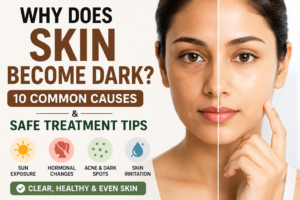
What Causes Skin to Become Dark?
Skin gets its color mainly from a pigment called melanin, which is produced by specialized cells called melanocytes. When the skin produces more melanin than usual, an area may become darker. This is known as hyperpigmentation.
Hyperpigmentation can appear as:
- Dark spots
- Brown or gray patches
- Dark marks after pimples
- Uneven skin tone
- Darkened areas around the mouth
- Dark neck or underarms
- Dark spots caused by sun exposure
The appearance and cause of pigmentation can vary from person to person, so identifying the trigger is an important first step.
10 Common Reasons Why Skin Becomes Dark
1. Too Much Sun Exposure
Sun exposure is one of the most frequent causes of skin darkening.
Melanin production is stimulated by ultraviolet (UV) radiation as part of the skin’s natural defense mechanism. Thus, tanning, freckles, sun spots, and uneven pigmentation can result from prolonged exposure to the sun.
- Face
- Forehead
- Nose
- Cheeks
- Neck
- Hands
- Arms
What can help?
Daily sunscreen is one of the most important steps for preventing further pigmentation. Choose a broad-spectrum sunscreen with an appropriate SPF and reapply as directed, particularly when spending extended time outdoors.
Wearing a hat and seeking shade can provide additional protection.
2. Acne and Pimples
Have you ever noticed a brown or dark mark where a pimple used to be?
This is called post-inflammatory hyperpigmentation (PIH). It can occur after inflammation or injury causes the skin to produce extra pigment.
Acne-related dark marks can remain long after the original pimple has disappeared.
Picking, squeezing, or scratching pimples can increase inflammation and may make post-acne marks more noticeable.
What can help?
The best approach is to treat both the acne and the resulting pigmentation. Avoid picking your skin and consider gentle skincare products containing ingredients such as niacinamide or azelaic acid when appropriate.
Daily sunscreen is particularly important because UV exposure can make dark marks last longer.
3. Hormonal Changes
Increased pigmentation can occasionally be brought on by hormonal changes.
Melasma, which can result in brown or grayish patches, especially on the face, is one well-known example. Hormonal changes are frequently linked to it, and sun exposure can make it more apparent.
Melasma frequently develops in areas like:
- Cheeks
- Forehead
- Upper lip
- Nose
- Chin
Hormonal fluctuations during pregnancy can also cause increased pigmentation in some people.
What can help?
Sun protection is essential for managing melasma. A dermatologist can also recommend appropriate topical treatments depending on the severity and type of pigmentation.
Because hormonal pigmentation can be persistent, patience is important.
4. Skin Irritation
Sometimes the skin-improving products we use can actually make our skin more discolored.
Skin irritation can be caused by harsh cleansers, vigorous scrubs, frequent exfoliation, scented products, or inappropriate skincare ingredients. Melanin production may then rise as a result of inflammation.
Darker patches may result from this, especially for those whose skin is susceptible to post-inflammatory pigmentation.
What can help?
Keep your skincare routine simple if your skin is irritated.
Use:
- A gentle cleanser
- A suitable moisturizer
- Sunscreen during the day
- Mild, well-tolerated skincare ingredients
Avoid repeatedly scrubbing or peeling dark areas.
5. Dry Skin and Repeated Friction
Dry, irritated skin can sometimes appear dull, rough, or darker than surrounding skin. Repeated rubbing can also contribute to pigmentation.
This may happen around areas such as:
- Inner thighs
- Underarms
- Neck
- Knees
- Elbows
Tight clothing, frequent shaving, or repeated rubbing can contribute to irritation in some people.
What can help?
Moisturize regularly and try to reduce unnecessary friction. Choose comfortable clothing and avoid aggressive scrubbing of darker areas.
If pigmentation continues despite reducing irritation, it is worth discussing it with a dermatologist.
6. Certain Medications
Some medications can cause changes in skin pigmentation as a side effect. The type and appearance of discoloration can vary depending on the medication.
If you notice new or unusual skin darkening after starting a medicine, do not stop the medication on your own.
Instead, speak with your doctor or pharmacist. They can determine whether the medication could be contributing to the change and whether an alternative is appropriate.
7. Post-Inflammatory Hyperpigmentation
Skin darkening can occur after almost any type of inflammation or injury.
Besides acne, common triggers include:
- Cuts
- Burns
- Insect bites
- Eczema
- Skin infections
- Allergic reactions
- Cosmetic procedures
The skin may heal but leave behind a darker patch.
This type of pigmentation can gradually fade, although it may take weeks or months.
How can you improve it?
Protect the affected area from the sun and avoid further irritation. Depending on the cause, a dermatologist may recommend ingredients that help improve pigmentation.
8. Certain Skin Conditions
Some skin conditions can cause areas of the skin to become darker.
For example, conditions involving chronic inflammation can sometimes leave pigmentation behind. Other conditions may directly affect the color or texture of the skin.
If darkening is persistent, spreading, itchy, painful, scaly, or associated with other symptoms, it is better to have it evaluated rather than assuming it is simply a cosmetic issue.
9. Acanthosis Nigricans
If you notice thick, darker, velvety skin, particularly around the neck, armpits, or groin, one possible cause is a condition called acanthosis nigricans.
It is not simply a buildup of dirt, and scrubbing the area aggressively will not solve the underlying problem.
Acanthosis nigricans can be associated with insulin resistance and other health conditions.
What should you do?
If you develop new, unexplained dark and thickened skin, especially around skin folds, consider speaking with a healthcare professional. Treating the underlying cause may help improve the appearance over time.
10. Aging and Natural Changes
Skin can change naturally as we get older.
Years of sun exposure can contribute to the development of age spots and uneven pigmentation. Skin also undergoes changes in texture, hydration, and cell turnover over time.
This does not necessarily mean something is wrong.
A consistent skincare routine and good sun protection can help reduce additional pigmentation and maintain healthier-looking skin.
How to Treat Dark Skin Safely
The safest treatment depends on why the skin became dark in the first place.
Here are some general approaches that can help improve uneven pigmentation.
1. Use Sunscreen Every Day
If you are trying to fade dark spots, sunscreen should be a major part of your routine.
UV exposure can encourage additional melanin production and make existing pigmentation more noticeable.
Look for a broad-spectrum sunscreen and use it consistently.
2. Try Gentle Brightening Ingredients
Certain skincare ingredients may help improve the appearance of hyperpigmentation over time.
Common options include:
- Niacinamide
- Vitamin C
- Azelaic acid
- Retinoids
- Alpha hydroxy acids (AHAs)
Not every ingredient is suitable for every skin type. Introduce new products gradually and avoid combining multiple strong ingredients at once if your skin is sensitive.
3. Moisturize Your Skin
A healthy skin barrier can help reduce irritation.
Choose a moisturizer appropriate for your skin type and apply it regularly, especially if your skin is dry or easily irritated.
4. Do Not Pick or Scratch Your Skin
Picking acne, scabs, insect bites, or irritated areas can increase inflammation and raise the risk of dark marks.
Allow damaged skin to heal naturally whenever possible.
5. Avoid Harsh Whitening Products
Be careful with products marketed as instant skin-lightening or bleaching treatments.
Some unregulated products may contain ingredients that can seriously irritate or damage the skin.
Instead of trying to make your natural skin color lighter, focus on treating uneven pigmentation and maintaining healthy skin.
Can Home Remedies Remove Dark Skin?
But “natural” does not always equate to skin-friendly.
In addition to causing irritation, lemon juice and other acidic or irritating substances may exacerbate pigmentation, especially if the skin is exposed to sunlight afterward.
Generally speaking, it’s safer to stick to a basic, gentle skincare regimen rather than trying out harsh DIY treatments.
How Long Does It Take for Dark Spots to Fade?
There is no single timeline for fading pigmentation.
Some superficial dark marks may gradually become lighter over several weeks or months, while deeper or hormonally driven pigmentation can take considerably longer.
Your results may depend on:
- The cause of pigmentation
- Your skin type
- How long the discoloration has been present
- Sun exposure
- The products you use
- Whether the original irritation continues
Consistency is more important than trying to achieve overnight results.
When Should You See a Dermatologist?
Not every dark patch requires medical treatment, but unexplained or changing pigmentation should sometimes be evaluated.
Consider seeing a dermatologist if:
- A dark patch appears suddenly
- Pigmentation is rapidly spreading
- The area is painful, itchy, or bleeding
- The skin becomes thick or velvety
- A dark spot changes in size, shape, or color
- Over-the-counter products are not helping
- You have widespread or unexplained skin darkening
A dermatologist can examine your skin and determine whether the pigmentation is caused by sun exposure, inflammation, a skin condition, medication, or another factor.
How to Prevent Skin From Becoming Dark
You cannot prevent every type of pigmentation, but several habits can reduce your risk.
Wear sunscreen
Make sunscreen part of your everyday routine, not just something you use on beach days.
Avoid unnecessary irritation
Do not over-exfoliate or repeatedly scrub your skin.
Treat acne early
Managing acne can reduce the likelihood of long-lasting dark marks.
Keep your skin moisturized
A well-maintained skin barrier is less likely to become irritated.
Be gentle after hair removal
Shaving and waxing can sometimes irritate the skin. Use appropriate techniques and avoid repeatedly going over the same area.
Protect your skin outdoors
Hats, shade, protective clothing, and sunscreen can all help reduce UV exposure.
Frequently Asked Questions About Skin Darkening
Why does my face become darker than my body?
The face receives frequent sun exposure and is also exposed to skincare products, cosmetics, acne, and environmental factors. These can contribute to uneven pigmentation.
Why is my neck getting darker?
A darker neck can have several causes, including friction, irritation, sun exposure, and conditions such as acanthosis nigricans. If the skin is also thick or velvety, medical evaluation is recommended.
Can dark skin become lighter naturally?
If the darkening is caused by temporary tanning or post-inflammatory pigmentation, it may gradually fade as the skin returns toward its usual tone. Sun protection and treating the underlying cause can help.
Does scrubbing remove dark skin?
No. Aggressive scrubbing does not safely remove pigmentation and can irritate the skin, potentially making dark marks worse.
Which ingredient is best for dark spots?
There is no single best ingredient for everyone. Niacinamide, vitamin C, azelaic acid, retinoids, and certain exfoliating acids can all be useful depending on the cause and your skin’s tolerance.
Can sunscreen prevent skin darkening?
Regular sun protection can help reduce tanning and prevent UV exposure from worsening existing hyperpigmentation. It is one of the most important steps when managing dark spots.
Final Thoughts
Why does skin become dark? The answer can range from something as simple as sun exposure to hormonal fluctuations, acne, irritation, drugs, or specific health issues.
The secret is to avoid using harsh scrubs or strong bleaching agents on dark skin. Rather, determine the potential cause, shield your skin from the sun, maintain a gentle routine, and give treatments enough time to take effect.
Professional evaluation is the safest course of action if pigmentation is abrupt, persistent, spreading, or accompanied by changes in skin texture or other symptoms.
Perfectly even skin tone is not necessary for healthy skin. Instead of attempting to alter your natural skin tone, the objective should be comfortable, healthy skin and safely controlled pigmentation.