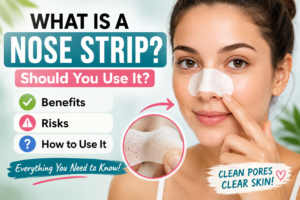

You might have thought about using a nose strip if you have ever examined your nose closely and found visible pores, blackheads, or extra oil. These tiny adhesive strips are frequently used as an easy way to give the nose a smoother, cleaner appearance.
However, do nose strips really get rid of blackheads? Are they beneficial to your skin? How frequently should you use them?
Oil, surface debris, and some material from clogged pores can be momentarily removed with a nose strip. It does not, however, address the root causes of acne or blackheads or permanently reduce pores. Sensitive skin may also be irritated by using nose strips improperly or too frequently.
In this guide, we will explain what a nose strip is, how it works, its potential benefits and risks, how to use it properly, and whether you should add it to your skincare routine.
What Is a Nose Strip?
A nose strip is an adhesive skincare product designed to stick to the skin of the nose. When the strip dries, it adheres to oil, dead skin cells, and other surface debris. When you peel it away, some of this material may come off with the strip.
Most nose strips are made from a flexible adhesive material and are designed specifically for the shape of the nose.
They are commonly marketed for:
- Blackhead removal
- Pore cleansing
- Removing excess oil
- Smoothing the appearance of the nose
- Making pores look temporarily cleaner
Although nose strips can make the skin appear cleaner immediately after use, their effects are generally temporary.
How Do Nose Strips Work?
Nose strips work mainly through adhesion rather than deep cleansing.
When the strip becomes wet, it forms an adhesive layer that attaches to the skin. As it dries, the adhesive grips some of the material sitting on or near the surface of pores.
When you remove the strip, it can pull away:
- Excess oil
- Dead skin cells
- Surface debris
- Some blackhead material
- Fine facial hairs
This can create the impression that the strip has deeply cleaned the pores.
However, a blackhead is a type of clogged pore, and simply pulling out surface material does not necessarily prevent the pore from becoming clogged again.
Do Nose Strips Really Remove Blackheads?
Yes, nose strips can remove some surface material from blackheads, but they do not provide a permanent solution.
Oil, dead skin cells, microscopic hairs, and material from clogged pores may all show up on the strip after removal. For this reason, the nose may appear smoother right away.
Nevertheless, excess sebum and the accumulation of dead skin cells are two things that cause clogged pores and are not addressed by nose strips.
A regular skincare regimen might be more beneficial than just using nose strips if you frequently get blackheads.
Benefits of Using a Nose Strip
Nose strips can offer several short-term cosmetic benefits when used correctly.
1. Helps Remove Surface Oil
If your nose becomes oily during the day, a nose strip may help remove some excess oil and surface buildup.
This can leave the skin feeling temporarily cleaner and fresher.
2. Makes the Nose Look Smoother
After removing a strip, the nose may appear smoother because some surface debris and oil have been removed.
This effect is usually temporary.
3. Provides Quick Blackhead Removal
Nose strips are popular because they provide visible results quickly. You may notice small plugs and debris on the strip after peeling it away.
However, this does not mean every pore has been completely cleared.
4. Easy to Use
Nose strips generally take only a few minutes to apply and remove. Unlike complicated skincare routines, they do not require multiple products.
5. Temporary Pore-Cleaning Effect
Nose strips can make pores appear less noticeable by removing material from the surface. However, they cannot permanently shrink your pores.
Risks and Side Effects of Nose Strips
Although nose strips are convenient, they are not suitable for everyone.
1. Skin Irritation
The adhesive can irritate sensitive skin, especially if you leave the strip on for too long or use it too often.
Possible symptoms include:
- Redness
- Burning
- Itching
- Tenderness
- Dryness
2. Dry or Flaky Skin
Repeated use may remove natural oils from the surface of the skin. This can leave your nose feeling dry or tight.
3. Damage to the Skin Barrier
Aggressive peeling can contribute to irritation and may disturb the skin barrier, particularly if your skin is already dry or sensitive.
4. Small Amounts of Bleeding
If a nose strip pulls strongly on irritated skin or inflamed blemishes, it can occasionally cause minor skin injury.
5. Temporary Redness
Some people experience redness immediately after removing a nose strip. This usually settles with time, but persistent irritation is a reason to stop using the product.
Who Should Avoid Nose Strips?
Nose strips may not be appropriate if you have very sensitive, irritated, or damaged skin.
Consider avoiding them if your nose has:
- Sunburn
- Open wounds
- Active irritation
- Severe dryness
- Peeling skin
- Recently treated skin
- Active inflammatory acne
People with sensitive skin should be especially careful with adhesive skincare products.
If you are unsure whether a nose strip is appropriate for your skin condition, consider asking a dermatologist.
How to Use a Nose Strip Correctly
Using a nose strip properly can reduce unnecessary irritation.
Step 1: Clean Your Face
Start with a gentle cleanser to remove makeup, sunscreen, oil, and dirt.
Avoid harsh scrubbing because your skin does not need to be aggressively exfoliated before applying the strip.
Step 2: Wet Your Nose
Most traditional nose strips require the nose to be wet before application.
Follow the instructions provided with your specific product because application methods can vary.
Step 3: Apply the Strip
Place the adhesive side onto your nose and press it gently so that it makes good contact with the skin.
Avoid placing it on irritated or broken skin.
Step 4: Allow It to Dry
Leave the strip on for the amount of time recommended on the package.
Do not assume that leaving it on longer will produce better results.
Step 5: Remove It Gently
Once the strip has dried, slowly peel it away.
If the strip feels extremely painful or is strongly attached, dampen the area and remove it carefully rather than pulling aggressively.
Step 6: Moisturize
After removing the strip, rinse or gently cleanse the area if necessary and apply a lightweight moisturizer.
This can help reduce dryness and support the skin barrier.
How Often Should You Use a Nose Strip?
There isn’t a single frequency that suits everyone.
For many people, it’s better to use nose strips infrequently rather than frequently. Always adhere to the product’s instructions.
After using a nose strip, stop using it until your skin heals if it becomes red, painful, dry, or irritated.
You won’t always get better or more durable results if you use a nose strip frequently.
Nose Strips vs. Salicylic Acid
If your main concern is blackheads, you may wonder whether nose strips or salicylic acid is better.
Nose strips provide quick, temporary removal of surface debris.
Salicylic acid, a beta-hydroxy acid (BHA), can help exfoliate inside pores and is often used in skincare products designed for clogged pores and acne-prone skin.
For long-term management of blackheads, a consistent skincare routine may be more beneficial than repeatedly using adhesive strips.
However, stronger skincare ingredients can also cause irritation if overused, so introduce them gradually and follow product directions.
Can Nose Strips Shrink Pores?
No, your pores cannot be permanently reduced by nose strips.
Genetics, skin type, age, and oil production are some of the factors that affect pore size.
Because a nose strip eliminates surface oil and debris, it may momentarily make pores appear smaller or cleaner. Pores may reappear once oil and dead skin cells start to build up again.
Instead of attempting to permanently reduce pores, concentrate on maintaining their cleanliness and controlling extra oil.
Are Nose Strips Good for Oily Skin?
People with oily skin may enjoy the temporary cleansing effect of nose strips.
However, oily skin still needs gentle care. Removing too much surface oil may leave the skin irritated or uncomfortable.
A better long-term routine may include:
- Gentle cleansing
- Non-comedogenic moisturizer
- Daily sunscreen
- Appropriate exfoliation
- Ingredients designed for clogged pores when needed
The goal should be balanced skin rather than completely removing natural oils.
Better Alternatives for Blackheads
If blackheads are a recurring problem, there are other approaches you can consider.
Salicylic Acid
Salicylic acid can help exfoliate inside pores and may be useful for blackheads and clogged pores.
Gentle Cleansing
Wash your face with a gentle cleanser rather than using harsh scrubs or repeatedly washing the skin.
Retinoids
Topical retinoids can help with clogged pores and acne. Some are available over the counter depending on where you live, while others require professional guidance.
Non-Comedogenic Products
Choose skincare and makeup products labeled non-comedogenic if you are prone to clogged pores.
Professional Extraction
If you have persistent blackheads, a qualified skincare professional or dermatologist may be able to provide appropriate extraction or treatment.
Common Mistakes to Avoid When Using Nose Strips
To protect your skin, avoid these common mistakes:
Using them too often: Frequent peeling can cause irritation.
Applying them to damaged skin: Adhesive can worsen irritation.
Pulling too aggressively: This can damage the surface of the skin.
Leaving them on too long: Follow the manufacturer’s instructions.
Skipping moisturizer: Your skin may feel dry after removal.
Expecting permanent results: Nose strips do not permanently remove blackheads or shrink pores.
Frequently Asked Questions
Are nose strips safe?
For many people, occasional use can be tolerated, but nose strips may cause irritation, dryness, or redness. People with sensitive or damaged skin should be particularly cautious.
Do nose strips remove blackheads permanently?
No. They can remove some surface material from clogged pores, but they do not address the causes of blackheads or prevent new ones from forming.
Can I use a nose strip every day?
Daily use is generally unnecessary and may increase the risk of irritation. Follow the product’s instructions and stop if your skin becomes irritated.
Should I moisturize after using a nose strip?
Yes. Applying a gentle moisturizer afterward can help reduce dryness and support the skin barrier.
Can nose strips damage your skin?
They can cause irritation, redness, dryness, or minor skin injury, particularly when used too frequently or peeled off aggressively.
Are nose strips good for acne?
Nose strips are not an acne treatment. They may temporarily remove surface material but do not treat the underlying causes of acne.
What is better than nose strips for blackheads?
For ongoing blackhead management, ingredients such as salicylic acid or topical retinoids may be more useful than relying on nose strips alone. A dermatologist can recommend an appropriate treatment based on your skin.
Final Thoughts: Should You Use a Nose Strip?
So, should a nose strip be used?
An occasional nose strip might be a good choice for you if you like the fleeting sensation of smoother, cleaner skin. However, it shouldn’t be regarded as a long-term solution for acne, enlarged pores, or blackheads.
Focus on a gentle skincare regimen that incorporates cleansing, moisturizing, sun protection, and the right ingredients for your particular skin concerns if you want your skin to look healthier over time.
Above all, pay attention to your skin. Stop using a nose strip and switch to a more gentle method if it significantly increases redness, pain, dryness, or irritation.