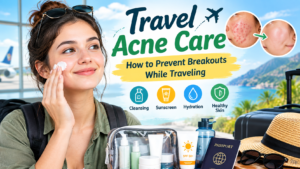

Travel Acne Care: How to Prevent Breakouts While Traveling
Although traveling can be thrilling, your skin might not always appreciate the experience. Changes in climate, long flights, stress, lack of sleep, unfamiliar skincare products, sweat, and exposure to pollution can all contribute to breakouts. Even a quick trip can occasionally result in clogged pores, pimples, or increased oiliness for those with acne-prone skin.
The good news is that a complex skincare regimen is not necessary when traveling. You can protect your skin, lessen clogged pores, and keep your complexion looking good during your trip with the correct travel acne care plan.
This guide explains how to prevent acne while traveling, what skincare products to pack, how to care for your skin during flights, and what to do if a breakout appears.
Why Does Traveling Cause Acne?
Traveling can expose your skin to several changes at once. Your normal routine may be disrupted, and your skin may react to environmental changes.
Common travel-related acne triggers include:
- Changes in humidity and temperature
- Sweat and excess oil
- Airplane cabin dryness
- Pollution and dust
- Stress and lack of sleep
- Touching your face more frequently
- Using unfamiliar skincare or makeup products
- Not washing your face regularly
- Dirty pillowcases or towels
- Changes in diet
- Hormonal changes
Travel acne is not necessarily caused by one single factor. Often, several small changes combine to make acne-prone skin more vulnerable to clogged pores and inflammation.
1. Keep Your Skincare Routine Simple
One of the most important travel acne care tips is to avoid completely changing your skincare routine during a trip.
Traveling is not the ideal time to experiment with multiple new products. A new cleanser, moisturizer, serum, or exfoliant may irritate your skin or trigger a reaction.
Try to maintain the basic routine you already know works for your skin:
Morning:
- Gentle cleanser
- Lightweight moisturizer
- Broad-spectrum sunscreen
Night:
- Cleanser
- Acne treatment if you normally use one
- Moisturizer
A simple routine is easier to follow when you are busy sightseeing, attending events, or changing hotels.
2. Cleanse Your Face After Traveling
Your skin can accumulate sweat, oil, sunscreen, makeup, and environmental particles throughout the day.
If possible, wash your face after a long flight, train journey, road trip, or outdoor activity. Use a gentle cleanser rather than aggressively scrubbing your skin.
Over-cleansing can damage the skin barrier and cause dryness and irritation. For most people, cleansing twice a day is sufficient, with an additional gentle cleanse after heavy sweating when necessary.
If you cannot immediately wash your face, cleansing wipes designed for sensitive or acne-prone skin may be useful temporarily. However, they should not replace regular face washing when you have access to water and a gentle cleanser.
3. Don’t Skip Moisturizer
Many people with acne-prone skin avoid moisturizer because they are afraid it will cause more pimples.
However, excessive dryness can make the skin uncomfortable and may weaken the skin barrier. Travel environments, especially airplane cabins and dry climates, can increase moisture loss from the skin.
Choose a lightweight, non-comedogenic moisturizer.
Look for ingredients such as:
- Ceramides
- Glycerin
- Hyaluronic acid
- Panthenol
- Niacinamide
A moisturizer helps maintain skin hydration without necessarily making acne worse.
4. Always Pack Sunscreen
Sunscreen is an important part of travel skincare, whether you are going to a beach, city, mountain destination, or theme park.
Sun exposure can worsen post-acne dark spots and contribute to premature skin aging. UV exposure can also make existing skin discoloration more noticeable.
Choose a broad-spectrum sunscreen with SPF 30 or higher. If your skin is oily or acne-prone, consider a lightweight, non-comedogenic formula.
Apply sunscreen in the morning and reapply when spending extended periods outdoors, especially after sweating or swimming.
Remember that sunscreen is important even on cloudy days because UV radiation can still reach your skin.
5. Avoid Touching Your Face
Travel often means touching more surfaces than usual. You may handle luggage, airplane seats, train doors, public transportation rails, phones, and other shared surfaces.
Touching your face repeatedly can transfer oil and dirt to your skin.
Try to avoid:
- Picking pimples
- Resting your hands on your face
- Squeezing blackheads
- Scratching irritated areas
Keep your hands clean and use hand sanitizer when appropriate, particularly before applying skincare or makeup.
6. Keep Your Pillowcase Clean
Hotel bedding is generally changed between guests, but if you have particularly sensitive or acne-prone skin, bringing a clean pillowcase can provide extra peace of mind.
A clean pillowcase can reduce the buildup of sweat, oil, hair products, and skincare residue against your face.
For longer trips, consider packing one or two lightweight pillowcases that can be washed easily.
This is especially useful if you are traveling frequently or staying in different accommodations.
7. Be Careful With Hair Products
Hair products can sometimes contribute to breakouts around the forehead, temples, cheeks, neck, and hairline.
During travel, you may use different shampoos, conditioners, oils, styling products, or sprays.
If you notice acne around your hairline, try keeping heavy hair products away from your facial skin.
Wash your face after using products that may leave residue around the forehead or temples, and keep your hair away from your face when possible.
8. Don’t Overuse Acne Treatments
It can be tempting to use several acne products when a breakout appears during vacation. However, applying too many active ingredients can irritate your skin.
Common acne ingredients include:
- Salicylic acid
- Benzoyl peroxide
- Adapalene
- Azelaic acid
- Niacinamide
You do not necessarily need all of them.
If you already have an acne treatment recommended for your skin, continue using it as directed. Avoid suddenly adding multiple strong products simply because you are traveling.
If your skin becomes red, burning, peeling, or extremely dry, reduce irritating products and focus on gentle cleansing and moisturizing.
9. Stay Hydrated During Flights
Long flights can be uncomfortable for your skin because airplane cabins generally have low humidity.
Drink water regularly and avoid relying heavily on sugary drinks or alcohol.
Hydration does not directly cure acne, but maintaining adequate fluid intake supports normal body function and can help prevent excessive dryness and discomfort.
For dry skin during a flight, a simple moisturizer can be more useful than constantly applying multiple facial products.
10. Clean Your Phone Regularly
Your phone touches your hands and face throughout the day and can accumulate oils, makeup, and other residue.
If you frequently experience acne on the cheeks or jawline, cleaning your phone according to the manufacturer’s guidance may be a useful part of your routine.
Avoid using harsh cleaning chemicals directly on the phone screen unless they are specifically recommended for your device.
Also, try using headphones or speaker mode when possible if you notice that prolonged phone contact seems to irritate your skin.
11. Don’t Sleep With Makeup On
Travel days can be exhausting, especially after a long flight or a full day of sightseeing. It may be tempting to fall asleep without removing makeup.
However, leaving makeup, sunscreen, sweat, and oil on the skin overnight can contribute to clogged pores and irritation.
Before going to bed, gently remove makeup and cleanse your face.
If you are extremely tired, keep your nighttime routine simple rather than skipping it completely.
12. Be Careful With Vacation Food
Trying new foods is one of the best parts of traveling. You do not necessarily need to avoid your favorite vacation foods because of acne.
However, if you notice that your skin tends to react to major dietary changes, try to maintain a balanced diet.
Include:
- Fruits
- Vegetables
- Protein-rich foods
- Whole grains
- Healthy fats
- Adequate fluids
Highly processed foods and large amounts of sugary foods may not be ideal for overall health, and some research has explored links between high-glycemic diets and acne. However, individual responses vary.
The goal is balance rather than strict food restriction.
13. Protect Your Skin in Hot and Humid Weather
Hot and humid destinations can increase sweating and oil production.
If you are visiting a tropical location, consider:
- Wearing breathable clothing
- Washing your face after heavy sweating
- Using lightweight skincare products
- Choosing non-comedogenic sunscreen
- Avoiding heavy facial oils
- Keeping hair away from your face
Do not repeatedly scrub your face to remove sweat. Gentle cleansing is usually a better approach.
14. Adjust Your Routine for Cold or Dry Weather
Cold destinations can create the opposite problem. Your skin may become dry, flaky, tight, or irritated.
In colder climates:
- Use a gentle cleanser
- Apply moisturizer regularly
- Avoid very hot water
- Protect your face from harsh wind
- Continue using sunscreen
- Avoid unnecessary exfoliation
If your skin barrier becomes irritated, temporarily simplify your routine.
15. Pack a Small Acne Emergency Kit
A small skincare travel kit can make managing breakouts much easier.
Consider packing:
- Gentle cleanser
- Lightweight moisturizer
- Sunscreen
- Your regular acne treatment
- Lip balm
- Clean pillowcase
- Makeup remover if needed
- Clean tissues
- Hair ties or clips
You do not need to bring your entire bathroom cabinet.
Choose travel-sized versions of products you already know your skin tolerates.
What to Do If You Get a Breakout While Traveling
Even with good travel acne care, a breakout can still happen.
If you notice a pimple:
- Avoid squeezing it.
- Cleanse your skin gently.
- Continue your usual acne treatment if appropriate.
- Apply moisturizer.
- Use sunscreen during the day.
- Avoid adding several new products at once.
A hydrocolloid acne patch may also be useful for some individual pimples, particularly if you tend to touch or pick them.
Give your skin time to recover instead of trying to eliminate the breakout overnight.
Common Travel Acne Care Mistakes to Avoid
Some travel habits can make breakouts or irritation worse.
Using Too Many New Products
Vacation is not the best time to test an entirely new skincare routine.
Skipping Sunscreen
Sun exposure can worsen post-acne marks and damage the skin.
Over-Washing
Washing your face excessively can increase dryness and irritation.
Picking Pimples
Squeezing acne can increase inflammation and potentially contribute to scarring or dark marks.
Sleeping in Makeup
This can leave makeup, oil, sweat, and sunscreen on your skin overnight.
Forgetting Moisturizer
Dryness can make the skin barrier more vulnerable to irritation.
Travel Acne Care Routine
A simple routine can look like this:
Morning:
Gentle cleanser → moisturizer → SPF 30+ sunscreen
During the day:
Reapply sunscreen when needed → cleanse after heavy sweating → avoid touching your face
Night:
Remove makeup → gentle cleanser → regular acne treatment → moisturizer
The exact products and frequency should be adjusted according to your skin type and any treatment recommended by your dermatologist.
When Should You See a Dermatologist?
Occasional travel breakouts are common and usually manageable with basic skincare.
Consider seeing a dermatologist if you develop:
- Severe or painful acne
- Deep cysts or nodules
- Rapidly worsening breakouts
- Significant scarring
- Persistent acne that does not improve
- Severe irritation after using skincare products
- Acne that continues after returning home
A dermatologist can determine whether you have acne or another condition that may look similar, such as folliculitis, rosacea, or contact dermatitis.
Frequently Asked Questions
Can traveling cause acne?
Yes. Changes in climate, stress, sleep, sweat, skincare products, diet, and environmental exposure can contribute to breakouts in people who are prone to acne.
How can I prevent acne while traveling?
Keep your skincare routine simple, cleanse regularly, use a lightweight moisturizer, wear sunscreen, avoid touching your face, stay hydrated, and continue your usual acne treatment.
Should I change my skincare routine before traveling?
Usually, it is better to keep your routine familiar. Avoid introducing several new products immediately before or during a trip.
Is airplane travel bad for acne?
Airplane cabins can be dry, and long flights may involve stress, lack of sleep, and prolonged exposure to recycled cabin air. These factors may make some people’s skin feel dry or irritated, although airplane travel itself does not directly cause acne.
What sunscreen is best for acne-prone skin while traveling?
Look for a broad-spectrum SPF 30 or higher that is lightweight and labeled non-comedogenic. The best choice is generally one that you already know your skin tolerates.
Should I wash my face more often when traveling?
Not necessarily. Most people do well with gentle cleansing twice daily, plus cleansing after heavy sweating when needed. Excessive washing can cause irritation.
Final Thoughts
Good travel acne care does not require a complicated routine. The most important strategy is consistency. Keep your cleanser, moisturizer, sunscreen, and regular acne treatment with you, protect your skin from excessive sun exposure, avoid picking pimples, and adjust your routine according to the climate.
There are a few short weekend weekend weekend weekend weekend weekend weekend weekend weekend weekend weekend weekend.
Keep in mind that every person’s skin responds differently to stress, travel, weather, and skincare products. You can find an appropriate treatment plan with professional dermatological advice if your acne becomes severe, painful, persistent, or leaves significant scars.