
Introduction
Although toenails and heels are frequently disregarded, healthy feet are crucial for daily comfort. Throughout the day, your feet bear the weight of your body and are frequently subjected to pressure, friction, sweat, shoes, and environmental changes. Inadequate maintenance can cause the heels to become extremely dry and cracked, and the toenails to become thick, brittle, discolored, or painful.
The good news is that you can maintain the health of your heels and toenails with a basic foot care regimen. Many common foot issues can be minimized with regular washing, moisturizing, appropriate nail cutting, comfortable footwear, and good hygiene.
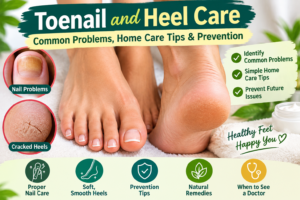
This guide will teach you about common issues with your toenails and heels, how to take care of them at home, preventative measures, and indicators that you might need to see a doctor.
Why Toenail and Heel Care Is Important
Toenails protect the sensitive ends of your toes from injury. The skin around your heels also provides protection while walking and standing. When these areas become damaged or neglected, small problems can sometimes become uncomfortable or difficult to manage.
For example, dry skin can develop into deep heel cracks. An improperly trimmed toenail may become painful or grow into surrounding skin. Moisture trapped inside shoes can also create an environment where fungal infections are more likely to develop.
Good foot care does not need to be complicated. A few minutes of attention several times a week can make a significant difference.
Common Toenail Problems
1. Thick Toenails
Toenails may become thicker for several reasons, including repeated pressure from shoes, injuries, aging, or fungal infections.
Thick nails can be difficult to cut and may become uncomfortable inside tight footwear.
If a toenail suddenly changes in thickness, color, or shape, it is worth having it evaluated, especially if the change persists.
2. Brittle or Cracked Toenails
Dry or damaged toenails can become brittle and break easily. Repeated exposure to water, harsh products, trauma, or certain nail treatments may contribute to nail weakness.
Avoid picking or tearing damaged nails. Keep them trimmed and use gentle foot-care products.
3. Discolored Toenails
Toenails can change color after an injury or because of fungal infections. Yellow, white, brown, or unusually dark discoloration can have different causes.
A persistent change in nail color should not automatically be treated at home because the underlying cause needs to be identified.
4. Ingrown Toenails
An ingrown toenail occurs when the edge of the nail grows into the surrounding skin. The area may become painful, red, swollen, or tender.
Cutting toenails too short or rounding the corners aggressively can increase the risk. Trimming nails straight across and avoiding tight shoes can help prevent the problem.
5. Fungal Toenail Infections
Toenail fungus may cause nails to become thick, discolored, brittle, or crumbly. It can take time to treat because toenails grow slowly.
Keeping feet clean and dry is an important part of prevention. Sharing nail clippers, towels, or footwear can also increase the spread of fungal infections.
Common Heel Problems
1. Dry Heels
Dry skin is one of the most common heel problems. The skin may feel rough, tight, flaky, or uncomfortable.
Dry weather, frequent hot showers, harsh soaps, and lack of moisturizing can make the problem worse.
Applying a thick moisturizer regularly can help restore moisture and soften rough skin.
2. Cracked Heels
When very dry heel skin becomes thick and loses flexibility, it can split and develop cracks. Mild cracks may cause discomfort, while deeper cracks can become painful and may bleed.
Regular moisturizing and reducing excessive pressure on the heels can help prevent worsening.
3. Calluses
Calluses are areas of thickened skin that develop because of repeated pressure or friction. They commonly occur on the heels and other areas of the feet.
Well-fitting shoes and moisture can help reduce the factors that contribute to callus formation.
4. Heel Discomfort
Heel discomfort can have many possible causes, including prolonged standing, unsuitable footwear, excessive pressure, or certain foot conditions.
If heel pain continues despite basic self-care or interferes with walking, professional evaluation may be appropriate.
How to Care for Your Toenails at Home
A consistent toenail routine can help maintain clean and healthy nails.
1. Wash Your Feet Regularly
Wash your feet with warm water and a gentle cleanser. Pay attention to the areas between the toes.
After washing, dry your feet thoroughly, especially between the toes. Keeping the skin dry can help reduce excessive moisture.
2. Trim Toenails Correctly
Use clean nail clippers to trim toenails regularly. Avoid cutting them extremely short.
It is generally better to trim toenails straight across rather than deeply rounding the corners. This can reduce the chance of the nail growing into the surrounding skin.
3. Keep Nail Tools Clean
Do not share nail clippers, files, or other personal foot-care tools with other people.
Clean your tools after use and allow them to dry completely.
4. Avoid Picking Damaged Nails
If a toenail becomes loose, cracked, or discolored, avoid pulling it off. Picking can damage surrounding tissue and potentially introduce bacteria.
Instead, protect the area and seek professional advice when necessary.
How to Care for Dry and Cracked Heels
1. Moisturize Daily
One of the easiest heel care at home methods is regular moisturizing.
Apply a thick foot cream or moisturizer after bathing and before bedtime. Ingredients commonly used for dry feet include urea, lactic acid, and other moisturizing agents.
For very dry heels, wearing clean cotton socks after moisturizing can help keep the product against the skin.
2. Avoid Very Hot Water
Long, hot showers may remove natural oils from the skin and contribute to dryness.
Use comfortably warm water and avoid spending excessive time soaking your feet.
3. Gently Remove Excess Hard Skin
A foot file or pumice stone can help reduce rough skin when used gently.
Do not aggressively scrape cracked or painful skin. Excessive filing can cause irritation and potentially make the skin more vulnerable to injury.
4. Choose Comfortable Footwear
Shoes that fit properly can reduce pressure and friction around the heel.
Avoid footwear that repeatedly rubs the back of your heel or leaves insufficient room for your toes.
Natural Ways to Support Healthy Feet
Some simple habits can support healthy toenails and heels.
Coconut Oil
Coconut oil can act as an occlusive moisturizer and may help reduce the feeling of dryness. Apply a small amount to clean, dry heels if your skin tolerates it.
Petroleum Jelly
Petroleum jelly is useful for reducing moisture loss from dry skin. Applying it to the heels at night can help keep them moisturized.
Gentle Foot Soaking
A short soak in comfortably warm water may soften rough skin. However, frequent or prolonged soaking can increase dryness in some people.
After soaking, dry the feet thoroughly and apply moisturizer.
Remember that home remedies are mainly supportive care. They should not replace medical treatment for infections, severe cracks, or persistent nail changes.
Toenail and Heel Care Prevention Tips
Prevention is often easier than treating a painful foot problem.
Keep Feet Clean and Dry
Wash your feet regularly and dry them carefully. Change socks when they become sweaty or damp.
Wear Breathable Socks
Moisture-wicking or breathable socks can help keep feet more comfortable. Avoid wearing damp socks for long periods.
Change Shoes Regularly
Allow shoes to dry completely between uses when possible. Avoid wearing footwear that is consistently damp or sweaty.
Avoid Tight Shoes
Shoes should provide enough room for your toes and should not constantly press against the toenails.
Do Not Walk Barefoot in High-Risk Public Areas
Wear appropriate footwear in communal showers, swimming-pool areas, and locker rooms. This can help reduce exposure to fungal infections.
Inspect Your Feet
Take a few minutes each week to check your feet and toenails. Look for cracks, swelling, redness, blisters, unusual discoloration, or other changes.
Early attention can prevent small problems from becoming more serious.
When Should You See a Doctor?
Many mild cases of dry skin can be managed with regular home care. However, some foot problems require professional attention.
See a healthcare professional if you notice:
- Severe or worsening toenail pain
- Significant swelling or redness
- Pus or drainage around a toenail
- Deep heel cracks that bleed
- A wound that does not heal
- Persistent nail discoloration or thickening
- Signs of a fungal infection that do not improve
- Severe or persistent heel pain
- A sudden unexplained change in a toenail
- Difficulty walking because of foot pain
People with diabetes, poor circulation, reduced sensation in the feet, or certain other medical conditions should be particularly careful with foot problems and may need professional guidance before attempting aggressive home treatments.
Common Toenail and Heel Care Mistakes
Even well-intentioned foot-care habits can sometimes cause problems.
Cutting Nails Too Short
Very short nails can become painful and may increase the risk of irritation around the nail.
Removing Too Much Callused Skin
Aggressive scraping can injure the skin. Gentle care is safer.
Ignoring Persistent Changes
A toenail that remains discolored, thick, painful, or distorted should not simply be covered with nail polish and forgotten.
Wearing Uncomfortable Shoes
Repeated pressure and friction can contribute to nail damage, blisters, calluses, and heel problems.
Using Shared Tools
Sharing nail clippers and other personal grooming tools can spread infections.
Simple Weekly Foot-Care Routine
A basic weekly routine can make toenail and heel care easier:
Step 1: Wash your feet with gentle soap and warm water.
Step 2: Dry your feet completely, especially between the toes.
Step 3: Check your toenails and heel skin for unusual changes.
Step 4: Trim your toenails when necessary, cutting them carefully and not excessively short.
Step 5: Gently smooth rough heel skin if needed.
Step 6: Apply a thick moisturizer to dry areas.
Step 7: Put on clean socks if you have applied moisturizer before bedtime.
Step 8: Make sure your everyday shoes fit comfortably and do not create pressure points.
Frequently Asked Questions
How often should I trim my toenails?
Trim toenails when they become long enough to catch on socks or shoes. Avoid cutting them extremely short and try to keep the edge relatively straight.
What is the best way to treat dry heels at home?
Regular moisturizing is one of the most useful approaches. A thick moisturizer or petroleum jelly can help reduce moisture loss. Avoid excessive scraping and very hot water.
Why are my toenails becoming thick?
Thick toenails can have several causes, including injury, repeated pressure, aging, or fungal infection. Persistent changes should be evaluated to determine the cause.
Can I use a pumice stone on cracked heels?
A pumice stone may help with mild rough skin when used gently. Do not aggressively file deep cracks, bleeding skin, or painful areas.
How can I prevent toenail fungus?
Keep your feet clean and dry, change damp socks, wear breathable footwear, avoid sharing personal nail tools, and wear protective footwear in communal wet areas.
Should I remove a damaged toenail myself?
It is generally better not to pull or remove a damaged toenail yourself. If the nail is severely damaged, painful, or infected-looking, seek professional advice.
Conclusion
Taking care of your toenails and heels does not require an expensive routine. Regular cleaning, proper nail trimming, daily moisturizing, comfortable footwear, and good hygiene can help maintain healthier feet.
Instead of ignoring changes in your heel skin and toenails, pay attention to them. Consistent at-home care may help with dryness and mild roughness, but a healthcare provider should be consulted for persistent pain, infection-like symptoms, deep cracks, wounds, or unusual nail changes.
You can easily incorporate toenail and heel care into your daily personal care routine and maintain the comfort, cleanliness, and health of your feet with a few easy habits.