

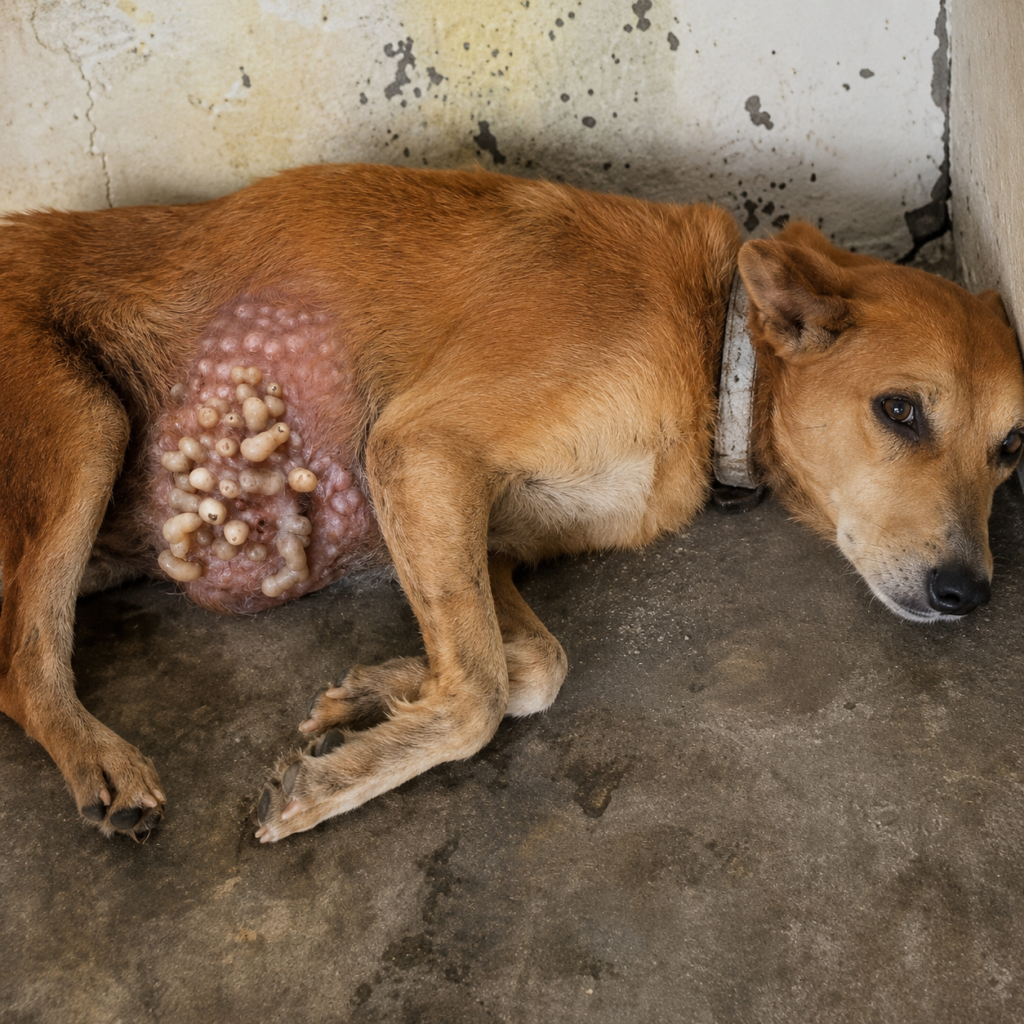
In many parts of the world, street dogs live difficult and painful lives. They struggle every day to find food, water, and a safe place to sleep. Some are lucky enough to receive kindness from humans, but many suffer silently from hunger, injuries, infections, and serious diseases. The image above shows a heartbreaking example of a sick dog suffering from a severe skin condition or tumor-like infection. The dog appears weak, helpless, and in pain, reminding us of the harsh reality faced by countless stray animals around the world.
The dog in the picture is lying on the ground with visible swelling and abnormal growths on its body. Its physical condition clearly shows signs of neglect and illness. Such diseases can be caused by infections, parasites, untreated wounds, tumors, or poor living conditions. Street dogs are often exposed to dirty environments, contaminated food, and extreme weather conditions. Without medical care, even a small injury can become life-threatening.
One of the biggest problems faced by stray dogs is the lack of veterinary treatment. Unlike pet dogs that receive vaccinations, healthy food, and regular checkups, street dogs must survive on their own. When they become sick, they continue suffering until someone notices them and decides to help. Unfortunately, many people ignore injured animals because they are afraid, busy, or unaware of how serious the problem is. This lack of attention increases the suffering of these innocent creatures.
The dog shown in the image may be experiencing extreme pain and discomfort. Large skin growths or infections can make it difficult for the animal to walk, sleep, or eat properly. In many cases, untreated infections spread rapidly and weaken the immune system. Dogs suffering from diseases often become thin, weak, and dehydrated. They may also lose their fur and develop wounds on different parts of the body. If treatment is not provided in time, the condition can become fatal.
Street dogs play an important role in society despite their difficult lives. They often protect neighborhoods by barking at strangers and alerting people to danger. Many stray dogs are intelligent, loyal, and capable of forming emotional bonds with humans. Sadly, instead of receiving love and protection, they are frequently abused, ignored, or abandoned. Some are victims of road accidents, while others suffer because of cruelty and lack of compassion.
Animal welfare organizations and rescue groups work hard to save sick and injured dogs. These organizations provide medical treatment, vaccinations, food, and shelter to animals in need. Veterinarians perform surgeries, treat infections, and help dogs recover from severe illnesses. In many cases, rescued dogs are later adopted into loving homes where they finally experience care and safety. However, rescue organizations often face financial difficulties because the number of homeless animals is extremely high.
The condition of the dog in the image highlights the importance of animal healthcare and public awareness. Many diseases in stray dogs can be prevented through proper vaccination and sterilization programs. Governments and local authorities should invest more resources in animal welfare services. Communities can also play an important role by supporting rescue shelters, reporting injured animals, and spreading awareness about responsible pet ownership.
Education is another important factor in reducing animal suffering. Children and adults should learn to treat animals with kindness and respect. Compassion toward animals reflects the humanity of a society. Feeding hungry dogs, offering clean water, or calling a rescue service for an injured animal may seem like small actions, but they can save lives. Even a little care can give hope to a suffering creature.
The emotional impact of seeing a sick dog is powerful. Animals cannot speak or explain their pain, yet their suffering is visible through their eyes and body language. The dog in the image appears exhausted and vulnerable, silently asking for help. Such scenes remind us that animals depend on human compassion for survival. Ignoring their pain only increases their suffering.
Medical treatment for severe skin diseases or tumors usually requires proper diagnosis by a veterinarian. The dog may need antibiotics, surgery, wound cleaning, pain relief, and nutritional support. Recovery can take weeks or months depending on the severity of the condition. Early treatment is extremely important because delays can make the disease harder to cure. Rescue workers often face emotional challenges when they see animals suffering in terrible conditions, but their dedication saves countless lives every year.
Adopting stray dogs instead of buying expensive breeds can also help reduce the number of homeless animals. Many stray dogs are loving, intelligent, and grateful companions. Adoption gives them a second chance at life while reducing overcrowding in shelters. Responsible pet ownership includes providing food, shelter, vaccinations, and medical care throughout the animal’s life.
The issue of stray animal suffering is not limited to one country or region. Around the world, millions of dogs live without proper care. Poverty, lack of awareness, and weak animal protection laws contribute to this problem. International animal welfare groups continue to advocate for stronger laws against cruelty and better healthcare systems for homeless animals. Public cooperation is necessary to create long-term solutions.
In conclusion, the image of the sick dog is a painful reminder of the suffering faced by stray animals every day. The dog’s condition reflects neglect, disease, and the urgent need for compassion and medical care. Animals deserve kindness, protection, and the right to live without pain. By supporting rescue organizations, spreading awareness, and showing empathy toward animals, society can help reduce their suffering. Every life matters, and even small acts of kindness can make a huge difference for animals in need.
