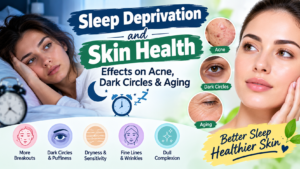

The body’s capacity to heal, control hormones, handle stress, and preserve good skin are all strongly correlated with sleep. Your skin may start to exhibit obvious indications of exhaustion if you consistently get too little sleep.
Skin health and sleep deprivation are related in a number of ways. Dark circles, puffiness, acne flare-ups, dullness, and a tired-looking complexion can all be caused by sleep deprivation. The skin’s capacity to preserve its barrier and recuperate from everyday environmental stressors may eventually be impacted by persistently insufficient sleep.
The good news is that improving sleep habits can support overall skin health. Sleep is not a replacement for acne treatment, sunscreen, or a proper skincare routine, but it can be an important part of a healthy lifestyle.
What Is Sleep Deprivation?
Sleep deprivation occurs when you regularly get less sleep than your body needs or when your sleep quality is poor.
Adults generally need around 7–9 hours of sleep per night, although individual needs can vary.
Sleep deprivation can result from:
- Staying up late
- Work or school schedules
- Stress and anxiety
- Excessive screen time
- Irregular sleep patterns
- Caffeine consumed too late in the day
- Certain medications
- Sleep disorders
- Frequent nighttime waking
- Lifestyle habits
Occasionally getting a short night’s sleep may make you look tired temporarily. Persistent poor sleep can have broader effects on physical and mental well-being.
How Does Lack of Sleep Affect Your Skin?
During sleep, the body carries out important repair and recovery processes. The skin also continues its normal renewal and barrier-maintenance activities.
When sleep is consistently inadequate, several factors may contribute to visible skin changes, including increased stress, altered inflammatory responses, and impaired recovery.
Common signs of sleep deprivation on the skin include:
- Dull complexion
- Dark circles
- Puffy eyes
- Dryness
- Increased sensitivity
- Uneven-looking skin tone
- More noticeable fine lines
- Acne flare-ups
- Slower recovery from irritation
Not everyone will experience all of these effects, and the appearance of the skin is influenced by genetics, age, skincare, diet, sun exposure, hormones, and other lifestyle factors.
Sleep Deprivation and Acne
One of the common concerns is whether lack of sleep causes acne.
Sleep deprivation itself is not considered the sole cause of acne. Acne develops through a combination of factors involving oil production, clogged hair follicles, inflammation, hormones, and acne-related bacteria.
However, poor sleep may indirectly contribute to acne in some people.
1. Increased Stress
Insufficient sleep can make it harder for the body to manage stress. Stress can affect hormonal and inflammatory pathways that may influence acne.
For someone already prone to breakouts, periods of high stress combined with poor sleep may coincide with more frequent or severe acne.
2. Changes in Daily Habits
When people are tired, they may be more likely to:
- Skip skincare
- Touch their face
- Eat irregularly
- Choose less balanced foods
- Stay awake late at night
- Forget to remove makeup
These habits can indirectly affect skin health.
3. Increased Inflammation
Sleep plays a role in normal immune and inflammatory regulation. Chronic sleep problems may influence inflammatory processes, which can be relevant to inflammatory skin conditions.
However, more research is needed to determine exactly how much poor sleep contributes to acne in different individuals.
Does Sleeping Late Cause Acne?
Simply going to bed late does not automatically cause acne. The more important issue is often whether late bedtime results in insufficient or poor-quality sleep.
For example, someone who sleeps at 1 a.m. but consistently gets enough high-quality sleep may not experience the same effects as someone who sleeps at 10 p.m. but wakes repeatedly throughout the night.
A consistent sleep schedule and adequate sleep duration are both important.
Sleep Deprivation and Dark Circles
Dark circles under the eyes are one of the most noticeable signs associated with tiredness.
Lack of sleep can make the area around the eyes look darker or more tired. Several factors may contribute, including changes in blood flow, fluid accumulation, and the increased visibility of underlying structures through thin under-eye skin.
However, sleep is not the only cause of dark circles.
Other possible causes include:
- Genetics
- Aging
- Allergies
- Dehydration
- Sun exposure
- Skin pigmentation
- Rubbing the eyes
- Certain medical conditions
If dark circles remain even after improving sleep, genetics, pigmentation, or another underlying factor may be responsible.
Lack of Sleep and Puffy Eyes
Poor sleep can also contribute to temporary under-eye puffiness.
Fluid can accumulate around the eyes, particularly after a night of inadequate sleep. Sleeping position, allergies, salt intake, and individual anatomy can also affect puffiness.
Simple lifestyle measures such as adequate sleep, hydration, and avoiding rubbing the eyes may help reduce the tired appearance.
Sleep Deprivation and Skin Aging
Another important connection is between sleep deprivation and skin aging.
Skin naturally becomes thinner and less resilient as we age. Collagen and elastin production also change over time.
Chronic inadequate sleep may negatively affect the body’s recovery processes and contribute to a tired, stressed appearance.
People who consistently sleep poorly may notice:
- Fine lines appearing more noticeable
- Dullness
- Reduced skin radiance
- Increased dryness
- Slower recovery from irritation
- A generally fatigued appearance
Sleep alone cannot prevent wrinkles. Sun exposure, genetics, smoking, environmental pollution, nutrition, and natural aging all play important roles.
Does Sleep Help Collagen Production?
Collagen is a structural protein that helps provide strength and elasticity to the skin.
The body performs important repair and maintenance processes during sleep. Adequate sleep supports overall physiological recovery, which is important for healthy skin.
However, it would be inaccurate to claim that sleeping more directly “boosts collagen” enough to reverse wrinkles.
For long-term skin aging prevention, sleep should be combined with:
- Daily sunscreen
- Avoiding smoking
- A balanced diet
- Regular exercise
- Appropriate skincare
- Good hydration
- Professional treatment when needed
Sleep Deprivation and Skin Barrier Function
The skin barrier helps prevent excessive water loss and protects the body from environmental irritants.
Poor sleep may interfere with normal skin recovery and barrier function in some people. When the barrier is compromised, skin may become:
- Dry
- Tight
- Sensitive
- Irritated
- More reactive to skincare products
If your skin suddenly becomes sensitive during a stressful period with poor sleep, simplifying your skincare routine may help.
A gentle cleanser, moisturizer, and sunscreen are often a good basic foundation.
Can Poor Sleep Make Your Skin Look Dull?
Yes, poor sleep can contribute to a tired or dull appearance.
After inadequate sleep, changes in circulation, hydration, skin barrier function, and overall fatigue may make the complexion appear less fresh.
However, dull skin can have many other causes, including:
- Dehydration
- Dead skin-cell buildup
- Smoking
- Excessive sun exposure
- Poor skincare
- Stress
- Nutritional deficiencies
- Certain medical conditions
If dullness persists despite improving sleep and skincare, consider discussing it with a healthcare professional.
How Much Sleep Does Your Skin Need?
There is no specific number of hours that your skin alone “needs.” Instead, healthy skin benefits from the same adequate sleep that supports overall health.
For most adults, 7–9 hours per night is a useful general target.
Teenagers generally need more sleep than adults.
Rather than focusing only on one night’s sleep, aim for a consistent pattern across the week.
Best Sleep Habits for Healthier Skin
Improving sleep does not require a complicated routine. Small changes can make a meaningful difference.
1. Keep a Consistent Sleep Schedule
Try to go to bed and wake up at approximately the same time every day.
A consistent schedule can help regulate your body’s internal clock.
2. Create a Relaxing Bedtime Routine
Reduce stimulating activities before bed. Consider reading, gentle stretching, or another calming activity.
3. Reduce Screen Exposure Before Bed
Bright screens and stimulating content can make it harder for some people to wind down.
Try putting your phone away before bedtime if screen use is interfering with sleep.
4. Avoid Excessive Caffeine Late in the Day
Caffeine can remain active in the body for hours. If caffeine affects your sleep, consider limiting it later in the day.
5. Keep Your Bedroom Comfortable
A dark, quiet, and comfortable bedroom can make it easier to sleep.
6. Follow a Simple Nighttime Skincare Routine
Cleanse your face gently, apply moisturizer if needed, and use any prescribed skincare treatments according to your healthcare provider’s instructions.
Avoid adding multiple strong active ingredients simply because you had a poor night’s sleep.
Skincare Routine for Sleep-Deprived Skin
If your skin looks tired after several nights of poor sleep, focus on protecting the skin barrier rather than aggressively exfoliating it.
Morning
- Gentle cleanser
- Hydrating moisturizer
- Broad-spectrum sunscreen
Evening
- Remove makeup and sunscreen
- Gentle cleanser
- Treatment products appropriate for your skin
- Moisturizer
If your skin is irritated or unusually dry, temporarily reducing strong exfoliating acids or retinoids may be appropriate, depending on your usual routine and medical advice.
Can Better Sleep Clear Acne?
Improving sleep may support overall health and stress management, but better sleep alone cannot be guaranteed to clear acne.
If you have persistent acne, evidence-based acne treatments may be necessary.
Depending on the severity, treatment may include ingredients such as:
- Benzoyl peroxide
- Salicylic acid
- Adapalene
- Azelaic acid
- Prescription retinoids
- Other prescription medications
A dermatologist can recommend treatment based on your type and severity of acne.
How Long Does It Take for Skin to Improve After Better Sleep?
There is no universal timeline.
Some people may notice that their face looks less tired after several nights of adequate sleep. Other concerns, such as acne, pigmentation, or fine lines, may require much longer and may not be caused primarily by sleep.
The goal should be consistent healthy sleep rather than expecting an immediate cosmetic transformation.
When Should You See a Doctor?
If you regularly have difficulty sleeping despite improving your sleep habits, speak with a healthcare professional.
Persistent sleep problems can sometimes be associated with sleep disorders or other medical conditions.
You should also seek professional advice for skin problems that are:
- Severe
- Painful
- Persistent
- Rapidly worsening
- Associated with significant itching or swelling
- Not improving with appropriate skincare
A dermatologist can evaluate persistent acne, pigmentation, premature skin changes, or other concerns.
Frequently Asked Questions
Does lack of sleep cause acne?
Lack of sleep is not considered a direct, single cause of acne. However, poor sleep may interact with stress, inflammation, hormones, and lifestyle habits that can contribute to breakouts in acne-prone individuals.
Does sleeping late cause dark circles?
Late bedtime itself is not necessarily the cause. Insufficient or poor-quality sleep can make dark circles and under-eye fatigue more noticeable, although genetics, pigmentation, allergies, aging, and other factors can also contribute.
Can sleep deprivation cause wrinkles?
Chronic inadequate sleep may contribute to a tired appearance and interfere with normal recovery. However, wrinkles have many causes, including natural aging and cumulative sun exposure.
How many hours should I sleep for healthy skin?
Most adults should generally aim for about 7–9 hours of sleep per night. Individual sleep needs vary.
Can drinking water and sleeping better improve skin?
Adequate hydration and sufficient sleep both support overall health and normal skin function. However, they cannot replace treatment for specific skin conditions.
Is sleep more important than skincare?
Healthy sleep and skincare serve different purposes. Sleep supports overall recovery and health, while skincare can directly address concerns such as acne, dryness, pigmentation, and sun damage. Both can contribute to healthy-looking skin.
Final Thoughts
Sleep deprivation and skin health are closely connected through the body’s recovery, stress, inflammatory, and barrier-regulation processes. Not getting enough sleep can make the skin appear dull and tired and may contribute to more noticeable dark circles, puffiness, dryness, and sensitivity.
Acne may also be indirectly impacted by sleep deprivation through stress and lifestyle modifications. However, sleep shouldn’t be seen as a stand-alone treatment for acne or skin ageing because these conditions have numerous causes.