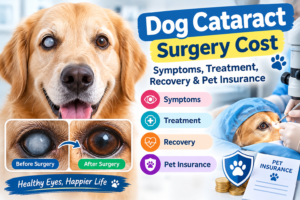

Cataracts are a common eye condition in dogs that can gradually make the lens of the eye cloudy and reduce vision. For pet owners, hearing that their dog may need cataract surgery can be worrying—not only because of the potential loss of vision, but also because of the dog cataract surgery cost and the care required afterward.
Fortunately, if a dog is deemed a good candidate, cataracts can frequently be effectively repaired with surgery. You may make better decisions regarding your dog’s eye health if you are aware of the symptoms, available treatments, surgical costs, recuperation time, and pet insurance coverage.
This page provides a detailed explanation of dog cataract surgery costs, cataract symptoms in dogs, treatment choices, recovery, risks, and pet insurance.
What Is a Cataract in Dogs?
A cataract is a clouding of the normally clear lens inside the eye. The lens helps focus light onto the retina, allowing a dog to see clearly. When a cataract develops, the lens becomes less transparent, which can interfere with vision.
Cataracts can affect one or both eyes and may develop slowly or progress relatively quickly. Some dogs develop cataracts because of aging, while others may have a genetic predisposition or an underlying health condition.
A cloudy or bluish appearance does not always mean that a dog has a cataract. Older dogs commonly develop nuclear sclerosis, an age-related change in the lens that can make the eyes look cloudy but usually does not cause the same degree of vision loss as a cataract.
A veterinary examination is therefore important for determining the actual cause of eye cloudiness.
Common Dog Cataract Symptoms
Recognizing cataract symptoms early can help you arrange a veterinary eye examination before complications develop.
Common signs may include:
- A white, gray, or cloudy appearance in the eye
- Difficulty seeing in dim lighting
- Bumping into furniture or walls
- Hesitation when using stairs
- Difficulty finding toys or food
- Reduced confidence in unfamiliar areas
- Changes in eye appearance
- Difficulty navigating at night
- Increased dependence on smell and hearing
Some dogs with cataracts continue to behave normally because they adapt to gradual vision changes. This means that cataracts can sometimes become advanced before owners realize how much vision has been affected.
If your dog suddenly appears unable to see, develops redness or pain, or has a rapidly changing eye, veterinary attention should be sought promptly.
What Causes Cataracts in Dogs?
Several factors can contribute to cataract development.
Genetics
Some breeds have a higher inherited tendency to develop cataracts. Hereditary cataracts can sometimes appear at a relatively young age.
Diabetes
Diabetes is an important cause of cataracts in dogs. Dogs with diabetes can develop cataracts relatively quickly because elevated blood glucose can affect the lens.
Aging
Age-related lens changes are common, although not every cloudy eye in an older dog is a cataract.
Eye Injury or Inflammation
Previous trauma, inflammation, or certain eye diseases can damage the lens and contribute to cataract formation.
Other Health Conditions
Certain systemic diseases and medications may also be associated with lens changes. Your veterinarian can evaluate your dog’s overall health to determine possible contributing factors.
Dog Cataract Surgery Cost
One of the most common questions pet owners ask is: How much does dog cataract surgery cost?
The price varies considerably depending on the country, veterinary hospital, specialist, diagnostic testing, anesthesia, surgical technique, medications, and whether one or both eyes require surgery.
In countries such as the United States, cataract surgery performed by a veterinary ophthalmologist can commonly cost several thousand dollars, particularly when both eyes are treated. Some clinics may quote a price per eye, while others provide a package covering examination, surgery, anesthesia, and follow-up care.
The final bill may include:
- Initial veterinary examination
- Veterinary ophthalmology consultation
- Eye pressure testing
- Blood tests
- Ocular ultrasound
- Electroretinography when recommended
- Anesthesia
- Cataract removal
- Intraocular lens implantation
- Surgical monitoring
- Prescription eye drops
- Pain or anti-inflammatory medication
- Postoperative examinations
- Treatment of complications if they occur
Because prices vary so much between locations and individual cases, it is best to request a detailed written estimate from the veterinary ophthalmologist.
For pet owners outside the United States, including those in countries where specialist veterinary eye surgery is less widely available, the cost can differ substantially and may include travel or referral expenses.
How Is Cataract Surgery Performed in Dogs?
The most common surgical approach involves removing the cloudy lens from the eye. A veterinary ophthalmologist generally uses a technique called phacoemulsification, in which specialized equipment breaks up and removes the abnormal lens material.
The ability to focus may then be restored by implanting an artificial intraocular lens.
The veterinarian must assess the health of the retina and other eye structures before to surgery in order to ensure that the procedure will result in useful eyesight.
Surgery is not always a good option for dogs with cataracts.
Tests Before Dog Cataract Surgery
A thorough examination is important before cataract surgery.
The veterinary ophthalmologist may perform:
Eye Examination
The veterinarian evaluates the cornea, lens, retina, and other structures of the eye.
Eye Pressure Measurement
Intraocular pressure testing helps identify glaucoma or other pressure abnormalities.
Blood Testing
Blood work can help assess general health and identify conditions that could affect anesthesia or surgery.
Ocular Ultrasound
If the cataract is too dense to see through, ultrasound may help evaluate structures behind the lens.
Electroretinography
An electroretinogram, or ERG, may be performed to assess retinal function. A healthy functioning retina is important for useful vision after cataract removal.
These tests add to the overall dog cataract surgery cost, but they can help determine whether surgery is appropriate.
Dog Cataract Surgery Recovery
Recovery is an important part of successful cataract treatment.
After surgery, your dog may need several types of prescription eye medications. These may include anti-inflammatory drops and other medications prescribed by the veterinary ophthalmologist.
Your veterinarian may also recommend an Elizabethan collar to prevent your dog from rubbing or scratching the eye.
During recovery, owners may need to:
- Give eye drops exactly as prescribed
- Prevent rubbing or scratching
- Limit strenuous physical activity
- Avoid situations that could injure the eye
- Attend all follow-up appointments
- Monitor for redness, swelling, discharge, or discomfort
The exact recovery schedule varies from dog to dog. Follow the veterinary ophthalmologist’s instructions rather than relying on a general recovery timeline.
How Long Does It Take for a Dog to Recover From Cataract Surgery?
Some dogs may begin showing improved vision relatively soon after successful surgery, but the eye still needs time to heal.
Follow-up examinations are particularly important during the first weeks after surgery because inflammation and pressure changes can occur.
Your veterinarian will determine when your dog can gradually return to normal activities.
Even when vision improves quickly, owners should continue medications and restrictions for as long as instructed.
Risks and Complications of Cataract Surgery
Like any surgical procedure, dog cataract surgery has potential risks.
Possible complications can include:
- Eye inflammation
- Increased intraocular pressure
- Glaucoma
- Retinal problems
- Infection
- Corneal changes
- Inflammation inside the eye
- Lens-related complications
- Reduced vision
- Need for additional treatment
The likelihood of complications depends on the dog’s individual eye health, the stage of cataract development, overall health, and other factors.
A veterinary ophthalmologist can explain the potential benefits and risks for your individual dog.
Can Cataracts in Dogs Be Treated Without Surgery?
There is currently no home remedy that can reliably remove an established cataract.
Some eye medications may be prescribed to control inflammation or reduce the risk of complications, depending on the individual case. However, medication generally does not make a mature cataract transparent again.
For dogs that are not suitable surgical candidates, veterinarians may focus on monitoring the eyes, controlling inflammation, treating discomfort, and managing any underlying disease.
Owners should avoid using human eye drops or unverified cataract remedies without veterinary advice.
Does Pet Insurance Cover Dog Cataract Surgery?
Whether pet insurance covers cataract surgery depends on the insurance company, policy, exclusions, waiting periods, and whether the cataract is considered hereditary or pre-existing.
Some pet insurance policies may cover medically necessary treatment for eye conditions if the condition develops after coverage begins and meets the policy requirements.
However, insurance may exclude:
- Pre-existing cataracts
- Conditions diagnosed before enrollment
- Conditions that developed during a waiting period
- Certain hereditary conditions
- Elective or cosmetic procedures
Some policies may also have annual limits, deductibles, reimbursement percentages, or condition-specific exclusions.
Before purchasing insurance, read the policy carefully and specifically check the sections covering eye conditions, hereditary conditions, pre-existing conditions, and surgery.
If your dog already has cataracts, obtaining insurance afterward may not mean the existing condition will be covered.
How to Reduce the Financial Burden of Cataract Treatment
Dog cataract surgery can be expensive, but there are several ways owners can plan for the cost.
First, ask the veterinary ophthalmologist for a complete estimate that separates the surgical fee from diagnostic tests, medications, and follow-up visits.
You can also ask whether the quoted price applies to one eye or both eyes.
If appropriate, compare estimates from qualified veterinary ophthalmology centers. However, cost should be considered alongside the specialist’s experience, available equipment, postoperative care, and your dog’s individual medical needs.
Pet insurance is another option for future veterinary expenses, but coverage should be purchased before a condition develops if you want that condition to have a chance of being covered.
A dedicated pet emergency fund can also help with unexpected veterinary expenses.
What Happens If Cataracts Are Left Untreated?
Not every cataract requires immediate surgery. The appropriate approach depends on the cataract’s stage, the dog’s vision, the condition of the eye, and the risk of complications.
Advanced cataracts can sometimes be associated with inflammation inside the eye and other complications. In some cases, glaucoma can develop, which may be painful and require urgent treatment.
This is why regular veterinary monitoring is important, particularly when cataracts are progressing.
If your dog has a cloudy eye, do not assume it is simply a normal part of aging.
When Should You See a Veterinarian?
Contact your veterinarian if you notice:
- New cloudiness in your dog’s eye
- White or gray areas in the lens
- Sudden vision loss
- Eye redness
- Excessive tearing
- Squinting
- Pawing at the eye
- Swelling
- Eye discharge
- Signs of pain
- Changes in behavior related to vision
Sudden eye problems deserve prompt veterinary assessment because several eye conditions can cause rapid vision loss or discomfort.
Frequently Asked Questions About Dog Cataract Surgery
How much does cataract surgery cost for a dog?
The cost varies widely depending on location, specialist fees, diagnostic tests, anesthesia, surgical technique, medications, and whether one or both eyes are treated. Specialist surgery can cost several thousand dollars in some countries.
Is dog cataract surgery worth it?
Whether surgery is appropriate depends on the dog’s eye health, vision, overall health, and veterinary assessment. A veterinary ophthalmologist can explain the expected benefits and risks for your dog.
Can dogs live with cataracts?
Yes. Some dogs adapt well to reduced vision. However, cataracts should be monitored because advanced cataracts can sometimes cause painful eye complications.
Can cataracts in dogs go away naturally?
Established cataracts generally do not disappear naturally. Treatment depends on the severity and condition of the eye.
Does pet insurance pay for cataract surgery?
Some policies may cover medically necessary cataract treatment when the condition meets the policy’s requirements. Pre-existing conditions and certain hereditary conditions may be excluded.
How long does dog cataract surgery recovery take?
Recovery varies between dogs. Vision may improve relatively quickly after successful surgery, but healing and medication management continue for weeks or longer. Your veterinary ophthalmologist will provide the specific recovery schedule.
Final Thoughts
Understanding dog cataract surgery cost, symptoms, treatment, recovery, and pet insurance can help you prepare if your dog develops this eye condition. Cataracts can have different causes and may progress at different rates, so a cloudy eye should be evaluated by a veterinarian rather than diagnosed at home.
For dogs that are suitable candidates, cataract surgery can potentially restore useful vision. However, the procedure requires careful preoperative testing, specialized surgery, prescription medications, and regular follow-up appointments.
If your dog has recently developed cloudy eyes, schedule a veterinary examination. Early evaluation can help determine whether the change is a cataract, an age-related lens change, or another eye condition requiring treatment.