

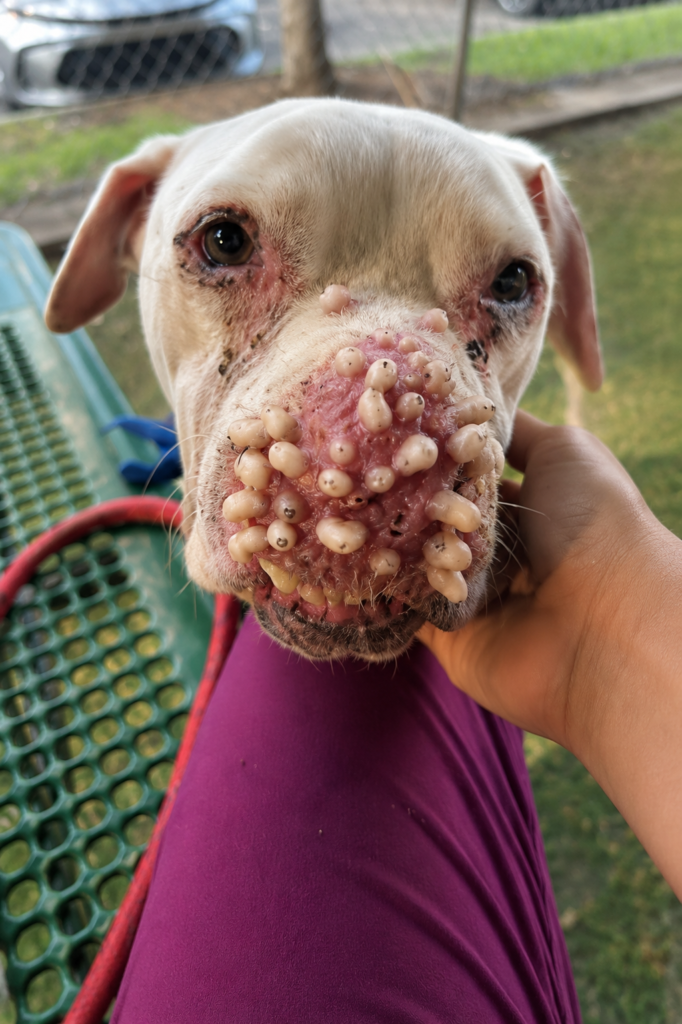
When people see a dog with visible skin growths around the nose and mouth, the first reaction is often shock or sadness. But behind every difficult image is a living animal that still feels comfort, fear, trust, and care. Conditions affecting a dog’s face can look severe, yet many require proper veterinary evaluation before anyone can know the cause.
This story-style article explores the importance of recognizing unusual skin changes, seeking professional care, and giving animals support during difficult moments.
A Face That Told a Story
At first glance, the dog looked quiet and tired. The eyes still carried softness, but the area around the nose showed multiple raised growths and irritated skin. Conditions like this can make eating, drinking, breathing comfortably, and daily life much more difficult.
Visible skin changes on dogs can happen for different reasons. Some possibilities may include:
- Viral skin growths
- Inflammatory skin conditions
- Benign or malignant tumors
- Severe infections
- Immune-related disorders
- Other veterinary skin diseases
A photograph alone cannot determine the exact cause, and appearance by itself is not enough for diagnosis.
Why Facial Skin Problems in Dogs Should Never Be Ignored
Dogs use their noses constantly. They explore the world through smell, eat through their mouths, and communicate through facial expressions.
When growths appear around these areas, several challenges may develop:
Difficulty Eating
Large or painful growths may make chewing uncomfortable.
Irritation and Bleeding
Sensitive facial skin can become inflamed or injured.
Infection Risk
Damaged skin may become vulnerable to secondary infections.
Reduced Quality of Life
Pain, discomfort, and stress may affect behavior and energy.
Possible Signs Owners Often Notice
People commonly report signs such as:
- Swelling around the nose
- Raised bumps or unusual tissue growth
- Redness
- Crusting
- Eye irritation
- Difficulty eating
- Increased pawing at the face
- Low energy
These signs do not confirm any single condition but indicate the dog should be examined.
The Importance of Veterinary Assessment
The most helpful next step for a dog with unusual facial changes is a veterinary visit.
A veterinarian may evaluate:
- Overall physical condition
- Skin appearance
- Medical history
- Changes over time
- Whether testing is needed
Possible tests can include:
- Physical examination
- Skin sampling
- Microscopic evaluation
- Blood work
- Imaging if necessary
Early assessment may improve options for treatment and comfort.
A Story of Patience and Care
Imagine a family noticing a small change one day.
At first it looked harmless—just a small area that seemed irritated. Days passed. The dog continued greeting everyone and wagging its tail.
Then the appearance changed.
Concern replaced uncertainty.
Instead of waiting longer, they chose action. They scheduled professional care and focused on helping their companion stay comfortable.
The dog still wanted gentle attention.
Still leaned into familiar hands.
Still trusted.
That reminder matters: animals are more than their medical condition.
Caring for a Dog During Veterinary Treatment
Supportive care often matters alongside medical treatment.
Owners may focus on:
Keeping Feeding Comfortable
Offer veterinarian-approved food if eating becomes difficult.
Monitoring Changes
Track appetite, behavior, and visible progression.
Maintaining Clean Surroundings
A clean resting area may support comfort.
Following Instructions Carefully
Use treatments exactly as directed.
Offering Calm Interaction
Stress reduction can help dogs feel secure.
Common Mistakes to Avoid
If a dog develops unusual facial growths:
- Do not squeeze or remove tissue at home
- Do not apply random creams or chemicals
- Do not delay professional evaluation if the condition worsens
- Do not rely only on photos for diagnosis
Emotional Side of Pet Care
Seeing a pet uncomfortable can feel overwhelming.
Owners often ask:
“Did I miss something?”
Skin and health conditions may not always appear obvious early on. What matters most is responding once changes become noticeable.
Care, observation, and seeking professional help are meaningful actions.
Prevention and Routine Health Habits
Not every condition can be prevented, but healthy habits support overall wellbeing:
- Routine veterinary checkups
- Monitoring skin and coat changes
- Balanced nutrition
- Parasite prevention
- Keeping records of unusual symptoms
- Early attention to changes in appearance
Final Thoughts
Images of dogs with visible facial conditions can be difficult to see, but they also remind us why animal care matters.
No one can determine a diagnosis from appearance alone. What can be done is recognizing that unusual skin growths deserve timely veterinary attention.
Every dog deserves comfort, safety, and the chance to receive proper care.
Behind every difficult moment, there is still a companion waiting for kindness, patience, and help.
