

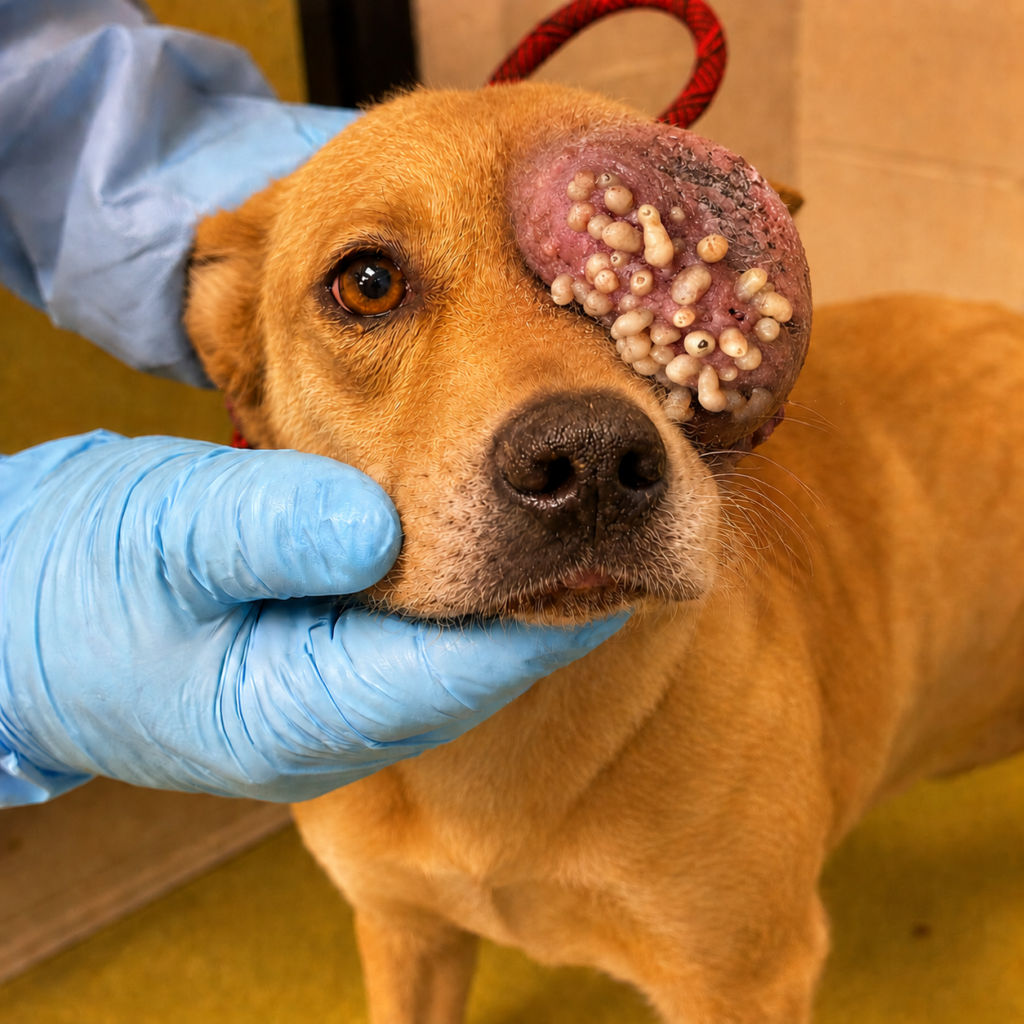
A dog’s eyes are among its most sensitive and important organs. When an eye becomes infected or severely damaged, the condition can quickly worsen and lead to pain, vision loss, or even life-threatening complications if left untreated. The image above appears to show a dog suffering from a serious eye condition involving extensive swelling, tissue damage, and infestation of the affected area. Such cases require immediate veterinary attention and should never be treated at home without professional guidance.
Understanding Severe Eye Conditions in Dogs
Eye diseases in dogs can develop for many reasons, including infections, injuries, parasites, tumors, and underlying health problems. What may begin as mild redness or irritation can progress into a severe condition if treatment is delayed.
Dogs often hide signs of pain, which means owners may not realize the seriousness of an eye problem until it becomes advanced. By that stage, the eye may be swollen, infected, or permanently damaged.
Common Causes of Severe Eye Damage
1. Untreated Eye Infections
Bacterial and fungal infections can attack the eye and surrounding tissues. If not treated promptly, these infections can spread rapidly and cause swelling, discharge, and destruction of eye structures.
2. Eye Injuries
Dogs can injure their eyes while playing, fighting, running through bushes, or encountering sharp objects. Even a small scratch on the cornea can become infected and develop into a severe problem.
3. Parasite Infestation
Flies may lay eggs in open wounds around the eye, leading to a condition known as myiasis. The larvae that hatch can damage surrounding tissues and cause serious infections.
4. Tumors and Growths
Cancerous or non-cancerous growths around the eye may become infected or ulcerated. Large tumors can interfere with normal eye function and lead to secondary infections.
5. Chronic Neglect
Dogs that are abandoned, stray, or receive inadequate medical care are at greater risk of developing severe eye diseases. Conditions that could have been treated early often become much worse over time.
Signs and Symptoms of a Serious Eye Problem
Dog owners should watch for the following warning signs:
- Redness around the eye
- Swelling of eyelids
- Excessive tearing
- Yellow or green discharge
- Cloudiness of the eye
- Squinting or keeping the eye closed
- Pawing at the face
- Sensitivity to light
- Foul odor from the eye area
- Visible wounds or growths
- Loss of vision
If any of these symptoms appear, veterinary care should be sought as soon as possible.
Why Eye Infections Become Dangerous
The eye is connected to many important structures, including nerves, blood vessels, and tissues surrounding the brain. A severe infection can spread beyond the eye and affect the dog’s overall health.
Potential complications include:
- Permanent blindness
- Severe pain
- Tissue destruction
- Secondary bacterial infections
- Facial swelling
- Bloodstream infections
- Death in extreme untreated cases
This is why eye diseases should never be ignored.
Diagnosis by a Veterinarian
When a dog is brought to a veterinary clinic with a severe eye condition, the veterinarian will perform a thorough examination.
Diagnostic procedures may include:
Physical Examination
The vet examines the eye, surrounding skin, and overall health of the dog.
Eye Staining Tests
Special dyes help identify ulcers and damage to the cornea.
Microscopic Analysis
Samples may be collected to determine whether bacteria, fungi, or parasites are involved.
Imaging
X-rays, ultrasound, or advanced scans may be necessary if deeper structures are affected.
Blood Tests
Blood work helps identify infections and underlying diseases.
Treatment Options
Treatment depends on the cause and severity of the condition.
Antibiotic Therapy
Bacterial infections are often treated with antibiotic eye drops, ointments, or oral medications.
Anti-Inflammatory Medication
These medicines reduce pain and swelling.
Parasite Removal
If parasites or larvae are present, they must be removed carefully by a veterinary professional.
Surgical Treatment
In advanced cases, surgery may be required to remove damaged tissue, repair injuries, or treat tumors.
Eye Removal (Enucleation)
When the eye cannot be saved and is causing severe pain or infection, surgical removal may be the safest option. Dogs can adapt surprisingly well to life with one eye.
Supportive Care
Additional treatments may include:
- Fluid therapy
- Nutritional support
- Pain management
- Wound care
- Protective collars to prevent scratching
Recovery and Healing
Recovery time varies depending on the severity of the disease.
Factors affecting recovery include:
- Age of the dog
- Overall health
- Cause of the condition
- Speed of treatment
- Presence of complications
Many dogs recover successfully when treatment begins early. However, advanced cases may result in permanent vision loss even after successful treatment.
How Owners Can Help During Recovery
After veterinary treatment, owners play an important role in healing.
Helpful measures include:
- Giving medications exactly as prescribed
- Keeping follow-up appointments
- Preventing the dog from rubbing the eye
- Maintaining a clean environment
- Providing proper nutrition
- Monitoring for signs of worsening infection
Any sudden changes should be reported to the veterinarian immediately.
Preventing Serious Eye Problems
Prevention is always better than treatment. Several simple steps can protect a dog’s eye health.
Regular Eye Checks
Examine your dog’s eyes weekly for redness, swelling, or discharge.
Grooming
Keep fur around the eyes trimmed to reduce irritation and contamination.
Parasite Control
Use veterinarian-recommended flea and fly control products.
Prompt Medical Care
Even minor eye injuries should be evaluated quickly.
Healthy Diet
Good nutrition supports the immune system and helps maintain healthy eyes.
Safe Environment
Remove hazards that could cause eye injuries.
The Importance of Early Intervention
One of the biggest mistakes pet owners make is waiting too long before seeking veterinary care. Eye conditions often worsen rapidly. A problem that might have been treated with simple medication can become a major medical emergency if ignored.
Early diagnosis offers several benefits:
- Less pain for the dog
- Lower treatment costs
- Better chance of preserving vision
- Reduced risk of complications
- Faster recovery
Emotional Impact on Dogs
Severe eye disease affects more than physical health. Dogs experiencing pain often become withdrawn, anxious, and less active. Some may lose interest in food, play, or interaction with family members.
Once pain is relieved and treatment begins, many dogs regain their normal personality and quality of life. This highlights the importance of prompt veterinary attention whenever eye problems are noticed.
Conclusion
Severe eye infections and injuries in dogs are serious medical conditions that require immediate veterinary care. Symptoms such as swelling, discharge, redness, pain, and visible tissue damage should never be ignored. Causes may include infections, injuries, parasites, tumors, or untreated wounds. Early diagnosis and treatment can help save vision, reduce suffering, and improve the dog’s chances of recovery.
Responsible pet ownership includes regular health monitoring, proper hygiene, parasite prevention, and timely veterinary visits. By acting quickly when eye problems appear, owners can protect their dogs from unnecessary pain and help ensure a healthier, happier life.
