

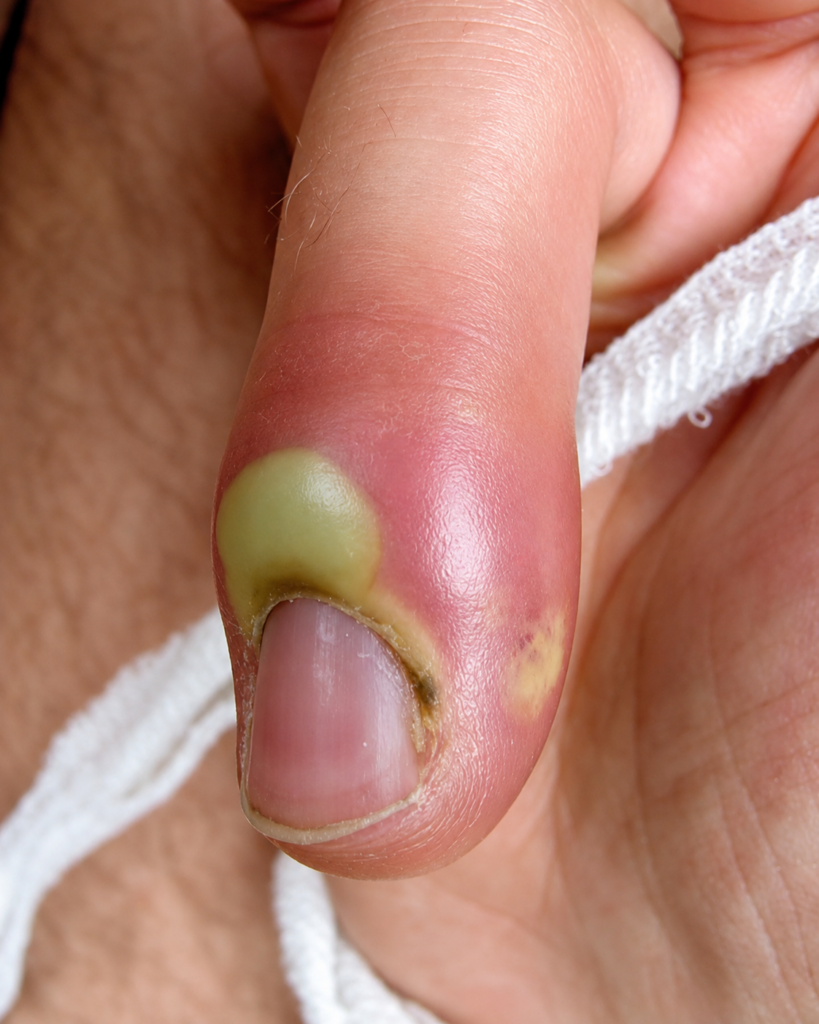
A finger nail infection with pus can be painful, uncomfortable, and alarming. The image above shows a severe infection around the nail fold, characterized by redness, swelling, and yellow-green pus accumulation. This condition is commonly known as paronychia, an infection that affects the skin surrounding the fingernail or toenail.
If left untreated, a nail infection can worsen, causing intense pain and potentially spreading to nearby tissues. Understanding the causes, symptoms, treatment options, and prevention strategies can help you manage the condition effectively and protect your nail health.
What Is a Finger Nail Infection?
A finger nail infection occurs when bacteria, fungi, or other microorganisms enter the skin around the nail through a small cut, crack, hangnail, or injury. The body responds by sending immune cells to fight the infection, which often leads to swelling, redness, warmth, and pus formation.
The condition can develop suddenly (acute paronychia) or gradually over time (chronic paronychia). Acute infections are usually caused by bacteria, while chronic infections are often linked to fungal growth and prolonged moisture exposure.
Signs and Symptoms of a Nail Infection
Recognizing the symptoms early can help prevent complications. Common signs include:
1. Redness Around the Nail
The skin surrounding the nail becomes red and inflamed due to infection.
2. Swelling
The affected finger may appear enlarged and feel tight because of fluid buildup.
3. Pain and Tenderness
Even slight pressure can cause discomfort. The pain may worsen as the infection progresses.
4. Pus Formation
Yellow, white, or green pus is a common sign of bacterial infection. The image clearly shows pus accumulation around the nail fold.
5. Warmth
The infected area often feels warmer than the surrounding skin.
6. Difficulty Using the Finger
Severe infections can make it difficult to grip objects or perform daily activities.
7. Nail Changes
In chronic cases, the nail may become thick, discolored, brittle, or distorted.
Common Causes of Finger Nail Infection
Several factors can increase the risk of developing a nail infection.
Nail Biting
Frequent nail biting damages the protective skin barrier, allowing bacteria to enter.
Picking at Hangnails
Tearing or pulling hangnails creates small openings that can become infected.
Finger Injuries
Cuts, scrapes, splinters, and puncture wounds near the nail can introduce harmful bacteria.
Aggressive Manicures
Cutting or pushing back cuticles excessively can damage the skin and increase infection risk.
Frequent Water Exposure
People who regularly wash dishes, clean, or work in wet environments may develop chronic infections.
Diabetes
Individuals with diabetes often have slower wound healing and a higher risk of infections.
Weakened Immune System
Conditions that weaken immunity can make infections more severe and difficult to treat.
Types of Nail Infections
Acute Paronychia
Acute paronychia develops rapidly, often within a few hours or days. It is commonly caused by bacteria such as Staphylococcus aureus.
Symptoms include:
- Sudden pain
- Swelling
- Redness
- Pus formation
Chronic Paronychia
Chronic paronychia develops slowly and may persist for weeks or months.
Symptoms include:
- Repeated inflammation
- Thickened skin around the nail
- Nail deformities
- Fungal involvement
How Doctors Diagnose Nail Infections
A healthcare provider can usually diagnose a nail infection through a physical examination.
In some cases, they may:
- Examine the affected finger closely
- Drain and test the pus
- Perform a culture to identify bacteria or fungi
- Evaluate underlying health conditions
Proper diagnosis helps determine the most effective treatment plan.
Treatment Options for Finger Nail Infection
Treatment depends on the severity and cause of the infection.
Warm Water Soaks
For mild infections, soaking the finger in warm water several times daily may help reduce swelling and promote drainage.
Antibiotic Treatment
Bacterial infections often require topical or oral antibiotics prescribed by a healthcare professional.
Drainage of Pus
When a large pocket of pus develops, a doctor may need to drain it safely. This procedure relieves pressure and promotes healing.
Antifungal Medication
If fungi are involved, antifungal creams or oral medications may be necessary.
Pain Relief
Over-the-counter pain relievers can help reduce discomfort and inflammation.
Home Care Tips
While medical evaluation is important for severe infections, the following steps may support recovery:
Keep the Area Clean
Wash the affected finger gently with mild soap and water.
Apply Warm Compresses
Warm compresses can improve circulation and encourage drainage.
Avoid Nail Biting
Stopping nail biting prevents further irritation and contamination.
Keep the Finger Dry
Excess moisture can worsen infections and slow healing.
Protect the Area
Wear gloves when cleaning or working with chemicals.
When to Seek Medical Attention
You should seek medical care if:
- The infection is spreading
- Red streaks appear on the finger or hand
- Fever develops
- Severe pain occurs
- Large amounts of pus are present
- Symptoms do not improve after a few days
- You have diabetes or a weakened immune system
The infection shown in the image appears significant due to the extensive redness, swelling, and visible pus. Such cases often require professional medical evaluation rather than home treatment alone.
Possible Complications
Without treatment, a nail infection can lead to serious complications.
Abscess Formation
A pocket of pus may continue growing and become increasingly painful.
Nail Damage
The infection can affect nail growth, causing permanent deformities.
Spread of Infection
Bacteria can spread to deeper tissues, bones, or the bloodstream in rare but serious cases.
Recurrent Infections
Improper treatment may result in repeated episodes of infection.
How to Prevent Nail Infections
Prevention is often easier than treatment.
Maintain Good Hand Hygiene
Wash your hands regularly and keep nails clean.
Trim Nails Properly
Cut nails straight across and avoid cutting them too short.
Avoid Picking Cuticles
Cuticles provide a natural barrier against infection.
Use Clean Nail Tools
Disinfect nail clippers, scissors, and manicure tools regularly.
Wear Protective Gloves
Gloves can help protect your hands from chemicals and excessive moisture.
Moisturize Your Hands
Healthy skin is less likely to crack and become infected.
Manage Health Conditions
Controlling diabetes and other chronic illnesses can reduce infection risk.
Frequently Asked Questions
Is a nail infection dangerous?
Most nail infections are treatable, but severe infections can become serious if ignored.
Can a nail infection heal on its own?
Mild cases may improve with proper care, but infections involving pus often require medical treatment.
What causes pus around the nail?
Pus forms when the body’s immune system fights bacteria or other microorganisms.
How long does recovery take?
Recovery can range from a few days to several weeks, depending on severity and treatment.
Conclusion
A finger nail infection with pus is a common but potentially serious condition that should not be ignored. Symptoms such as redness, swelling, tenderness, and pus accumulation are clear signs that the body is fighting an infection. Early treatment, proper hygiene, and preventive care can help avoid complications and protect long-term nail health.
If you notice severe swelling, increasing pain, or significant pus buildup similar to the image shown, consult a healthcare professional promptly for proper diagnosis and treatment. Early intervention can prevent the infection from spreading and ensure a faster recovery.
