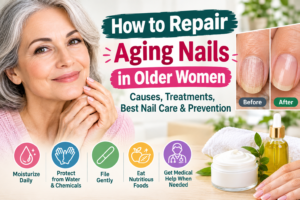

How to Repair Aging Nails in Older Women: Causes, Treatments, Best Nail Care & Prevention
As women get older, changes in the appearance and texture of their nails are common. Nails may become thinner, weaker, more brittle, dry, ridged, or slower to grow. Some women may also notice splitting, peeling, yellowing, or changes in nail shape.
Even while growing older is a normal part of life, age shouldn’t always be the cause of nail changes. Repeated exposure to water and cleaning agents, dietary disorders, certain drugs, fungal infections, skin ailments, and other health issues can also impair nail health.
The good news is that maintaining a regular nail care regimen can both protect and enhance the appearance of ageing nails. Selecting the first step is the first step is the first step.
Why Do Nails Change With Age?
Nails naturally change over time. As women age, nail growth may become slower, and nails can lose some of their flexibility. This can make them more vulnerable to dryness, splitting, and breakage.
Blood circulation around the hands and feet can also change with age, which may contribute to slower nail growth. Long-term exposure to water, household chemicals, nail polish removers, and frequent manicures can further weaken already fragile nails.
However, sudden or significant nail changes should not simply be considered a normal part of aging. If a nail changes dramatically in color, thickness, shape, or texture, professional evaluation may be appropriate.
Common Signs of Aging Nails
Aging nails can look different from younger, healthier nails. Common changes may include:
- Increased nail brittleness
- Thin or fragile nails
- Vertical ridges
- Dry nail plates
- Peeling or splitting
- Slower nail growth
- Rough nail texture
- More frequent breakage
- Changes in nail color
- Thicker toenails
- Dry or damaged cuticles
Vertical ridges are particularly common with age and are often harmless. However, a new or unusual change affecting only one nail deserves more attention.
1. Keep Aging Nails Properly Moisturized
One of the simplest ways to care for aging nails is to keep the nails and surrounding skin moisturized.
Dry nails are more likely to become brittle and split. Apply a fragrance-free hand cream after washing your hands and massage some of the product over the nails and cuticles.
A cuticle oil can also be used to soften dry cuticles. Ingredients such as jojoba oil, mineral oil, shea butter, and other moisturizing ingredients may help reduce dryness.
Moisturizing should become part of your daily routine rather than something you do only when your nails start peeling.
2. Protect Your Nails From Excessive Water
Frequent exposure to water can contribute to dry and fragile nails, especially when hands repeatedly move between water and dry environments.
Wearing protective gloves while washing dishes, cleaning the bathroom, gardening, or using household cleaning products can reduce direct exposure.
Avoid keeping your hands submerged in water for long periods whenever possible.
After washing your hands, gently dry them and apply hand cream to the hands, nails, and cuticles.
3. File Nails Instead of Letting Them Break
Older or fragile nails can break more easily when they become too long.
Maintaining a comfortable nail length can help prevent unintentional breakage. Use a fine nail file, sawing, aggressively, sawing, and aggressively.
Don’t rip the loose layers if your nails are splitting or peeling. Further splitting can be avoided by carefully cutting and filing the damaged edge.
Additionally, a smooth nail shape might lessen the likelihood that the nail will catch on clothing or other items.
4. Avoid Aggressive Cuticle Cutting
Cuticles provide a protective barrier around the nail. Cutting them too aggressively can cause irritation or small injuries.
Instead of repeatedly cutting the cuticle, soften it with a moisturizer or cuticle product and gently push it back if needed.
If the skin around a nail becomes red, swollen, painful, or produces drainage, avoid performing a manicure over the affected area and consider professional medical advice.
5. Take a Break From Harsh Nail Products
Frequent use of nail polish, gel manicures, acrylic nails, and acetone-based removers may contribute to dryness or physical damage in some people.
If your nails are already thin or splitting, consider taking a break from artificial nail enhancements.
When removing nail polish, avoid scraping the nail surface. Gentle removal is preferable to aggressively peeling polish away.
Giving fragile nails time without artificial enhancements can also make it easier to observe changes in their natural condition.
6. Use a Gentle Nail Strengthening Routine
Nail hardeners are sometimes marketed as a solution for brittle nails. However, stronger does not always mean healthier.
Some hardening products can make nails feel less flexible, and excessive use may contribute to breakage in certain people.
Instead, focus on regular moisturization, gentle filing, protection from chemicals, and avoiding habits that cause mechanical damage.
If brittleness continues despite good nail care, identifying the underlying cause is more useful than continually adding strengthening products.
7. Pay Attention to Nutrition
Healthy nails require adequate nutrition because nails are made primarily of keratin, a protein.
A balanced diet containing sufficient protein, vegetables, fruits, whole grains, and healthy fats supports overall health and normal nail growth.
Nutrients such as iron, zinc, vitamin B12, and other vitamins and minerals play important roles in the body. However, supplements should not automatically be used simply because nails are weak.
For example, taking iron supplements without knowing whether you have an iron deficiency may not be appropriate.
If brittle nails occur along with fatigue, hair changes, unusual skin changes, or other symptoms, speak with a healthcare professional about whether nutritional deficiencies or another underlying condition should be evaluated.
8. Do Not Ignore Changes in Toenails
Toenails can become thicker and harder to trim as people age. Footwear, repeated pressure, injuries, and fungal infections can all contribute to toenail changes.
Choose shoes with enough room around the toes. Tight shoes can place repeated pressure on the toenails and may contribute to discomfort or nail damage.
Trim toenails carefully and avoid cutting them extremely short.
If a toenail becomes unusually thick, yellow, crumbly, painful, or separated from the nail bed, a healthcare professional can help determine whether a fungal infection or another condition is responsible.
9. Treat Nail Fungus Properly
Fungal nail infections can become more common with age and may cause changes such as thickening, discoloration, brittleness, or crumbling.
A fungal infection usually requires a different approach from ordinary dry or aging nails. Moisturizers alone will not treat a fungal infection.
Because several nail conditions can look similar, getting the correct diagnosis is important before starting treatment.
Over-the-counter treatments may help some cases, while other infections require prescription medication. Treatment can also take months because healthy nail growth is slow.
10. Be Careful With Manicures
Manicures can make hands and nails look polished, but aggressive techniques may damage fragile nails.
Avoid excessive buffing because repeatedly thinning the nail surface can make it weaker.
Make sure manicure tools are properly cleaned, especially when visiting a salon.
If you have cuts, irritated skin, or an active nail infection, it may be better to postpone a manicure until the area has healed or has been evaluated.
Best Daily Nail Care Routine for Older Women
A simple daily routine can help protect aging nails without requiring many products.
Morning
After washing your hands, apply a moisturizing hand cream. Massage a small amount around the cuticles and nail edges.
If you will be doing household cleaning or gardening, wear protective gloves.
During the Day
Reapply hand cream whenever your hands feel dry.
Avoid using your nails as tools to open packages, scrape surfaces, or remove objects. These habits can create tiny injuries and increase breakage.
Evening
Before bed, apply a richer hand cream or cuticle moisturizer. Gently massage it into the nails and surrounding skin.
If your nails are particularly dry, wearing soft cotton gloves after applying moisturizer may help reduce overnight moisture loss from the hands.
What About Biotin for Brittle Nails?
Biotin is often promoted as a nail-strengthening supplement. Some people take biotin when their nails are brittle, but supplements are not automatically necessary for everyone.
If you suspect a nutritional deficiency, it is better to discuss the issue with a healthcare professional rather than taking high-dose supplements without guidance.
It is also important to tell your healthcare provider about supplements you take because some supplements can interfere with certain laboratory tests.
Can Aging Nails Become Healthy Again?
The answer depends on what is causing the nail changes.
If dryness, frequent water exposure, harsh chemicals, or mechanical damage is contributing to brittle nails, improving nail care habits may help the new nail grow in stronger and healthier.
However, nails grow slowly. Fingernails generally take several months to completely grow out, while toenails can take considerably longer.
This means that nail improvement requires patience. A damaged nail cannot usually be transformed overnight with a single cream or treatment.
When Should Older Women See a Doctor?
Not every nail change requires medical treatment, but certain symptoms should not be ignored.
Consider speaking with a healthcare professional if you notice:
- A sudden major change in nail color
- A dark streak that is new or changing
- Persistent nail pain
- Swelling or drainage around the nail
- A nail separating from the nail bed
- Severe nail thickening
- Repeated nail infections
- Changes affecting only one nail
- Nail changes that do not improve with basic care
A dermatologist or other qualified healthcare professional can examine the nail and determine whether further testing or treatment is needed.
Prevention Tips for Healthier Aging Nails
Preventing additional nail damage is often easier than repairing severely damaged nails.
Keep nails at a manageable length, moisturize regularly, protect hands from cleaning chemicals, and wear gloves during household chores.
Avoid biting or picking the nails and do not use them as tools.
Choose gentle nail products when possible, and take breaks from artificial nails if your natural nails are becoming thin or damaged.
For toenails, wear comfortable footwear and keep feet clean and dry.
These small habits can make a significant difference over time.
Final Thoughts
Aging nails can become thinner, drier, more brittle, ridged, or slower-growing, but these changes do not always mean that healthy-looking nails are impossible to maintain.
The best approach is to combine gentle nail care with good hand protection, regular moisturization, balanced nutrition, and appropriate professional care when unusual changes occur.
Additionally, older ladies should keep in mind that ageing is not the only factor contributing to nail issues. Similar symptoms can be caused by drugs, recurrent trauma, dietary deficiencies, fungal infections, and other medical disorders.
Over time, stronger-looking nails can be supported by a straightforward regimen that includes moisturising the nails and cuticles, shielding hands from chemicals and water, filing carefully, avoiding harsh manicures, and keeping an eye out for odd changes.
There are healthy healthy healthy healthy healthy healthy healthy healthy healthy healthy healthy healthy healthy healthy healthy healthy healthy healthy healthy healthy persistent nails.