

What Are Recurring Boils on Skin?
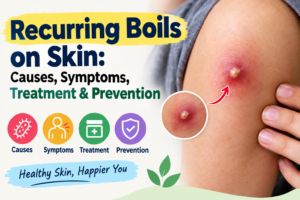
Painful, pus-filled lumps that recur in different parts of the body or occasionally in the same region are known as recurrent boils. When an infection forms around a hair follicle, a boil, also known as a furuncle, typically begins as a sensitive, red swelling that eventually fills with pus.
Boils can appear anywhere, but they are particularly prevalent in places like the face, neck, armpits, buttocks, thighs, and groin where there is perspiration, friction, or hair development.
Having a single boil occasionally is usually not a major concern. However, recurring boils on skin may indicate an underlying problem, repeated exposure to bacteria, skin irritation, or a condition that needs medical attention.
Understanding the cause is important because treating one boil may not prevent new ones from developing.
What Causes Recurring Boils on Skin?
Several factors can contribute to repeated boils. The most common cause is a bacterial infection, particularly involving Staphylococcus aureus.
1. Bacterial Skin Infection
Tiny cuts, scrapes, inflamed hair follicles, and damaged skin are all potential entry points for bacteria. Bacteria can produce pus and inflammation if they have penetrated farther into the follicle.
Some people may have germs in their noses or on their skin without showing any symptoms. Occasionally, these germs can spread to skin damage and cause recurrent infections.
2. Poor Skin Hygiene
Poor hygiene does not necessarily cause every boil, but inadequate cleansing can allow bacteria, sweat, and oil to accumulate on the skin.
Regular bathing and keeping sweaty areas clean can help reduce bacterial buildup.
3. Excessive Sweating
Sweat creates a warm and moist environment where bacteria can multiply more easily. People who sweat heavily may therefore be more prone to boils, particularly around the armpits, groin, thighs, and buttocks.
4. Friction and Tight Clothing
Repeated rubbing can irritate hair follicles and damage the skin barrier. Tight clothing, shaving, or frequent friction between skin surfaces may increase the risk of infection.
5. Shaving and Ingrown Hairs
Shaving can cause tiny cuts and irritation. Ingrown hairs can also become inflamed and infected, potentially developing into boils.
Using clean shaving equipment and avoiding aggressive shaving can help reduce irritation.
6. Diabetes
People with poorly controlled diabetes may be more susceptible to certain bacterial infections, including recurrent skin infections.
If you frequently develop boils without an obvious reason, a healthcare professional may recommend checking your blood glucose levels.
7. Weakened Immune System
Certain medical conditions and medications can weaken the immune system and make it harder for the body to fight infections.
If boils occur frequently or take a long time to heal, medical evaluation can help identify possible contributing factors.
8. Hidradenitis Suppurativa
Repeated painful lumps in the armpits, groin, buttocks, or under the breasts may sometimes be caused by hidradenitis suppurativa (HS) rather than ordinary boils.
HS is a chronic inflammatory skin condition that can cause recurrent nodules, abscesses, drainage, and scarring. If you repeatedly develop painful lumps in the same areas, it is worth discussing the symptoms with a dermatologist.
Symptoms of a Boil
A boil often begins as a small, red, painful bump. As it develops, you may notice:
- A red or swollen lump
- Increasing tenderness or pain
- Warmth around the affected area
- A white or yellow center containing pus
- Swelling around the boil
- Pus or fluid drainage
- Crusting after drainage
- Mild fever in some cases
A cluster of connected boils is sometimes called a carbuncle. Carbuncles can be deeper and more serious than individual boils.
Why Do My Boils Keep Coming Back?
Treating each individual lump may not be sufficient if you have boils on a regular basis.
Boils may recur because bacteria are still present on the skin or because an underlying condition increases the risk of infection. Inflammatory skin disorders, diabetes, high perspiration, shaving, repeated friction, and immunological issues can all be contributing factors.
Another important possibility is bacterial transmission between household members. Sharing towels, razors, clothing, or personal grooming items can potentially spread bacteria.
Keeping personal items separate and washing towels and clothing regularly can help reduce the chance of spreading infection.
How to Treat Recurring Boils
Treatment depends on the size, location, severity, and frequency of the boils.
1. Apply a Warm Compress
A warm, clean compress can be placed over a small boil for about 10–15 minutes several times a day.
Warmth may encourage natural drainage and can help relieve discomfort.
Always use a clean cloth each time and avoid excessively hot water that could burn the skin.
2. Keep the Area Clean
Wash the affected area gently with soap and water. Avoid harsh scrubbing because it can irritate the skin and potentially spread infection.
After washing, gently pat the area dry.
3. Do Not Squeeze or Pop the Boil
One of the most important rules is do not squeeze, puncture, or pop a boil yourself.
Trying to force the pus out can push bacteria deeper into surrounding tissues and increase the risk of spreading the infection.
4. Cover a Draining Boil
If a boil opens and drains naturally, gently clean the area and cover it with a clean, sterile dressing.
Change the dressing regularly and wash your hands before and after touching the area.
5. Antibiotics May Be Needed
Not every boil requires antibiotics. However, a doctor may prescribe antibiotics when there is significant surrounding infection, multiple boils, recurrent infections, certain medical risk factors, or other signs that treatment is necessary.
Do not use leftover antibiotics or take antibiotics without medical advice.
6. Professional Drainage
Large, painful, or deep boils may need to be drained by a healthcare professional.
Medical drainage can safely release pus and reduce pressure while lowering the risk of complications.
How to Prevent Recurring Boils on Skin
Preventing future boils requires reducing bacterial spread and protecting the skin.
Practice Good Hygiene
Take regular showers, especially after heavy sweating or exercise. Pay particular attention to areas where sweat and friction commonly occur.
Wash Towels and Clothes Regularly
Wash clothing, towels, bedding, and other items that regularly touch the affected skin.
Avoid sharing towels, razors, washcloths, or other personal items.
Keep Cuts Covered
Even small cuts and scratches can provide an entry point for bacteria. Clean minor wounds and cover them with an appropriate dressing until they heal.
Avoid Picking Your Skin
Picking pimples, ingrown hairs, or irritated areas can damage the skin and introduce bacteria.
Be Careful When Shaving
Use clean shaving equipment and avoid shaving over irritated or infected skin. If shaving repeatedly causes bumps and irritation, consider discussing alternative hair-removal methods with a healthcare professional.
Wear Loose, Breathable Clothing
Loose clothing can reduce friction and help keep the skin cooler and drier.
This is particularly useful if boils tend to occur around the thighs, groin, or armpits.
Manage Underlying Health Problems
If boils keep returning, speak with a healthcare professional about possible contributing conditions such as diabetes or immune problems.
Treating an underlying condition can sometimes reduce the frequency of recurrent infections.
When Should You See a Doctor?
Occasional small boils may improve with basic home care, but recurrent or severe boils deserve medical evaluation.
Seek medical attention if:
- Boils repeatedly come back
- You develop several boils at once
- The redness or swelling is spreading
- You have a fever or chills
- The boil is extremely painful
- The boil is on your face or near your eye
- You have diabetes or an immune-related condition
- The wound is not healing
- You notice red streaks extending from the affected area
- The infection appears to be getting worse
A healthcare professional may examine the skin, drain the boil if necessary, take a sample for laboratory testing, or investigate possible underlying causes.
Are Recurring Boils Contagious?
Boils themselves are not always considered contagious in the same way as respiratory infections, but the bacteria that cause many boils can spread through direct skin contact or contaminated personal items.
For this reason, avoid sharing towels, razors, clothing, bedding, or washcloths with someone who has an active draining infection.
Good hand hygiene and proper wound covering can help reduce transmission.
Frequently Asked Questions
Can recurring boils be caused by stress?
Stress itself is not usually a direct cause of boils, but prolonged stress may affect immune function and overall skin health. Other factors, such as sweating, friction, bacterial exposure, or underlying medical conditions, are more common contributors.
Why do I keep getting boils in the same place?
Repeated boils in the same location may be related to an infected hair follicle, recurring friction, an ingrown hair, or a chronic skin condition such as hidradenitis suppurativa. A dermatologist can help determine the exact cause.
Can poor diet cause boils?
Diet is not usually the direct cause of boils. However, overall health and blood sugar control can influence susceptibility to infections. If boils repeatedly occur, it is more important to identify underlying medical or skin-related factors.
Should I pop a boil?
No. Popping or squeezing a boil at home can increase inflammation and spread bacteria. Warm compresses and professional medical drainage, when needed, are safer approaches.
How long does a boil take to heal?
Small boils may improve and drain naturally over several days, while larger or deeper infections can take longer. If a boil is not improving or symptoms are getting worse, seek medical advice.
Final Thoughts
Recurring boils on skin should not always be dismissed as simple pimples. While many boils result from bacterial infection around hair follicles, repeated infections can sometimes be linked to skin irritation, excessive sweating, bacterial colonization, diabetes, immune problems, or conditions such as hidradenitis suppurativa.
Future issues can be avoided by keeping your skin clean, avoiding needless squeezing, covering cuts, using clean personal objects, lowering friction, and consulting a doctor when boils recur frequently.
If you frequently develop painful or draining lumps, especially in the same areas, professional evaluation is important. Identifying the underlying cause is often the key to stopping recurring boils rather than simply treating each new one.