
Using pricey cosmetics is not the only way to have healthy hair and radiant skin. Over time, your daily routines, food, personal cleanliness, sleep patterns, and facial and hair care practices can all have a significant impact.
Common issues that many girls face include dullness, frizz, greasy skin, dry hair, split ends, acne, and uneven skin texture. The good news is that taking better care of yourself doesn’t always need a complex beauty regimen.
A simple and consistent hair and face care routine for girls can help keep your hair stronger, your skin healthier, and your overall appearance fresh.
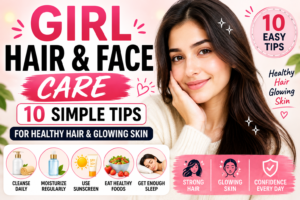
In this guide, you’ll discover 10 simple hair and face care tips for girls, including washing habits, moisturizing, sun protection, nutrition, and everyday practices that support healthy-looking hair and skin.
Why Hair and Face Care Is Important
Your hair and skin are exposed to many factors every day, including sunlight, pollution, sweat, dust, styling products, makeup, and environmental changes.
Without proper care, these factors may contribute to:
- Dry or rough skin
- Excess oil
- Clogged pores
- Breakouts
- Dull-looking skin
- Dry or frizzy hair
- Split ends
- Hair breakage
- Scalp buildup
A consistent routine doesn’t have to be complicated. The goal is to choose gentle products and healthy habits that work with your individual skin type, hair type, and lifestyle.
10 Simple Girl Hair and Face Care Tips
1. Wash Your Face Gently
One of the most important face care tips for girls is to cleanse the skin gently.
Your face can collect sweat, oil, dirt, sunscreen, makeup, and other substances throughout the day. Washing your face can help remove buildup without unnecessarily irritating the skin.
Choose a gentle cleanser that suits your skin type.
If you have oily skin, you may prefer a lightweight cleanser designed for oil and congestion. If your skin is dry or sensitive, a gentle, fragrance-free cleanser may be more comfortable.
Avoid Overwashing
Washing your face too frequently or scrubbing aggressively can irritate the skin and may leave it feeling tight and uncomfortable.
For many people, cleansing twice a day—morning and evening—is enough. However, your ideal routine can vary depending on your skin and activities.
2. Moisturize Your Face Every Day
Even oily skin needs hydration.
A moisturizer helps support the skin barrier and can reduce the uncomfortable feeling of dryness or tightness.
Choose a moisturizer based on your skin type:
- Oily skin: Lightweight gel or oil-free moisturizer
- Dry skin: Cream-based moisturizer
- Combination skin: Lightweight moisturizer where needed
- Sensitive skin: Gentle, fragrance-free moisturizer
Applying moisturizer after cleansing can help keep your skin feeling soft and comfortable.
If you’re using acne treatments or exfoliating ingredients, moisturizing can be particularly useful because some treatments may cause dryness or irritation.
3. Never Skip Sunscreen
Daily sun protection is one of the most important steps in a healthy skincare routine.
UV exposure can contribute to premature skin aging, uneven pigmentation, sunburn, and long-term skin damage.
Use a broad-spectrum sunscreen with an appropriate SPF and apply it to exposed skin. Don’t forget areas such as the neck, ears, and hands when they’re exposed to the sun.
Make Sunscreen a Daily Habit
Don’t use sunscreen only when you’re going to the beach.
Sun exposure can happen during everyday activities such as:
- Walking to school or work
- Shopping
- Driving
- Outdoor exercise
- Sitting outside
- Traveling
For better protection, combine sunscreen with shade, protective clothing, and avoiding prolonged direct sunlight when possible.
4. Don’t Sleep With Makeup On
If you wear makeup, removing it before bed is an important part of face care.
Leaving makeup on overnight can contribute to buildup on the skin and may worsen irritation or clogged pores for some people.
At night:
- Remove makeup gently.
- Cleanse your face.
- Apply any suitable treatment products.
- Finish with moisturizer.
Avoid rubbing your eyes or scrubbing your face aggressively when removing makeup.
If you frequently experience breakouts, consider checking whether your makeup, brushes, or other beauty products may be contributing to the problem.
5. Choose the Right Shampoo for Your Hair
Hair care starts with taking care of the scalp.
Choose a shampoo based on your scalp and hair needs rather than simply choosing a product because it is popular.
For example:
- Oily scalp → shampoo designed for oil control
- Dry scalp or dry hair → gentle, moisturizing shampoo
- Dandruff → appropriate anti-dandruff shampoo
- Curly hair → products designed for curls and moisture
- Chemically treated hair → gentle products designed for treated hair
How often you wash your hair depends on your scalp, hair texture, oil production, exercise habits, and product buildup.
There is no universal shampoo schedule that works for every girl.
6. Use Conditioner After Shampoo
Shampoo cleans the scalp and hair, while conditioner can help improve softness, manageability, and smoothness.
Apply conditioner mainly to the lengths and ends of your hair, particularly if your scalp becomes oily easily.
Leave it on according to the product instructions before rinsing.
If your hair is dry, curly, or prone to tangling, regular conditioning can make brushing and styling easier.
Extra Tip for Dry Hair
Avoid washing your hair with extremely hot water. Lukewarm or comfortably warm water may be a better choice, especially if your scalp and hair tend to feel dry.
7. Reduce Heat and Chemical Damage
Frequent use of straighteners, curling irons, blow dryers, bleaching, and chemical treatments can contribute to hair damage.
You don’t necessarily have to stop styling your hair completely. Instead, try to reduce unnecessary heat and use protective techniques.
Helpful habits include:
- Use lower heat settings when possible
- Avoid repeatedly applying heat to the same section
- Use a heat-protectant product before hot styling
- Avoid excessive bleaching
- Give your hair breaks between chemical treatments
- Handle wet hair gently
Wet hair can be more vulnerable to stretching and breakage, so avoid aggressive brushing immediately after washing.
8. Eat a Balanced Diet for Hair and Skin
Beauty care doesn’t stop with products. Your body needs adequate nutrition to maintain normal skin and hair function.
Include a variety of nutrient-rich foods such as:
- Eggs
- Fish
- Yogurt
- Beans
- Lentils
- Nuts and seeds
- Fruits
- Leafy vegetables
- Whole grains
- Avocados
Protein provides amino acids that your body uses to build tissues, while vitamins and minerals support many normal biological processes.
Don’t Rely on Supplements Automatically
Hair and skin supplements are not necessary for everyone.
If you suspect a nutritional deficiency is contributing to hair loss, brittle nails, or other symptoms, talk with a healthcare professional rather than taking high-dose supplements on your own.
9. Keep Your Pillowcase, Hair Tools, and Towels Clean
Everyday items that touch your face and hair can collect oil, sweat, product residue, and dirt.
Regularly wash items such as:
- Pillowcases
- Face towels
- Makeup brushes
- Hair brushes
- Hair accessories
- Headbands
If you have acne-prone skin, avoid repeatedly touching your face with unwashed hands.
Similarly, clean hair brushes regularly to remove accumulated hair products, oils, and debris.
Small hygiene habits can complement your regular skincare and hair-care routine.
10. Get Enough Sleep and Manage Stress
Your beauty routine isn’t complete without healthy lifestyle habits.
Poor sleep and ongoing stress can affect how your skin looks and how you feel. Lack of sleep may leave you looking tired, while stress can contribute to some skin concerns, including acne flare-ups in certain people.
Try to create a relaxing nighttime routine.
You can:
- Keep a consistent sleep schedule
- Reduce unnecessary screen time before bed
- Keep your bedroom comfortable
- Avoid excessive caffeine late in the day
- Practice relaxation techniques
- Give yourself enough time to sleep
Healthy sleep habits can support your overall well-being as well as your appearance.
Simple Morning Hair and Face Care Routine for Girls
You don’t need 10 different products every morning.
Try this simple routine:
Step 1: Cleanse
Wash your face gently according to your skin’s needs.
Step 2: Moisturize
Apply a suitable moisturizer.
Step 3: Sunscreen
Apply broad-spectrum sunscreen to exposed skin.
Step 4: Hair Care
Gently brush or style your hair. Use a heat protectant if you’re using hot styling tools.
Step 5: Hydrate
Drink fluids regularly throughout the day according to your body’s needs.
This simple routine can be easier to maintain than a complicated routine with too many products.
Simple Night Hair and Face Care Routine
Your nighttime routine can focus on cleaning and repairing your skin’s moisture balance.
For Your Face
- Remove makeup
- Cleanse gently
- Apply suitable skincare treatments
- Moisturize
For Your Hair
- Gently detangle hair
- Avoid sleeping with very tight hairstyles
- Use a silk or satin pillowcase if you find it helpful for reducing friction
- Keep your scalp and hair clean according to your needs
You don’t need to apply multiple oils or treatments every night. Choose products based on your actual hair concerns.
Common Hair and Face Care Mistakes Girls Should Avoid
Even a good routine can become less effective if you make common mistakes.
Avoid Using Too Many Products
Using many active skincare products at once can increase irritation.
Don’t Pick Pimples
Picking or squeezing acne can worsen inflammation and increase the risk of marks and scarring.
Don’t Overuse Hair Oil
Hair oil can be useful for some hair types, but applying excessive amounts can make washing difficult and may cause scalp buildup for some people.
Don’t Share Makeup
Sharing makeup, especially products that touch the eyes or lips, can increase the risk of spreading germs.
Don’t Follow Every Beauty Trend
A viral beauty hack isn’t necessarily suitable for your skin or hair.
Avoid applying harsh household ingredients, strong acids, or irritating substances to your face simply because they’re trending online.
Hair and Face Care According to Skin Type
Understanding your skin type can make choosing products easier.
Oily Skin
Look for lightweight, non-comedogenic products and avoid excessively heavy products if they make you feel greasy or contribute to congestion.
Dry Skin
Focus on gentle cleansing and regular moisturizing. Avoid excessive exfoliation.
Combination Skin
You may need different approaches for different areas of your face.
Sensitive Skin
Choose gentle, fragrance-free products when possible and introduce new products slowly.
Remember that skin type can change with seasons, hormones, age, medications, and environmental conditions.
When Should You See a Professional?
Simple home care can support healthy hair and skin, but some problems require professional attention.
Consider speaking with a dermatologist or healthcare professional if you experience:
- Persistent or severe acne
- Sudden or significant hair loss
- Bald patches
- Severe scalp itching
- Persistent dandruff that doesn’t improve
- Painful skin rashes
- Severe irritation
- Unexplained changes in your skin or hair
Early evaluation can help identify the underlying cause and appropriate treatment.
Frequently Asked Questions
How can a girl take care of her hair and face daily?
A simple daily routine can include gentle face cleansing, moisturizer, sunscreen, appropriate hair washing, conditioning, a balanced diet, and good sleep. Avoid excessive heat styling and harsh skincare products.
What is the best skincare routine for girls?
A basic routine usually includes cleansing, moisturizing, and daily sun protection. Additional products can be added based on specific concerns such as acne, dryness, or pigmentation.
How can I make my hair healthier naturally?
Eat a balanced diet, wash your scalp according to its needs, condition the hair lengths, minimize excessive heat and chemical treatments, and handle wet hair gently.
Can diet improve hair and skin?
A balanced diet provides nutrients your body needs for normal skin and hair function. However, diet alone cannot solve every skin or hair problem.
Is sunscreen necessary every day?
Daily sun protection is recommended when your skin is exposed to sunlight. Broad-spectrum sunscreen can help protect against UV-related skin damage.
How often should girls wash their hair?
There is no single correct schedule. Washing frequency depends on scalp oiliness, hair texture, exercise, climate, and product buildup.
How can I get glowing skin naturally?
Focus on consistent skincare, sun protection, adequate hydration, nutritious foods, sufficient sleep, and avoiding habits that irritate your skin. Healthy-looking skin usually develops through consistent habits rather than overnight remedies.
Final Thoughts
Good girl hair and face care doesn’t need to be expensive or complicated. The most effective routine is usually one that is gentle, consistent, and suitable for your individual needs.
Start with the basics: cleanse your face, moisturize, protect your skin from the sun, wash and condition your hair properly, reduce heat damage, eat a balanced diet, maintain good hygiene, and get enough sleep.
You don’t need to follow every beauty trend or buy dozens of products. Healthy hair and glowing skin are built through small habits repeated consistently.
Remember that everyone’s skin and hair are different. What works for one person may not work for another, so pay attention to how your skin and hair respond and adjust your routine accordingly.