
Introduction
Parrots are intelligent, colorful, and social birds that can become wonderful companions. However, keeping a parrot healthy requires more than providing food and a cage. Good parrot health care includes a balanced diet, clean living conditions, regular exercise, mental stimulation, proper sleep, and routine veterinary checkups.
One of the hardest things about parrots is that they can hide when they are sick. In the wild, a sick bird could be easy for animals to eat, so parrots usually act normally until their health problem gets worse. This is why pet owners should learn to spot small changes in their pets’ eating, poop, hair, breathing, activity, and behavior.
This parrot health guide talks about common health problems, how to feed your bird healthily, how to spot signs of illness, how to keep your bird clean, and practical daily care tips to keep your bird healthy and active.
Table of Contents
- Understanding Parrot Health
- Common Health Problems in Parrots
- Signs Your Parrot May Be Sick
- Healthy Nutrition for Parrots
- Foods to Avoid
- Cage Hygiene and Environmental Care
- Exercise and Mental Stimulation
- Importance of Sleep
- Preventive Veterinary Care
- Tips for Keeping Your Parrot Healthy
- Frequently Asked Questions
- Conclusion
Understanding Parrot Health
A healthy parrot is usually alert, active, curious, and interested in its surroundings. Depending on the species, a healthy bird should have bright eyes, clean feathers, normal appetite, and regular droppings.
Every parrot is different, so it is important to understand your bird’s normal habits. Knowing what is normal makes it easier to notice unusual changes.
Keep track of your parrot’s eating habits, sleeping schedule, activity level, vocalization, weight, and droppings. Sudden changes can sometimes be an early indication of illness.
Common Health Problems in Parrots
Parrots can develop several health problems, particularly when their diet, environment, or hygiene is poor.
1. Nutritional Deficiencies
An unbalanced diet can cause serious problems in parrots. Birds that eat mostly seeds may receive too much fat while missing important vitamins, minerals, and other nutrients.
Nutritional deficiencies may affect feathers, bones, immunity, skin, and overall energy levels.
A varied diet containing appropriate formulated pellets, vegetables, limited fruit, and other species-appropriate foods can help provide better nutrition.
2. Obesity
Parrots that consume too many high-fat seeds, nuts, or treats and do not receive enough exercise may become overweight.
Obesity can put additional stress on the body and may contribute to other health problems. Portion control, regular activity, and a balanced diet are important for maintaining a healthy body condition.
3. Respiratory Problems
Respiratory illness can be particularly dangerous for birds. Warning signs may include sneezing, nasal discharge, difficulty breathing, wheezing, tail bobbing while breathing, or unusual breathing sounds.
Poor ventilation, dust, smoke, strong fragrances, and certain household fumes can also irritate a bird’s respiratory system.
If your parrot has difficulty breathing, seek veterinary care promptly.
4. Feather Problems
Healthy parrots generally maintain clean and well-groomed feathers. Excessive feather plucking, bald patches, broken feathers, or unusual feather changes may indicate an underlying issue.
Possible causes include nutritional problems, skin irritation, parasites, stress, boredom, hormonal issues, or medical conditions.
Feather plucking should not simply be treated as a behavioral problem without considering possible medical causes.
5. Beak and Nail Problems
A parrot’s beak is essential for eating, climbing, and exploring. Overgrown, cracked, misshapen, or unusually soft beaks can indicate health problems.
Nails can also become excessively long and interfere with normal movement.
Never attempt major beak trimming yourself. Improper trimming can cause pain, bleeding, or permanent injury. A qualified avian veterinarian should handle abnormal beak or nail problems.
6. Digestive Problems
Changes in droppings can sometimes provide useful clues about a parrot’s health. Diarrhea, significant changes in color or consistency, reduced droppings, or unusually frequent droppings should be monitored.
Vomiting or regurgitation can have different causes. While some parrots naturally regurgitate food as a social behavior, repeated vomiting or other unusual symptoms should be evaluated by a veterinarian.
7. Parasites and Infections
Parrots can be affected by certain external or internal parasites and infectious diseases. Symptoms vary depending on the condition and may include itching, poor feather quality, weight loss, weakness, digestive changes, or abnormal droppings.
Do not use dog or cat parasite products on a parrot unless specifically instructed by a veterinarian. Some products that are safe for mammals can be dangerous to birds.
Signs Your Parrot May Be Sick
Knowing the warning signs of illness can help you seek veterinary care early.
Contact an avian veterinarian if you notice:
- Sudden loss of appetite
- Significant weight loss
- Extreme tiredness or weakness
- Sitting at the bottom of the cage
- Difficulty breathing
- Tail bobbing with breathing
- Nasal or eye discharge
- Persistent vomiting
- Major changes in droppings
- Excessive feather plucking
- Swelling or unusual lumps
- Changes in balance or coordination
- Unusual sleeping or hiding
- Sudden changes in vocalization
- Difficulty eating
- Changes in the appearance of the beak
A bird showing severe breathing difficulty, collapse, bleeding, seizures, or extreme weakness should receive urgent veterinary attention.
Healthy Nutrition for Parrots
Nutrition is one of the most important parts of parrot health care.
A healthy diet depends on the species, age, size, activity level, and individual health of the bird. Many companion parrots benefit from a diet based on quality formulated pellets along with suitable fresh vegetables and carefully selected fruits.
Vegetables
Vegetables can provide important nutrients and variety. Depending on the species and veterinary advice, suitable choices may include:
- Carrots
- Bell peppers
- Broccoli
- Leafy greens
- Pumpkin
- Sweet potato
- Peas
Wash fresh produce thoroughly before serving it.
Fruits
Fruit can be offered in moderation because many fruits contain natural sugars. Apples without seeds, berries, melon, and other bird-safe fruits can provide variety.
Treat fruit as part of a balanced diet rather than the main food.
Fresh Water
Clean drinking water should be available every day. Replace it regularly and clean the water container to prevent contamination.
Foods to Avoid
Some human foods can be harmful or dangerous to parrots. Avoid feeding parrots foods such as:
- Avocado
- Chocolate
- Alcohol
- Caffeinated drinks
- Very salty foods
- Very sugary processed foods
- Foods containing unsafe ingredients
- Moldy or spoiled food
Avoid giving your bird food simply because it is safe for humans. Birds have different nutritional requirements and sensitivities.
Cage Hygiene and Environmental Care
A clean environment is essential for good parrot health.
Remove uneaten fresh food regularly so it does not spoil. Clean food and water dishes frequently and replace contaminated cage liners.
Perches should also be cleaned regularly. Provide different safe perch sizes and textures to encourage healthy foot movement.
Good ventilation is important, but avoid placing the cage directly in strong drafts.
Household fumes can be dangerous to birds. Smoke, aerosols, strong cleaning chemicals, scented candles, and overheated non-stick cookware can create serious respiratory risks.
Keep your parrot away from potentially toxic fumes and supervise the bird whenever it is outside the cage.
Exercise and Mental Stimulation
Parrots are intelligent birds that need both physical exercise and mental stimulation.
Depending on the species and your home environment, provide safe opportunities for climbing, flying, playing, chewing, and exploring.
Bird-safe toys can keep them from getting bored. Rotate toys regularly rather than leaving the same toys in the cage for months.
Training sessions can also provide mental exercise. A simple training method called positive reinforcement can help you and your parrot trust each other.
Watch what birds do when they are not in their cages at all times, and make sure the room is safe for them by getting rid of things like open windows, ceiling fans, toxic plants, hot cooking surfaces, and other things that could hurt them.
Importance of Sleep
Parrots need consistent, uninterrupted sleep. Too little sleep can contribute to stress and behavioral problems.
Try to provide a quiet and dark sleeping environment with a consistent bedtime routine. The exact sleep requirement can vary by species and individual bird, so discuss your bird’s needs with an avian veterinarian.
Avoid regularly disturbing your parrot during its normal sleeping period.
Preventive Veterinary Care
Regular veterinary examinations can help identify health problems before they become severe.
An avian veterinarian can assess your parrot’s weight, body condition, feathers, eyes, beak, nails, breathing, and overall health. Depending on the bird’s condition and medical history, the veterinarian may recommend additional testing.
Keep records of your bird’s weight and health changes. A reliable gram scale can be useful because even relatively small changes in body weight may be important in a small bird.
Do not wait until your parrot looks extremely sick before seeking veterinary advice. Early evaluation can make treatment easier in many situations.
Tips for Keeping Your Parrot Healthy
Follow these simple habits for better long-term parrot health:
- Provide a balanced, species-appropriate diet.
- Make fresh, clean water available every day.
- Keep food and water bowls clean.
- Clean the cage regularly.
- Provide safe toys and enrichment.
- Give your parrot appropriate opportunities for exercise.
- Maintain a consistent sleep schedule.
- Avoid smoke, strong fragrances, and dangerous household fumes.
- Monitor your bird’s weight and behavior.
- Learn what is normal for your individual parrot.
- Arrange routine checkups with an avian veterinarian.
- Seek professional help when you notice unusual symptoms.
Frequently Asked Questions
How do I know if my parrot is healthy?
A healthy parrot is generally alert, active, curious, eating normally, and maintaining clean feathers. Normal droppings and regular behavior are also good signs. Any sudden change should be monitored carefully.
What is the best food for parrots?
The ideal diet depends on the species. Many companion parrots benefit from quality formulated pellets combined with appropriate vegetables and limited fruit. Seeds and nuts are generally better treated as limited parts of the diet rather than the sole food source.
How often should a parrot visit a veterinarian?
Routine veterinary examinations are recommended, but the schedule depends on the bird’s species, age, health, and medical history. An avian veterinarian can recommend an appropriate checkup schedule.
Why is my parrot losing feathers?
Feather loss can have many causes, including normal molting, nutritional problems, parasites, stress, boredom, skin disease, or other medical conditions. Excessive feather plucking or bald areas should be evaluated by an avian veterinarian.
Can parrots eat human food?
Some fresh foods can be safely shared in small, appropriate amounts, but many human foods are unsuitable or dangerous for parrots. Avoid foods such as chocolate, avocado, alcohol, and caffeinated drinks.
What should I do if my parrot stops eating?
Loss of appetite can be a serious warning sign in birds. Monitor your parrot closely and contact an avian veterinarian promptly, particularly if the bird is also weak, unusually quiet, losing weight, or showing breathing problems.
Conclusion
Good parrot health depends on consistent daily care, proper nutrition, cleanliness, exercise, mental stimulation, and preventive veterinary care. Because parrots often hide signs of illness, owners should pay close attention to small changes in appetite, droppings, feathers, breathing, activity, and behavior.
A healthy meal should be paired with fresh water, a clean cage, safe toys, proper sleep, and chances for exercise. Most importantly, unusual symptoms should not be ignored. If your parrot looks sick or develops rapid changes in behavior or physical condition, visit a bird doctor as soon as possible.
With careful care and a healthy setting, you can give your bird friend a better chance of living a healthy, busy, and happy life.
SEO Image Alt Text
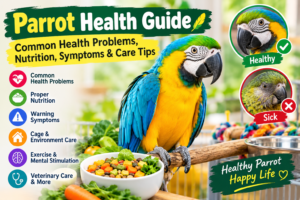
Parrot health guide showing a healthy pet parrot receiving proper nutrition and care
Suggested Internal Links
- Best Healthy Foods for Pet Birds
- How to Keep a Pet Bird Cage Clean
- Common Bird Diseases and Warning Signs
- Safe Fruits and Vegetables for Pet Birds
- How to Reduce Stress in Pet Birds
Suggested External Link Topic
Link to a reputable avian veterinary or animal-care resource when discussing serious symptoms, diagnosis, or treatment.