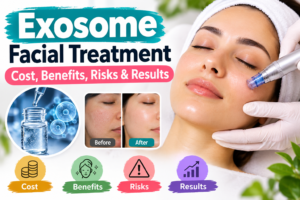

Exosome facial treatment is an emerging cosmetic skincare procedure that has gained attention for its potential to improve skin texture, hydration, firmness, and overall appearance. Exosomes are tiny extracellular vesicles that can carry proteins, lipids, and signaling molecules between cells. In aesthetic medicine, exosome-based products are being explored as a way to support skin-repair and rejuvenation processes.
Microneedling, laser treatments, and other skin procedures are often done at the same time as exosome treatments. But the quality and make-up of exosome goods can be very different, and more study needs to be done on cosmetic exosome treatment.
Before you decide to go through with this treatment, you should learn about the exosome face cost, benefits, risks, predicted results, healing time, and safety issues.
What Is an Exosome Facial?
An exosome facial is a cosmetic skin treatment that involves applying an exosome-containing product to the skin, usually after a procedure such as microneedling or laser resurfacing.
Exosomes are microscopic extracellular vesicles released by cells. They can contain biological molecules involved in cell-to-cell communication. In laboratory and research settings, exosomes have attracted interest because of their potential role in tissue repair, inflammation, and regeneration.
In aesthetic clinics, exosome products may be marketed for:
- Skin rejuvenation
- Fine lines and wrinkles
- Uneven skin texture
- Dull skin
- Acne scars
- Skin hydration
- Redness and inflammation
- Loss of skin firmness
- Recovery after certain cosmetic procedures
It is important to understand that marketing claims can go beyond the strength of available clinical evidence. Patients should ask exactly what product is being used and whether it is legally authorized for the intended cosmetic use in their country.
Exosome Facial Cost
The exosome facial cost can vary widely depending on the clinic, location, product, treatment method, and whether another procedure is performed at the same appointment.
A basic exosome-based facial may cost several hundred dollars, while treatments combined with microneedling, laser resurfacing, or other advanced procedures can cost considerably more.
The final price may depend on:
- Type and source of the exosome product
- Brand and formulation
- Amount of product used
- Clinic location
- Provider’s experience
- Microneedling or laser treatment fees
- Number of treatment sessions
- Follow-up appointments
- Additional skincare products
Prices can also differ significantly between countries. For example, cosmetic treatment costs in the United States may be substantially different from prices in the United Kingdom, Canada, Australia, Pakistan, or other regions.
Why Are Some Exosome Treatments Expensive?
Exosome products can involve specialized manufacturing, storage, and handling requirements. However, a higher price does not automatically mean a product is safer or more effective.
Before paying for treatment, ask the provider about the product’s manufacturer, ingredients, source, storage conditions, intended use, and regulatory status.
Potential Benefits of Exosome Facial Treatment
Exosome facial treatments are promoted for several skin-rejuvenation benefits. However, evidence for cosmetic use is still evolving, so results should not be guaranteed.
1. May Improve Skin Texture
One of the most common reasons people consider exosome treatments is uneven or rough skin texture.
When exosomes are used alongside microneedling or another controlled skin procedure, the combination may support the skin’s healing response. Some patients may notice smoother-looking skin as the skin recovers.
2. May Support Skin Rejuvenation
Exosomes contain signaling molecules that may influence cellular communication. Researchers are studying whether these properties can contribute to tissue repair and skin regeneration.
However, more high-quality human clinical research is needed to determine how effective exosome products are for cosmetic skin rejuvenation.
3. May Improve Skin Hydration and Radiance
Some cosmetic treatments involving exosome-based products are marketed to improve skin hydration and give the complexion a more refreshed appearance.
The visible improvement may also be influenced by the accompanying treatment, such as microneedling, rather than exosomes alone.
4. May Help the Appearance of Fine Lines
Exosome facial treatments are often promoted as an anti-aging procedure. The goal is to support healthier-looking skin and potentially improve the appearance of fine lines.
However, exosomes should not be considered equivalent to established treatments such as Botox or dermal fillers because they work differently.
5. May Support Post-Procedure Recovery
Some clinics use exosome-based products after procedures that intentionally create controlled skin injury, such as microneedling or certain lasers.
The proposed goal is to support the skin’s natural recovery process. More research is needed to establish which products and treatment combinations provide meaningful clinical benefits.
How Does an Exosome Facial Work?
The exact procedure depends on the clinic and product being used.
Step 1: Skin Assessment
A qualified professional should examine your skin and discuss your concerns, medical history, medications, allergies, and treatment goals.
Step 2: Skin Cleansing
The treatment area is thoroughly cleansed before the procedure.
Step 3: Microneedling or Another Procedure
Many exosome treatments involve microneedling. A device containing tiny needles creates controlled microchannels in the skin.
These channels can increase penetration of topical products while microneedling itself stimulates a wound-healing response.
Step 4: Exosome Product Application
The exosome-containing product is applied according to the manufacturer’s instructions and the provider’s treatment protocol.
Step 5: Aftercare
The provider should explain how to cleanse the skin, protect it from sunlight, and avoid irritating skincare products during recovery.
Not all products described as “exosomes” are the same. Their source, preparation, concentration, purity, and manufacturing process can differ considerably.
Exosome Facial Results: What to Expect
Exosome facial results can vary from person to person.
Some people may notice that their skin appears temporarily brighter or smoother after treatment. Longer-term changes, if they occur, generally depend on the underlying procedure, skin condition, and individual healing response.
Potentially reported improvements include:
- Smoother-looking skin
- Improved skin texture
- Increased radiance
- More hydrated appearance
- Reduced appearance of fine lines
- Improved appearance of some acne scars
- Firmer-looking skin
It is important to avoid claims that exosome facials can dramatically reverse aging or permanently repair damaged skin. Scientific evidence for many of these cosmetic claims remains limited.
How Many Exosome Facial Sessions Are Needed?
There is no universally established number of exosome facial sessions that works for everyone.
Some clinics recommend a series of treatments spaced several weeks apart, while others offer the treatment as an occasional maintenance procedure.
The appropriate treatment schedule depends on:
- Your skin condition
- Treatment method
- Product used
- Whether microneedling or laser is performed
- Treatment goals
- Individual response
A qualified dermatologist or appropriately trained healthcare professional should determine whether repeated treatment is appropriate.
Exosome Facial Risks and Side Effects
Like other cosmetic procedures, exosome facial treatments can cause side effects.
If microneedling or laser treatment is performed, common temporary effects may include:
- Redness
- Mild swelling
- Skin sensitivity
- Tightness
- Warmth
- Mild discomfort
- Dryness or peeling
- Temporary irritation
The risks can also depend on the product itself and how it is manufactured and handled.
Potential Safety Concerns
One of the most important concerns with exosome products is that the term “exosome” can cover a wide range of products with different sources and characteristics.
Possible concerns include:
- Contamination
- Allergic or inflammatory reactions
- Infection from improper handling
- Unknown ingredients
- Inadequate quality control
- Unproven medical claims
- Product storage problems
Patients should be particularly cautious about products marketed as miracle anti-aging treatments or claiming guaranteed skin regeneration.
If severe pain, significant swelling, pus, fever, spreading redness, or other concerning symptoms develop after treatment, seek medical attention promptly.
Is an Exosome Facial FDA Approved?
Regulatory status is an important consideration.
In the United States, consumers should not assume that a product is FDA-approved simply because a clinic markets it as an “exosome treatment.” The regulatory status of a specific product depends on what it contains, how it is manufactured, and how it is intended to be used.
Some products may be marketed or used in ways that do not have established approval for cosmetic skin rejuvenation.
Patients should ask the provider to identify the exact product being used and explain its regulatory status. Similar considerations apply in other countries, where regulatory authorities may have different requirements.
Who May Be a Candidate for an Exosome Facial?
Exosome-based cosmetic treatment may be considered by adults interested in improving the appearance of their skin.
However, an individual assessment is important before treatment.
Extra caution may be appropriate for people with:
- Active skin infections
- Open wounds
- Severe inflammatory skin conditions
- Certain immune-system conditions
- A history of severe allergic reactions
- Problems with wound healing
- Certain medications or medical conditions
People who are pregnant or breastfeeding should discuss elective cosmetic treatments with their healthcare professional before proceeding.
Exosomes vs. PRP Facial
Exosome therapy and PRP facial treatment are different.
PRP, or platelet-rich plasma, is prepared from the patient’s own blood. A small blood sample is collected and processed to concentrate platelets.
Exosome treatments generally involve an externally manufactured or processed product containing extracellular vesicles.
PRP has been studied in various medical and aesthetic applications, while exosome-based cosmetic treatments remain a newer and less standardized field.
Neither treatment should automatically be considered better for every patient.
Exosome Facial Aftercare
Proper aftercare is especially important if exosomes are used together with microneedling or laser treatment.
Protect Your Skin From the Sun
Freshly treated skin can be more sensitive. Follow your provider’s instructions regarding sunscreen and sun avoidance.
Avoid Harsh Skincare Products
Do not immediately return to strong exfoliating acids, retinoids, scrubs, or other irritating products unless your healthcare professional recommends them.
Keep the Skin Clean
Use gentle cleansing methods and avoid excessive rubbing or scrubbing.
Avoid Picking the Skin
Do not scratch, peel, or pick areas that become dry or flaky during recovery.
Follow Your Provider’s Instructions
Aftercare depends on the procedure used. Laser treatment, microneedling, and topical application can have different recovery requirements.
How to Choose an Exosome Facial Provider
Choosing a qualified provider is more important than simply finding the lowest price.
Before booking treatment, ask:
- What exactly is the product being used?
- Who manufactures the product?
- What is its source?
- How is it stored?
- Is it intended for human cosmetic use?
- What regulatory authorization applies?
- Who will perform the treatment?
- What procedure will be combined with the exosome product?
- What side effects should you expect?
- What happens if a complication develops?
A reputable provider should be willing to answer these questions clearly.
Be cautious if a clinic promises guaranteed results, claims that exosomes can permanently reverse aging, or refuses to disclose the product being used.
Frequently Asked Questions
How much does an exosome facial cost?
The cost varies by location, provider, product, and whether microneedling or laser treatment is included. Many cosmetic treatments cost several hundred dollars per session, but prices can be significantly higher or lower depending on the clinic and treatment protocol.
Are exosome facials safe?
Safety depends on the product, manufacturing quality, handling, and procedure used. Because exosome-based cosmetic treatments are still an emerging field, patients should carefully evaluate the product and provider before treatment.
How long do exosome facial results last?
There is no universally established duration for cosmetic exosome facial results. Any improvement can depend on the treatment used, individual skin characteristics, lifestyle, and skincare routine.
Can exosomes remove acne scars?
Exosome treatments may be marketed for acne scars, particularly when combined with microneedling. However, they should not be expected to completely remove scars, and evidence for exosome-specific benefits is still developing.
Can exosomes replace Botox or fillers?
No. Exosomes, Botox, and dermal fillers have different mechanisms and purposes. Exosome treatments are generally marketed for skin quality, while Botox affects muscle activity and fillers restore or add volume.
Final Thoughts
An exosome facial treatment is an emerging cosmetic approach that has attracted attention for its potential role in skin rejuvenation, texture improvement, and post-procedure recovery. Exosomes contain biological signaling molecules that researchers are studying for their possible effects on tissue repair and cellular communication.
However, the evidence supporting cosmetic exosome treatments is still developing, and products can differ significantly in source, formulation, quality, and regulatory status.
The cost of an exosome facial can range from several hundred dollars to substantially more depending on the product, clinic, location, and whether treatments such as microneedling or laser resurfacing are included.
Before undergoing treatment, consult a qualified dermatologist or appropriately trained healthcare professional. Ask exactly what product will be used, where it comes from, how it is processed, and what evidence supports its intended cosmetic use. Choosing a reputable provider and having realistic expectations are essential for making a safer and more informed decision.osome facial treatment.