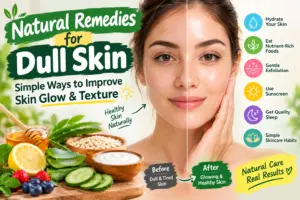

Natural Remedies for Dull Skin: Simple Ways to Improve Skin Glow & Texture
Dull skin can make your complexion look tired, rough, uneven, or less radiant than usual. Lack of hydration, dead skin cell buildup, poor sleep, environmental pollution, sun exposure, and an inconsistent skincare routine can all contribute to a dull-looking complexion.
The good news is that complex skincare regimens are not always necessary to make dull skin look better. Over time, smoother, healthier-looking skin can be supported by easy lifestyle choices and mild, skin-friendly treatments.
The finest natural solutions for dull skin will be discussed in this book. These include hydration, mild exfoliation, nourishing meals, face massage, sleep, sun protection, and basic skincare practices that may enhance the texture and radiance of your skin.
What Causes Dull Skin?
Before treating dull skin, it helps to understand what may be causing it. Several factors can make skin appear less radiant.
1. Dehydrated Skin
When your skin lacks enough moisture, it may look dry, tight, flaky, or rough. Dehydrated skin can also make fine lines appear more noticeable.
Using a gentle moisturizer and maintaining adequate fluid intake can help support healthy-looking skin.
2. Dead Skin Cell Buildup
Your skin naturally sheds dead skin cells. However, when dead cells accumulate on the surface, your complexion may appear rough and dull.
Gentle exfoliation can help remove excess surface buildup and improve the appearance of skin texture.
3. Sun Exposure
Regular exposure to ultraviolet (UV) radiation can contribute to premature skin aging, uneven pigmentation, and changes in skin texture.
Daily sunscreen is therefore one of the most important steps for maintaining a healthy-looking complexion.
4. Lack of Sleep
Poor or insufficient sleep can make you look tired and may affect the overall appearance of your skin. Establishing a consistent sleep schedule can support both general health and a fresher-looking complexion.
5. Stress
Long-term stress can affect sleep, lifestyle habits, and overall well-being, all of which may influence the appearance of your skin.
Stress-management activities such as walking, exercise, meditation, or relaxation techniques may help support healthier habits.
6. Environmental Pollution
Air pollution can expose the skin to particles and chemicals that may contribute to oxidative stress and skin irritation. Cleansing your face at the end of the day can help remove accumulated dirt, sweat, makeup, and environmental residue.
Best Natural Remedies for Dull Skin
There are several simple ways to improve the appearance of dull skin without relying on harsh treatments.
1. Keep Your Skin Hydrated
Hydration is one of the simplest ways to support a healthy-looking complexion.
Drink fluids regularly according to your body’s needs, and use a moisturizer that suits your skin type. Ingredients such as glycerin, hyaluronic acid, and ceramides can help support the skin’s moisture barrier.
If your skin is dry, avoid very hot showers and harsh cleansers because they can leave the skin feeling even drier.
2. Eat a Skin-Friendly Diet
Your diet can play an important role in overall skin health.
Try to include a variety of nutrient-rich foods such as:
- Fresh fruits
- Leafy green vegetables
- Tomatoes
- Carrots
- Berries
- Citrus fruits
- Nuts and seeds
- Eggs
- Fish
- Whole grains
Foods containing vitamins, minerals, healthy fats, and antioxidants can contribute to a balanced diet that supports overall health.
Instead of focusing on one “miracle” food for glowing skin, aim for variety and nutritional balance.
3. Use Gentle Exfoliation
Exfoliation can help remove excess dead skin cells from the surface and make skin feel smoother.
However, more exfoliation is not necessarily better. Over-exfoliating can cause dryness, irritation, redness, and damage to the skin barrier.
Choose a gentle exfoliating product appropriate for your skin type and avoid aggressive scrubbing with rough materials.
If you have sensitive or acne-prone skin, introduce exfoliation gradually.
4. Try an Oatmeal-Based Soothing Mask
Oatmeal is commonly used in skincare because it can help soothe and moisturize dry or irritated skin.
For a simple at-home option, finely ground plain oats can be mixed with water to create a soft paste. Apply it gently to clean skin, leave it on briefly, and rinse with lukewarm water.
Do not scrub the mixture aggressively against your skin.
If you have sensitive skin, test a small area first.
5. Use Aloe Vera Carefully
Aloe vera is commonly used in skincare products because it can provide a cooling and soothing sensation.
If you want to use an aloe product, choose a simple formulation designed for skin and avoid products containing unnecessary fragrances or irritating ingredients.
Apply a small amount first to check how your skin reacts.
Natural does not automatically mean irritation-free, so patch testing is a useful precaution.
6. Protect Your Skin From the Sun
One of the most important ways to maintain a brighter and more even-looking complexion is consistent sun protection.
Use a broad-spectrum sunscreen with an SPF of 30 or higher when appropriate, especially when spending time outdoors.
Sun protection can help reduce the effects of UV exposure that contribute to uneven pigmentation and premature skin aging.
Remember that sunscreen works best when applied generously and reapplied as needed, particularly during prolonged outdoor activities.
7. Get Enough Quality Sleep
Your nighttime routine should not only involve skincare products. Good sleep is also an important part of a healthy lifestyle.
Aim for a consistent sleep schedule and create a relaxing nighttime environment.
Try limiting excessive screen use before bed, keeping your bedroom comfortable, and following a regular bedtime routine.
Better sleep can help you look more refreshed and support overall well-being.
8. Practice Facial Massage
Gentle facial massage can feel relaxing and temporarily improve the appearance of the skin by increasing circulation near the surface.
You can use clean hands and a gentle moisturizer or facial product to reduce friction.
Use light movements rather than pressing or pulling the skin aggressively.
Facial massage should be considered a relaxation and skincare technique rather than a permanent treatment for dullness.
9. Avoid Very Hot Water
Hot water can strip the skin of natural oils and leave it feeling dry or tight.
When washing your face, use lukewarm water instead.
After cleansing, gently pat your face dry with a clean towel and apply moisturizer while the skin is slightly damp.
10. Choose a Gentle Cleanser
A harsh cleanser can leave your skin feeling tight and uncomfortable.
Look for a gentle cleanser suited to your skin type. If your skin is dry or sensitive, fragrance-free products may be preferable.
Cleanse your face to remove sweat, dirt, sunscreen, and makeup without aggressively scrubbing.
11. Reduce Excessive Sugar and Highly Processed Foods
A balanced diet is generally more helpful for skin health than focusing on individual “beauty foods.”
If your diet contains a lot of highly processed foods and added sugars, consider gradually replacing some of them with vegetables, fruits, whole grains, legumes, nuts, and other nutrient-rich options.
The goal should be an overall balanced eating pattern rather than eliminating one particular food group without medical reason.
12. Keep Your Skin Barrier Healthy
A healthy skin barrier helps the skin retain moisture and defend itself from environmental irritants.
To support your skin barrier:
- Avoid excessive exfoliation.
- Use gentle cleansers.
- Moisturize regularly.
- Avoid very hot water.
- Protect your skin from excessive sun exposure.
- Introduce new skincare products gradually.
A simple routine is often better than constantly experimenting with multiple products.
Simple Morning Routine for Glowing-Looking Skin
A basic morning routine can help keep your skin comfortable and protected.
Step 1: Gentle Cleanser
Wash your face with a mild cleanser or simply rinse with water if your skin is very dry and your dermatologist has recommended this approach.
Step 2: Moisturizer
Apply a moisturizer appropriate for your skin type.
Step 3: Sunscreen
Finish with broad-spectrum sunscreen, particularly when you will be exposed to daylight.
Simple Night Routine for Dull Skin
Your nighttime routine can focus on cleansing, hydration, and skin-barrier support.
Step 1: Remove Makeup
If you wear makeup, remove it thoroughly before going to bed.
Step 2: Cleanse
Use a gentle cleanser to remove accumulated sunscreen, sweat, oil, and dirt.
Step 3: Moisturize
Apply a nourishing but non-irritating moisturizer.
If you want to use an exfoliating or treatment product, introduce it gradually rather than combining multiple strong ingredients at once.
Natural Remedies to Avoid
Many popular DIY skincare remedies can actually irritate the skin.
Avoid applying concentrated lemon juice, baking soda, undiluted essential oils, or harsh scrubs directly to your face.
These ingredients can disrupt the skin barrier and cause irritation, dryness, or increased sensitivity.
Similarly, do not assume that a product is safe simply because it is labeled “natural.” Plant-based ingredients can still cause allergic reactions or irritation.
How Long Does It Take to Improve Dull Skin?
The timeline varies depending on the underlying cause.
If dullness is related to dehydration or a damaged skin barrier, improving hydration and using gentle skincare may make the skin feel better relatively quickly.
Changes related to pigmentation, sun damage, or uneven texture can take considerably longer.
Consistency is more important than using numerous products. A simple routine followed regularly is generally easier to maintain.
When Should You See a Dermatologist?
Dull-looking skin is usually not a serious medical concern, but persistent changes may sometimes indicate an underlying skin condition.
Consider speaking with a dermatologist if you experience:
- Persistent redness
- Severe dryness or peeling
- Sudden changes in skin texture
- Persistent itching
- Unexplained pigmentation changes
- Painful or inflamed skin
- A rash that does not improve
- Significant changes that continue despite a gentle skincare routine
A dermatologist can assess your skin and recommend treatments based on the specific cause.
Frequently Asked Questions
What is the best natural remedy for dull skin?
There is no single remedy that works for everyone. A combination of good hydration, balanced nutrition, gentle cleansing, appropriate exfoliation, sufficient sleep, and daily sun protection can help improve the appearance of dull skin.
Does drinking water make your skin glow?
Adequate hydration is important for overall health, but drinking extra water beyond your body’s needs is not guaranteed to produce glowing skin. If you are dehydrated, restoring normal hydration can help your skin feel and look healthier.
How can I make my skin glow naturally?
Focus on a consistent skincare routine, healthy diet, sufficient sleep, regular physical activity, stress management, and sun protection. Avoid harsh DIY treatments that can irritate your skin.
Is aloe vera good for dull skin?
Aloe vera can have soothing and moisturizing properties, but results vary. Choose a skin-friendly formulation and patch test it before applying it more broadly.
How often should I exfoliate dull skin?
It depends on your skin type and the exfoliating product. Start conservatively and avoid exfoliating if your skin is irritated, peeling, or damaged. Over-exfoliation can make dullness worse by damaging the skin barrier.
Can lack of sleep cause dull skin?
Poor sleep can contribute to a tired appearance and may affect overall skin health. Maintaining a consistent sleep schedule can support a healthier-looking complexion.
Final Thoughts
Improving dull skin naturally does not require an expensive or complicated routine. Small, consistent habits can make a meaningful difference in the way your skin looks and feels.
Focus on keeping your skin hydrated, eating a balanced diet, getting adequate sleep, protecting your skin from UV exposure, cleansing gently, and avoiding harsh DIY remedies. Gentle exfoliation may also help improve the appearance of rough or uneven texture when used appropriately.
Remember that every person’s skin is different. If your dullness is persistent or accompanied by redness, irritation, unusual pigmentation, or other symptoms, consider getting professional advice.
Healthy-looking skin is usually the result of consistent care rather than a single overnight remedy.