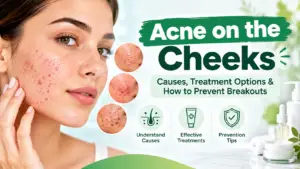

Acne on the Cheeks: Causes, Treatment Options & How to Prevent Breakouts
Introduction
Acne on the cheeks is a common skin concern that can affect teenagers and adults alike. Unlike acne that mainly appears on the forehead or chin, cheek acne can sometimes be linked to skincare products, makeup, friction, hormones, excess oil, bacteria, or everyday habits such as frequently touching your face.
Small bumps, whiteheads, blackheads, red pimples, or deeper, more painful cysts can all be signs of cheek acne. While some people have sporadic breakouts, others have chronic acne that can leave scars or dark spots.
Selecting a suitable skincare regimen and treatment strategy can be made simpler by being aware of the potential causes of cheek acne. Common causes, successful treatments, preventative measures, and when it might be time to see a dermatologist are all covered in this guide.
What Causes Acne on the Cheeks?
There is rarely one single cause of cheek acne. Several factors can contribute to clogged pores and inflammation.
1. Clogged Pores
One of the most common causes of cheek acne is clogged pores. Dead skin cells, excess sebum, and cosmetic residue can accumulate inside hair follicles.
When a pore becomes blocked, it can develop into a whitehead or blackhead. If inflammation develops, the clogged pore may become a red, swollen pimple.
Using heavy or pore-clogging skincare and makeup products can make this problem worse in people who are acne-prone.
2. Hormonal Changes
Hormones can influence oil production and inflammation in the skin. Hormonal fluctuations during puberty, menstrual cycles, pregnancy, or other life stages may contribute to acne.
Hormonal acne is often associated with the lower face and jawline, but it can also appear on the cheeks.
If cheek acne repeatedly becomes worse around certain times of the menstrual cycle or continues despite a consistent skincare routine, hormonal factors may be worth discussing with a dermatologist.
3. Makeup and Skincare Products
Foundation, concealer, sunscreen, moisturizers, and other cosmetic products can sometimes contribute to breakouts, particularly if they are heavy or not suitable for acne-prone skin.
This does not mean people with acne need to avoid makeup completely. Instead, look for products labeled non-comedogenic and remove makeup thoroughly before going to bed.
Dirty makeup brushes and sponges can also collect oil, dead skin cells, and microorganisms. Cleaning them regularly can help maintain better hygiene.
4. Friction and Pressure
Repeated friction or pressure against the cheeks may contribute to breakouts. This can happen from:
- Phone screens
- Tight masks
- Helmets or straps
- Pillowcases
- Hands resting against the face
- Certain sports equipment
This type of acne is sometimes referred to as acne mechanica because physical pressure, heat, and friction can contribute to blocked follicles.
5. Dirty Phone Screens
Your phone regularly touches your face and can accumulate oil, makeup, dust, and other substances.
Although a dirty phone is not automatically the cause of acne, regularly cleaning the surface and avoiding prolonged pressure against the cheeks may help reduce unnecessary irritation.
Using headphones or speaker mode when practical can also reduce direct contact with the skin.
6. Stress
Stress does not necessarily cause acne by itself, but it may worsen existing acne in some people.
Stress can affect hormones and inflammatory pathways, and stressed individuals may also touch or pick their skin more frequently.
Getting enough sleep, exercising regularly, and maintaining a consistent daily routine may support overall skin health.
7. Hair and Skin Products
Hair products such as oils, pomades, conditioners, and styling creams can sometimes transfer onto the cheeks, especially when hair touches the face.
If you notice small bumps along areas where your hair frequently contacts your skin, consider whether a hair product could be contributing to the problem.
Types of Acne That Can Appear on the Cheeks
Cheek acne can have different appearances depending on the type of lesion.
Whiteheads
Whiteheads are closed clogged pores. They usually appear as small, flesh-colored or white bumps.
Blackheads
Blackheads are open clogged pores. Their dark appearance is caused by oxidation of the material inside the pore, not simply dirt.
Papules
Papules are small, red, inflamed bumps that do not contain visible pus.
Pustules
Pustules are inflamed pimples containing visible pus.
Cystic or Nodular Acne
Deep, painful lumps may represent nodular or cystic acne. These forms can increase the risk of permanent acne scarring and may require professional treatment.
How to Treat Acne on the Cheeks
Treatment depends on the severity and type of acne. A simple routine may be enough for mild breakouts, while persistent or severe acne may require prescription treatment.
1. Use a Gentle Cleanser
Wash your face gently twice a day and after heavy sweating.
Choose a cleanser that removes excess oil and impurities without leaving the skin extremely dry or tight.
Scrubbing aggressively can irritate the skin and potentially make inflammatory acne worse.
2. Try Salicylic Acid
Salicylic acid is a beta hydroxy acid that can help exfoliate inside pores.
It may be particularly useful for blackheads, whiteheads, and clogged pores. If your skin is sensitive, start with a lower concentration or use the product less frequently.
Avoid introducing several strong exfoliating products at the same time.
3. Consider Benzoyl Peroxide
Benzoyl peroxide can help reduce acne-causing bacteria and inflammation. It is commonly used for inflammatory pimples.
Because it can cause dryness and irritation, begin gradually and use a moisturizer that suits acne-prone skin.
Benzoyl peroxide can also bleach fabrics, so be careful with towels, clothing, and pillowcases.
4. Use Adapalene for Acne-Prone Skin
Adapalene is a topical retinoid that can help prevent clogged pores and treat acne.
It is generally introduced gradually because retinoids can initially cause dryness or irritation.
Use sunscreen during the day because acne treatments can make skin more sensitive to irritation from the environment.
If you are pregnant or planning pregnancy, talk with a healthcare professional before using topical retinoids.
5. Keep Your Skin Moisturized
People sometimes avoid moisturizer because they believe it will make acne worse. However, excessive dryness can irritate the skin and make a skincare routine harder to tolerate.
Choose a lightweight, non-comedogenic moisturizer designed for your skin type.
Ingredients such as ceramides, glycerin, and hyaluronic acid can help support hydration without necessarily making the skin greasy.
6. Wear Sunscreen
Daily sunscreen is important, especially when acne leaves dark marks.
Choose a broad-spectrum sunscreen with an SPF of 30 or higher that feels comfortable on your skin.
Sun exposure can make post-acne discoloration more noticeable and may slow the process of fading dark spots.
A Simple Skincare Routine for Cheek Acne
A consistent routine is often more useful than using many products.
Morning
- Gentle cleanser
- Acne treatment if appropriate
- Lightweight moisturizer
- Broad-spectrum SPF 30+ sunscreen
Evening
- Remove makeup and sunscreen
- Gentle cleanser
- Acne treatment such as salicylic acid or adapalene, depending on your routine
- Moisturizer
Introduce new active ingredients gradually rather than starting several at once.
How to Prevent Acne on the Cheeks
Prevention is about reducing clogged pores, irritation, and repeated exposure to possible triggers.
Keep Your Hands Away From Your Face
Touching your face can transfer oil and other substances to the skin. More importantly, squeezing pimples can damage surrounding tissue and increase the risk of dark marks and scars.
Clean Your Phone Regularly
Wipe your phone according to the manufacturer’s cleaning recommendations, especially if it frequently touches your face.
Change Pillowcases Regularly
Pillowcases can accumulate oil, skincare products, sweat, and hair products. Regular washing can help keep your sleeping environment cleaner.
Wash Makeup Brushes
Clean makeup brushes and reusable sponges regularly. Avoid sharing makeup applicators with other people.
Choose Non-Comedogenic Products
When possible, look for skincare and makeup products labeled non-comedogenic or formulated for acne-prone skin.
Avoid Over-Washing
Washing your face repeatedly throughout the day does not necessarily prevent acne. Excessive cleansing can cause dryness and irritation.
A gentle routine is usually preferable to aggressive scrubbing.
Don’t Pick or Pop Pimples
Popping pimples may temporarily make them look smaller, but it can push inflammation deeper into the skin.
Picking can also increase the chance of scarring and prolonged discoloration.
How Long Does Cheek Acne Take to Improve?
Acne treatment usually requires patience. Some products may take several weeks before noticeable improvement occurs.
A consistent skincare routine can gradually reduce new breakouts, while leftover dark spots may take longer to fade.
If your acne continues to worsen after several weeks of consistent treatment, or if you develop painful deep lesions, consider consulting a dermatologist.
When Should You See a Dermatologist?
You should consider professional medical advice if:
- Acne is painful or deep
- Breakouts are widespread or persistent
- Acne is leaving scars
- Dark marks continue to develop
- Over-the-counter products are not helping
- Acne is significantly affecting your daily life
- You suspect hormones or medication may be contributing
A dermatologist can determine the type and severity of acne and recommend treatments such as prescription retinoids, antibiotics, hormonal therapy, or other appropriate options.
Can Diet Cause Cheek Acne?
Diet and acne can be complicated. Research suggests that certain dietary patterns may influence acne in some people, but there is no universal acne diet that works for everyone.
Instead of eliminating many foods unnecessarily, focus on an overall balanced diet that includes vegetables, fruits, whole grains, adequate protein, and healthy sources of fat.
If you notice that a particular food consistently appears to coincide with worsening acne, discuss your observations with a healthcare professional rather than making major dietary restrictions on your own.
Acne on the Cheeks vs. Acne Scars and Dark Spots
It is important to distinguish active acne from marks left behind after acne.
Active acne includes pimples, pustules, papules, blackheads, and whiteheads.
Post-inflammatory hyperpigmentation refers to flat dark or brown marks that can remain after inflammation has healed.
Acne scars involve a change in the texture of the skin, such as depressed or raised areas.
Treating active acne early can help reduce the likelihood of new marks and scars. Persistent scars may require professional procedures such as chemical peels, microneedling, laser treatments, or other dermatologist-guided options.
Frequently Asked Questions
Why am I suddenly getting acne on my cheeks?
Sudden cheek acne can be related to hormonal changes, new skincare or makeup products, friction, hair products, stress, or changes in your routine. Identifying recent changes can help determine a possible trigger.
Is cheek acne caused by dirty skin?
Not necessarily. Acne is not simply a result of poor hygiene. Excessive washing and harsh scrubbing can actually irritate acne-prone skin.
Should I pop cheek pimples?
It is generally better not to pop or squeeze pimples. Doing so can increase inflammation and the risk of dark marks and scarring.
What is the best ingredient for cheek acne?
There is no single best ingredient for everyone. Salicylic acid can help with clogged pores, benzoyl peroxide can help with inflammatory acne, and adapalene can help prevent clogged pores and treat acne over time.
Can stress make cheek acne worse?
Stress may worsen acne in some people, although it is not necessarily the only cause. Managing stress and maintaining healthy sleep habits can support overall skin health.
How can I prevent cheek acne from coming back?
Use a consistent skincare routine, choose non-comedogenic products, clean makeup tools and frequently touched objects, avoid picking pimples, and identify personal triggers such as friction or irritating products.
Final Thoughts
Acne on the cheeks can result from clogged pores, hormonal changes, skincare and makeup products, friction, stress, and other factors. The most effective approach is usually a simple, consistent skincare routine rather than constantly switching products.
An acne-friendly regimen can be built around gentle cleansing, suitable acne-fighting ingredients, moisturizer, and daily sunscreen. Steer clear of squeezing pimples and be aware of any habits or products that might be causing recurrent breakouts.
Professional dermatology advice can help identify the underlying causes and provide a treatment plan that is appropriate for your skin type if your cheek acne is painful, severe, persistent, or leaving scars.
Many people can greatly improve their cheek acne and lessen the chance of future breakouts with consistent care and patience.