

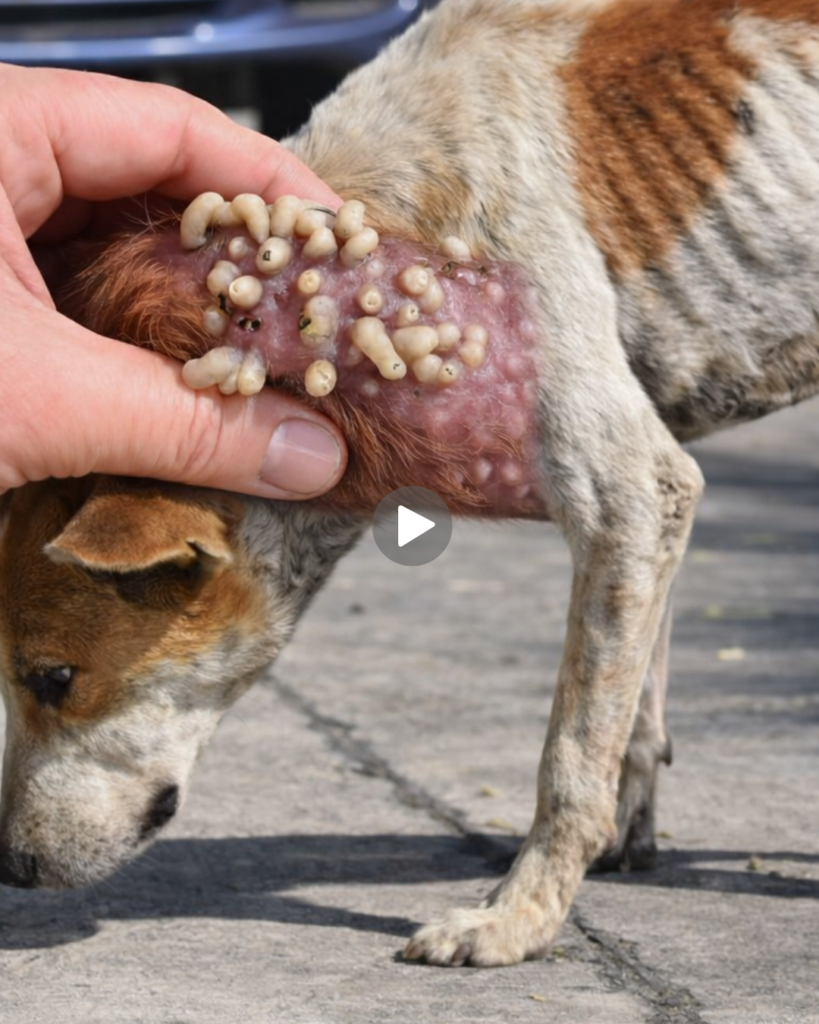
The image above is disturbing, heartbreaking, and difficult to look at—but it represents a harsh reality faced by thousands of dogs every year. The dog in the picture is suffering from myiasis, a severe parasitic condition caused by maggots infesting living tissue. This is not a rare disease, nor is it limited to abandoned or stray animals. Myiasis can affect any dog if wounds are neglected, hygiene is compromised, or early warning signs are ignored.
This article aims to raise awareness, educate dog owners and animal lovers, and emphasize why early intervention can mean the difference between life and death.
What Is Myiasis?
Myiasis is a condition in which fly larvae (maggots) infest the skin, wounds, or body cavities of animals. Flies are attracted to open wounds, moist fur, blood, pus, feces, or urine-soaked skin. Once they lay eggs, those eggs hatch within hours, and the larvae begin feeding on living tissue.
In the image, you can clearly see clusters of pale, swollen maggots embedded deep into the dog’s flesh. This is an advanced stage of myiasis—one that causes extreme pain, infection, tissue destruction, and systemic illness.
If untreated, myiasis can lead to:
- Severe bacterial infection
- Septic shock
- Organ failure
- Death
How Does Myiasis Start?
Contrary to common belief, myiasis does not happen overnight. It begins quietly and progresses rapidly.
Common causes include:
- Small cuts or bite wounds
- Tick or flea infestations causing skin damage
- Surgical wounds left uncovered
- Matted fur trapping moisture
- Diarrhea or urine scalding the skin
- Poor grooming, especially in long-haired dogs
- Weak immune systems, old age, or illness
In many cases, owners do not notice the wound until the smell, swelling, or behavior changes become impossible to ignore.
Why the Condition Is So Dangerous
Maggots do not simply sit on the surface. They burrow deep into tissue, releasing enzymes that break down flesh. This causes:
- Rapid tissue necrosis (death)
- Intense pain and distress
- Toxic substances entering the bloodstream
- Rapid spread of infection
Dogs suffering from myiasis may stop eating, become lethargic, isolate themselves, or show signs of shock. By the time maggots are visible, the condition is often already severe.
The image shows extensive infestation along the dog’s neck—an area close to vital blood vessels and nerves—making the situation even more dangerous.
Signs and Symptoms Dog Owners Must Never Ignore
Early detection can save a dog’s life. Warning signs include:
- Constant licking or scratching one area
- Foul, rotting smell coming from the body
- Swelling or redness under the fur
- Sudden aggression or pain when touched
- Lethargy and loss of appetite
- Visible movement in wounds
- Hair loss around a specific area
- Fever or weakness
If you notice any of these signs, immediate veterinary care is essential.
Emergency Treatment: What Must Be Done
Myiasis is a medical emergency. Treatment should never be delayed or attempted casually.
Veterinary treatment usually involves:
- Immediate removal of maggots (often under sedation)
- Deep wound cleaning and flushing
- Antibiotics to control infection
- Pain management
- Supportive care such as fluids and nutrition
- Follow-up wound care for weeks
In severe cases, surgery may be required to remove dead tissue. Without proper treatment, mortality rates are high.
Can Home Remedies Help?
No.
Myiasis is not a home-treatable condition.
Applying oil, turpentine, or chemicals without medical guidance can:
- Drive maggots deeper into tissue
- Cause chemical burns
- Delay proper treatment
- Increase pain and complications
Only trained professionals should manage this condition.
Prevention: The Most Powerful Weapon
The good news is that myiasis is largely preventable.
Here’s how dog owners can protect their pets:
1. Daily Inspection
Check your dog’s body daily, especially:
- Neck folds
- Behind ears
- Under legs
- Tail base
- Genital area
2. Proper Grooming
- Keep fur clean and trimmed
- Remove mats and tangles
- Bathe regularly, especially in warm weather
3. Immediate Wound Care
- Clean even small cuts
- Cover wounds when necessary
- Seek veterinary advice if healing is slow
4. Parasite Control
- Use tick and flea preventatives
- Treat skin conditions promptly
5. Clean Living Environment
- Keep sleeping areas dry and clean
- Dispose of waste properly
- Reduce fly populations around homes
Stray Dogs: The Silent Victims
Stray and abandoned dogs are most vulnerable to myiasis. Without human care, minor injuries become fatal infestations. The image you see could represent countless voiceless animals suffering in silence.
Community awareness, rescue efforts, and responsible pet ownership can save lives.
Your one click, one share, or one act of kindness can bring attention to this cruel but preventable condition.
Emotional Impact: More Than a Physical Wound
Beyond physical suffering, dogs with myiasis endure extreme stress and fear. Animals cannot understand why they are in pain. They rely entirely on humans for protection and care.
Seeing images like this is painful—but ignoring them allows the suffering to continue unseen.
A Call to Action
This image is not meant to shock—it is meant to educate and awaken responsibility.
- Share awareness posts
- Educate other pet owners
- Support local animal rescue groups
- Report animals in distress
- Never ignore wounds or bad smells
Early action saves lives. Delayed action costs them.
Conclusion
Myiasis is a brutal reminder of what neglect, lack of awareness, and delayed care can cause. The dog in the image survived long enough to be photographed—but many others do not.
