
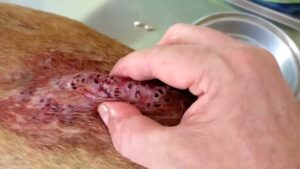

Mango Worms: Causes, Symptoms, Treatment, and Prevention
Mango worms may sound like something that grows on fruit, but they’re actually tiny parasites that can infect the skin of humans and animals—especially dogs. These worms come from the mango fly, also known as the tumbu fly (Cordylobia anthropophaga). The infection they cause is called cutaneous myiasis, which means “fly larvae under the skin.”
What Are Mango Worms?<
/strong>
Mango worms are the larval stage of the mango fly. These flies are mostly found in tropical regions of Africa but can spread through travel and trade. The adult female fly lays her eggs on damp soil, clothing, or bedding that has been left outside to dry.
When someone wears or lies on contaminated clothes, the tiny larvae can burrow into the skin. Once under the skin, they start to grow, feed on tissue fluids, and create a small boil-like bump. After 8–12 days, the larva matures and exits the skin, falling to the ground to become a new fly.
How Do People and Pets Get Infected?
Mango worm infections often happen in areas with warm, humid weather. Here’s how it usually happens:
- Clothes left outside: The mango fly lays eggs on damp clothes or towels.
- Contact with soil: Sitting or lying on sandy ground where flies have laid eggs.
- Pet bedding: Dogs lying on contaminated soil are especially at risk.
The eggs hatch into larvae, which then enter the skin through hair follicles or tiny cuts. Humans are not their main target—dogs and other animals are—but people can still get infected if they come into contact with contaminated materials.
Symptoms of Mango Worms
When a mango worm gets under your skin, it causes a painful, itchy bump that looks like a pimple or boil. Symptoms usually include:
- Red, raised bumps on the skin
- A small hole in the center of the bump (used by the worm to breathe)
- Pain, itching, or a “moving” sensation under the skin
- Fluid or pus coming out of the hole
- Swelling or redness around the bump
In pets, you may notice small lumps on the body, excessive licking, scratching, or discomfort when touched.
Treatment: How to Remove Mango Worms
The good news is that mango worm infections can be treated easily if handled properly. Here are the common treatment methods:
1. Suffocation method
The simplest and safest way is to cover the bump with petroleum jelly (Vaseline) or thick oil. This blocks the worm’s air supply, forcing it to move toward the surface. Once it comes out slightly, it can be gently removed with clean tweezers.
2. Medical removal
If the worm is deep, a doctor or veterinarian can make a small incision and remove it safely. Trying to squeeze it yourself can break the worm, which may cause infection or inflammation.
3. Clean the wound
After removal, clean the area with antiseptic and cover it with a clean bandage. An antibiotic cream may be applied to prevent infection.
4. For multiple infections
If several worms are present, or if the person has a fever or swelling, it’s best to see a doctor. They may prescribe antibiotics or other medications to speed up healing.
How to Prevent Mango Worm Infestations
Prevention is very easy with a few simple habits. Here’s how to protect yourself and your pets:
- Iron your clothes. Always iron clothes, sheets, and towels that were dried outdoors. The heat kills any eggs or larvae.
- Don’t dry clothes on the ground. Use a clothesline or dryer instead of laying laundry on soil or grass.
- Keep pets clean. Regularly wash and dry your pet’s bedding in the sun or a dryer.
- Avoid sitting on bare ground. In endemic areas, use mats or blankets.
- Maintain hygiene. Dispose of garbage and animal waste properly to reduce fly breeding sites.
- Check your pets often. Dogs that play outside can easily pick up mango worm larvae. Look for lumps and take them to a vet if needed.
Are Mango Worms Dangerous?
Mango worms are unpleasant and painful, but they’re usually not life-threatening. The main danger comes from secondary infections caused by scratching or improper removal. With proper care, the wounds heal completely within a few weeks.
However, in rare cases, if the infection spreads or multiple larvae infest the body, it can cause more serious complications. That’s why it’s important to get treatment early rather than trying risky home remedies.
When to See a Doctor
You should see a doctor if:
- You have more than one bump
- The area becomes very painful, red, or swollen
- You develop a fever
- You cannot remove the worm safely at home
Doctors can remove the larvae safely and prescribe medicine to prevent infection or scarring.
Final Thoughts
Mango worms are a common tropical skin problem, especially in parts of Africa. While they may look scary, understanding how they work helps in quick treatment and easy prevention.
Always remember:
- Iron your clothes.
- Keep pets and bedding clean.
- Avoid sitting on bare ground.
By following these simple steps, you can easily avoid mango worm infections and keep both yourself and your furry friends safe.

