
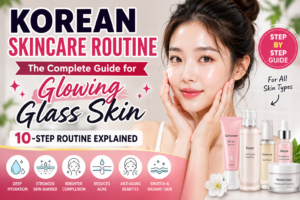

The Korean skincare routine has become one of the most popular beauty trends worldwide. Instead of hiding skin imperfections with makeup, Korean skincare focuses on achieving naturally healthy, hydrated, and glowing skin from within.
The famous “glass skin” look is the result of consistent skincare habits rather than expensive treatments. Whether you have oily, dry, combination, or sensitive skin, following the Korean skincare routine can improve your skin’s texture, hydration, and overall appearance.
In this complete guide, you’ll learn every step of the Korean skincare routine, how to choose products for your skin type, common mistakes to avoid, and expert tips for long-lasting results.
What Is the Korean Skincare Routine?
The Korean skincare routine is a skincare method that emphasizes:
- Gentle cleansing
- Deep hydration
- Layering lightweight products
- Skin barrier protection
- Daily sunscreen use
- Consistency instead of harsh treatments
Unlike many Western skincare routines that focus mainly on treating skin problems, Korean skincare aims to prevent damage before it starts.
Benefits of the Korean Skincare Routine
Following a Korean skincare routine offers numerous benefits.
1. Deep Hydration
Hydrated skin looks healthier, smoother, and younger.
2. Better Skin Barrier
A healthy skin barrier protects against pollution, bacteria, and irritation.
3. Brighter Complexion
Regular exfoliation and nourishing ingredients help improve dull skin.
4. Reduced Acne
Proper cleansing removes excess oil and impurities that clog pores.
5. Slower Signs of Aging
Hydrated skin develops fewer fine lines and wrinkles over time.
6. Smooth Texture
Consistent care improves uneven skin texture and rough patches.
Step 1: Oil Cleanser
Oil cleansing removes:
- Makeup
- Sunscreen
- Excess sebum
- Dirt
- Pollution
Massage the oil cleanser onto dry skin for about one minute before rinsing.
Best ingredients include:
- Jojoba oil
- Rice bran oil
- Sunflower oil
Step 2: Water-Based Cleanser
After oil cleansing, use a gentle foaming cleanser to remove leftover impurities.
Look for:
- Low pH cleansers
- Sulfate-free formulas
- Hydrating ingredients
Avoid harsh cleansers that leave your skin feeling tight.
Step 3: Exfoliation (2–3 Times Weekly)
Exfoliation removes dead skin cells and improves product absorption.
Types include:
Physical Exfoliation
Uses tiny particles to polish skin.
Chemical Exfoliation
Uses ingredients like:
- AHA
- BHA
- PHA
Chemical exfoliants are usually gentler and more effective.
Do not exfoliate every day.
Step 4: Toner
Korean toners hydrate instead of stripping the skin.
Benefits include:
- Restores moisture
- Balances skin pH
- Prepares skin for serums
Choose alcohol-free toners with soothing ingredients like:
- Green tea
- Rice extract
- Centella Asiatica
- Hyaluronic acid
Step 5: Essence
Essence is considered the heart of Korean skincare.
It delivers lightweight hydration while improving:
- Skin elasticity
- Brightness
- Texture
Popular ingredients include:
- Snail mucin
- Fermented extracts
- Rice water
- Niacinamide
Step 6: Serum or Ampoule
Serums target specific skin concerns.
Examples include:
Vitamin C Serum
Brightens pigmentation.
Niacinamide
Controls oil production.
Hyaluronic Acid
Provides intense hydration.
Retinol
Improves wrinkles and fine lines.
Centella Serum
Calms redness and irritation.
Choose one or two serums depending on your skin concerns.
Step 7: Sheet Mask (2–3 Times Weekly)
Sheet masks deliver concentrated hydration.
Benefits include:
- Instant glow
- Cooling effect
- Better hydration
- Improved skin softness
Leave on for 15–20 minutes.
Do not rinse afterward.
Step 8: Eye Cream
The skin around the eyes is thinner than the rest of your face.
Eye creams help with:
- Fine lines
- Puffiness
- Dark circles
- Dryness
Use your ring finger to gently pat the product.
Step 9: Moisturizer
Moisturizer locks in all previous skincare products.
Choose according to your skin type.
Oily Skin
- Gel moisturizer
- Lightweight lotion
Dry Skin
- Cream moisturizer
- Ceramide cream
Sensitive Skin
- Fragrance-free moisturizer
Step 10: Sunscreen (Most Important Step)
Never skip sunscreen.
UV rays cause:
- Wrinkles
- Hyperpigmentation
- Sunburn
- Skin cancer
- Premature aging
Use SPF 30 or higher every morning.
Reapply every two hours if outdoors.
Morning Korean Skincare Routine
Morning routine usually includes:
- Gentle cleanser
- Toner
- Essence
- Serum
- Moisturizer
- Sunscreen
Night Korean Skincare Routine
Evening routine may include:
- Oil cleanser
- Water cleanser
- Exfoliation (2–3 times weekly)
- Toner
- Essence
- Serum
- Sheet mask
- Eye cream
- Moisturizer
Best Ingredients in Korean Skincare
Snail Mucin
- Repairs damaged skin
- Hydrates deeply
- Improves elasticity
Centella Asiatica
Excellent for:
- Acne
- Sensitive skin
- Redness
Rice Extract
Helps brighten uneven skin tone.
Green Tea
Rich in antioxidants.
Great for oily skin.
Hyaluronic Acid
Attracts moisture into the skin.
Perfect for dry skin.
Niacinamide
Improves:
- Enlarged pores
- Pigmentation
- Oil control
- Skin barrier
Korean Skincare Routine by Skin Type
Oily Skin
Focus on:
- Lightweight products
- Oil-free moisturizers
- BHA exfoliants
- Gel sunscreen
Dry Skin
Choose:
- Rich moisturizers
- Hydrating toners
- Ceramides
- Hyaluronic acid
- Sleeping masks
Combination Skin
Balance hydration with lightweight products.
Use different products for oily and dry areas if needed.
Sensitive Skin
Choose products that are:
- Fragrance-free
- Alcohol-free
- Gentle
- Hypoallergenic
Avoid over-exfoliation.
Common Korean Skincare Mistakes
Many beginners make these mistakes.
Using Too Many Products
Start with 4–5 products before trying the full routine.
Over-Exfoliating
More exfoliation doesn’t mean better skin.
Stick to two or three times weekly.
Skipping Sunscreen
Without sunscreen, your skincare results will suffer.
Changing Products Too Quickly
Give new skincare products at least 4–6 weeks to show results.
Ignoring Patch Testing
Always patch test new products before applying them to your entire face.
Expert Tips for Better Results
- Drink enough water.
- Sleep at least 7–8 hours daily.
- Avoid touching your face.
- Wash makeup brushes regularly.
- Eat antioxidant-rich foods.
- Stay consistent.
- Introduce one new product at a time.
Frequently Asked Questions
Is the Korean skincare routine suitable for all skin types?
Yes. The products should be selected based on your individual skin type and concerns.
Do I need all 10 steps every day?
No. The famous 10-step routine is flexible. On busy days, cleansing, moisturizing, and sunscreen are enough.
How long does it take to see results?
Most people notice improvements in hydration within a few weeks, while concerns like dark spots or uneven texture may take 6–12 weeks with consistent care.
Can men follow the Korean skincare routine?
Absolutely. Healthy skin has no gender, and the routine works for both men and women.
Is Korean skincare better than Western skincare?
Neither is universally better. Korean skincare focuses on prevention and hydration, while Western skincare often emphasizes active treatments. Many people successfully combine elements of both.
Conclusion
The Korean skincare routine is more than a beauty trend—it’s a long-term approach to maintaining healthy, radiant skin. By focusing on gentle cleansing, hydration, targeted treatments, and daily sun protection, you can build a routine that supports your skin’s natural barrier and promotes a brighter, smoother complexion over time.
Remember, you don’t have to follow all 10 steps every day. Start with the essentials, choose products that match your skin type, and stay consistent. Healthy skin is built through regular care, not overnight results.