
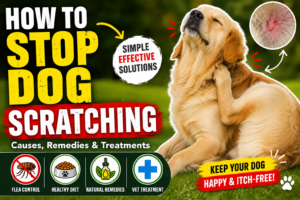

Dogs naturally scratch themselves from time to time, but constant scratching is not normal. If your dog keeps scratching all day, bites at its skin, or rubs against furniture, it could be suffering from an underlying health issue. Persistent itching can lead to skin infections, hair loss, open wounds, and discomfort.
Fortunately, most cases of dog scratching can be treated once you identify the cause. Whether the itching is due to fleas, allergies, dry skin, parasites, or infections, there are many effective solutions that can help your furry friend feel better.
In this comprehensive guide, you’ll learn the most common causes of dog scratching, effective home remedies, veterinary treatments, prevention tips, and when it’s time to visit a veterinarian.
Table of Contents
- Why Dogs Scratch
- Common Causes of Dog Scratching
- Signs Your Dog Has an Itchy Skin Problem
- How to Stop Dog Scratching Naturally
- Best Veterinary Treatments
- Foods That Improve Skin Health
- Grooming Tips for Healthy Skin
- Preventing Future Itching
- Common Mistakes to Avoid
- When to Visit a Veterinarian
- Frequently Asked Questions
- Conclusion
Why Do Dogs Scratch?
Scratching is your dog’s way of responding to irritation. Just like humans scratch an itchy mosquito bite, dogs scratch to relieve discomfort.
Occasional scratching is perfectly normal.
However, if your dog scratches constantly or develops red skin and sores, there’s usually an underlying cause that requires attention.
Common Causes of Dog Scratching
1. Fleas
Fleas are one of the biggest causes of itching in dogs.
Even a few flea bites can make sensitive dogs scratch continuously.
Signs include:
- Small black flea dirt
- Red bumps
- Hair loss
- Constant biting around the tail
- Excessive licking
Regular flea prevention is essential.
2. Allergies
Dogs can develop allergies just like humans.
Common allergens include:
- Grass
- Tree pollen
- Dust mites
- Mold
- Certain foods
- Cleaning chemicals
Symptoms include:
- Red paws
- Ear infections
- Face rubbing
- Belly rash
- Constant scratching
3. Dry Skin
Dry skin often develops because of:
- Cold weather
- Low humidity
- Poor nutrition
- Frequent bathing
- Harsh shampoos
Dry skin usually causes flaky skin and mild itching.
4. Food Allergies
Certain ingredients trigger allergic reactions.
Common food allergens include:
- Chicken
- Beef
- Dairy
- Wheat
- Soy
- Eggs
Food allergies often cause:
- Ear infections
- Paw licking
- Skin redness
- Digestive problems
5. Skin Infections
Bacterial and yeast infections make dogs extremely itchy.
Signs include:
- Bad odor
- Oily skin
- Thick skin
- Red patches
- Hair loss
These infections usually require veterinary treatment.
6. Mange
Mange is caused by microscopic mites.
Symptoms include:
- Severe itching
- Thick skin
- Hair loss
- Crusty patches
Mange spreads quickly and should always be treated by a veterinarian.
7. Hot Spots
Hot spots are painful, inflamed areas caused by excessive licking and scratching.
They often appear:
- Behind the ears
- On the hips
- Around the neck
- On the legs
Hot spots worsen rapidly if untreated.
8. Stress and Anxiety
Some dogs scratch due to boredom or anxiety.
Common causes include:
- Separation anxiety
- Lack of exercise
- Changes in routine
- Loud noises
Mental stimulation often helps reduce stress-related scratching.
Signs Your Dog Has an Itchy Skin Problem
Watch for these symptoms:
- Constant scratching
- Excessive licking
- Chewing paws
- Hair loss
- Red skin
- Bleeding
- Scabs
- Bad smell
- Thickened skin
- Ear infections
The longer these symptoms continue, the greater the risk of infection.
How to Stop Dog Scratching Naturally
1. Use a Flea Prevention Product
Year-round flea prevention is one of the best ways to stop itching before it starts.
Choose veterinarian-approved flea treatments.
2. Bathe with an Oatmeal Shampoo
Oatmeal shampoos soothe irritated skin.
Benefits include:
- Moisturizing dry skin
- Reducing inflammation
- Relieving itchiness
- Improving skin barrier
Avoid bathing more than once every 3–4 weeks unless advised by your veterinarian.
3. Feed a High-Quality Diet
Healthy skin starts with proper nutrition.
Look for foods rich in:
- Omega-3 fatty acids
- Vitamin E
- Zinc
- Protein
Poor diets often worsen skin conditions.
4. Add Fish Oil
Fish oil supports:
- Skin repair
- Coat shine
- Reduced inflammation
- Less itching
Always use pet-safe supplements and follow dosage recommendations.
5. Keep Your Dog Hydrated
Proper hydration helps maintain healthy skin.
Always provide fresh, clean water.
6. Brush Regularly
Regular brushing removes:
- Loose fur
- Dirt
- Allergens
- Dead skin
It also improves blood circulation.
7. Wash Bedding Frequently
Dog beds collect:
- Fleas
- Dust mites
- Pollen
- Bacteria
Wash bedding weekly in hot water.
8. Clean Your Home
Vacuum carpets frequently.
Dust furniture regularly.
Keep your dog’s environment clean to reduce allergens.
Best Veterinary Treatments
If home remedies don’t help, your veterinarian may recommend:
- Prescription anti-itch medication
- Antibiotics
- Antifungal medication
- Allergy testing
- Medicated shampoo
- Steroid therapy
- Allergy injections
- Parasite treatment
Always follow veterinary instructions carefully.
Foods That Improve Skin Health
Healthy nutrition helps reduce chronic itching.
Excellent foods include:
- Salmon
- Sardines
- Pumpkin
- Sweet potatoes
- Blueberries
- Spinach
- Eggs (if tolerated)
- Carrots
Avoid sudden diet changes without consulting your veterinarian.
Grooming Tips for Healthy Skin
Good grooming prevents many skin problems.
Helpful habits include:
- Brush several times each week.
- Use dog-specific shampoo.
- Trim long hair around the paws.
- Dry the coat thoroughly after baths.
- Check for fleas and ticks after walks.
- Keep nails trimmed to reduce skin damage from scratching.
Preventing Future Itching
Prevention is easier than treatment.
Follow these tips:
- Use flea prevention year-round.
- Feed a balanced diet.
- Maintain a healthy weight.
- Schedule routine veterinary checkups.
- Keep your dog’s ears clean.
- Avoid harsh grooming products.
- Wash blankets regularly.
- Limit exposure to known allergens.
- Provide regular exercise and mental stimulation.
Common Mistakes to Avoid
Many owners accidentally make itching worse.
Avoid these mistakes:
- Using human shampoo
- Ignoring flea prevention
- Bathing too often
- Feeding low-quality food
- Delaying veterinary care
- Allowing excessive licking
- Using medications without veterinary advice
When to Visit a Veterinarian
Seek veterinary care immediately if your dog has:
- Severe scratching
- Bleeding skin
- Pus or discharge
- Fever
- Hair loss
- Swollen skin
- Bad odor
- Large hot spots
- Loss of appetite
- Persistent itching lasting more than a few days
Early treatment prevents serious skin infections.
Frequently Asked Questions
Why is my dog scratching so much but has no fleas?
Your dog may have allergies, dry skin, mites, fungal infections, bacterial infections, or environmental irritants.
Can dry skin make dogs scratch?
Yes. Dry skin is a common cause of mild to moderate itching, especially during winter or in dry climates.
Does coconut oil help itchy dogs?
Coconut oil may moisturize dry skin in some dogs, but it is not a cure for allergies or infections. Consult your veterinarian before regular use.
What food helps stop dog itching?
Foods rich in omega-3 fatty acids, such as salmon and sardines, along with a balanced, high-quality diet, can support healthy skin and reduce inflammation.
Can stress cause dog scratching?
Yes. Anxiety and boredom can lead to excessive scratching or licking. Regular exercise, enrichment, and a consistent routine can help.
Conclusion
Occasional scratching is a normal part of a dog’s behavior, but constant itching is usually a sign that something is wrong. Fleas, allergies, dry skin, infections, parasites, and poor nutrition are among the most common causes. By identifying the underlying problem, maintaining good grooming habits, feeding a nutritious diet, and using effective flea prevention, you can greatly reduce your dog’s discomfort. If the itching is severe, persistent, or accompanied by sores or hair loss, consult a veterinarian promptly. Early diagnosis and treatment will help your dog enjoy healthier skin, a shinier coat, and a happier, itch-free life.