
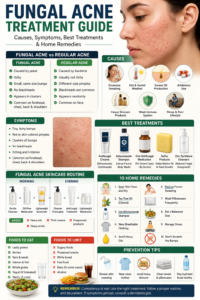

Have you been treating stubborn acne for weeks or months without seeing any improvement? If your small, itchy bumps refuse to disappear, you may not have traditional acne at all. Instead, you could be dealing with fungal acne, a common but often misunderstood skin condition.
Unlike regular acne caused by bacteria and clogged pores, fungal acne develops when yeast naturally living on your skin grows out of control. Fortunately, fungal acne responds well to the right treatment once it is properly identified.
In this complete guide, you’ll learn what fungal acne is, what causes it, how to recognize the symptoms, and the best fungal acne treatments recommended by dermatologists.
What Is Fungal Acne?
Despite its name, fungal acne isn’t actually acne.
The medical name for fungal acne is Malassezia folliculitis. It occurs when a yeast called Malassezia, which naturally lives on human skin, multiplies excessively and infects hair follicles.
This results in clusters of tiny, itchy bumps that resemble acne but require completely different treatment.
Fungal Acne vs Regular Acne
Many people mistake fungal acne for common acne because both conditions can look similar.
| Fungal Acne | Regular Acne |
|---|---|
| Caused by yeast | Caused by bacteria |
| Usually itchy | Usually not itchy |
| Small bumps of equal size | Different sizes of pimples |
| No blackheads | Blackheads are common |
| Appears in clusters | Random breakouts |
| Doesn’t respond to acne products | Often improves with acne medication |
Knowing the difference is essential because using the wrong skincare products can actually make fungal acne worse.
What Causes Fungal Acne?
Several factors can cause yeast to multiply rapidly on the skin.
1. Hot and Humid Weather
Warm temperatures and excessive sweating create the perfect environment for yeast growth.
People living in tropical climates or exercising frequently are at higher risk.
2. Excessive Sweating
Sweat trapped under tight clothing can clog hair follicles and encourage fungal overgrowth.
3. Oily Skin
The yeast responsible for fungal acne feeds on skin oils.
People with naturally oily skin may experience more frequent flare-ups.
4. Antibiotic Use
Long-term antibiotics kill healthy skin bacteria that normally keep yeast under control.
Without these bacteria, yeast can multiply rapidly.
5. Weak Immune System
Certain medical conditions or medications that weaken immunity may increase fungal acne risk.
6. Heavy Skincare Products
Rich creams, thick moisturizers, and oily sunscreens may worsen fungal acne by feeding yeast.
Symptoms of Fungal Acne
Fungal acne has several unique signs.
Common symptoms include:
- Tiny white bumps
- Small red pimples
- Itchy skin
- Uniform bumps
- Clusters of pimples
- Forehead breakouts
- Chest acne
- Back acne
- Shoulder bumps
- Skin irritation after sweating
Unlike traditional acne, fungal acne rarely contains blackheads or deep cysts.
Where Does Fungal Acne Usually Appear?
The condition commonly affects areas where sweat and oil accumulate.
Typical locations include:
- Forehead
- Hairline
- Chin
- Jawline
- Neck
- Chest
- Upper back
- Shoulders
Athletes often notice fungal acne after intense workouts.
Best Fungal Acne Treatment
Treating fungal acne requires antifungal ingredients rather than traditional acne medications.
1. Antifungal Creams
Topical antifungal creams are often the first treatment recommended by dermatologists.
Popular ingredients include:
- Ketoconazole
- Clotrimazole
- Miconazole
- Ciclopirox
These medications reduce yeast growth and calm inflammation.
2. Ketoconazole Shampoo
One of the most popular fungal acne treatments is ketoconazole shampoo.
Although designed for dandruff, many dermatologists recommend using it as a face or body wash several times per week.
Leave it on the skin for about five minutes before rinsing.
3. Oral Antifungal Medication
Severe fungal acne may require prescription medications such as:
- Fluconazole
- Itraconazole
These treatments should only be used under medical supervision.
4. Sulfur Products
Sulfur helps reduce excess oil while creating an environment that is less favorable for yeast growth.
Sulfur cleansers can be helpful for mild fungal acne.
5. Zinc Pyrithione Cleansers
Zinc pyrithione is another antifungal ingredient commonly found in dandruff shampoos and medicated soaps.
It may reduce fungal populations on the skin.
Build a Fungal Acne-Friendly Skincare Routine
A simple skincare routine can help prevent future breakouts.
Morning
- Wash with a gentle cleanser.
- Apply an oil-free moisturizer.
- Use a lightweight sunscreen labeled non-comedogenic.
Evening
- Cleanse thoroughly after sweating.
- Use an antifungal cleanser a few times weekly if recommended.
- Apply prescribed antifungal cream.
- Finish with a lightweight moisturizer.
Avoid heavy oils, thick creams, and fragranced products if they seem to trigger flare-ups.
10 Home Remedies for Fungal Acne
While home remedies cannot replace prescription antifungal treatments for severe cases, they may help reduce symptoms and support healthy skin when used alongside a proper skincare routine.
1. Keep Your Skin Clean and Dry
Malassezia yeast thrives in warm, moist environments. Wash your face and body after sweating, then gently pat your skin dry with a clean towel.
Tip:
- Shower within 30 minutes after exercise.
- Change out of sweaty clothes immediately.
2. Use Tea Tree Oil (Diluted)
Tea tree oil has natural antifungal and anti-inflammatory properties that may help reduce yeast growth.
How to Use:
- Mix 2–3 drops of tea tree oil with one teaspoon of a carrier oil.
- Apply to the affected area once daily.
- Perform a patch test before use.
3. Wash with Ketoconazole Shampoo
Ketoconazole shampoo is commonly used to treat fungal acne on the face, chest, and back.
Directions:
- Apply to damp skin.
- Leave on for 3–5 minutes.
- Rinse thoroughly.
- Use 2–3 times per week or as directed by your healthcare provider.
4. Wear Breathable Clothing
Tight, sweaty clothing traps heat and moisture, encouraging yeast growth.
Choose:
- Cotton fabrics
- Moisture-wicking workout clothes
- Loose-fitting shirts
Avoid staying in sweaty clothing after exercising.
5. Avoid Heavy Oils
Malassezia yeast feeds on certain fatty acids found in many skincare products.
Avoid products containing:
- Coconut oil
- Olive oil
- Cocoa butter
- Heavy facial oils
Instead, choose lightweight, non-comedogenic, fungal acne-safe products.
6. Reduce Excess Sweating
Sweating isn’t harmful, but leaving sweat on your skin for long periods can encourage fungal overgrowth.
Tips:
- Shower after workouts.
- Keep a clean towel handy.
- Stay in cool environments when possible.
7. Wash Pillowcases Frequently
Oil, sweat, and yeast can accumulate on pillowcases.
Dermatologists recommend:
- Changing pillowcases every 2–3 days.
- Washing towels after every few uses.
- Cleaning makeup brushes weekly.
8. Eat a Balanced Diet
Although diet alone doesn’t cause fungal acne, eating a nutrient-rich diet supports overall skin health.
Choose foods rich in:
- Vitamin C
- Zinc
- Omega-3 fatty acids
- Lean protein
- Fresh vegetables
9. Manage Stress
High stress levels may weaken the immune system and contribute to skin problems.
Stress-reducing activities include:
- Walking
- Meditation
- Yoga
- Deep breathing
- Getting enough sleep
10. Don’t Scratch the Bumps
Fungal acne can be itchy, but scratching increases irritation and may lead to infection or scarring.
Foods to Eat for Healthy Skin
Eating nutritious foods may help support healthy skin and reduce inflammation.
Best Foods
- Salmon
- Sardines
- Eggs
- Greek yogurt (if tolerated)
- Leafy greens
- Broccoli
- Bell peppers
- Blueberries
- Strawberries
- Citrus fruits
- Pumpkin seeds
- Almonds
- Brown rice
- Oats
- Lentils
Drink plenty of water throughout the day to help maintain skin hydration.
Foods to Limit
Some people notice flare-ups after consuming large amounts of sugary or highly processed foods.
Consider limiting:
- Sugary drinks
- Candy
- White bread
- Pastries
- Processed snacks
- Fast food
- Excess alcohol
A balanced diet is generally more beneficial than restrictive eating.
Ingredients That May Trigger Fungal Acne
Some skincare ingredients may worsen fungal acne in susceptible individuals.
Examples include:
- Coconut Oil
- Olive Oil
- Avocado Oil
- Cocoa Butter
- Lanolin
- Certain fatty acid esters
Look for products labeled:
- Oil-free
- Non-comedogenic
- Lightweight
- Gel-based
How Long Does Fungal Acne Take to Clear?
Recovery time depends on the severity of the condition and whether the correct treatment is used.
Mild Cases
- Improvement may begin within 2–4 weeks.
Moderate Cases
- Often require 4–8 weeks of consistent treatment.
Severe Cases
- May need prescription oral antifungal medication and take several weeks to a few months to fully resolve.
Continue treatment as directed, even if your skin starts to improve.
Prevention Tips
Preventing fungal acne is often easier than treating repeated flare-ups.
Follow these habits:
- Wash your face twice daily.
- Shower after sweating.
- Wear breathable clothing.
- Avoid heavy skincare products.
- Keep your pillowcases clean.
- Remove makeup before bed.
- Don’t share towels.
- Maintain a simple skincare routine.
- Stay hydrated.
- Manage stress.
When to See a Dermatologist
Consult a dermatologist if:
- Home treatment doesn’t improve symptoms after several weeks.
- The bumps spread rapidly.
- The itching becomes severe.
- You develop pain, swelling, or pus.
- You’re unsure whether you have fungal acne or another skin condition.
- Symptoms keep returning despite treatment.
A dermatologist can confirm the diagnosis and recommend the most appropriate treatment.
Frequently Asked Questions (FAQs)
Is fungal acne contagious?
No. Fungal acne is not contagious. It results from an overgrowth of yeast that naturally lives on the skin.
Can fungal acne go away on its own?
Mild cases may improve with good skincare and hygiene, but many cases require antifungal treatment to clear completely.
Can I pop fungal acne?
No. Popping the bumps can increase irritation and may lead to infection or scarring.
Is fungal acne itchy?
Yes. Itching is one of the most common symptoms and helps distinguish fungal acne from regular acne.
Does sunscreen make fungal acne worse?
Not necessarily. Choose a lightweight, oil-free, non-comedogenic sunscreen that suits acne-prone skin.
Can dandruff shampoo treat fungal acne?
Some dandruff shampoos containing ketoconazole or zinc pyrithione are commonly recommended by healthcare professionals for fungal acne. Use them only as directed.
Conclusion
Fungal acne, also known as Malassezia folliculitis, is a common skin condition that can easily be mistaken for regular acne. Because it is caused by an overgrowth of yeast rather than bacteria, traditional acne treatments may not work and can sometimes make symptoms worse.
The most effective approach includes using antifungal treatments, following a gentle skincare routine, avoiding heavy oil-based products, and keeping the skin clean and dry. With consistent care, many people notice significant improvement within a few weeks. If your symptoms persist or worsen, consult a dermatologist for an accurate diagnosis and personalized treatment.
