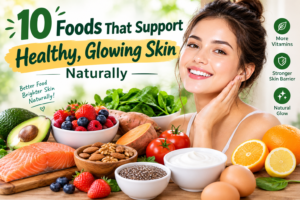

Healthy, glowing skin is something many people want, but achieving it requires more than using skincare products. Your daily diet also plays an important role in maintaining smooth, hydrated, and healthy-looking skin. The nutrients you get from food help support collagen production, protect skin cells from environmental damage, and maintain the skin’s natural moisture barrier.
Including foods high in nutrients in your meals is a fantastic way to start if you desire a natural glow. A regular skincare regimen can be enhanced by eating foods high in vitamins, minerals, antioxidants, healthy fats, and protein.In this article, we will explore 10 foods that support healthy, glowing skin, explain their potential benefits, and share simple ways to include them in your daily diet.
Why Is Nutrition Important for Healthy Skin?
Your skin is the body’s largest organ, and it needs a variety of nutrients to function properly. Vitamin C supports collagen formation, healthy fats help maintain the skin barrier, and antioxidants protect cells from oxidative stress.
A balanced diet may help your skin look healthier over time, although no single food can guarantee clear skin or eliminate wrinkles. Genetics, sleep, hydration, hormones, sun exposure, and skincare habits also influence your skin’s appearance.
The best approach is to eat a varied diet that provides the nutrients your body needs while maintaining healthy lifestyle habits.
1. Avocados: A Source of Healthy Fats
Avocados are among the best foods to consider when building a skin-friendly diet. They contain monounsaturated fats, vitamin E, and other nutrients that support overall health.
Healthy fats help maintain the skin’s natural barrier, which reduces moisture loss and helps keep skin feeling soft. Vitamin E also acts as an antioxidant, helping protect cells from oxidative damage.
Avocados are easy to include in a balanced diet. You can add sliced avocado to whole-grain toast, mix it into salads, or blend it into a smoothie.
Skin benefits of avocados:
- Provide healthy fats that support the skin barrier.
- Supply vitamin E and other beneficial nutrients.
- Help make meals more satisfying and nutritious.
Although avocados can contribute to a healthy diet, eating them alone will not automatically make your skin glow. Consistency and overall nutrition matter most.
2. Fatty Fish: Rich in Omega-3 Fatty Acids
Fatty fish such as salmon, sardines, and mackerel are excellent sources of omega-3 fatty acids. These essential fats support normal cell function and help regulate inflammatory processes in the body.
Omega-3 fatty acids are important for maintaining healthy cell membranes, including those in the skin. Including fish in a balanced diet may also help support overall skin function.
Salmon is also a source of protein and vitamin D, both of which contribute to general health.
How to eat fatty fish: Grill, bake, or steam fish and serve it with vegetables and whole grains. If you do not eat fish, walnuts, chia seeds, and flaxseeds can provide plant-based omega-3 fats, although they contain a different form of omega-3.
Aim for variety rather than relying on a single food for skin health.
3. Sweet Potatoes: Packed with Beta-Carotene
Sweet potatoes are rich in beta-carotene, a plant compound that the body can convert into vitamin A. Vitamin A is essential for normal skin growth and maintenance.
Beta-carotene also acts as an antioxidant. Eating foods rich in this compound can contribute to the body’s natural defenses against oxidative stress. However, sweet potatoes are not a replacement for sunscreen or other sun-protection measures.
Their fiber content also supports digestive health, making them a nutritious addition to everyday meals.
Easy ways to enjoy sweet potatoes:
- Roast them with olive oil and herbs.
- Add cooked sweet potatoes to salads.
- Serve them as a side dish with beans, fish, or chicken.
Their naturally sweet flavor makes them a delicious option for anyone looking to improve the nutritional quality of their diet.
4. Berries: Antioxidants for Skin Health
Berries such as strawberries, blueberries, and raspberries are rich in vitamin C, fiber, and various antioxidant compounds.
Vitamin C is especially important because the body needs it to produce collagen, a structural protein that helps support the skin’s firmness and strength. Getting enough vitamin C through food is therefore an important part of maintaining normal skin health.
Berries include antioxidants that help shield cells from oxidative stress, which over time can lead to cellular damage.
Benefits of adding berries to your diet:
- Provide vitamin C for collagen formation.
- Supply beneficial plant compounds.
- Add fiber and natural sweetness to meals.
Enjoy berries with oatmeal, yogurt, or smoothies. Fresh and frozen berries can both be nutritious choices, so choose whichever is affordable and convenient.
5. Nuts and Seeds: Nutrients for a Healthy Skin Barrier
Nuts and seeds are small foods with significant nutritional value. Almonds, walnuts, sunflower seeds, chia seeds, and flaxseeds provide different combinations of healthy fats, vitamin E, minerals, and other beneficial compounds.
Vitamin E helps protect cells from oxidative damage, while essential fatty acids contribute to normal cell structure and function. Nuts and seeds can also supply zinc, which plays a role in wound healing and normal skin function.
A small serving can be an easy way to improve the nutritional quality of your meals.
Simple ways to eat nuts and seeds:
- Sprinkle chia or flaxseeds over oatmeal.
- Add almonds or walnuts to a snack.
- Mix sunflower seeds into salads.
- Blend seeds into homemade smoothies.
Choose unsalted varieties when possible, and remember that nuts and seeds are energy-dense foods, so moderate portions are usually sufficient.
6. Tomatoes: A Source of Lycopene
Tomatoes contain lycopene, a carotenoid with antioxidant properties. They also provide vitamin C and other nutrients that contribute to a balanced diet.
Some research suggests that lycopene-rich foods may help support the skin’s response to ultraviolet-related oxidative stress. However, the evidence does not mean that tomatoes can prevent sunburn or replace sunscreen.
Interestingly, cooking tomatoes with a small amount of healthy oil can increase the availability of lycopene for absorption.
How to include tomatoes in your diet:
- Add fresh tomatoes to salads and sandwiches.
- Prepare homemade tomato soup.
- Use cooked tomatoes in curries and sauces.
- Combine tomatoes with olive oil in vegetable dishes.
Tomatoes are affordable, versatile, and easy to include in everyday meals, making them a practical choice for a skin-supportive diet.
7. Spinach and Leafy Greens: A Vitamin-Rich Choice
Spinach, kale, and other leafy green vegetables provide vitamins A, C, and K, folate, and several minerals. They also contain carotenoids and other plant compounds that support overall health.
Vitamin C contributes to collagen production, while vitamin A supports normal skin cell development. Eating leafy greens regularly helps provide a broad range of nutrients needed for the body’s normal functions.
Leafy greens also contain fiber, which supports digestive health.
Ways to eat leafy greens:
- Add spinach to omelets or scrambled eggs.
- Mix leafy greens into salads.
- Include spinach in soups and curries.
- Blend a handful into a fruit smoothie.
You do not need to eat large amounts at once. Including a variety of vegetables throughout the week is a practical way to improve your overall nutrient intake.
8. Greek Yogurt: Protein for Skin Maintenance
Greek yogurt is a useful source of protein, and some varieties also provide vitamin B12, calcium, and other essential nutrients. Protein supplies amino acids that the body uses to build and repair tissues, including the structures that support healthy skin.
Plain Greek yogurt can be a convenient breakfast or snack, especially when paired with fruit, nuts, or seeds.
Choose unsweetened yogurt when possible to limit added sugar. If you are lactose-intolerant, lactose-free yogurt or suitable fortified alternatives may work better for you.
It is worth noting that dairy affects people differently. Some individuals with acne-prone skin report that certain dairy products may be associated with breakouts, but the relationship is complex and varies between individuals. Greek yogurt should not be considered a guaranteed acne treatment.
9. Eggs: Protein and Essential Nutrients
Eggs provide high-quality protein and several nutrients, including vitamin B12, selenium, and small amounts of vitamin D. They also contain choline, which supports normal cell function.
Protein is important for tissue maintenance, while selenium contributes to antioxidant defense systems in the body. A varied diet containing eggs, legumes, fish, nuts, and other protein sources can help meet your nutritional needs.
Eggs are also easy to prepare, making them a convenient option for breakfast, lunch, or dinner.
Healthy ways to eat eggs:
- Boil eggs for a quick snack.
- Prepare an omelet with spinach and tomatoes.
- Serve scrambled eggs with whole-grain toast.
- Add sliced boiled eggs to a vegetable salad.
If you have an egg allergy, choose alternative protein sources such as beans, lentils, tofu, or fish.
10. Citrus Fruits: Vitamin C for Collagen Production
Oranges, lemons, grapefruit, and other citrus fruits are well-known sources of vitamin C. This vitamin is essential for collagen synthesis, which helps maintain the structure of the skin and other connective tissues.
Vitamin C also supports normal immune function and acts as an antioxidant. Getting enough through food is important because the human body cannot produce vitamin C on its own.
Although lemon water can contribute to hydration, it is not a special skin-clearing remedy. Eating whole citrus fruits provides vitamin C along with fiber and other nutrients.
Easy ways to enjoy citrus fruits:
- Eat an orange as a snack.
- Add lemon juice to salads.
- Mix citrus segments into fruit bowls.
- Pair grapefruit with a balanced breakfast, if it is safe with your medications.
Grapefruit can interact with certain medicines, so check with a healthcare professional if you take prescription medication.
Additional Tips for Naturally Glowing Skin
Eating skin-friendly foods is only one part of a healthy routine. The following habits can also support your skin’s appearance and function.
Stay Hydrated
Drink water regularly throughout the day. Your hydration needs depend on your activity level, climate, and overall health. Eating water-rich foods such as cucumbers, oranges, and watermelon can also contribute to fluid intake.
Protect Your Skin from the Sun
Excessive ultraviolet exposure contributes to premature skin aging and skin damage. Use broad-spectrum sunscreen with SPF 30 or higher, seek shade when appropriate, and wear protective clothing.
Get Enough Sleep
Consistent, sufficient sleep supports general health and the body’s normal repair processes. Establishing a regular sleep schedule may help you maintain a healthier daily routine.
Limit Excessive Added Sugar
A balanced diet with plenty of vegetables, fruits, whole grains, and protein is generally preferable to one dominated by highly processed foods and sugary drinks. You do not need to eliminate all sugar to support healthy skin.
Follow a Consistent Skincare Routine
Use a gentle cleanser, a suitable moisturizer, and daily sunscreen. Choose products based on your skin type and concerns. If you experience persistent acne, irritation, or unusual skin changes, consult a qualified dermatologist.
Frequently Asked Questions (FAQs)
1. Which food is best for glowing skin?
There is no single best food for glowing skin. Berries, citrus fruits, fatty fish, avocados, nuts, seeds, and leafy greens all provide nutrients that support skin health. Eating a variety of these foods is more beneficial than relying on one ingredient.
2. How long does it take for diet to improve skin?
Changes in skin appearance vary from person to person. Diet-related improvements, if they occur, may take several weeks or longer. Skin concerns caused by hormonal changes, medical conditions, or other factors may require specific treatment.
3. Can drinking water make your skin glow?
Adequate hydration supports normal body function and helps prevent dehydration. However, drinking more water than your body needs will not automatically clear acne, remove wrinkles, or create glowing skin.
4. Are fruits good for healthy skin?
Yes. Fruits such as oranges, strawberries, blueberries, and kiwi provide vitamin C and other beneficial nutrients. They can contribute to collagen formation and overall skin health as part of a balanced diet.
5. Can food alone prevent acne?
No. Acne is influenced by several factors, including hormones, genetics, inflammation, and skincare habits. Diet may influence acne in some people, but no specific food guarantees clear skin. Persistent acne may benefit from professional dermatological treatment.
Conclusion
Healthy, glowing skin starts with a combination of good nutrition, consistent skincare, sun protection, and healthy lifestyle habits. Foods such as avocados, fatty fish, sweet potatoes, berries, nuts, tomatoes, leafy greens, Greek yogurt, eggs, and citrus fruits provide nutrients that help support normal skin function.
The key is to maintain a balanced diet rather than searching for a miracle food. Include a variety of colorful fruits and vegetables, healthy fats, and protein sources in your daily meals, and give your body time to benefit from consistent habits.
Remember: Healthy skin is not about achieving perfection. It is about nourishing your body, protecting your skin, and choosing habits that support your well-being over time.