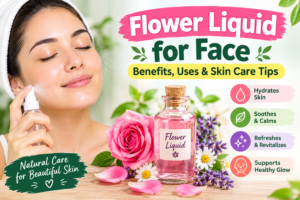

People searching for easy and revitalizing ways to take care of their skin are increasingly turning to flower-based skincare. Flower liquid for the face, sometimes referred to as hydrosol, floral water, or flower water, is one of the most well-liked choices.
Facial mists, toners, creams, and DIY skincare regimens frequently contain rose water, lavender water, chamomile water, and other floral waters. These products are typically water-based and may include trace amounts of aromatic compounds derived from plants that are created during distillation.
But what exactly does flower liquid do for your skin? Can it hydrate the face, reduce redness, or make your skin glow? And how should you use it safely?
This guide explains the benefits, uses, skin-type recommendations, precautions, and skincare tips for flower liquid for the face.
What Is Flower Liquid for the Face?
Flower liquid generally refers to floral water or hydrosol, a water-based botanical product made by distilling flowers or other plant materials.
During steam distillation, plant material is exposed to steam. The resulting vapor is cooled and condensed into a liquid. This produces essential oil along with a water-based distillate known as hydrosol or floral water. Hydrosols contain much more water and are considerably less concentrated than essential oils.
Common examples include:
- Rose water
- Lavender water
- Chamomile water
- Orange blossom water
- Cornflower water
- Rosemary hydrosol
However, not every product labeled “floral water” is necessarily a true hydrosol. Some products may simply contain purified water, fragrance, essential oils, preservatives, or botanical extracts. Therefore, checking the ingredient list is important.
Benefits of Flower Liquid for Face
Flower liquid can be a pleasant addition to a skincare routine, especially when you want a lightweight and refreshing product. However, scientific evidence for many specific hydrosol claims is still limited. Its benefits should therefore be viewed mainly as cosmetic and supportive skincare benefits, rather than medical treatments.
1. Provides Lightweight Hydration
One of the simplest benefits of flower water is that it can make the skin feel fresh and lightly hydrated.
Because floral water is primarily water, applying it to clean skin can provide temporary surface moisture. For better and longer-lasting hydration, follow it with a moisturizer that helps lock moisture into the skin.
Flower water can be especially refreshing during hot weather or whenever your face feels dry and tired.
2. Refreshes Tired-Looking Skin
A quick mist of floral water can give the face a refreshing sensation.
If your skin feels uncomfortable after spending time outdoors, working in a dry environment, or washing your face, a facial mist can make your skin feel more comfortable.
Keep in mind that the refreshing feeling does not necessarily mean the product is treating an underlying skin problem.
3. Can Have a Soothing Feel
Some floral waters are traditionally used in skincare because of their pleasant and calming properties.
For example, rose and chamomile waters are commonly incorporated into cosmetic products designed for a soothing skincare experience. However, evidence that hydrosols can medically treat inflammation or skin diseases is limited.
If your skin is irritated, burning, or developing a rash, do not rely on flower water as a treatment. Instead, stop potentially irritating products and seek professional advice if the problem continues.
4. Works as a Gentle Toner Alternative
Flower water can be used as a lightweight toner or facial mist.
Traditional toners may contain ingredients designed to remove residue, provide hydration, or support the feel of the skin after cleansing. Floral water can serve a similar cosmetic role when you want something simple and lightweight.
However, a toner is not an essential step for everyone. A gentle cleanser, moisturizer, and sunscreen may be more important for a basic skincare routine.
5. Gives Skin a Fresh, Dewy Feel
Flower liquid can make your skin feel fresh and comfortable immediately after application.
When used before a moisturizer, it can also make the skincare routine feel more hydrating and pleasant. The dewy appearance you see after misting is generally temporary and should not be confused with permanent skin brightening.
6. May Help Make Skincare More Enjoyable
Skincare is easier to maintain when you enjoy the routine.
The light fragrance and refreshing application of floral water can make your daily skincare routine feel relaxing. However, fragrance can be irritating for some people, particularly those with sensitive or reactive skin.
Best Flower Liquids for Different Skin Types
Different floral waters may be marketed for different skin concerns. Choosing a product based on your skin type and sensitivity is more useful than simply choosing the most popular flower.
Rose Water for Dry or Normal Skin
Rose water is one of the most popular floral waters for facial skincare.
It can provide a refreshing and lightweight moisturizing feel and is commonly found in facial sprays and toners. However, fragrance components can irritate sensitive individuals, so patch testing is recommended.
Chamomile Water for Sensitive Skin
Chamomile is traditionally associated with soothing skincare products.
If you have sensitive skin, choose a simple formula with minimal ingredients. Remember that “natural” does not automatically mean allergy-free.
Lavender Water for Normal or Combination Skin
Lavender hydrosol is commonly used in cosmetic products because of its pleasant botanical scent.
If you have sensitive skin, introduce lavender products slowly because botanical aromatic compounds can sometimes cause irritation.
Orange Blossom Water for Refreshing Skincare
Orange blossom water is often used in facial mists and cosmetic products for its refreshing fragrance.
If your skin reacts easily to fragrance, look for a fragrance-free alternative instead.
How to Use Flower Liquid on Your Face
Using flower water is generally simple.
Step 1: Clean Your Face
Start with a gentle cleanser suitable for your skin type. Remove makeup, sunscreen, oil, and dirt before applying your floral water.
Step 2: Apply the Flower Liquid
You can spray the product directly onto clean skin if the label specifically recommends facial use.
Alternatively, apply a small amount using clean hands or a cotton pad.
Avoid spraying directly into your eyes.
Step 3: Apply Serum
If you use a serum, apply it after the floral water according to your normal skincare routine.
Step 4: Moisturize
Follow with a moisturizer to help maintain the skin’s moisture.
Step 5: Use Sunscreen During the Day
In the morning, finish with a broad-spectrum sunscreen. Flower water is not a replacement for sunscreen.
Can You Use Flower Water Every Day?
Some people can use a suitable floral water daily without problems. However, daily use is not necessary for healthy skin.
If the product contains fragrance or botanical aromatic compounds, frequent application may cause irritation in sensitive individuals. If you notice burning, itching, redness, dryness, or a rash, stop using it.
For sensitive skin, a simple fragrance-free routine may be a better option.
Flower Liquid for Face: Morning vs. Night
Morning Routine
A simple morning routine can be:
- Gentle cleanser
- Flower water or facial mist
- Hydrating serum
- Moisturizer
- Sunscreen
Night Routine
At night, you can use:
- Cleanser
- Flower water
- Treatment serum if needed
- Moisturizer
You do not need to use many products to have healthy-looking skin.
Is Flower Liquid Safe for Sensitive Skin?
Flower water can be tolerated by many people, but it is not automatically safe for every sensitive skin type.
Hydrosols can contain aromatic plant compounds, and some products also contain fragrance or preservatives. These ingredients may cause irritation or allergic reactions in certain people.
If you have eczema, rosacea, fragrance sensitivity, or a history of allergic reactions, be particularly careful.
Patch Test Before Facial Use
Before applying a new product all over your face:
- Apply a small amount to an area of intact skin.
- Leave it according to the product’s directions.
- Watch for redness, itching, burning, or swelling.
- Stop using it if a reaction occurs.
Do not apply a new product to broken, infected, or severely irritated skin.
Flower Water vs. Rose Water: What’s the Difference?
Flower water is a broad term that can refer to water derived from different flowers.
Rose water is one specific type of floral water made from roses.
Hydrosol is generally the water-based distillate produced during plant distillation.
The exact meaning can vary between products, so always read the ingredient list and product description rather than relying only on the front label.
What to Look for When Buying Flower Liquid
When choosing flower liquid for your face, consider these factors:
1. Check the Ingredients
Look for clearly listed ingredients. If you have sensitive skin, simpler formulas are often easier to evaluate.
2. Choose a Product Intended for Facial Use
Do not assume every floral water or aromatic water is suitable for your face.
3. Avoid Unnecessary Fragrance if Your Skin Is Sensitive
Added fragrance can increase the chance of irritation for some people.
4. Check the Packaging
Because hydrosols are water-based, proper storage and preservation are important. Poorly stored water-based products can become contaminated.
5. Follow Storage Instructions
Keep the product according to the manufacturer’s directions and close the bottle after use.
Discard the product if it develops an unusual smell, changes color, becomes cloudy, or passes its expiration date.
Common Mistakes to Avoid
Using It Instead of Moisturizer
Flower water provides mostly lightweight moisture. It does not necessarily replace a moisturizer.
Expecting It to Cure Acne
Flower water should not be considered a proven treatment for acne. Persistent acne requires appropriate skincare or professional treatment.
Applying It to Broken Skin
Avoid using fragranced botanical products on damaged or broken skin unless recommended by a healthcare professional.
Using Too Many Botanical Products
Combining several fragranced or active products can make irritation more likely and make it difficult to identify which product caused the reaction.
Assuming Natural Means Safe
Natural ingredients can still cause allergies or irritation. Patch testing is especially useful when trying a new botanical skincare product.
Frequently Asked Questions
Can I use flower liquid directly on my face?
Yes, if the product is specifically formulated and labeled for facial use. Apply it to clean skin and avoid the eyes. Patch testing is recommended, particularly for sensitive skin.
Does flower water brighten the skin?
Flower water can temporarily make skin look fresh and hydrated, but there is not strong evidence that it permanently lightens or brightens skin. For uneven pigmentation, proven skincare ingredients and sun protection are more important.
Is rose water good for everyday skincare?
Rose water can be an optional part of a skincare routine if your skin tolerates it. However, people sensitive to fragrance may experience irritation.
Can flower water remove acne?
No. Flower water should not be considered an acne treatment. It may provide a refreshing skincare step, but persistent acne generally requires ingredients and treatments specifically supported for acne.
Can I use flower water before moisturizer?
Yes. Applying floral water before moisturizer is a common way to incorporate it into a skincare routine.
Does flower water replace toner?
It can be used as a toner-like step, but it does not have to replace a targeted toner. The right choice depends on your skin’s needs and the product’s ingredients.
Final Thoughts
A basic skincare regimen can benefit from the refreshing and entertaining addition of flower liquid for the face. Floral waters and hydrosols are mostly water-based botanical products that are frequently used as ingredients in cosmetics, toners, and face mists. They can offer a brief sense of comfort, light hydration, and freshness.
But it’s crucial to maintain reasonable expectations. There is little research on hydrosols, and they shouldn’t be used to treat infections, acne, eczema, or other serious skin disorders.
For healthy skin, focus on the basics: gentle cleansing, adequate moisturizing, and daily sun protection. If you enjoy flower water, you can add it as an optional step—as long as your skin tolerates it.
Always patch-test new floral products, choose reputable formulations, follow storage instructions, and stop using the product if it causes irritation or an allergic reaction.