

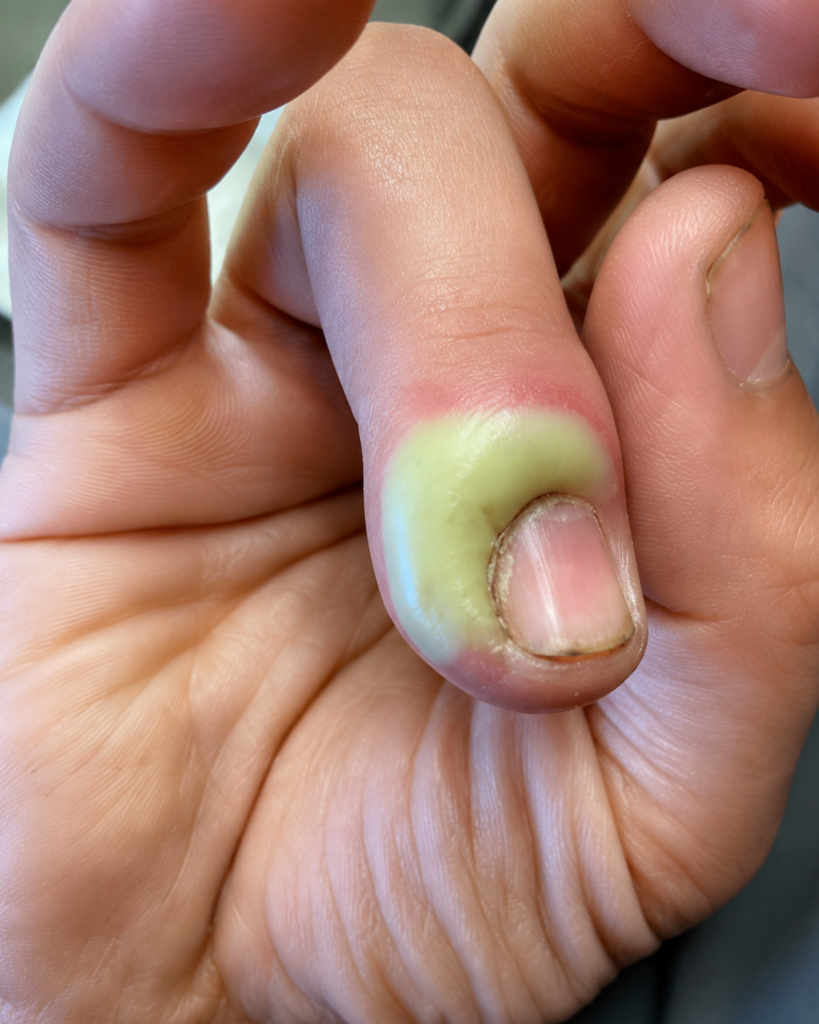
The image appears to show a swollen, red, and pus-filled infection around the fingernail. This condition is commonly known as Paronychia, a bacterial or fungal infection that develops in the skin surrounding the nail. It can cause pain, swelling, redness, and the formation of yellow or green pus.
Paronychia is one of the most common nail infections and can affect both adults and children. If left untreated, the infection may spread deeper into the finger and become more painful.
Why Does Paronychia Happen?
Paronychia develops when bacteria, fungi, or other germs enter the skin through a small break near the nail. Even a tiny cut can allow infection to begin.
Common causes include:
- Nail biting
- Picking at cuticles
- Ingrown nails
- Finger injuries
- Frequent hand washing
- Exposure to water for long periods
- Using unclean nail tools
- Aggressive manicures
- Skin conditions such as eczema
When the protective barrier around the nail is damaged, bacteria can enter and multiply, leading to infection.
Symptoms of a Finger Nail Infection
The symptoms may develop suddenly or gradually depending on the cause.
Early Symptoms
- Redness around the nail
- Tenderness and pain
- Mild swelling
- Warm skin near the nail
Advanced Symptoms
- Pus collection
- Severe swelling
- Throbbing pain
- Yellow or green discoloration
- Difficulty bending the finger
- Increased sensitivity to touch
The finger in the image shows significant swelling and pus accumulation, which may indicate an advanced infection.
Types of Paronychia
1. Acute Paronychia
Acute paronychia develops quickly, usually within a few days. It is commonly caused by bacteria such as Staphylococcus aureus.
Characteristics
- Sudden pain
- Redness
- Swelling
- Visible pus
This type often requires prompt treatment to prevent complications.
2. Chronic Paronychia
Chronic paronychia develops slowly and may last for several weeks or months.
Common Causes
- Frequent exposure to moisture
- Fungal infections
- Irritating chemicals
People who frequently wash dishes, clean, or work with water may be more likely to develop chronic paronychia.
Risk Factors
Several factors increase the risk of nail infections.
Nail Biting
Biting nails damages the skin around the nail and allows bacteria to enter.
Diabetes
People with diabetes may experience slower healing and a higher risk of infections.
Weak Immune System
A weakened immune system can make it harder for the body to fight infection.
Frequent Water Exposure
Constant moisture softens the skin and increases vulnerability to infection.
Nail Trauma
Any injury around the nail can create an entry point for bacteria.
How Is Paronychia Diagnosed?
Doctors usually diagnose paronychia through a physical examination.
They may look for:
- Swelling
- Redness
- Pus formation
- Tenderness
In severe cases, a sample of pus may be tested to identify the specific bacteria or fungus causing the infection.
Treatment for Finger Nail Infection
The best treatment depends on the severity of the infection.
Warm Water Soaks
For mild infections, soaking the finger in warm water for 15–20 minutes several times daily may help reduce inflammation and encourage drainage.
Antibiotic Treatment
Bacterial infections may require topical or oral antibiotics prescribed by a healthcare professional.
Drainage of Pus
When a large pocket of pus develops, a doctor may need to drain it safely. Attempting to squeeze or cut the area at home can worsen the infection.
Antifungal Medication
If the infection is caused by fungi, antifungal treatments may be recommended.
Pain Relief
Over-the-counter pain relievers may help reduce discomfort and inflammation.
Home Care Tips
While recovering from a nail infection:
- Keep the finger clean and dry.
- Avoid nail biting.
- Do not pick at the infected area.
- Change bandages regularly.
- Wash hands gently.
- Avoid harsh chemicals.
Proper care can speed healing and reduce the risk of recurrence.
When Should You See a Doctor?
Seek medical attention if:
- Pus continues to increase.
- Pain becomes severe.
- Redness spreads beyond the finger.
- Fever develops.
- The infection does not improve within a few days.
- You have diabetes or a weakened immune system.
Prompt treatment can prevent serious complications.
How to Prevent Future Nail Infections
Prevention is often easier than treatment.
Keep Nails Trimmed
Short, clean nails reduce the risk of injury and infection.
Avoid Nail Biting
Breaking this habit helps protect the skin around the nails.
Moisturize Hands
Healthy skin acts as a barrier against bacteria.
Use Clean Nail Tools
Always disinfect nail clippers and manicure equipment.
Protect Hands
Wear gloves when cleaning, gardening, or working with water.
Treat Minor Cuts Quickly
Clean and cover any cuts near the nails to prevent infection.
Can a Nail Infection Become Serious?
Most nail infections improve with proper treatment. However, untreated infections can spread to deeper tissues, bones, or other areas of the body. This is why early diagnosis and treatment are important.
People with diabetes should be especially careful because infections may heal more slowly and become more severe.
Conclusion
A swollen, pus-filled infection around the fingernail is commonly called Paronychia. It occurs when bacteria or fungi enter damaged skin around the nail, causing redness, pain, swelling, and pus formation. Common causes include nail biting, injuries, excessive moisture exposure, and poor nail care habits. Early treatment with warm soaks and proper hygiene can help mild cases, while severe infections may require antibiotics or medical drainage. Maintaining good nail hygiene and protecting the skin around the nails are the best ways to prevent future infections.
