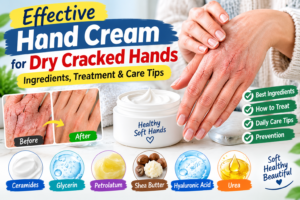

Effective Hand Cream for Dry Cracked Hands: Ingredients, Treatment & Care Tips
Dry, cracked hands can be uncomfortable, painful, and difficult to manage, especially when the skin becomes rough, flaky, tight, or develops small cuts. Frequent hand washing, cold weather, low humidity, harsh soaps, cleaning products, and prolonged exposure to water can all weaken the skin barrier and contribute to dryness.
Selecting a hand cream that works well for dry, cracked hands can have a big impact. The proper moisturizer helps replenish lost moisture, fortify the skin’s barrier, lessen irritation, and shield the hands from additional harm. But not all hand creams work the same way. Depending on how dry or damaged your hands are, ingredients like ceramides, glycerin, petrolatum, shea butter, hyaluronic acid, and urea can offer various advantages.
The best ingredients for dry cracked hands, how to select a hand cream, treatment advice, and easy daily routines that can keep your hands hydrated, soft, and healthy are all explained in this guide.
What Causes Dry and Cracked Hands?
Dry hands occur when the skin loses too much water or when the protective skin barrier becomes damaged. Once the barrier is weakened, moisture escapes more easily, making the skin increasingly dry and sensitive.
Some common causes of dry cracked hands include frequent hand washing, hot water, cold temperatures, dry indoor air, alcohol-based hand sanitizers, harsh soaps, detergents, household cleaning chemicals, and repeated exposure to water.
People who work in healthcare, cleaning, food preparation, construction, beauty services, or other jobs requiring frequent hand washing may be especially prone to dry hands.
Skin conditions can also cause persistent dryness. Eczema, contact dermatitis, psoriasis, and other inflammatory skin problems may lead to redness, itching, scaling, and painful cracks. If your hands remain severely dry despite regular moisturizing, an underlying skin condition may need professional evaluation.
How Does an Effective Hand Cream Help?
A good hand cream does more than temporarily make the skin feel soft. It should help improve the skin barrier and reduce water loss.
Effective moisturizers generally contain three types of ingredients: humectants, emollients, and occlusives.
Humectants attract water into the outer layer of the skin. Glycerin, hyaluronic acid, and urea are common examples.
Emollients smooth rough skin by filling gaps between skin cells. Ingredients such as shea butter and certain plant oils can provide this effect.
Occlusives create a protective layer over the skin to slow moisture loss. Petrolatum is one of the most effective occlusive ingredients for severely dry skin.
For very dry or cracked hands, a combination of these ingredients can provide better protection than a lightweight lotion alone.
Best Ingredients in Hand Cream for Dry Cracked Hands
1. Ceramides
Ceramides are lipids naturally found in the skin barrier. Moisturizers containing ceramides can help support the skin’s protective barrier and reduce moisture loss.
A ceramide hand cream for dry skin may be particularly useful when hands feel rough, tight, or irritated from frequent washing.
2. Glycerin
Glycerin is a powerful humectant that helps attract and retain water in the outer layer of the skin. It is commonly found in moisturizing creams because it provides hydration without necessarily feeling excessively greasy.
For everyday dry hands, glycerin can be an excellent ingredient to look for.
3. Petrolatum
Petrolatum is an occlusive ingredient that forms a protective layer over the skin. It can be especially helpful when hands are extremely dry or cracked.
For severe dryness, applying a rich hand cream and then a thin layer of petrolatum before bedtime can help reduce overnight moisture loss.
4. Shea Butter
Shea butter is a rich emollient that helps soften rough skin and improve the feel of dry hands. It is commonly used in thick hand creams and balms.
It can be particularly comfortable during cold weather when the skin needs additional protection.
5. Urea
Urea can act as both a humectant and a skin-softening ingredient. Lower concentrations are commonly used in moisturizing products, while higher concentrations may be used for very rough, thickened skin.
If your hands are cracked, irritated, or have open wounds, stronger urea products may sting. Choose a formulation appropriate for your skin and avoid applying irritating products directly to painful open cracks unless advised by a healthcare professional.
6. Hyaluronic Acid
Hyaluronic acid is another humectant that helps attract water to the skin. Although it is often associated with facial skincare, it can also be included in hand moisturizers.
For best results, hyaluronic acid is often paired with occlusive ingredients that help prevent the attracted moisture from escaping.
7. Dimethicone
Dimethicone is a silicone-based ingredient that can form a protective barrier over the skin. It can help reduce moisture loss and protect hands from environmental irritation.
It may be especially useful in hand creams designed for people who wash their hands frequently.
How to Choose the Best Hand Cream for Dry Hands
When shopping for an effective hand cream for dry cracked hands, consider the severity of your dryness and how often you need to use the product.
For mildly dry hands, a fragrance-free moisturizing cream containing glycerin or ceramides may be enough.
For very dry hands, choose a thicker cream or balm containing occlusive ingredients such as petrolatum, along with humectants and emollients.
If your hands are sensitive, fragrance-free products are generally a better choice because fragrances can irritate already damaged skin.
Look for a product labeled for dry, sensitive, or eczema-prone skin if you frequently experience redness or irritation.
How to Treat Dry Cracked Hands at Home
Treating dry cracked hands requires more than applying hand cream once a day. Consistent care is important.
Moisturize Immediately After Washing
One of the simplest and most effective habits is applying hand cream after washing your hands.
Gently pat your hands dry rather than rubbing them aggressively, then apply moisturizer while the skin is still slightly damp. This helps trap moisture in the skin.
Avoid Very Hot Water
Hot water can remove protective oils from the skin and make dryness worse. Use lukewarm water instead.
Although hot water may feel comfortable during cold weather, frequent exposure can contribute to a damaged skin barrier.
Use a Gentle Hand Wash
Harsh soaps and heavily fragranced cleansers may worsen dry or sensitive hands. Consider using a gentle, fragrance-free cleanser.
You do not need to avoid washing your hands when appropriate for hygiene. Instead, focus on using a mild cleanser and moisturizing afterward.
Wear Protective Gloves
If your hands are frequently exposed to detergents, cleaning products, soil, or chemicals, wear suitable protective gloves.
For household cleaning, gloves can reduce direct contact with irritating substances. If gloves cause sweating or irritation, take appropriate breaks and keep the hands clean and dry.
Apply a Rich Cream Before Bed
Nighttime is an excellent opportunity to provide intensive moisture.
Apply a generous layer of a thick hand cream before going to sleep. If your skin is extremely dry, an occlusive ointment can be applied over the moisturizer to help seal in hydration.
Some people also find soft cotton gloves comfortable overnight, provided they do not cause irritation.
What to Avoid When Your Hands Are Cracked
Certain skincare habits can make damaged hands worse.
Avoid frequent use of strongly fragranced products if they cause irritation. Avoid harsh scrubs, exfoliating acids, or aggressive rubbing on cracked skin.
Do not pick at flakes or peel loose skin around cracks. This can increase irritation and potentially create additional wounds.
It is also important to avoid applying irritating ingredients to open or bleeding cracks unless a healthcare professional recommends them.
Hand Cream vs. Hand Lotion: Which Is Better?
The difference between a hand cream and lotion is mainly related to texture and formulation.
Lotions are usually lighter and spread easily, making them convenient for daytime use. They may be suitable for mildly dry hands.
Creams are generally richer and provide more lasting moisturization. They are often a better choice for dry or cracked hands.
Ointments and balms tend to be even more occlusive and can be helpful for severely dry areas, especially overnight.
If your hands are severely dry, a thick hand cream for cracked skin may provide better protection than a lightweight lotion.
How Often Should You Apply Hand Cream?
There is no universal number of applications that works for everyone. However, people with dry hands may benefit from applying moisturizer several times throughout the day.
A practical routine is to apply hand cream after washing your hands, after exposure to drying environments, and before going to bed.
If your hands become dry shortly after applying moisturizer, you may need a richer product or more frequent application.
Consistency is often more important than using a large amount of product only occasionally.
When Should You See a Doctor?
Dry hands are often manageable with proper skincare, but persistent or severe symptoms may require medical attention.
Consider speaking with a healthcare professional if your hands have deep or painful cracks, bleeding, significant swelling, severe redness, pus, or signs of infection.
You should also seek professional advice if intense itching, rash, scaling, or recurring symptoms continue despite regular moisturizing.
Conditions such as hand eczema, contact dermatitis, psoriasis, or infection can sometimes resemble ordinary dry skin and may require specific treatment.
Simple Daily Routine for Dry Cracked Hands
A simple hand-care routine can help protect the skin barrier:
Morning: Wash hands with a gentle cleanser and apply a fragrance-free hand cream.
During the day: Reapply moisturizer whenever your hands feel dry, especially after washing.
Before cleaning: Use appropriate protective gloves when handling detergents or household chemicals.
Evening: Apply a thicker hand cream to dry areas.
Before bed: Use a rich moisturizer or suitable occlusive ointment to help reduce overnight moisture loss.
This routine can be adjusted according to your skin’s needs and daily activities.
Frequently Asked Questions
What is the best hand cream for severely dry cracked hands?
A thick, fragrance-free hand cream containing ingredients such as ceramides, glycerin, petrolatum, shea butter, or dimethicone can be useful for severely dry hands. The best option depends on your skin type and the cause of the dryness.
Is petroleum jelly good for cracked hands?
Petroleum jelly can help protect dry skin by creating an occlusive barrier that reduces moisture loss. It is especially useful as a final layer over moisturizer before bedtime.
How can I heal cracked hands quickly?
Use a rich moisturizer frequently, avoid very hot water and harsh soaps, protect your hands from cleaning chemicals, and moisturize immediately after washing. If cracks are deep, painful, bleeding, or persistent, seek professional advice.
Why are my hands still dry after using hand cream?
Your product may be too lightweight, or you may be washing your hands frequently without reapplying moisturizer. Persistent dryness can also be associated with eczema, dermatitis, or another skin condition.
Should I use hand cream every day?
Yes. Daily moisturizing is one of the most useful habits for preventing and managing dry hands. Applying cream after washing and before bed can be especially beneficial.
Final Thoughts
Finding an effective hand cream for dry cracked hands is an important step toward restoring comfortable, healthy-looking skin. Look for formulas that combine hydrating ingredients such as glycerin or hyaluronic acid with barrier-supporting ingredients such as ceramides and protective ingredients such as petrolatum or dimethicone.
However, hand cream is most effective when used in conjunction with healthy daily routines. Apply a richer product at nite, use lukewarm water, select mild cleansers, moisturize after washing, and shield your hands from harsh chemicals.
Don’t assume that dry skin is the only issue if your cracked hands are severe, painful, recurring, or accompanied by noticeable redness, itching, swelling, or infection symptoms. A medical expert can assist in determining the root cause and suggest the best course of action.
With consistent moisturizing and proper hand protection, many cases of dry hands can become softer, smoother, and more comfortable.